
Cement mills are among the most power-intensive grinding machines in any industry ¡ª a single ball mill or vertical roller mill processing clinker and limestone can absorb 5 000 to 15 000 kW of drive power continuously for 24 hours a day, seven days a week, across an operational year of 8 000 or more hours. The planetary gearbox driving the mill must reduce the motor speed from 990 or 1 480 rpm down to the 12 to 22 rpm at which the mill shell or grinding table rotates, delivering the full rated torque continuously without overheating, and surviving the shock torques that occur when large clinker lumps enter the grinding zone and momentarily stall the mill.
Cement Mill Drive Architecture
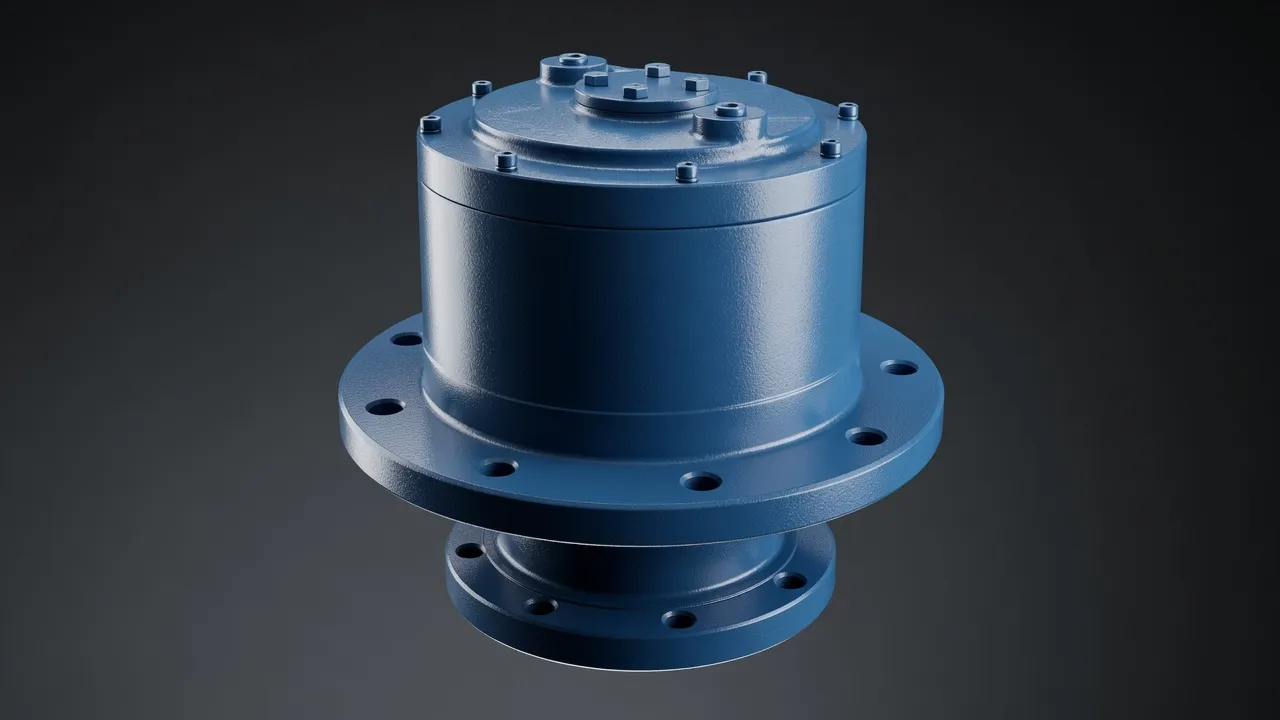
Large cement ball mills use a central drive arrangement: a single large motor or two motors on a tandem drive connects to a central planetary gearbox whose output flange drives the mill shell through a large-diameter flange coupling. The gearbox ratio of 60:1 to 120:1 is achieved in two or three planetary stages stacked concentrically. For vertical roller mills the gearbox is mounted below the grinding table with its output flange bolted directly to the table hub, combining a bevel input stage with planetary reduction stages to achieve the required ratio while changing the axis from horizontal at the motor to vertical at the table.
Ratio and Speed Selection
| Mill Type | Output Speed | Motor Speed | Required Ratio | Stage Count | Power Range |
|---|---|---|---|---|---|
| Ball mill small 3 m | 22 rpm | 990 rpm | 45:1 | 2-stage | 500¨C2 000 kW |
| Ball mill medium 4 m | 18 rpm | 990 rpm | 55:1 | 2¨C3 stage | 2 000¨C6 000 kW |
| Ball mill large 5¨C6 m | 14 rpm | 990 rpm | 70:1 | 3-stage | 5 000¨C10 000 kW |
| VRM medium | 25 rpm | 990 rpm | 40:1 | Bevel+2-stage | 2 000¨C5 000 kW |
| VRM large | 18 rpm | 990 rpm | 55:1 | Bevel+2-stage | 5 000¨C12 000 kW |
Output speed is the mill shell (ball mill) or grinding table (VRM) rotational speed.
High Reduction Ratio in Compact Footprint
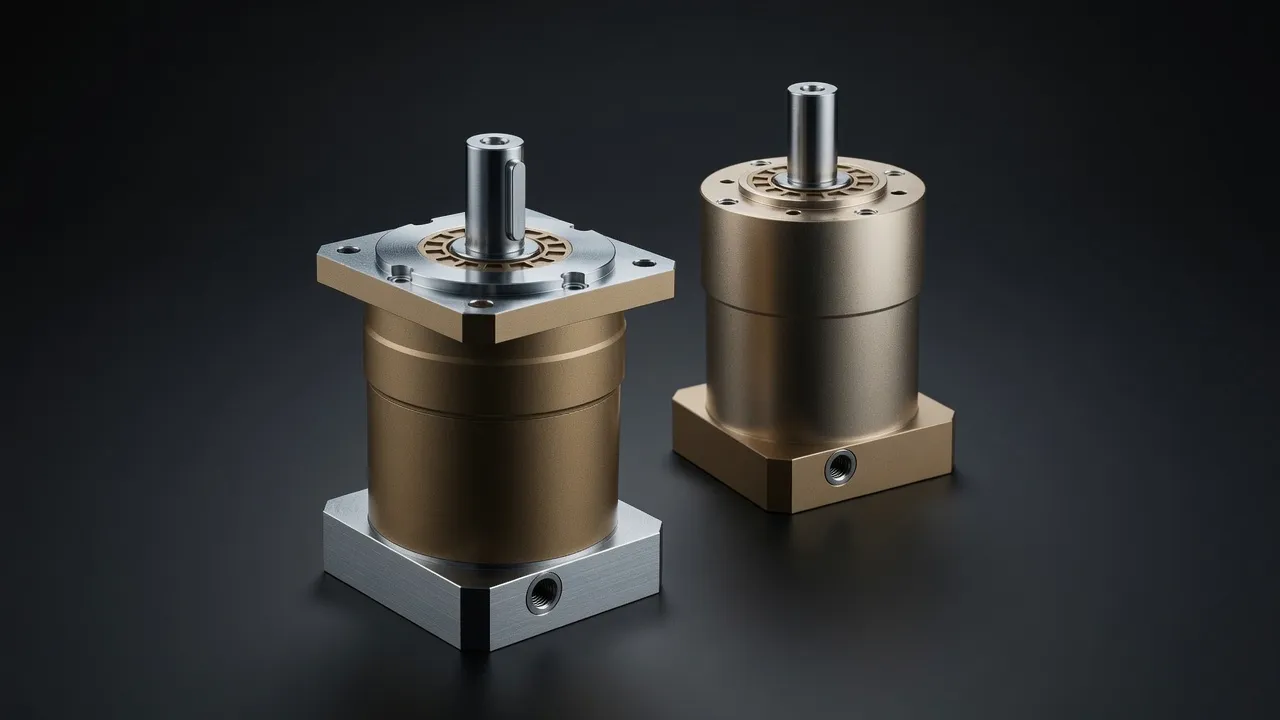
The space available for the cement mill drive gearbox is tightly constrained ¡ª it must fit between the motor and the mill without extending the mill building footprint or interfering with maintenance access. Planetary gearing achieves the required 60:1 to 120:1 ratio in a footprint one-third to one-half that of an equivalent parallel-shaft gearbox. This compact format allows installation on a common base frame with the motor, reducing alignment complexity and civil foundation costs. The EPX heavy planetary gearbox series delivers high torque output within a coaxial housing that fits standard motor interface dimensions, demonstrating the compactness principle used in cement mill design.
Continuous Duty Thermal Management
A 10 000 kW cement mill drive at 97% gearbox efficiency generates 300 kW of heat in the planetary stages ¡ª enough to raise oil temperature above 100¡ãC within minutes if no cooling is provided. All large cement mill planetary gearboxes use forced oil circulation with a dedicated pump, multi-stage filter, and water-cooled or air-cooled heat exchanger maintaining oil temperature at 45¡ãC to 60¡ãC at the gearbox inlet. Temperature sensors at the inlet, outlet, and each bearing location feed into the plant DCS with automatic shutdown on high temperature.
Shock Load Resistance: Clinker Lumps and Mill Jamming
Cement ball mills occasionally jam when large clinker agglomerates or tramp metal reach the mill inlet together, momentarily arresting the mill shell. The energy stored in the rotating motor and gearbox dissipates through the gear mesh as a torque spike ¡ª typically 3 to 5 times the rated torque, lasting 0.1 to 0.5 seconds. Planet gear teeth with shot-peened roots and conservative tooth safety factors absorb these spikes within the elastic range of the tooth material. The EPB high-precision torque planetary series applies the same tooth root shot-peening and material specification to industrial precision planetary applications, demonstrating that high torque density and shock resistance are compatible design objectives.
Lubrication and Oil Maintenance Intervals
Cement mill gearbox oil must resist the highly alkaline, dusty cement plant environment ¡ª cement dust that infiltrates the breather raises the oil pH and reduces additive effectiveness. Sealed breathers with desiccant cartridges prevent bulk ingress. Oil analysis every 500 hours tracks pH, water content, iron and chromium particle counts, and additive element concentrations. Most cement plants change gearbox oil annually during the scheduled kiln maintenance shutdown, regardless of analysis results ¡ª the low cost of an oil change versus the catastrophic cost of a gearbox failure during the 8 000-hour production year justifies this conservative interval. For comparable sealed heavy-duty drives in continuously operating industrial processes, the RR528 heavy-duty worm gearbox illustrates the housing and breather design principles applied in similar dusty continuous-process environments.
Frequently Asked Questions
Speak with a Planetary Drive Specialist
Share your torque requirement, ratio, and application environment ¡ª our team at Condell Park NSW returns a sized recommendation and stock check within one business day. No obligation.