
Product Description
Km Series Aluminium Alloy 7.5~300 Ratio 90 Degree Hypoid Gear Motor Vertical Hypoid Reduction Gearbox with Electric Motor
Product Parameters
|
Applicable Industries |
Garment Shops, Manufacturing Plant, Machinery Repair Shops, Food & Beverage Factory |
|
Gearing Arrangement |
Hypoid |
|
Output Torque |
100~500NM |
|
Input Speed |
1400rpm |
|
Output Speed |
5~187 |
|
Place of Origin |
China |
|
Brand Name |
HUAKE |
|
Product name |
Hypoid gear reducer |
|
Color |
Blue |
|
Ratio |
5-400 |
|
Certificate |
ISO9001 CCC CE |
Detailed Photos
Product Description
KPM-KPB series helical-hypoid gearboxes are the new-generation product with a compromise of advanced technology both at home and abroad.This product is widely used in textile, foodstuff, beverage,tobacco, logistics industrial fields,etc.
Main Features:
(1) Driven by hypoid gears, which has big ratios.
(2) Large output torque, high efficiency(up to 92%), energy saving and environmental protection.
(3) High quality aluminum alloy housing, light in weight and non-rusting.
(4) Smooth in running and low in noise, and can work long time in dreadful conditions.
(5) Good-looking appearance, durable service life and small volume.
(6) Suitable for all round installation, wide application and easy use.
(7) KPM series can replace NMRV worm gearbox; KPB series can replace CHINAMFG W series worm gearbox;
(8) Modular and multi-structure can meet the demands of various conditions.
Main Material:
(1) Housing: aluminum alloy
(2) Gear wheel: 20CrMnTiH1,carbonize & quencher heat treatment make the hardness of gears surface up to 56-62 HRC, retain carburization layers thickness between 0.3 and 0.5mm after precise grinding.
Gearbox Application
Company Profile
Certifications
Packaging & Shipping
FAQ
| Application: | Motor, Electric Cars, Motorcycle, Machinery, Marine, Toy, Agricultural Machinery, Car, Transmission Parts |
|---|---|
| Function: | Distribution Power, Clutch, Change Drive Torque, Change Drive Direction, Speed Changing, Speed Reduction, Speed Increase |
| Layout: | Cycloidal |
| Hardness: | Hardened Tooth Surface |
| Installation: | Torque Arm Type |
| Step: | Single-Step |
| Samples: |
US$ 80/Piece
1 Piece(Min.Order) | |
|---|
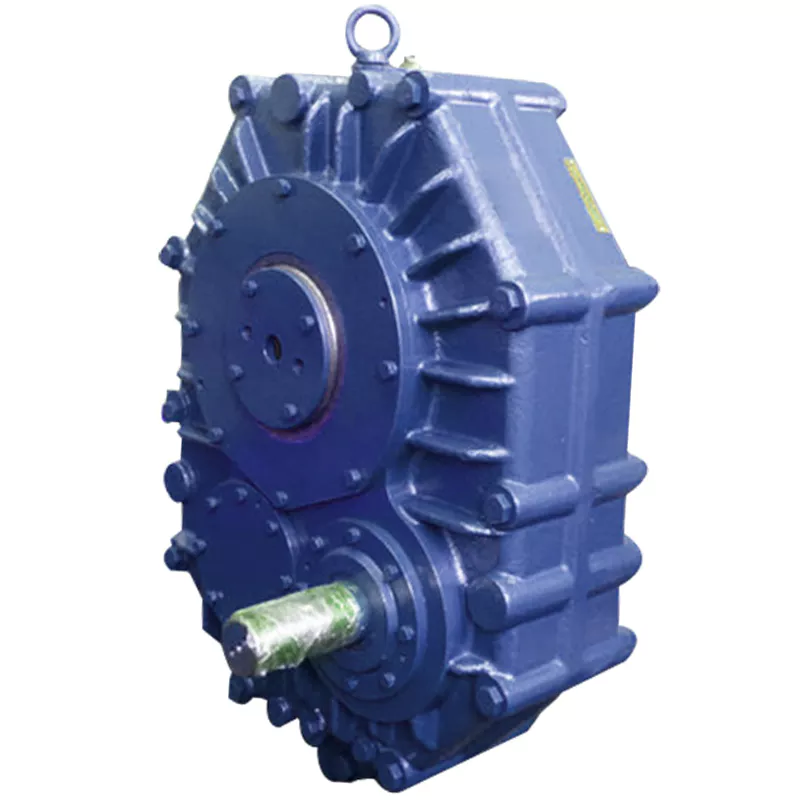
Ensuring Precision of Gear Tooth Profiles in Speed Reducer Gearboxes
Manufacturers employ several techniques to ensure the precision of gear tooth profiles in speed reducer gearboxes, which is crucial for optimal performance and longevity:
- High-Quality Materials: Manufacturers use high-quality materials for gear manufacturing, such as hardened steel or specialized alloys, to enhance durability and minimize wear.
- Precision Machining: Advanced machining processes, including CNC (Computer Numerical Control) machining and grinding, ensure accurate tooth profiles and precise gear dimensions.
- Tooth Profile Design: Detailed tooth profile designs based on mathematical calculations and engineering principles help optimize meshing and minimize stress concentration.
- Tooth Forming Techniques: Various tooth forming methods, such as hobbing, shaping, and broaching, are employed to create accurate gear tooth profiles with minimal deviations.
- Heat Treatment: Heat treatment processes like carburizing, quenching, and tempering are used to achieve the desired hardness and strength, ensuring gear teeth can withstand operational stresses.
- Quality Control: Rigorous quality control measures, including inspection using precision tools like coordinate measuring machines (CMMs), ensure compliance with design specifications.
- Lubrication and Surface Coatings: Proper lubrication and specialized surface coatings help reduce friction and wear, maintaining accurate tooth profiles during operation.
By implementing these techniques and adhering to stringent quality standards, manufacturers can achieve the required precision in gear tooth profiles, resulting in smooth and efficient operation of speed reducer gearboxes.
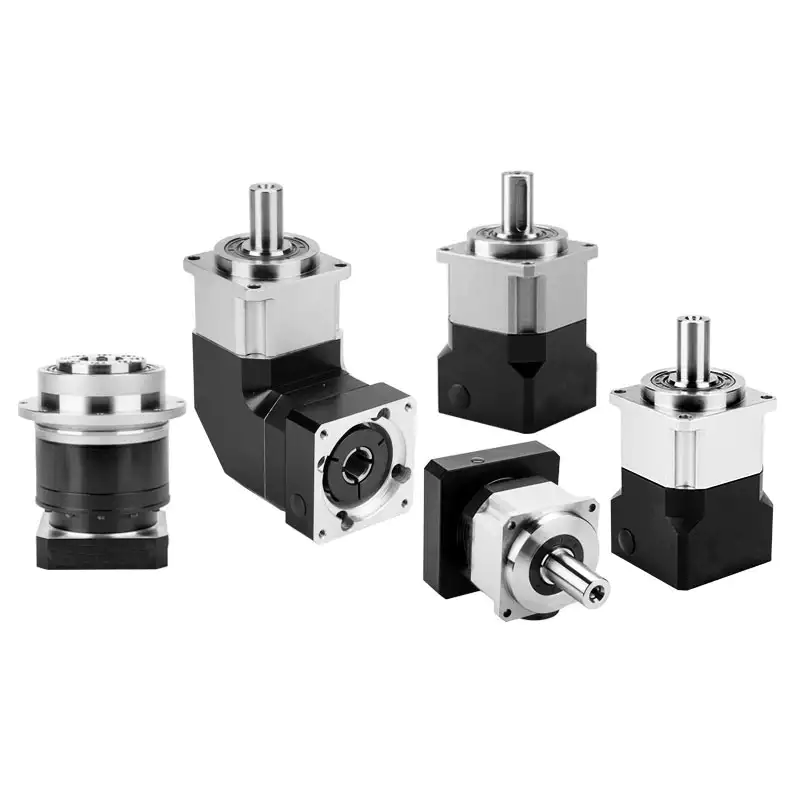
Impact of Gear Ratios on Performance of Speed Reducer Gearboxes
Gear ratios in speed reducer gearboxes play a crucial role in determining their performance characteristics and capabilities. The gear ratio represents the ratio of the number of teeth on the driving (input) gear to the number of teeth on the driven (output) gear within the gearbox. This ratio directly affects how the gearbox transforms the input speed and torque into the desired output speed and torque.
Speed Reduction: A higher gear ratio in a speed reducer gearbox results in greater speed reduction. In this case, the input shaft’s higher rotational speed is converted into a lower rotational speed at the output shaft. This is advantageous for applications that require increased torque and reduced speed, such as heavy-duty machinery and conveyor systems.
Speed Increase: Conversely, a lower gear ratio in a speed reducer gearbox leads to speed increase. The input shaft’s rotational speed is transformed into a higher rotational speed at the output shaft, albeit with decreased torque. This configuration is useful in applications where higher speed is necessary, such as certain types of pumps and fans.
The choice of gear ratio is a critical design consideration when selecting a speed reducer gearbox for a specific application. It determines the trade-off between speed and torque, allowing engineers to tailor the gearbox’s performance to match the requirements of the machinery and equipment it will drive.
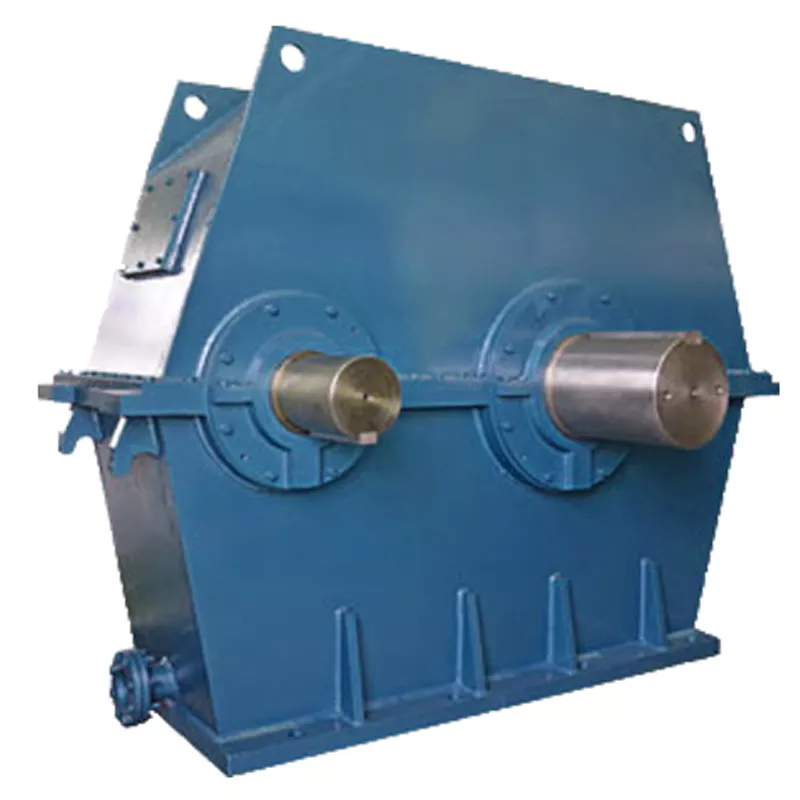
What is a Speed Reducer Gearbox and How Does It Function in Mechanical Systems?
A speed reducer gearbox, also known as a gear reducer or gearhead, is a mechanical device used to reduce the rotational speed of an input shaft while increasing the output torque. It consists of a combination of gears with different sizes and configurations that work together to achieve the desired speed reduction and torque increase.
The primary function of a speed reducer gearbox is to adapt the output speed and torque of a power source, such as an electric motor or an internal combustion engine, to match the requirements of a specific application. By changing the speed and torque characteristics, the gearbox enables efficient power transmission and motion control in various industrial and mechanical systems.
The basic operation of a speed reducer gearbox involves the interaction of different types of gears, such as spur gears, helical gears, bevel gears, and worm gears. These gears mesh together to create a mechanical advantage, which results in the reduction of output speed and the amplification of output torque. The specific gear arrangement and ratios determine the extent of speed reduction and torque multiplication achieved by the gearbox.
Speed reducer gearboxes find widespread use in applications where the input power source operates at higher speeds and lower torques than what is required for the output application. Examples include conveyor systems, industrial machinery, robotics, automotive transmissions, and various types of manufacturing equipment. By providing the necessary speed reduction and torque increase, speed reducer gearboxes play a crucial role in optimizing the performance and efficiency of these mechanical systems.
In summary, a speed reducer gearbox is a mechanical component that utilizes gear combinations to reduce input speed and increase output torque, enabling effective power transmission and motion control in a wide range of industrial applications.


editor by CX 2023-09-14