Description
EO Series Double Worm Gear Reducer with Vertical Output
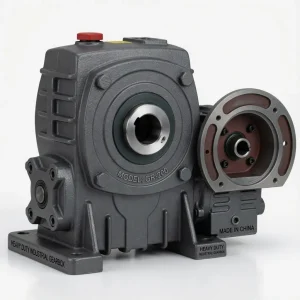
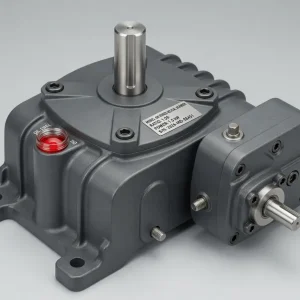
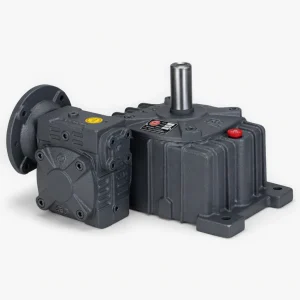
The EO Series is a foot-mounted double-stage worm gear reducer with the output shaft pointing vertically upward. Unlike its motor-flange sibling (the EDO), the EO uses a bare input shaft that connects to the motor through a coupling, belt, or chain — giving engineers the freedom to offset the motor, add a pre-stage reduction, or use a non-IEC-standard prime mover. Ratios from 200:1 to 900:1 across five frame combinations (WP40–70 through WP155–250) deliver output torques up to 6,050 N·m. Dual self-locking worm stages hold the vertical load securely when the motor stops, providing a built-in safety function for gate actuators, screw lifts, and overhead positioning systems.
Technical Specifications
The performance figures below are measured at 1,500 r/min input under continuous duty. The EO shares the same WP-platform dual-housing construction as the EA and EDO series. Because the EO does not include a motor flange, the rated input power reflects the maximum power the first-stage worm shaft can accept via a coupling or belt drive from any speed reducer gearbox compatible motor.
| Frame Combo | Input Power (kW) | Ratios | Torque at 300:1 (N·m) | Peak Torque (N·m) |
|---|---|---|---|---|
| WP40–70 | 0.48 | 200:1 – 900:1 | 88 | 250 |
| WP60–100 | 0.95 | 200:1 – 900:1 | 276 | 500 |
| WP80–135 | 2.5 | 200:1 – 900:1 | 880 | 1,400 |
| WP120–175 | 5.09 | 200:1 – 900:1 | 2,340 | 3,050 |
| WP155–250 | 11.71 | 200:1 – 900:1 | 4,087 | 6,050 |
Application Scenarios
Grain-Bin Slide Gates
Agricultural storage facilities use slide gates at the bottom of grain silos to control discharge flow. An EO at 400:1 drives the gate screw at approximately 3.75 r/min, providing smooth, controllable gate travel. The foot-mounted layout allows the motor to sit on a shelf bracket offset from the gate frame, keeping it clear of grain dust accumulation. The dual self-locking worm gearbox stages hold the gate at any intermediate position without a separate locking pin.
Stage Machinery and Theatre Lifts
Fly-bar winches and orchestra-pit lifts in performance venues demand silent, precise, self-locking drives. The EO’s worm mesh is inherently quieter than spur or helical gear alternatives, and the self-locking property holds scenery and platforms securely at any height. Frame combinations WP80–135 and WP100–155 match the load and speed requirements of most mid-size venue rigging systems.
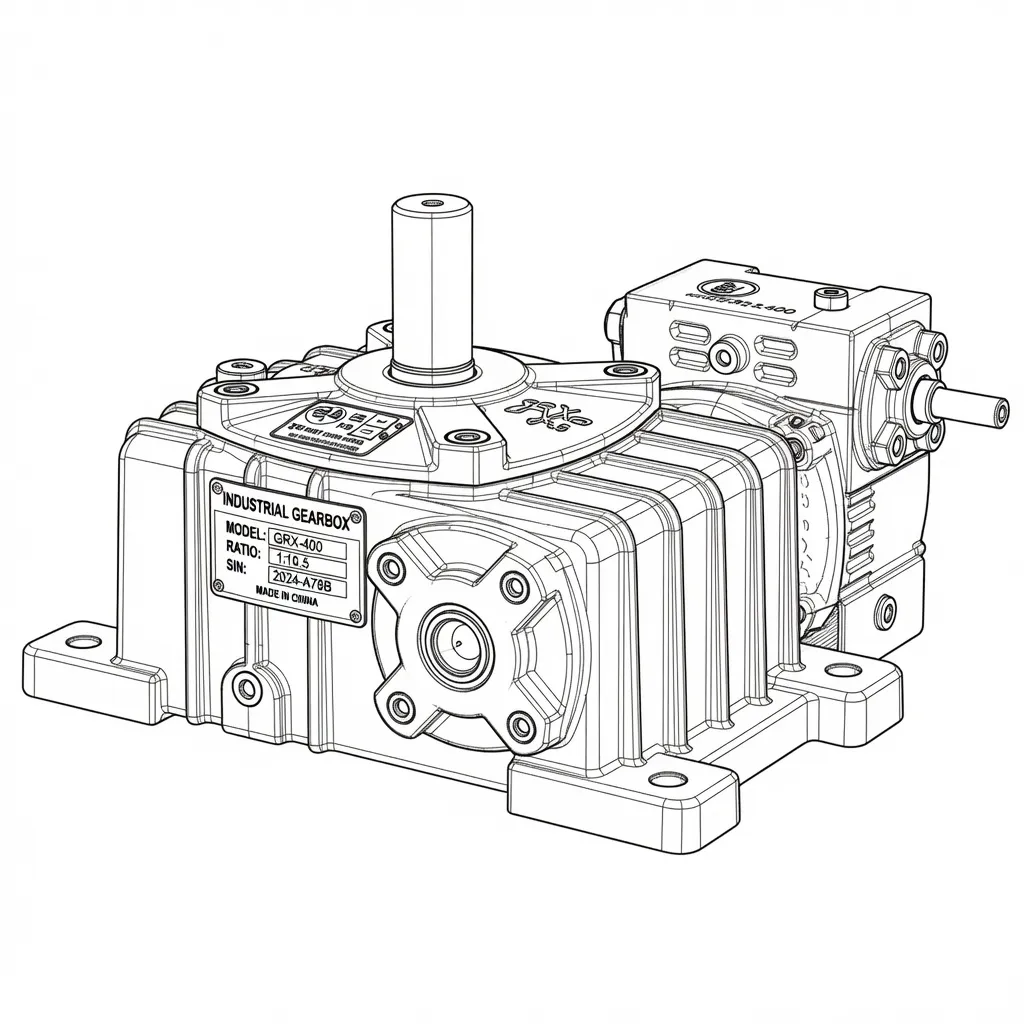
Foot-mounted layout and vertical output shaft position
Design and Construction
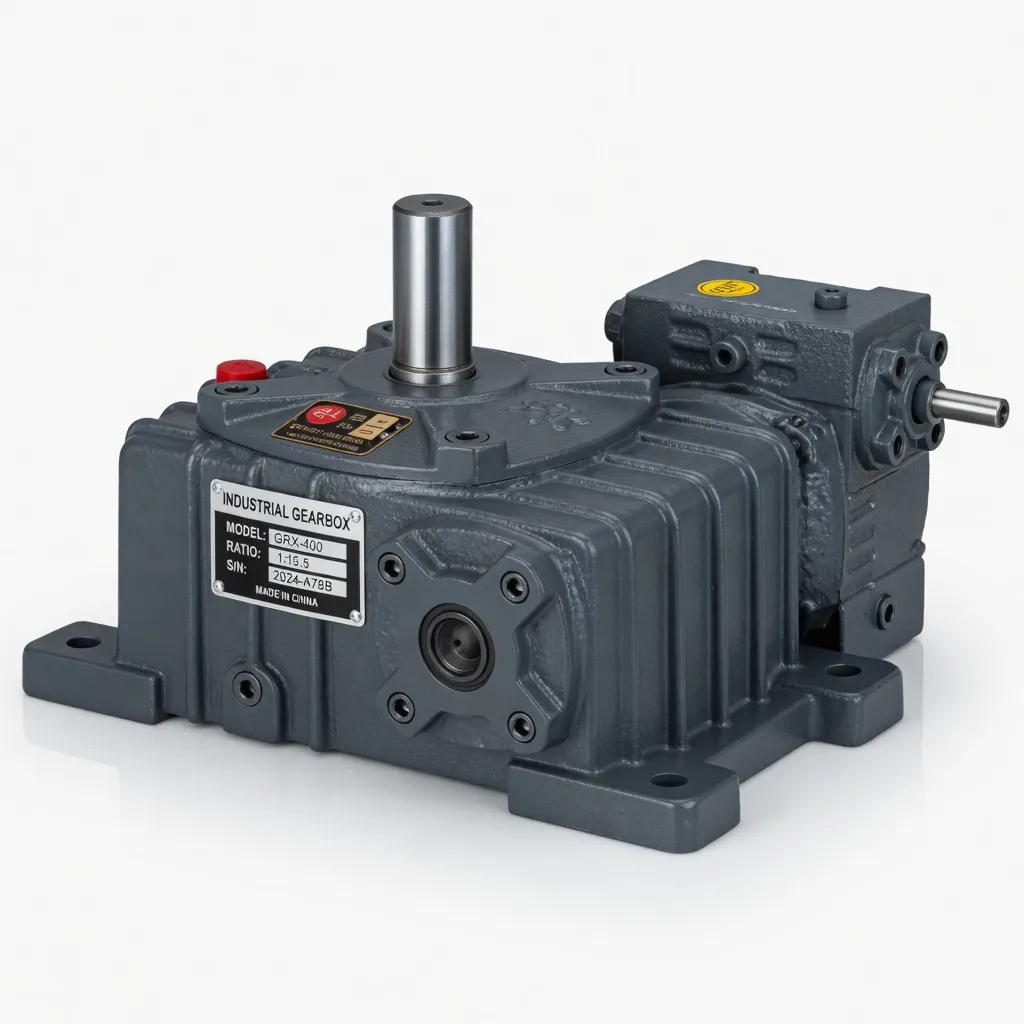
The EO consists of two bolted grey cast-iron housings mounted on a common foot base. The smaller first-stage casing carries the input shaft supported on tapered roller bearings; the larger second-stage casing holds the output shaft pointing vertically upward. Both stages use case-hardened alloy-steel worm shafts and centrifugally cast tin-bronze worm wheels. The foot base is machined flat across both housings in a single CNC setup to guarantee coplanarity, so the unit sits flush on the machine frame without shimming. Oil seals on every shaft penetration are double-lipped NBR with a dust-exclusion outer lip.
Components and Spare Parts
Every major component inside this reducer is available as an individual spare part, so a worn gear set or leaking seal never means replacing the entire unit. Our spare-parts inventory covers the full WP-platform range and ships from our Condell Park, NSW warehouse. Each stage has its own worm pair, bearing set, and seal kit — all individually orderable by frame size.
Worm Shaft
Case-hardened 20CrMnTi alloy steel, thread-ground to Ra 0.8 μm finish
Worm Wheel
Centrifugally cast ZCuSn10Pb1 tin-bronze, hobbed full-depth involute profile
Bearings
Tapered roller bearings handling combined radial and axial loads on both shafts
Seal & Gasket Kit
Double-lipped NBR oil seals, housing gaskets, breather plugs, and O-rings
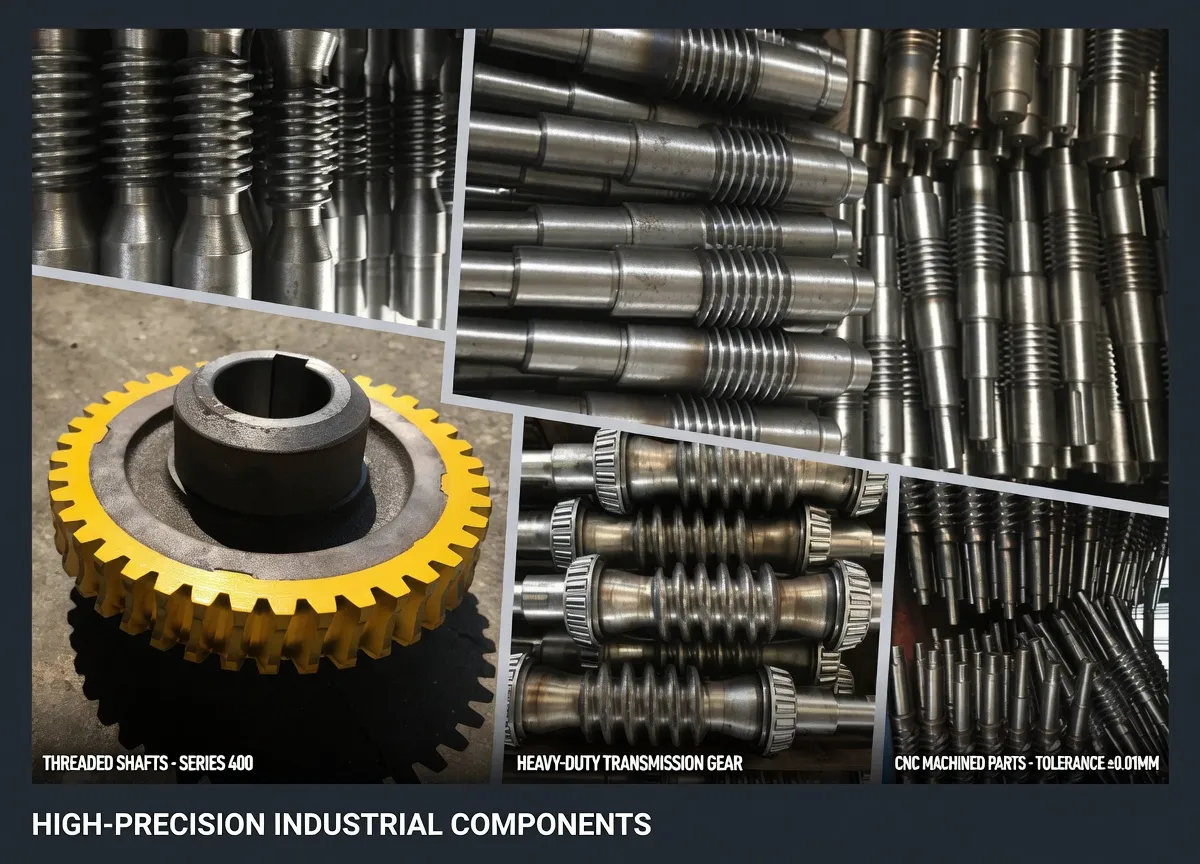
Individual components available for order: worm shaft, bronze wheel, bearings, and seal kits
Lubrication Guide
Fill each stage with ISO VG 220–320 EP gear oil. For the vertical-output second stage, increase the fill to submerge the worm wheel fully. Recommended oils include Shell Omala S2 G 220, Mobil Gears 627, and Texaco Meropa 320. Change the factory fill after 100 hours, then every 2,000 hours or annually. Synthetic oil (Mobil SHC 630) is recommended for continuous duty above six hours to reduce operating temperature by 10–20 °C.
Customer Reviews
The EO foot-mount design gave us the flexibility to use our existing belt-drive setup from motor to reducer. Output torque is solid and consistent — no complaints after 14 months of three-shift operation.
James Li
Conveyor Systems Integrator, QLD
We use two EO units on grain-bin discharge gates. The self-locking is reliable and the foot-mounted layout let us bolt them to our existing gate frames without any welding or adapter plates.
Sandra Mitchell
Operations Manager, Agricultural Co-op
Replacement worm wheels arrived within three days from Ever-Power Sydney. The ability to buy individual components rather than a whole new gearbox saves us significant cost on planned maintenance shutdowns.
Paul Novak
Millwright, Steel Fabrication
Ever-Power Australia — Local Supply Partner
We stock EO frame combinations and replacement components at our Condell Park, NSW warehouse. Every unit includes ISO 9001 documentation and a factory oil fill. For textile-industry drives, see our FRV030 worm reducer for textile machinery line. Reach out via contact us or call +61 2 9708 3322.
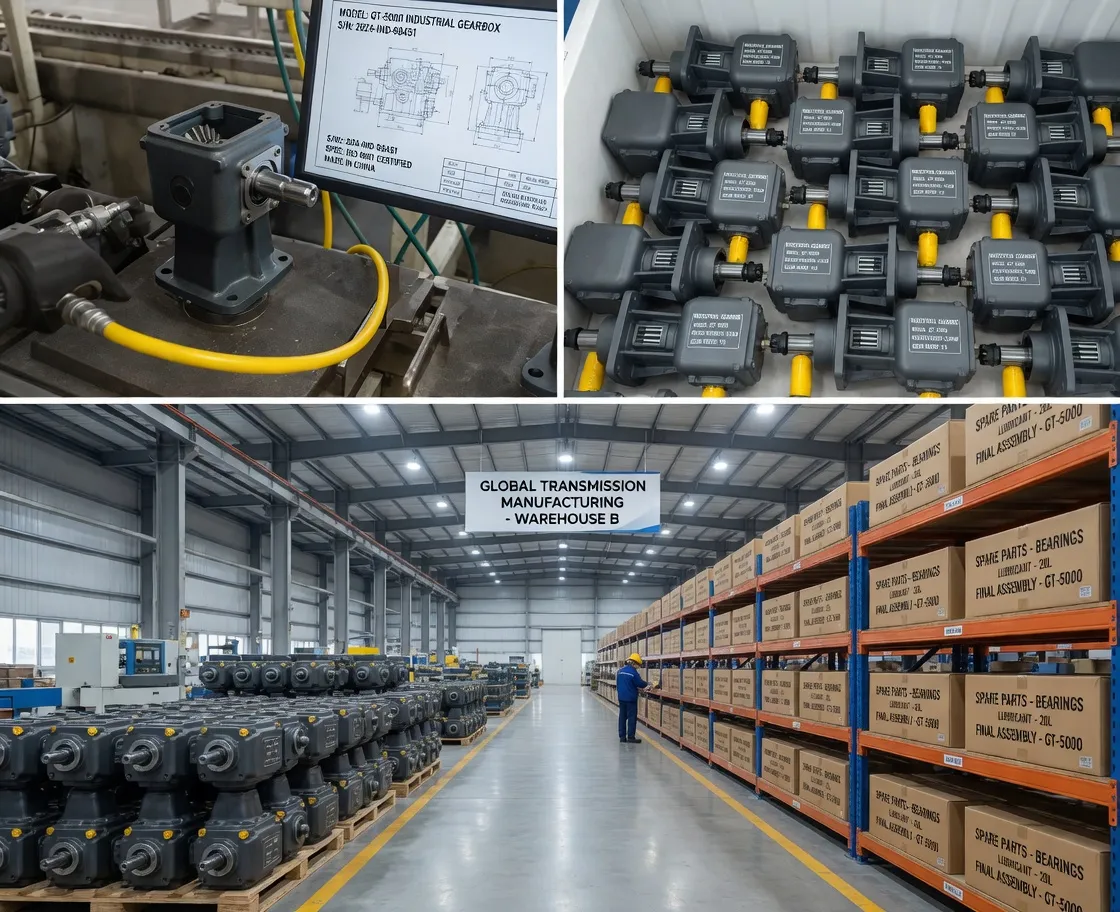
Assembly and quality-control area