Description
EWA Series Universal Double Worm Gear Reducer
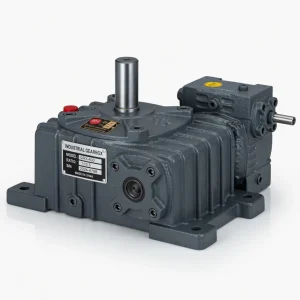
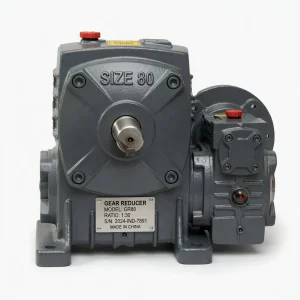
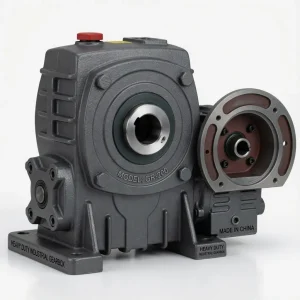
The EWA Series combines a universal (multi-angle) first-stage worm housing with a standard second-stage output to create a double-stage gear reducer that adapts to virtually any motor-entry angle. While a standard double-stage unit locks the motor position to one or two orientations, the EWA’s universal first stage accepts input from below, above, either side, or at intermediate angles — making it the go-to choice when existing structural steel, piping, or access platforms constrain the motor position. Ratios from 200:1 to 900:1 across five frame combinations deliver output torques up to 6,050 N·m, and dual self-locking stages hold the load without an external brake.
Where Universal Mounting Matters
Retrofit and Upgrade Projects
In brownfield installations — existing mines, mills, and processing plants — structural constraints rarely allow the motor to sit in the textbook position. The EWA’s universal input stage means the motor can enter from whatever angle the available space permits, without fabricating custom brackets or modifying the machine frame. This dramatically reduces retrofit engineering time and cost, and the right angle worm gearbox output geometry remains unchanged regardless of the input angle.
Multi-Axis Conveyor Systems
Complex conveyor routing in automotive body shops and parcel-sorting hubs often requires drive units at odd angles to follow the conveyor path around columns and mezzanines. The EWA accepts the motor at whichever angle the conveyor frame dictates, and the A-type horizontal output drives the conveyor head pulley through a standard coupling or chain. Frame combinations WP80–135 and WP120–175 cover the speed and torque range most belt and roller conveyors operate in.
Performance Specifications
Output torque data is measured at 1,500 r/min input. The EWA shares the same dual-housing WP-platform construction and gear geometry as all other double-stage models. Power values span the coupling-driven (higher) and motor-flange (lower) input configurations. contact us for frame-specific dimensional drawings and correction-factor tables.
| Frame Combo | Motor (kW) | Ratios | Torque at 300:1 (N·m) | Peak Torque (N·m) |
|---|---|---|---|---|
| WP40–70 | 0.12 – 0.48 | 200:1 – 900:1 | 88 | 250 |
| WP60–100 | 0.37 – 0.95 | 200:1 – 900:1 | 276 | 500 |
| WP80–135 | 1.5 – 2.5 | 200:1 – 900:1 | 880 | 1,400 |
| WP120–175 | 2.2 – 5.09 | 200:1 – 900:1 | 2,340 | 3,050 |
| WP155–250 | 5.5 – 11.71 | 200:1 – 900:1 | 4,087 | 6,050 |
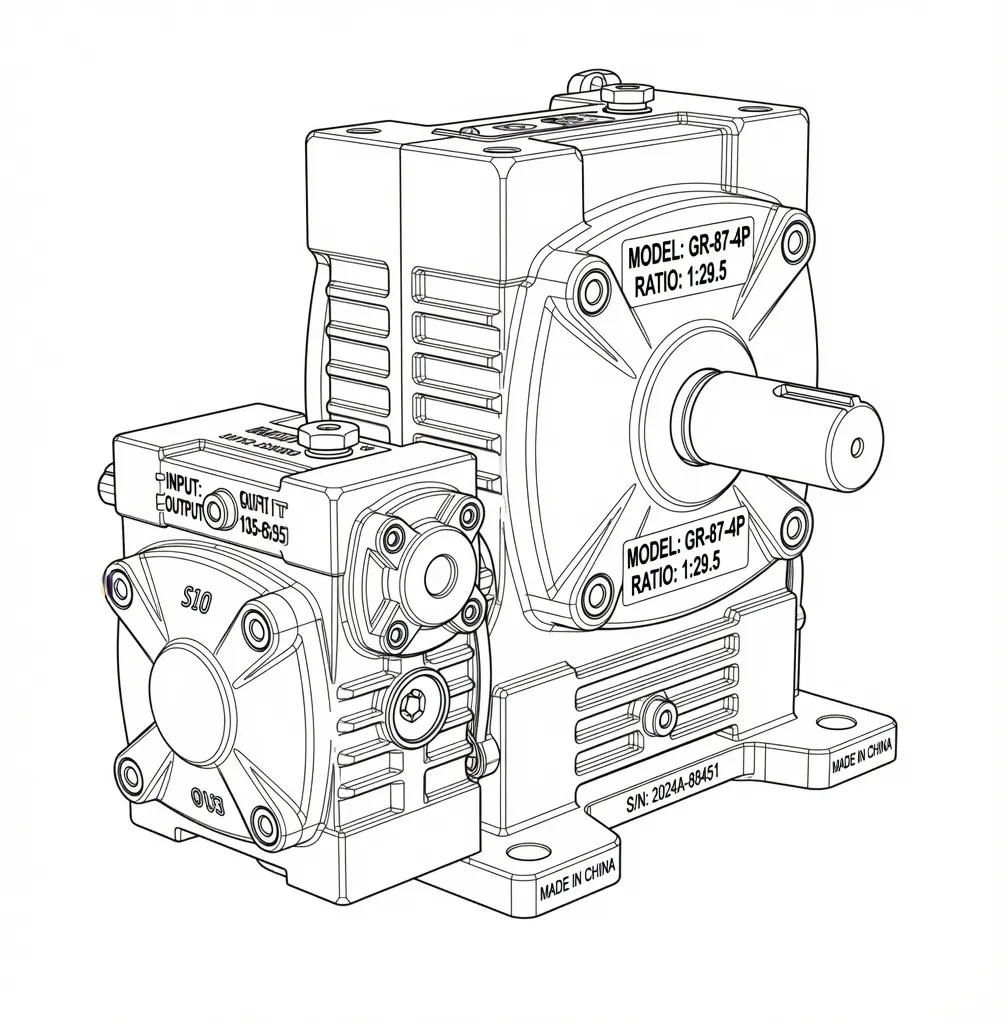
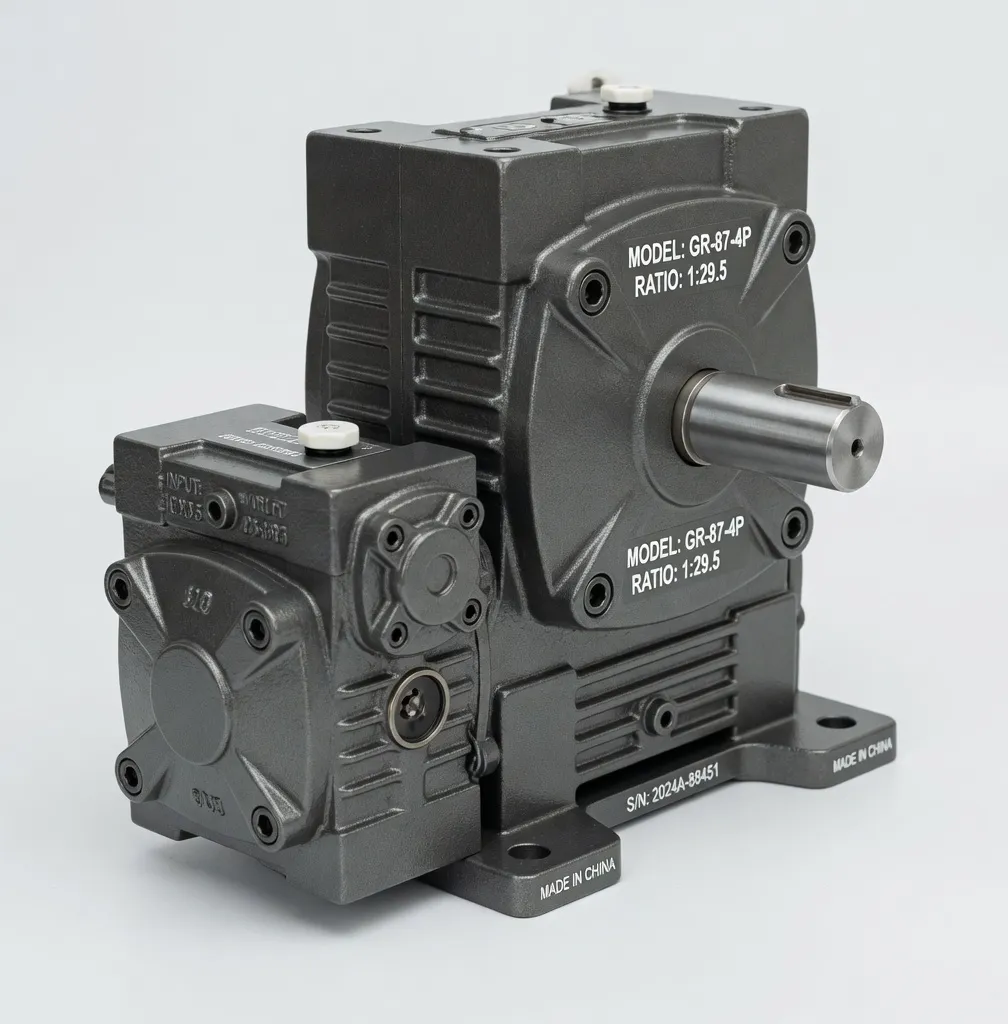
Multi-angle input and A-type horizontal output
Construction Details
The first-stage housing is a special WP universal casting with motor-mounting faces machined on multiple planes, allowing the input shaft to accept a motor or coupling from six standard orientations (A, S, O, X, T, V). The second-stage housing is a standard WP casting with a horizontal output shaft and foot pads. Both stages use case-hardened alloy-steel worm shafts, centrifugally cast tin-bronze wheels, tapered roller bearings, and double-lipped NBR seals. The two housings bolt together with precision-ground dowel pins to maintain inter-stage shaft alignment. The combined unit mounts on the machine base via the second-stage foot pads, which are machined flat in a single CNC setup for zero-shim installation.
Components and Spare Parts
Every major component inside this reducer is available as an individual spare part, so a worn gear set or leaking seal never means replacing the entire unit. Our spare-parts inventory covers the full WP-platform range and ships from our Condell Park, NSW warehouse. The universal first-stage components (worm shaft, wheel, bearings, seals) are interchangeable with corresponding single-stage WPW universal models, simplifying your spares inventory.
Worm Shaft
Case-hardened 20CrMnTi alloy steel, thread-ground to Ra 0.8 μm finish
Worm Wheel
Centrifugally cast ZCuSn10Pb1 tin-bronze, hobbed full-depth involute profile
Bearings
Tapered roller bearings handling combined radial and axial loads on both shafts
Seal & Gasket Kit
Double-lipped NBR oil seals, housing gaskets, breather plugs, and O-rings
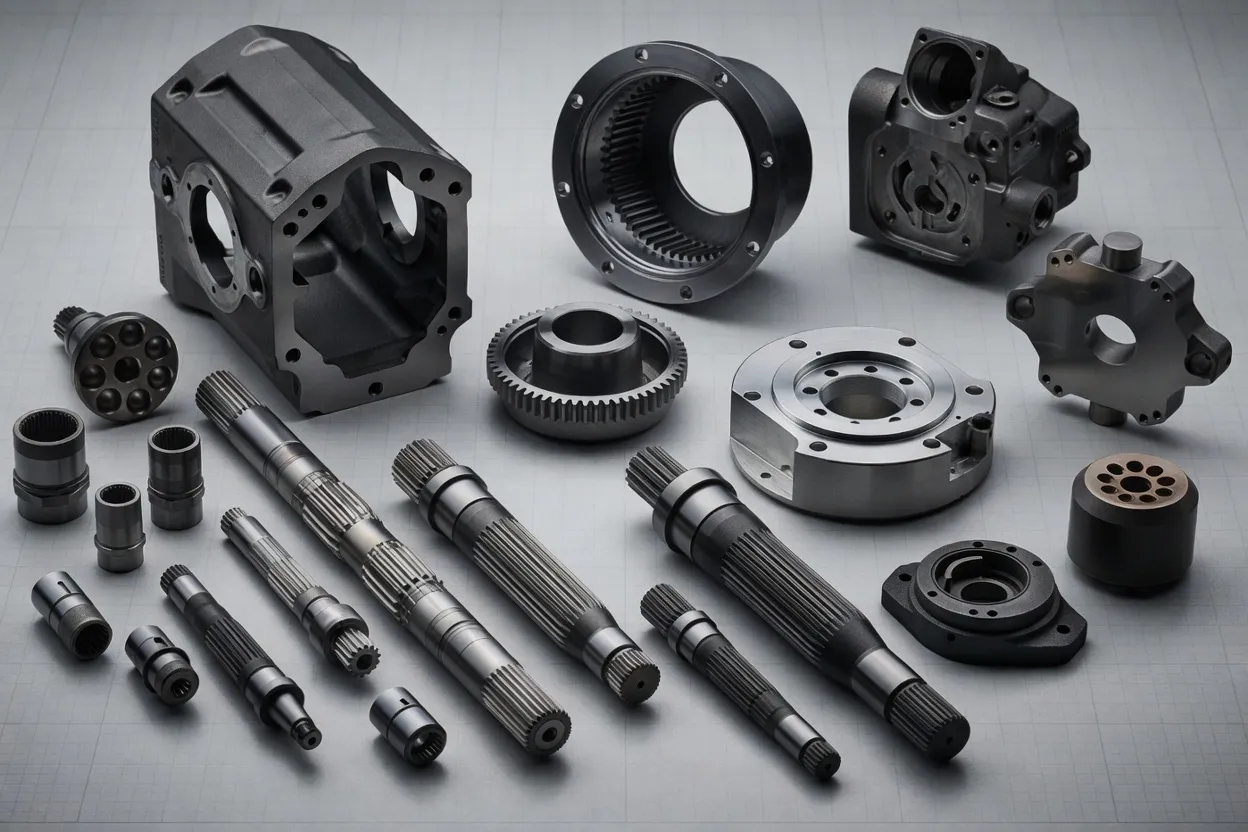
Individual components available for order: worm shaft, bronze wheel, bearings, and seal kits
Oil and Maintenance
Each stage has its own oil fill, drain plug, and sight glass. Use ISO VG 220–320 EP gear oil for ambient temperatures up to 40 °C. Synthetic ISO VG 220 is recommended for continuous duty above six hours. First oil change at 100 running hours; subsequent changes at 2,000-hour or annual intervals. During each service, inspect the magnetic drain plugs in both stages and check all shaft seals for weeping. Re-torque the inter-stage bolts to factory specification after the first 500 hours to account for initial settling.
Customer Reviews
The universal first stage gave us the flexibility to mount the motor at a 45-degree angle to clear an existing structural beam. No other double-stage worm gearbox offered that without a custom housing.
Chris O’Brien
Mechanical Engineer, Mining Services
Solid unit. The WP120–175 combo on our kiln auxiliary drive has been running 18 months without any temperature or vibration issues. Oil changes are easy with the twin drain plugs.
Liam Walsh
Maintenance Supervisor, Cement Plant
We replaced a competitor unit with the EWA and the mounting dimensions lined up within 2 mm. Our fitters had the new reducer bolted in and running within half a shift.
Mei Zhang
Process Engineer, Chemical Plant
Why Ever-Power Australia
Based in Condell Park, NSW, we stock the EWA alongside the full EA, EDA, and EDO range. ISO 9001-certified manufacturing, dynamometer load testing, and local engineering support ensure every unit performs from day one. We also supply HRV104 high-temperature worm gearbox for glass and ceramics industry drives that operate at elevated ambient temperatures. Visit our About Us page or call +61 2 9708 3322 for more information.
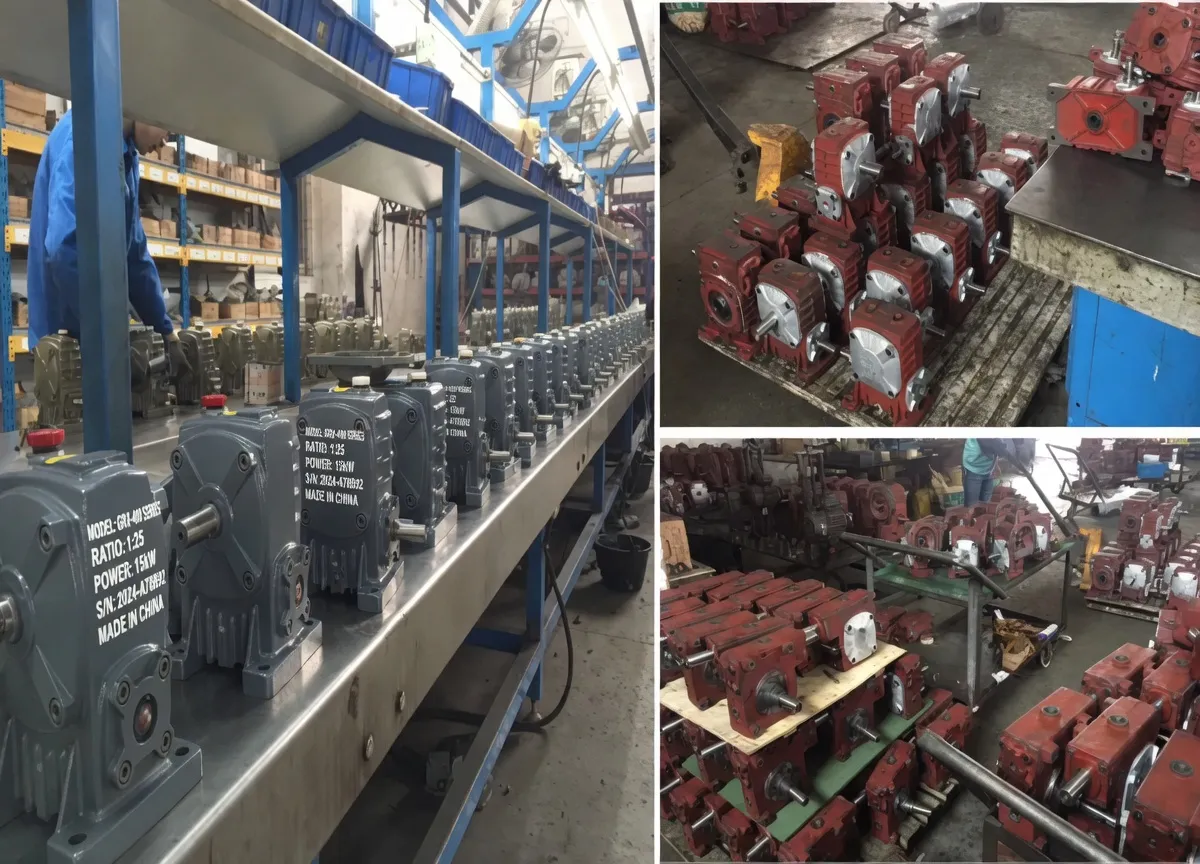
CNC machining and gear-grinding lines