
Industrial mixers in chemical, pharmaceutical, food, and construction materials processing cover an enormous range of viscosities, volumes, and mixing mechanisms ¡ª from low-viscosity liquid blending in a 50 000-litre stirred tank reactor to the mixing of concrete in a planetary pan mixer, and from kneading rubber compounds at 500 kN¡¤m to stirring cosmetic emulsions at 50 N¡¤m. What these applications share is a requirement for a compact, reliable drive that delivers the shaft torque needed to keep the mixer turning at a controlled speed against the viscous resistance of the batch, continuously and for years of production use. Planetary gearboxes provide this across the full range of mixer applications.
Mixer Types and Planetary Drive Requirements
The mixer type determines the planetary gearbox specification. Anchor and gate agitators for viscous chemicals require very high torque at low speed (1 to 30 rpm) and continuous duty. Top-entry stirrers for low-viscosity liquids require moderate torque at medium speed (60 to 200 rpm) and intermittent or continuous duty. Planetary pan mixers for concrete and ceramics require very high torque at low speed, continuous heavy duty, and high shock resistance from hard aggregate. Sigma blade kneaders for rubber and polymer compounds require the highest torque per unit volume of any mixer type, at speeds of 10 to 60 rpm, with significant cyclical torque variation as the blades engage and disengage.
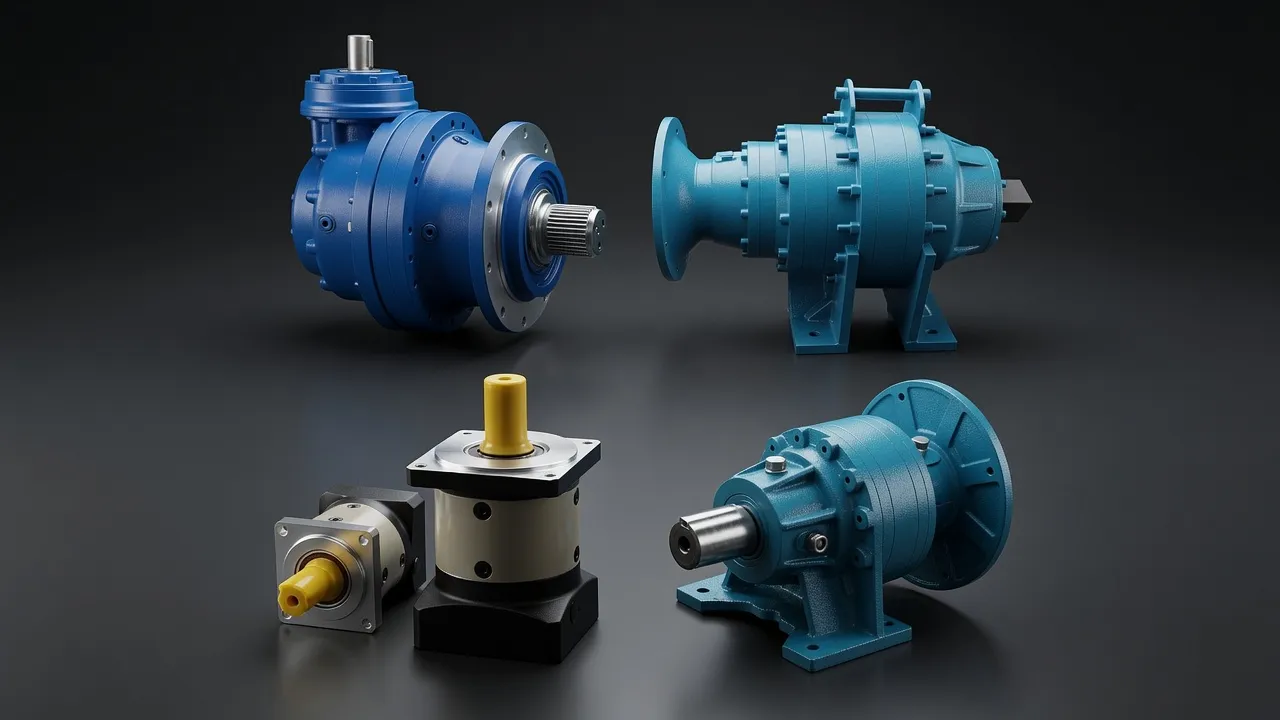
| Mixer Type | Typical Speed | Torque Range | Duty Cycle | Gearbox Series | Ratio Range |
|---|---|---|---|---|---|
| Anchor/gate agitator | 1¨C20 rpm | 2 000¨C200 000 N¡¤m | Continuous | EPX/EPB 2¨C3 stage | 60:1¨C300:1 |
| Top-entry stirrer | 30¨C200 rpm | 100¨C5 000 N¡¤m | Continuous/intermittent | EPG 1¨C2 stage | 8:1¨C50:1 |
| Planetary pan mixer | 8¨C25 rpm tool | 5 000¨C100 000 N¡¤m | Continuous heavy | EPX 3-stage | 80:1¨C200:1 |
| Sigma blade kneader | 10¨C60 rpm | 5 000¨C500 000 N¡¤m | Continuous heavy | Multi-stage compound | 50:1¨C200:1 |
| Ribbon blender | 10¨C60 rpm | 500¨C10 000 N¡¤m | Intermittent | EPG/EPB 2-stage | 25:1¨C100:1 |
Torque values are at the mixer shaft. Gearbox must be sized for the peak, not the average torque.
Load Distribution in a Planetary Pan Mixer
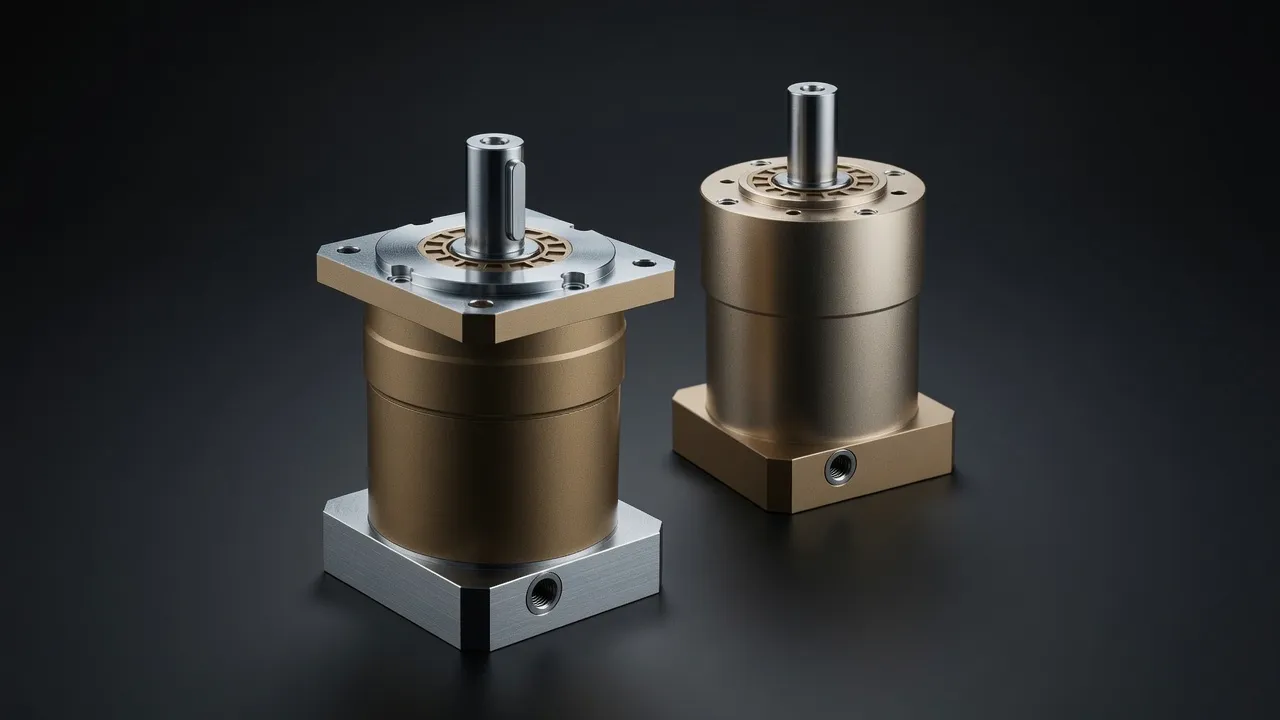
A concrete planetary pan mixer operates on a principle directly analogous to a planetary gearbox: the mixing tools revolve around their own axes while simultaneously orbiting around the pan centre. The drive gearbox provides two simultaneous motions ¡ª the orbital revolution at low ratio and high torque, and the tool self-rotation at higher ratio and lower torque. These two motions are mechanically coupled through the planetary gearbox, which determines both speeds simultaneously with a fixed ratio between them. The result is a complex, efficient mixing action that processes concrete and refractory materials in a fraction of the time of a drum mixer.
Viscosity Effects on Drive Sizing
The torque required to mix a viscous batch is proportional to the viscosity, the impeller speed, and the impeller geometry. Processes that start with a low-viscosity liquid and progressively add solids to build a paste ¡ª polymer dissolution, gel preparation, dough mixing ¡ª reach peak torque only at the end of the batch, when the product is most viscous. The gearbox must be sized for this peak viscosity torque, not the average batch torque. The EPX heavy planetary series provides the peak torque rating and continuous duty capacity required for large batch mixers in chemical and construction materials applications. The EPB high-precision torque planetary serves precision mixing applications in pharmaceutical and food manufacturing where torque monitoring accuracy is required for batch consistency.
Speed Control and Variable Frequency Drives
Many industrial mixing processes require variable mixing speed during the batch cycle ¡ª higher speed during dispersion, lower speed during incorporation of sensitive additives, controlled ramp-down before discharge. Variable frequency drives connected to the gearbox motor provide this control. The planetary gearbox must be rated for operation across the full VFD speed range ¡ª typically 10% to 120% of the nominal motor speed ¡ª without excessive heating at low speed or vibration at high speed. Synthetic oil lubrication is preferred for VFD-driven mixers because it maintains adequate viscosity at the lower temperatures seen during low-speed periods while not overheating at high speeds.
Seal Selection for Process Compatibility
The shaft seal on a mixer planetary gearbox is critical ¡ª leakage from the gearbox into the process can destroy a pharmaceutical or food batch worth far more than the gearbox itself. Mechanical face seals provide the most reliable zero-leakage sealing for top-entry stirrers. For food-grade and pharmaceutical mixers, the seal must be made from NSF H1-approved materials, and the gearbox oil itself must be an NSF H1 food-grade oil. The EPG two-stage precision planetary with mechanical seal option and NSF H1 food-grade oil filling provides a ready-to-specify solution for pharmaceutical and food mixer drives in Australian GMP-compliant manufacturing facilities. For comparable sealed drive solutions in food-contact environments, the HSRV stainless steel worm gearbox demonstrates the sealing and material standards applicable to hygienic industrial drives.
Frequently Asked Questions
Speak with a Planetary Drive Specialist
Share your torque requirement, ratio, and application environment ¡ª our team at Condell Park NSW returns a sized recommendation and stock check within one business day. No obligation.