Description
Key Advantages of the DKA Series
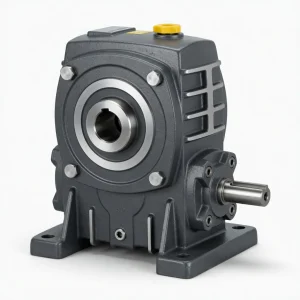
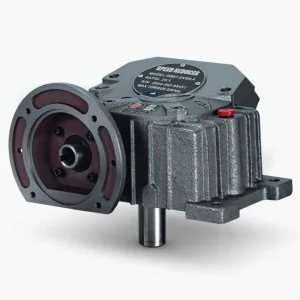
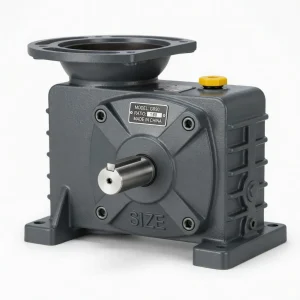
The DKA Series is a hollow shaft worm gearbox that mounts directly onto the driven machine shaft, removing couplings, alignment shims, and guard-rail assemblies from the drivetrain. Built around the same cast-iron WP housing platform used across the single-stage range, it adds a keyed hollow bore on the output side and integrates an IEC motor flange for direct motor mounting. Thirteen frame sizes from WP40 to WP250, with reduction ratios spanning 5:1 to 60:1, cover virtually every low-to-medium-speed industrial drive you might encounter. The result is a power-transmission package that occupies far less floor space than a motor-plus-coupling-plus-foot-mounted reducer arrangement — a meaningful advantage on crowded production floors or inside enclosed machine frames.
Where the DKA Series Excels
Screw Conveyors and Augers
Screw-conveyor head shafts are a natural fit for a worm gear reducer with a hollow output bore. The DKA slides over the conveyor shaft and is held in position by a torque arm bolted to the trough frame. No separate pillow-block bearing or rigid coupling is needed at the drive end, which simplifies both installation and maintenance. Equipment integrators working with FLSmidth or WAM screw-conveyor platforms regularly specify the DKA in the WP100–WP175 range for cement, grain, and biomass transfer lines.
Mixer and Agitator Drives
Tank-mounted agitators in food, chemical, and pharmaceutical plants often use a hollow-shaft reducer to slide directly onto the mixer impeller shaft. The DKA’s A-type orientation (motor below) works well on horizontal mixer barrels, while the companion DKS model puts the motor above for vertical tank-top installations. Paddle mixers on ribbon blenders from brands such as Eirich and Peerless frequently pair with WP80–WP135 DKA units at 20:1 or 30:1, taking advantage of the self-locking worm gearbox behaviour to hold the impeller stationary during material loading.
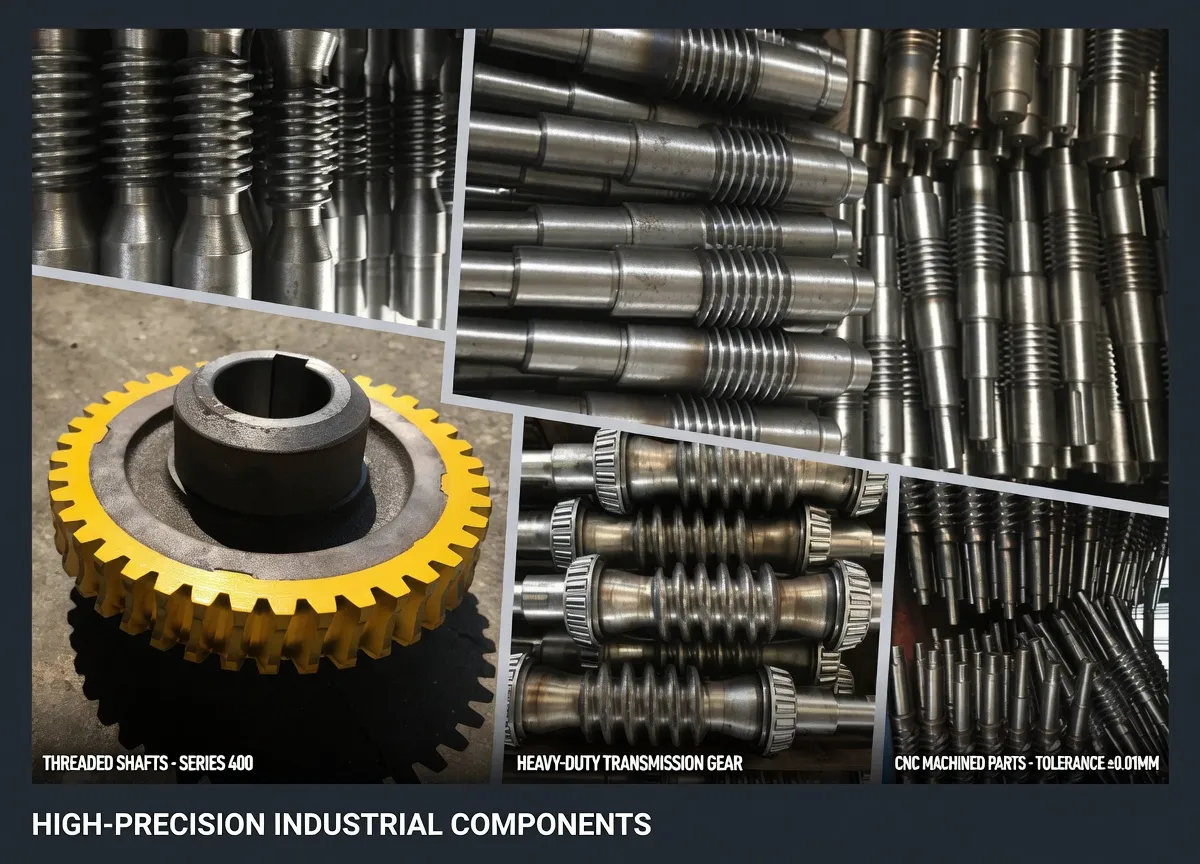
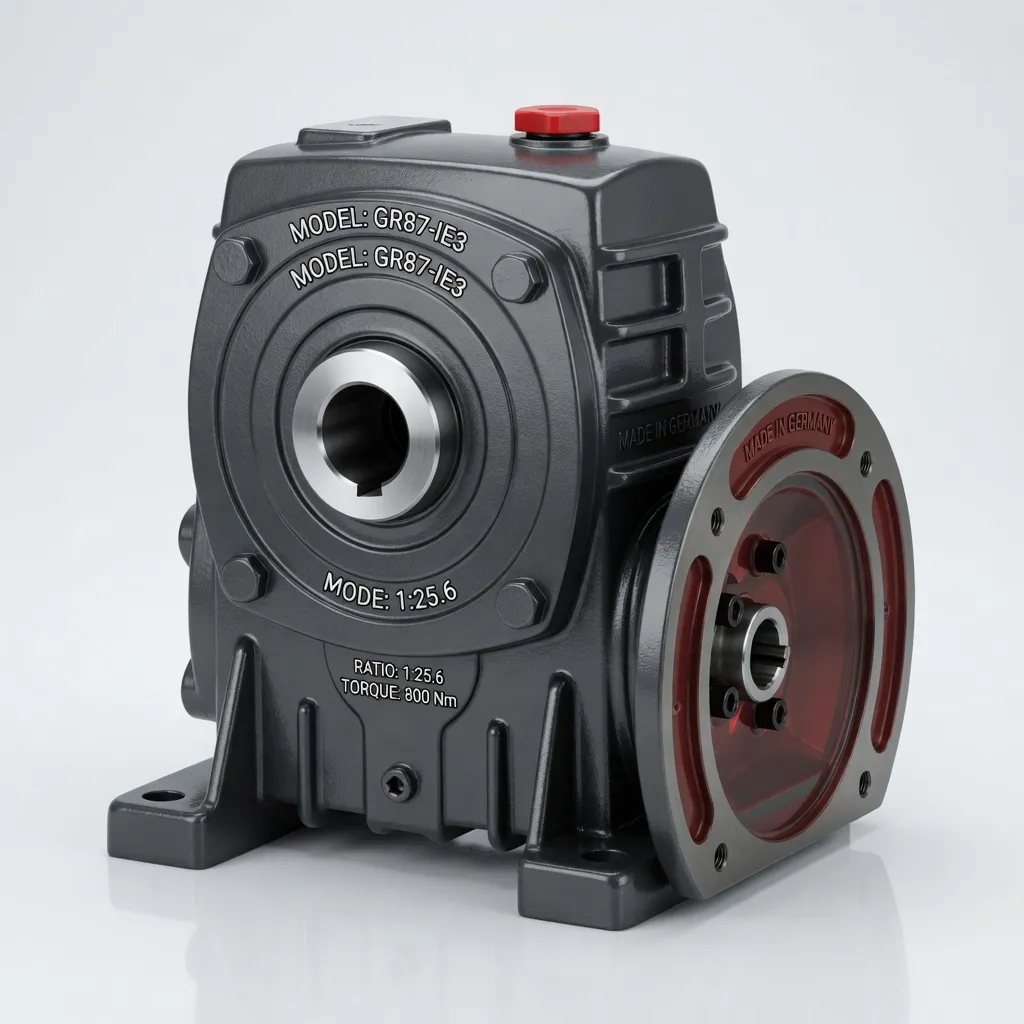
Hardened worm shaft and precision-machined hollow output bore
Technical Specifications
The following table outlines performance at 1,500 r/min input speed. Hollow-bore diameters listed are the standard production sizes; custom bores and spline profiles are available for OEM contracts. Torque values represent continuous-duty capacity at 10–25 °C ambient. All DKA units share the same speed reducer gearbox housing platform and gear geometry as the solid-shaft DA Series, so bearing loads and efficiency figures are identical.
| Frame (mm) | Motor (kW) | Ratios | Torque at 10:1 (N·m) | Peak Torque (N·m) | Hollow Bore (mm) |
|---|---|---|---|---|---|
| WP40 | 0.12 | 5:1 – 60:1 | 6 | 20 | 14 |
| WP60 | 0.37 | 5:1 – 60:1 | 19 | 73 | 20 |
| WP80 | 0.75 – 1.5 | 5:1 – 60:1 | 77 | 248 | 28 |
| WP100 | 1.5 | 5:1 – 60:1 | 80 | 344 | 32 |
| WP120 | 2.2 – 3 | 5:1 – 60:1 | 151 | 521 | 40 |
| WP155 | 5.5 | 5:1 – 60:1 | 270 | 1,260 | 55 |
| WP200 | 11 | 10:1 – 60:1 | 623 | 2,856 | 70 |
| WP250 | 11 – 15 | 10:1 – 60:1 | 850 | 3,025 | 85 |
Design and Construction Details
Hollow Output Shaft with Keyway
The output bore is machined to H7 tolerance and fitted with a parallel keyway per DIN 6885. A clamping ring or torque-arm bracket reacts the housing torque back to the machine frame, preventing the reducer body from spinning around the driven shaft during operation. This approach distributes radial load across the full bore length rather than concentrating it at a coupling hub, which extends bearing life.
Integrated Motor Flange and Input Bore
The input side carries a B5/B14 IEC motor flange with an h6-tolerance bore. The motor shaft inserts through the flange into the worm shaft, locked by a parallel key. No belt tensioning, chain lubrication, or coupling inspection is needed once assembled. For heavy motors above 5.5 kW, an optional AS-type motor support bracket transfers weight to the machine base.
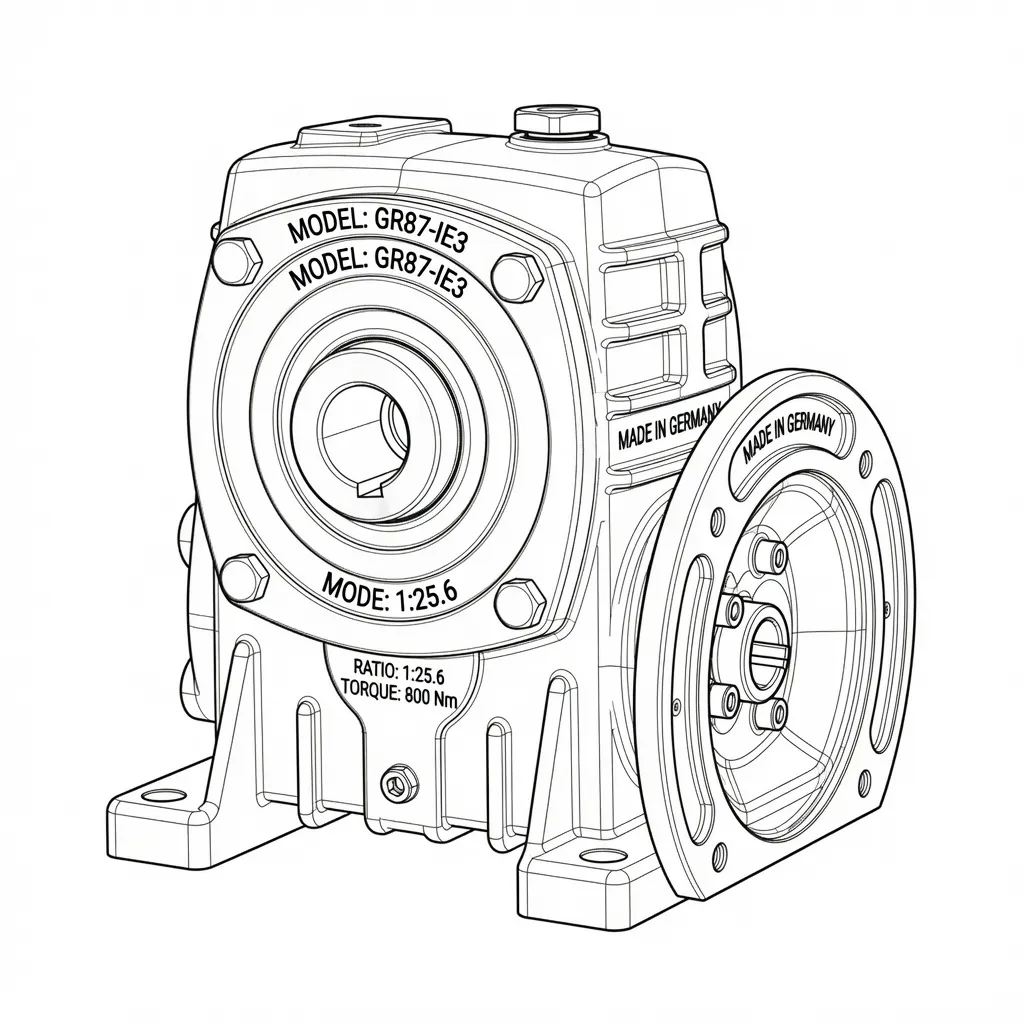
Dimensional outline showing hollow bore, keyway, and torque-arm position
Installation and Commissioning Process
Getting the DKA onto your machine shaft and running requires only basic hand tools and a dial indicator for alignment verification. Follow the card steps below or contact us for on-site commissioning support in the greater Sydney metro area.
Measure the Driven Shaft
Record the diameter, keyway width, and length of the machine shaft the reducer will mount onto. Tolerance is typically h7 or h8.
Calculate Torque & Ratio
Determine the output torque and speed your process requires. Divide 1,500 r/min by the target output speed to find the ratio.
Match the Frame
Locate the frame size whose hollow bore exceeds the driven shaft diameter and whose rated torque covers your load with correction factors applied.
Order & Install
Send us model, ratio, and shaft details. Once delivered, slide the hollow bore over the driven shaft, tighten the torque arm, and connect the motor.
Maintenance Schedule
Lubrication practices for the DKA mirror those of every WP-platform reducer. Use ISO VG 220–320 extreme-pressure gear oil (Shell Omala S2 G 220, Mobil Gears 627, or Texaco Meropa 320) for ambient temperatures up to 40 °C. Drain the factory-fill oil after the first 100 running hours to flush out machining residues and run-in particles. Subsequent oil changes follow a 2,500-hour or 12-month interval. Check the oil sight glass weekly and top up if the level has fallen below the lower mark. Inspect the torque-arm fasteners during each oil change to make sure vibration has not loosened them.
Why Partner with Ever-Power Australia
Ever-Power Transmission Australia Pty Ltd keeps popular DKA frame sizes on hand at our Condell Park, NSW warehouse for rapid dispatch across Australia and New Zealand. Every unit is manufactured under ISO 9001 and undergoes a run-in noise and temperature test before packing. Our engineering team in Sydney can help you match the hollow-bore diameter to your existing shaft, specify the torque arm, and recommend the correct motor frame. We also carry complementary product lines including HSRV stainless-steel worm gearboxes for washdown-rated food and pharmaceutical environments.
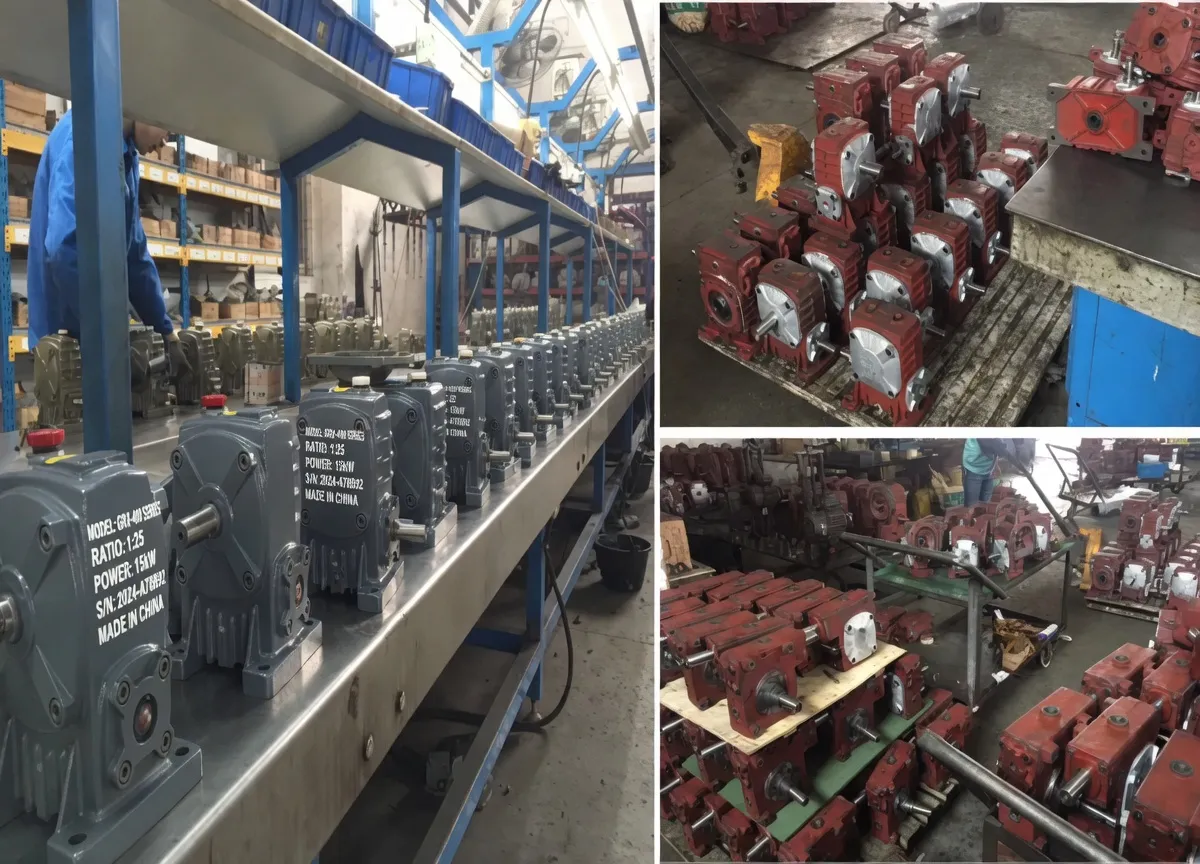
Our ISO 9001-certified production line