
Industrial mixers — paddle mixers, ribbon blenders, agitators, and kneaders — impose some of the most complex torque profiles of any process machine. The load swings between high impulsive torque at startup (when paddles break through set material) and continuous moderate torque at steady state, often for eight to twelve hours per batch. Combining that duty cycle with strict hygienic requirements in food applications narrows the gearbox field considerably.
Torque Profile of Mixer Applications
Starting torque in a mixer can reach 3–4 times the steady-state running value when paddles first engage stiff dough, cold fat, or compacted granular material. For a 200-litre horizontal ribbon blender processing bread dough at 65% hydration, running torque at the agitator shaft might be 380 N·m, but break-out torque on a cold-start can exceed 1 100 N·m for the first 10–15 seconds. A gearbox selected only on running torque will survive the peak mechanically but the output shaft seal may be stressed enough to begin leaking lubricant into the product area.
Hygiene Requirements in Food-Grade Mixer Drives
Oil and Grease Compatibility
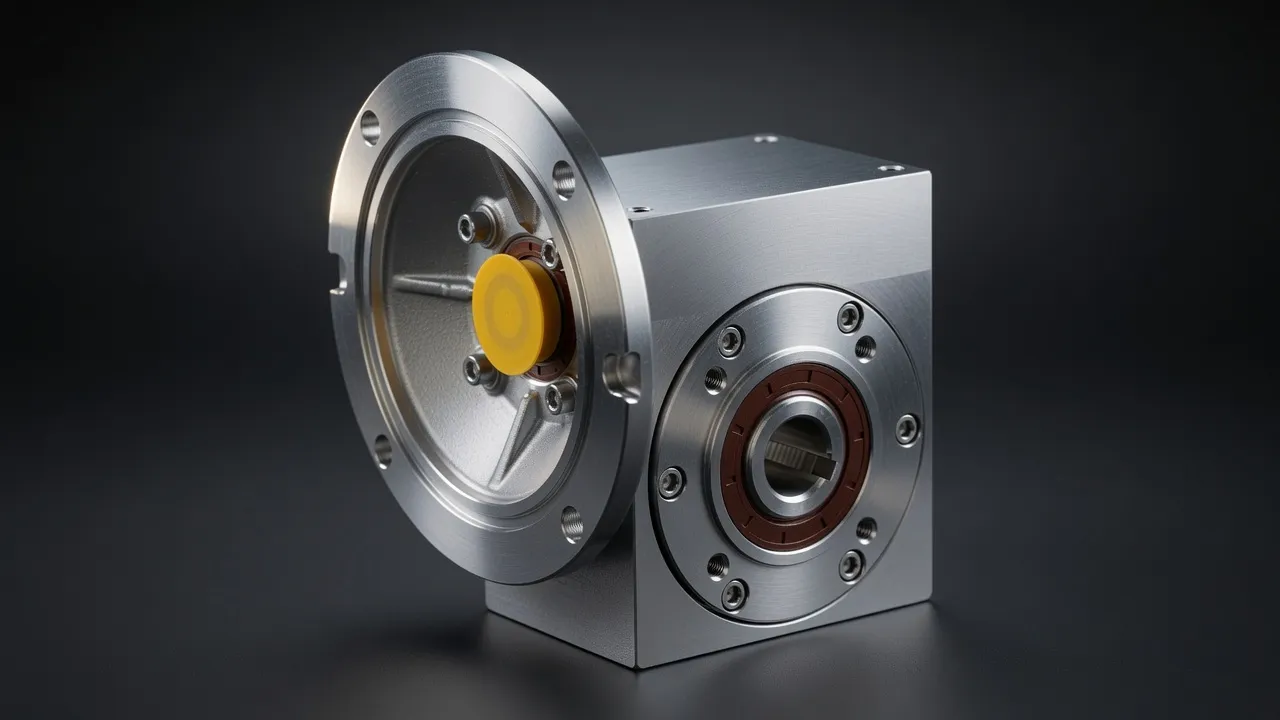
Food safety regulations under FSANZ and the NSW Food Authority require that any lubricant that could plausibly contact food product be food-grade (NSF H1 or H2 certified). WP worm units used in direct-contact zones above conveyors, mixers, or blenders should be filled with NSF H1 certified oil. ISO VG 320 polyalphaolefin (PAO) synthetic oils carry H1 certification at most viscosity grades — confirm with the lubricant supplier before purchasing.
Seal Design and IP Rating
Standard WP lip seals are not rated for wash-down environments. Mixer rooms in bakeries, meat processing plants, and confectionery factories are pressure-washed daily, often with hot water and caustic detergent. A minimum IP65 housing with enhanced lip seals or mechanical seals at the output shaft is required. The output shaft area is the highest-risk zone — any wear in the shaft-seal interface creates a direct pathway for oil contamination of the product.
Direct Foot Mount (WPA)
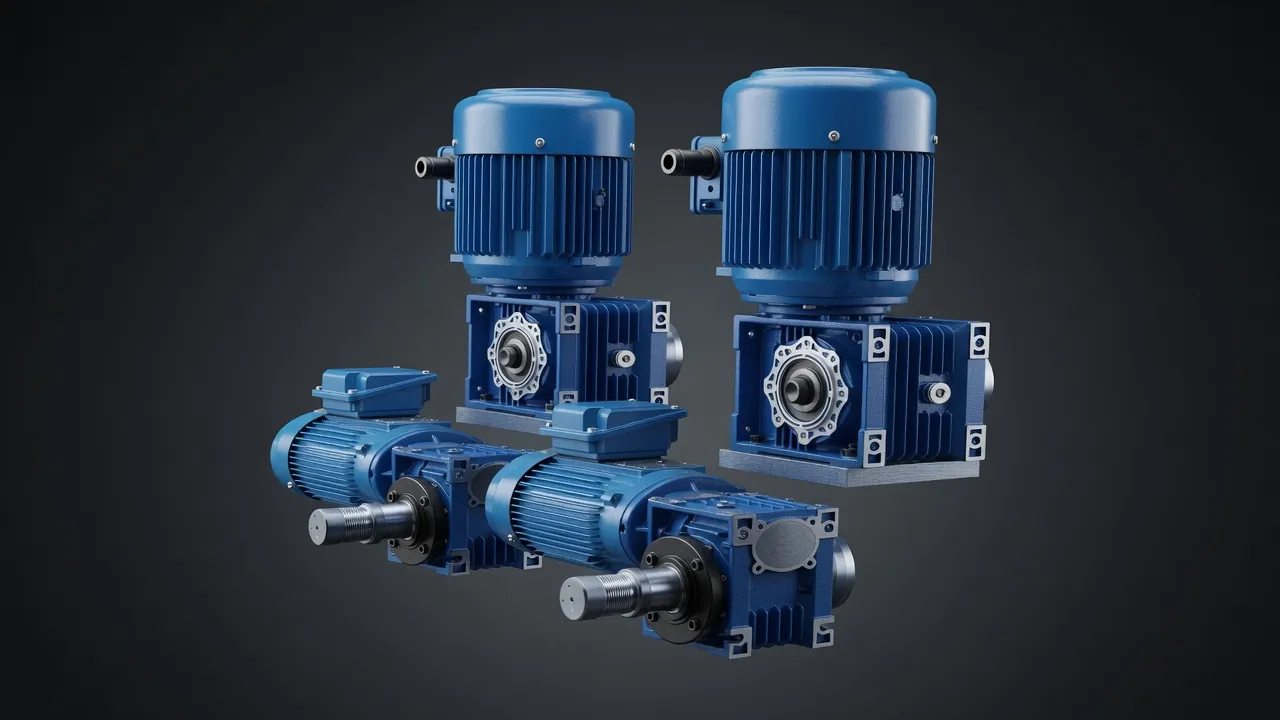
Gearbox bolted to mixer saddle frame. Motor mounts offset via a V-belt stage for ratio flexibility. Standard in large batch mixers where the motor needs service access.
IEC Flange Mount (WPDA)
Motor flange-mounted directly on gearbox. Compact, no V-belt to maintain. Common on mid-size ribbon blenders where the driveline length is constrained.
Hollow Shaft (WPKA)
Gearbox slides over the agitator stub shaft and is held by a torque arm. Eliminates coupling hardware inside the food-zone area. Preferred in open-top mixers.
Vertical Output (WPO)
Motor and gearbox mount horizontally above the mixer, with the output shaft turning a vertical agitator. Common in planetary and orbital mixers.
Ratio Selection for Mixer Speed
| Application | Agitator Speed | Ratio Needed | Frame (1440 rpm) | Output Torque |
|---|---|---|---|---|
| Liquid agitator, thin batter | 120 rpm | 1:10+ | WPA 60, 1:10 | 71 N·m |
| Bread dough kneader | 50 rpm | 1:30 | WPA 100, 1:30 | 277 N·m |
| Ribbon blender, granules | 40 rpm | 1:40 | WPA 120, 1:40 | 392 N·m |
| Heavy dough kneader | 30 rpm | 1:50 | WPA 135, 1:50 | 626 N·m |
| Paddle granulator, powder | 20 rpm | WPE 1:100 | WPE 80-135 | 1400 N·m |
Output torque from WP single-stage at 1500 r/min rated input.
Frequently Asked Questions
Get a Sized Recommendation
Share your load data and target speed — our team at Condell Park NSW returns torque calculations and a stock check within one business day.