
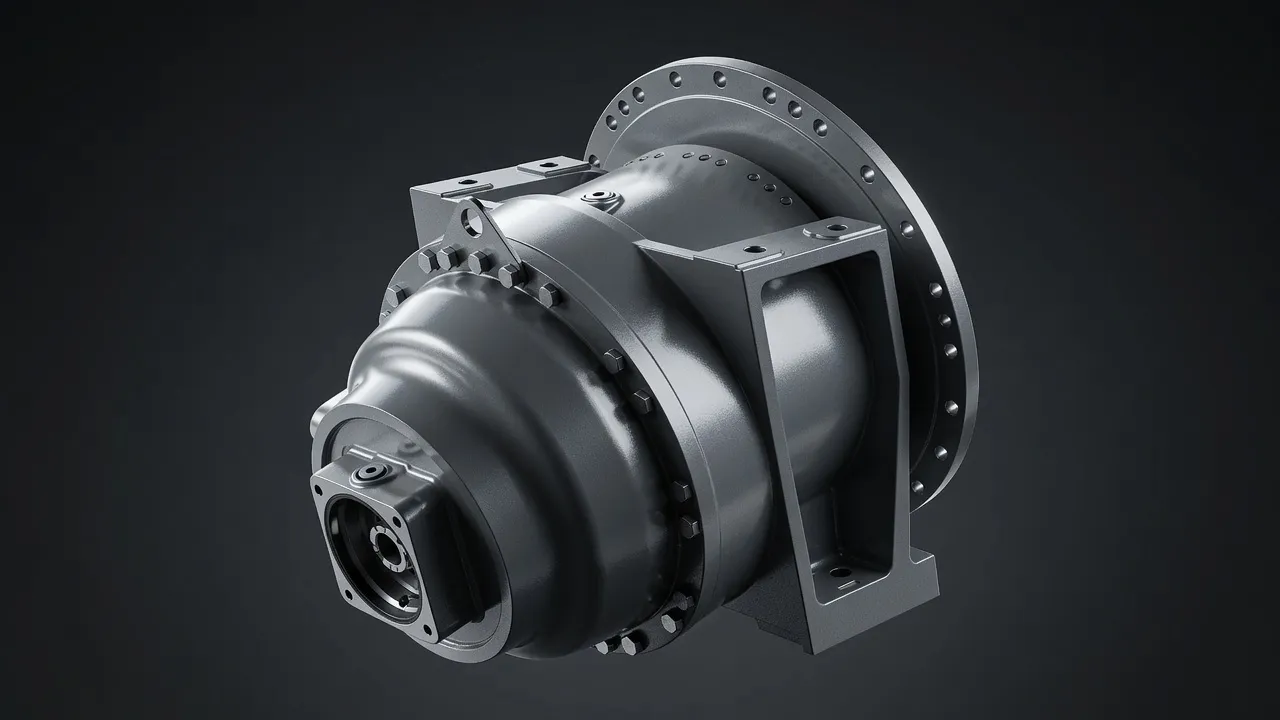
A planetary gearbox in a linear actuator converts the rotary output of a servo or stepper motor into linear force and displacement through a ball screw, lead screw, or rack-and-pinion stage. The gearbox sits at the centre of the actuator’s performance characteristics: it determines the force the actuator can exert (by multiplying motor torque), the speed the actuator achieves (by setting the ratio between motor speed and screw speed), and the positioning resolution (by controlling how much linear movement results from each motor encoder count). Specifying the planetary gearbox correctly is the single most important mechanical design decision in a high-performance linear actuator.
Force, Speed, and Ratio: The Fundamental Trade-off
The relationship between gearbox ratio and actuator performance is governed by two equations: actuator force = motor torque × ratio × 2π ÷ screw lead × efficiency, and actuator speed = motor speed × screw lead ÷ ratio. These equations immediately show the trade-off: increasing the ratio by 2× doubles the maximum force but halves the maximum speed. For a given motor and screw, there is a ratio that maximises power output (force × speed) — this occurs when the reflected load inertia equals the motor inertia, which for a screw system is when ratio = √(screw_mass / motor_rotor_inertia × screw_lead / (2π)).
| Application | Required Force | Required Speed | Screw Lead | Motor Torque | Required Ratio |
|---|---|---|---|---|---|
| Small automation gate | 500 N | 200 mm/s | 5 mm | 0.5 N·m | 1:3.2→ 1:3 |
| CNC Z-axis quill | 5 000 N | 50 mm/s | 5 mm | 2.0 N·m | 1:16→ 1:15 |
| Injection mould clamp | 50 000 N | 20 mm/s | 10 mm | 5.0 N·m | 1:64→ 1:60 |
| Aircraft landing gear | 100 000 N | 5 mm/s | 5 mm | 10 N·m | 1:100→ 1:100 |
| Stage lift (slow) | 20 000 N | 2 mm/s | 5 mm | 8.0 N·m | 1:38→ 1:40 |
Required ratio = force × lead ÷ (motor torque × 2π × efficiency). Efficiency assumed 0.90.
Ball Screw vs Lead Screw: Efficiency Implications
Ball screws achieve 90–95% linear conversion efficiency (rotary torque to linear force), while lead screws (ACME or trapezoidal thread) achieve only 30–50%. This difference matters for the planetary gearbox in two ways: first, the gearbox must be sized for the higher required input torque if a lead screw is used; second, the self-locking property of a lead screw (at low lead angles) means the actuator may not need a separate brake to hold position when power is removed — the lead screw itself holds. Ball screws are not self-locking, so a brake must be provided by the motor or gearbox if the actuator must hold under load without continuous motor current.
Backlash and Repeatability in Precision Linear Actuators
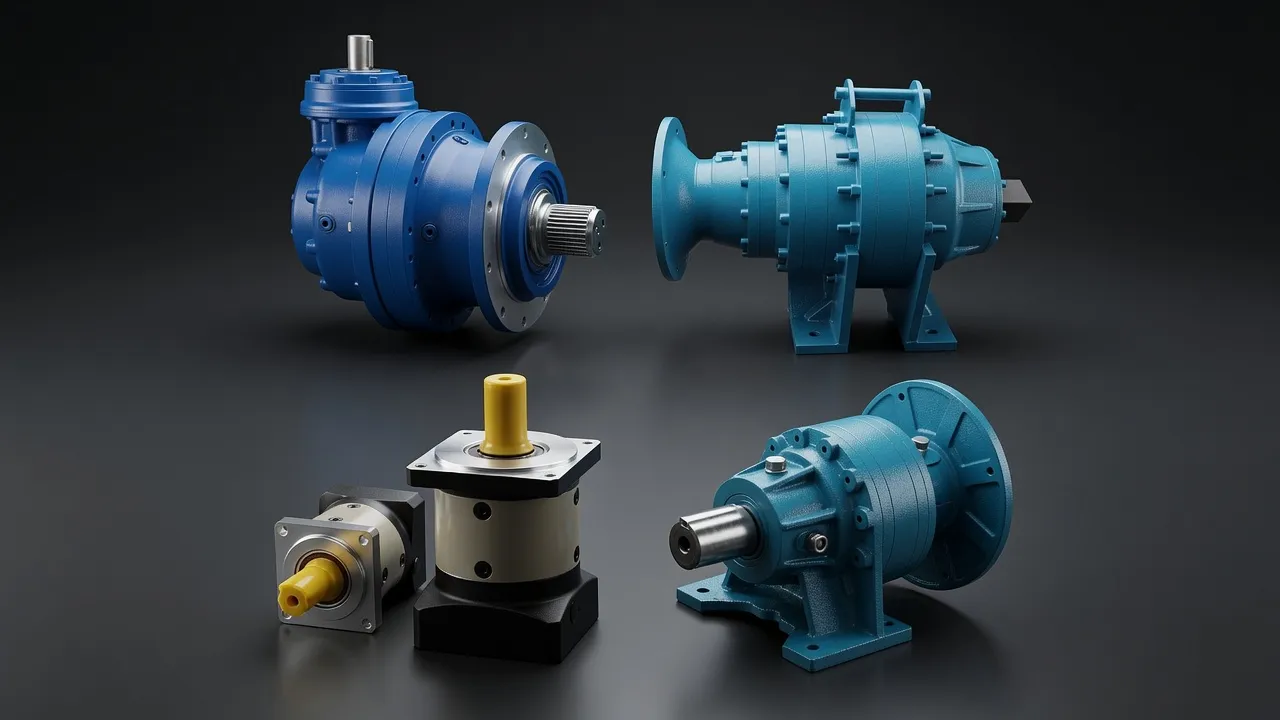
The backlash budget for a linear actuator is shared between the gearbox (arc-minute backlash converted to linear by the screw pitch) and the ball screw or lead screw nut (linear backlash from nut wear). The AD047 right-angle planetary series provides right-angle output in a compact format suited to actuators where the motor must be perpendicular to the screw axis — common in machine tool and automation designs where envelope width is constrained. The AF075 flange output series provides inline high-ratio planetary reduction for actuators requiring high force in a direct coaxial configuration.
Self-Locking in Planetary-Driven Actuators
A planetary gearbox does not self-lock — if the motor is de-energised, the load can back-drive the screw, through the gearbox, and spin the motor. This means a separate brake is required on any actuator that must hold position under load without continuous motor current. The brake may be mounted on the motor shaft (most compact) or on the gearbox input shaft (allows independent brake sizing). The brake spring force must be sufficient to hold the worst-case backdrive torque, which equals the maximum actuator force × screw lead ÷ (2π × screw efficiency). For a 50 000 N clamp force with a 10 mm lead ball screw at 92% efficiency: motor brake torque = 50 000 × 0.01 ÷ (6.28 × 0.92) = 86.5 N·m — much higher than most motor brakes. A gearbox-mounted brake or a dedicated shaft-mounted brake between gearbox and screw is the practical solution.
Environmental Protection for Industrial Actuator Applications
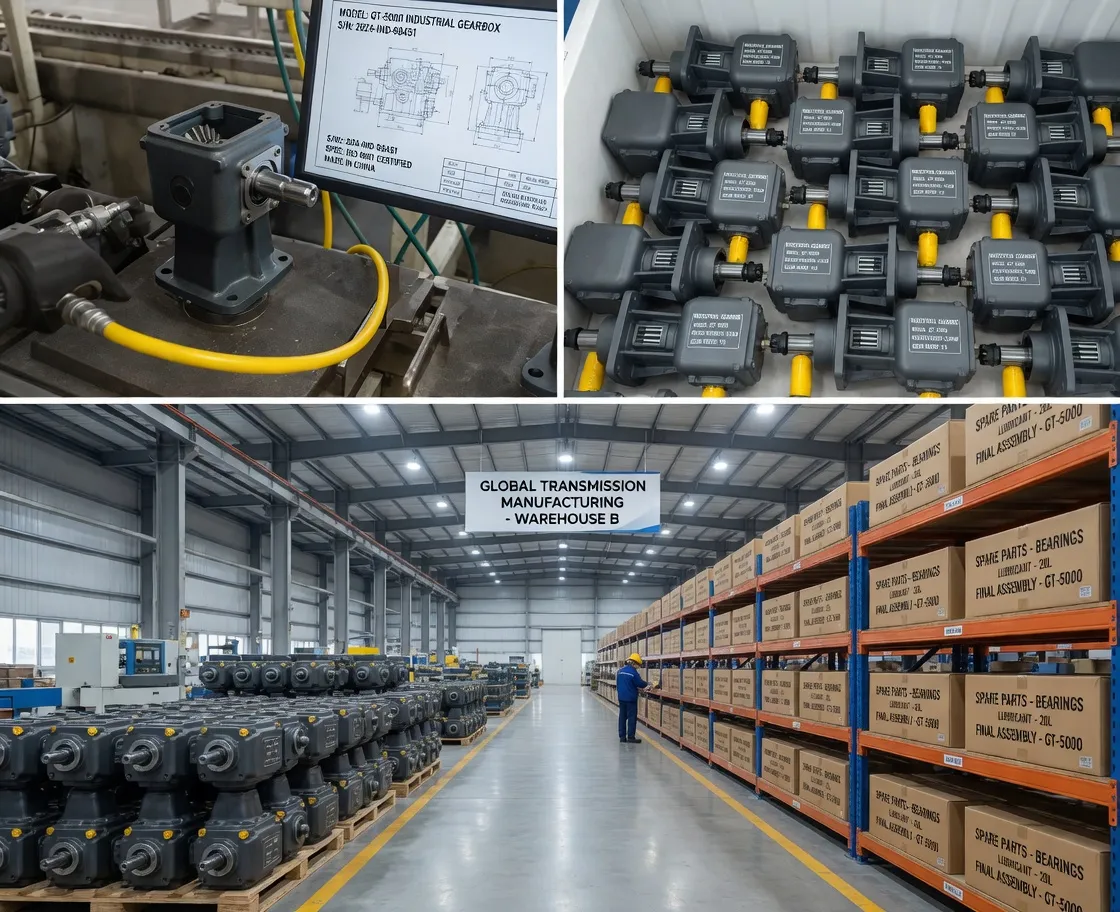
Industrial linear actuators operate in environments ranging from cleanroom semiconductor fabs to outdoor construction equipment. The planetary gearbox sealing must match the operating environment. For indoor automation, IP54 is generally adequate. For outdoor, wash-down, or high-humidity applications, IP65–IP67 is required. For food processing or pharmaceutical actuators where lubricant contamination is a food-safety concern, specify NSF H1 grease and Viton seals. The PGV planetary gearbox series provides a reference for compact precision planetary drives used in automation actuators across a range of industrial environments.
Frequently Asked Questions
Speak with a Planetary Drive Specialist
Share your torque requirement, ratio, and application environment — our team at Condell Park NSW returns a sized recommendation and stock check within one business day. No obligation.