
The cutter head drive on a tunnel boring machine (TBM) is the most powerful planetary gearbox installation in any civil construction project — a large-diameter TBM for a metro rail tunnel may drive 8–16 independent planetary gearboxes in parallel, each producing 500–1 500 kW of output to rotate a cutter head 10–14 m in diameter against rock or mixed ground. The engineering of these drives combines the highest torque densities available in industrial planetary gearing with the operational reliability demands of an underground machine that cannot be withdrawn from a tunnel for major service without destroying weeks of excavation progress.
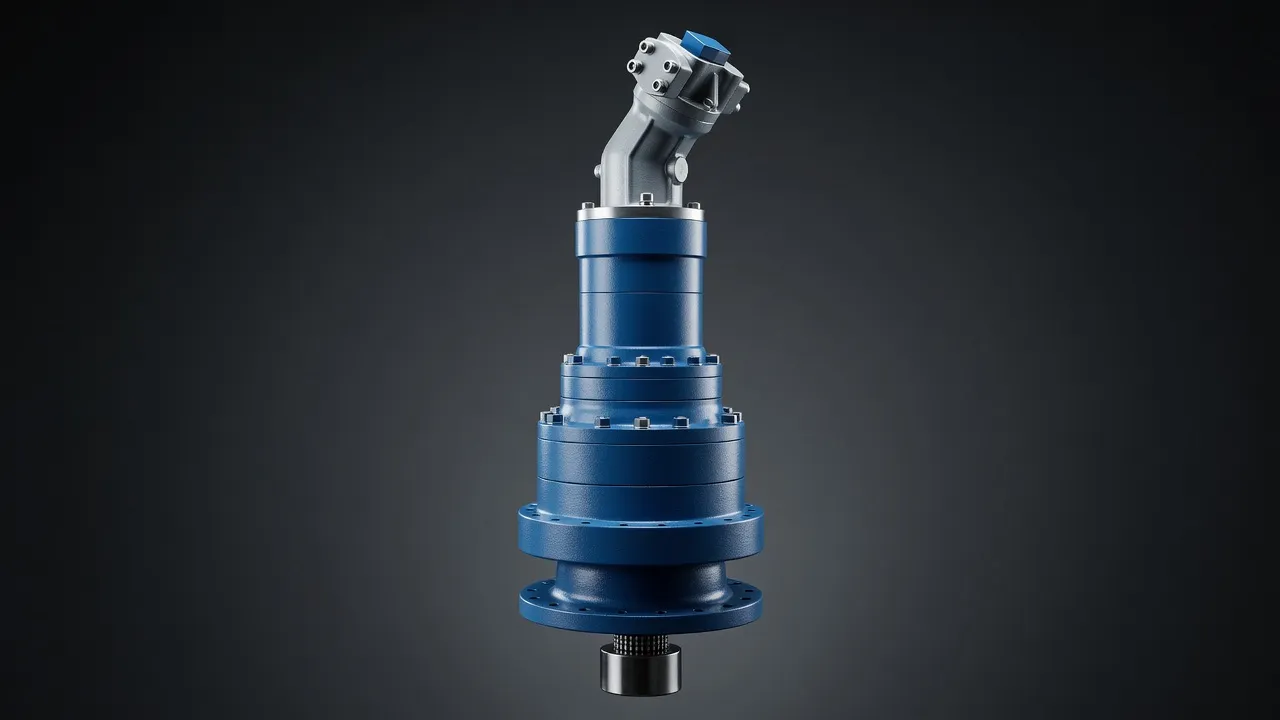
TBM Drive Architecture and Multiple Parallel Gearboxes
TBM cutter heads are driven by multiple electric motors, each coupled to a planetary gearbox whose output pinion meshes with the cutter head ring gear. Using multiple independent drive units rather than a single central drive allows the cutter head to continue rotating (at reduced torque) if one or two units fail — critical for maintaining excavation progress. A 10 m diameter TBM for Sydney Metro construction might use 12 drive units each producing 900 kW at the cutter head ring gear, giving a total installed power of 10.8 MW. The ring gear may be 8–9 m in diameter, with each drive pinion providing 1/12 of the total ring torque.
Ratio Selection for Cutter Head Speed
Cutter head rotation speed is measured in rpm or in peripheral cutting velocity (metres per second at the cutter disc tip). Optimal cutting velocity for hard rock is approximately 3–5 m/s at the outermost disc, while soft ground TBMs operate at lower velocities. For a 10 m cutter head (5 m radius) at 3 m/s peripheral velocity: angular speed = 3 ÷ 5 = 0.6 rad/s = 5.7 rpm. From an 1 500 rpm electric motor, the required ratio is 1 500 ÷ 5.7 = 263:1 — requiring a two-stage planetary at typical stage ratios of 5:1 to 7:1 per stage (giving 25:1 to 49:1 two-stage), combined with the pinion-to-ring-gear final reduction of 6:1 to 10:1.
| TBM Diameter | Cutter Head RPM | Drive Unit Count | Drive Unit Output | Ring Gear Diameter | Total Installed Power |
|---|---|---|---|---|---|
| 4–6 m (utility tunnel) | 6–8 rpm | 4–6 | 300–500 kW each | 3.5–5 m | 1.5–3 MW |
| 6–8 m (road tunnel) | 5–7 rpm | 6–8 | 500–800 kW each | 5–7 m | 3–6 MW |
| 9–12 m (metro rail) | 4–6 rpm | 8–12 | 800–1 200 kW each | 7–10 m | 6–14 MW |
| 12–16 m (large metro) | 3–5 rpm | 10–16 | 1 000–1 500 kW each | 10–14 m | 10–24 MW |
| Over 16 m (expressway) | 2–4 rpm | 12–24 | 1 200–2 000 kW each | 13–18 m | 15–48 MW |
Values are indicative; actual specifications depend on ground conditions and TBM contractor specification.
Torque Density and Housing Design
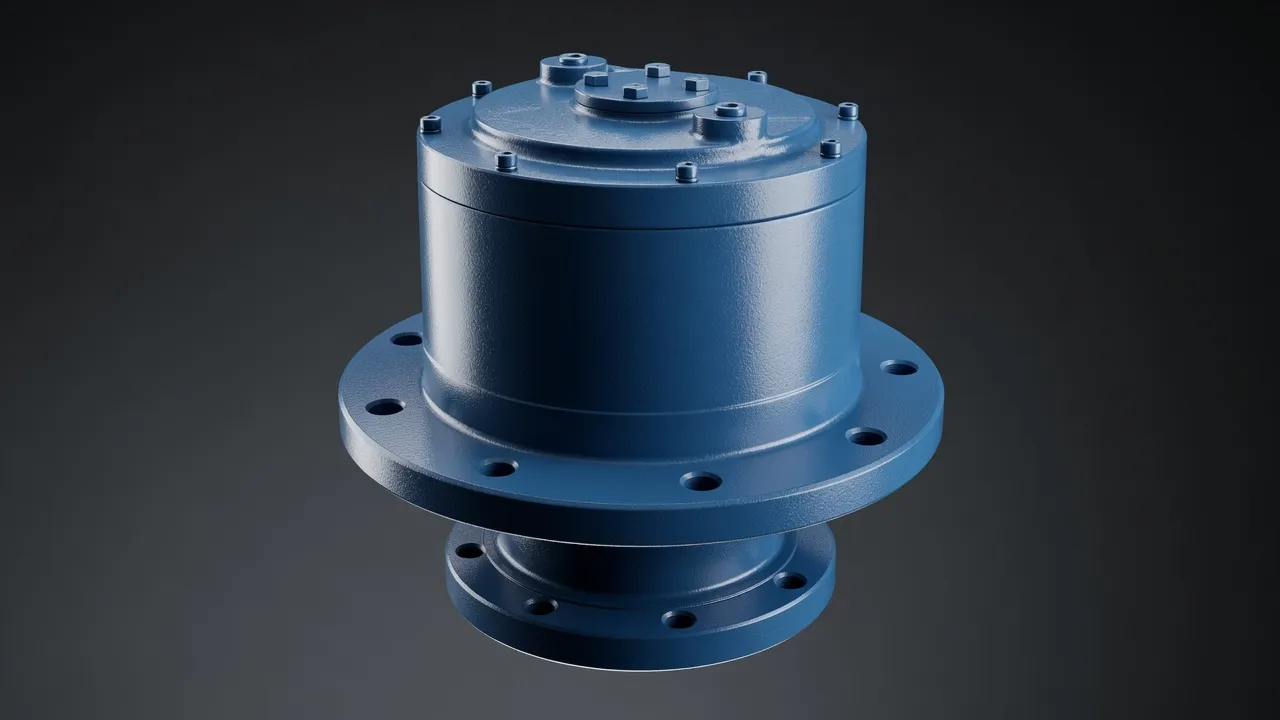
TBM drive units must be as compact as possible to fit within the cutter head shield diameter while maximising the number of drive units (and therefore total power). This places the highest torque density demand on the planetary gearbox of any application — the gear mesh must transmit the maximum possible torque per unit of gear material volume. Case-hardened and ground gears of 18CrNiMo7-6 or 17CrNiMo6 steel, shot-peened tooth roots, and precision-finished tooth profiles are the minimum specification. Many TBM gearboxes use nitrided or plasma-nitrided ring gears to achieve surface hardness without the distortion risk of carburising a large ring gear.
The EPB high-precision torque planetary series demonstrates the torque-density design principles used in TBM drives in an industrial format — case-hardened gears, precision assembly, and high shaft load ratings in a compact housing. For the largest and most demanding TBM drives, the EPX heavy planetary series provides the structural rigidity and gear safety factors required for sustained high-power operation underground.
Condition Monitoring in an Inaccessible Environment
A TBM drive unit that fails mid-drive requires either repair in the confined space of the TBM drive chamber (possible for minor repairs) or withdrawal of the TBM from the tunnel face (impossible in most cases without destroying weeks of excavation progress). This inaccessibility makes condition monitoring of TBM planetary gearboxes more important than in almost any other application. Vibration sensors on each gearbox, oil particle counters, and oil temperature sensors feed into a real-time monitoring system that alerts the TBM operator to developing faults before they become failures. Oil analysis (taken from each gearbox at every service interval, typically 250 hours) tracks the rate of gear and bearing wear debris accumulation.
Frequently Asked Questions
Speak with a Planetary Drive Specialist
Share your torque requirement, ratio, and application environment — our team at Condell Park NSW returns a sized recommendation and stock check within one business day. No obligation.