
The single-speed reducer in an electric vehicle is one of the most elegant applications of planetary gearing: a fixed ratio of 8:1 to 12:1 that matches the motor’s peak torque and peak speed to the vehicle’s traction requirements across the full speed range from standstill to 200+ km/h. Unlike internal combustion powertrains with 6–10 gears to keep the engine in its narrow power band, an electric motor produces maximum torque from zero speed and maintains usable power across a 10:1 speed range, so a single fixed ratio serves the entire operating envelope. The planetary gearbox achieves this ratio in a format that is lighter, more compact, and more efficient than any multi-stage parallel-shaft alternative.
Why a Single Stage is Sufficient for Electric Vehicles
A typical EV traction motor produces peak torque of 200–400 N·m and spins to 12 000–18 000 rpm. The drive wheel at 200 km/h rotates at approximately 1 200 rpm (for a 640 mm diameter tyre). The required ratio is therefore 12 000 ÷ 1 200 = 10:1. A single-stage planetary gearbox achieves 8:1 to 10:1 in a package that fits within the space envelope of a conventional differential, with efficiency above 97% at peak speed — losses of only 3% at the highest speed the vehicle normally operates.
Ratio Selection for EV Performance Optimisation
The optimal ratio for an EV powertrain balances three competing requirements: maximum torque at the wheel for acceleration (favours higher ratio), maximum vehicle speed at the motor’s peak rpm (favours lower ratio), and motor operating efficiency at the most common driving speeds (typically 60–120 km/h on Australian roads, where the motor should be near its peak efficiency island). For a high-performance passenger car targeting 0–100 km/h in under 4 seconds and a top speed of 250 km/h with a motor peaked at 16 000 rpm, the ratio works out to approximately 9:1 to 10:1.
| Vehicle Class | Motor Peak RPM | Target Top Speed | Wheel Diameter | Calculated Ratio | Typical Selection |
|---|---|---|---|---|---|
| City EV, 150 km/h | 12 000 | 150 km/h | 620 mm | 8.3:1 | 8:1 or 8.5:1 |
| Passenger sedan, 200 km/h | 14 000 | 200 km/h | 640 mm | 8.6:1 | 8.5:1 or 9:1 |
| Performance sedan, 250 km/h | 16 000 | 250 km/h | 660 mm | 7.9:1 | 8:1 |
| Electric SUV, 180 km/h | 12 000 | 180 km/h | 720 mm | 6.3:1 | 6.5:1 or 7:1 |
| Electric bus, 100 km/h | 6 000 | 100 km/h | 800 mm | 6.4:1 | 6:1 or 6.5:1 |
Wheel diameter includes tyre height; use rolling radius (approximately 96% of overall radius) for precision.
Noise, Vibration, and Harshness in EV Planetary Drives
In an internal combustion vehicle, gear noise is masked by engine noise — the combustion cycle creates broadband noise that drowns out gear whine. In an EV, the cabin is acoustically quiet, and any gear noise from the planetary reducer is immediately perceptible to occupants. This places NVH (noise, vibration, harshness) requirements on EV planetary gearboxes that are far stricter than any industrial application. Gear tooth profile corrections — tip relief, lead crowning, and helix angle optimisation — are applied to reduce the transmission error that generates gear mesh noise.
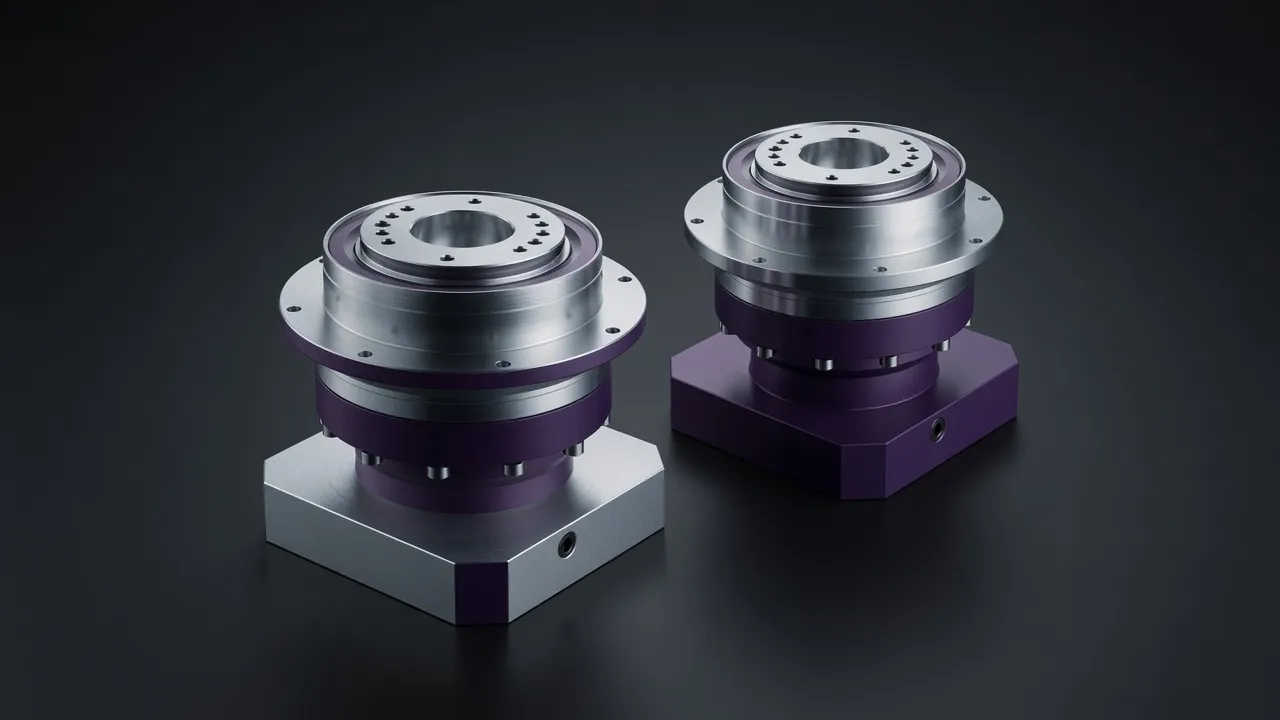
The AB090 high-precision planetary series uses precision ground helical planet gears with optimised tooth profile corrections that reduce gear mesh noise to below 65 dB(A) at 1 m distance at rated speed — comparable to the noise floor of a conventional vehicle on smooth road. The EPG one-stage precision planetary series applies similar noise reduction techniques in a modular configuration that allows axial length optimisation for tight packaging in e-axle installations.
Efficiency Across the Operating Range
EV range is directly determined by powertrain efficiency — every percentage point of gearbox efficiency recovered translates to approximately 0.5–1% more range for the same battery capacity. A planetary EV reducer operating at 97% efficiency at 120 km/h cruise loses 3% of battery energy as heat in the gear mesh and bearings. At 97.5% efficiency, the loss drops to 2.5% — a 17% reduction in gearbox losses that adds 0.5–1% to the vehicle range. Over 400 km of range and a 10-year vehicle life, this seemingly small difference accumulates to hundreds of kilowatt-hours of energy and a meaningful reduction in lifetime battery charge cycles.
Thermal Management in Continuous High-Speed Operation
An EV planetary reducer at 16 000 rpm input generates heat from gear mesh friction, bearing friction, and windage losses (the churning of oil by fast-rotating gears). At high vehicle speeds on a motorway, this heat generation is continuous — unlike an acceleration event that lasts only seconds. The oil in the EV reducer must be cooled either by circulating it through a heat exchanger (water-cooled oil cooler integrated with the vehicle thermal management system) or by designing the housing to dissipate heat directly into the motor cooling jacket. Most EV manufacturers choose the integrated thermal management approach because it also allows the reducer oil to be pre-warmed during cold morning starts by routing warm coolant through the oil cooler in reverse. For comparable precision planetary drives used in servo positioning systems, the VRV040 servo-grade precision worm gearbox provides a reference point for alternative compact precision drive approaches.
Frequently Asked Questions
Speak with a Planetary Drive Specialist
Share your torque requirement, ratio, and application environment — our team at Condell Park NSW returns a sized recommendation and stock check within one business day. No obligation.