
Offshore wind turbines represent the most hostile operating environment for any industrial gearbox: salt spray, condensation cycling, high humidity, corrosion from marine atmosphere, inaccessibility for maintenance (weather windows of only 60–100 days per year at many North Sea and Bass Strait sites), and the requirement to operate reliably for at least 25 years between major overhauls. Every aspect of the planetary gearbox specification — materials, coatings, sealing system, lubricant, condition monitoring — must be elevated above the already demanding onshore standard to meet the offshore lifecycle requirements.
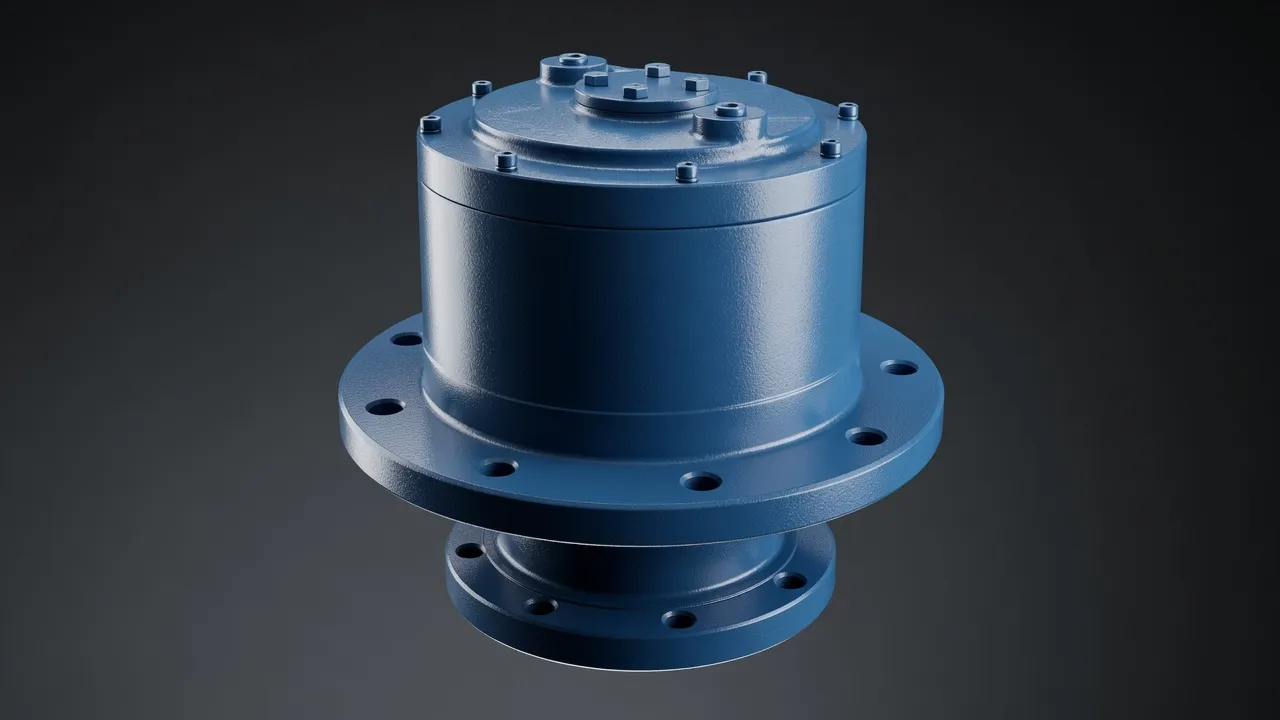
Marine Atmosphere Corrosion: The Design Challenge
A nacelle 80–120 m above the sea surface is continuously exposed to salt-laden air, condensation on cold metal surfaces, and the occasional wave spray during storm events. The corrosion rate of unprotected carbon steel in this environment is 0.1–0.3 mm per year — a gearbox housing that starts at 30 mm wall thickness could lose structural integrity within 50–100 years from corrosion alone, but the sealing surfaces and bearing fits deteriorate much earlier. The practical problem is not the bulk material loss but the corrosion products that contaminate the oil, accelerate gear and bearing wear, and eventually block the oil circulation system.
Sealing System Design for IP67 and Beyond
Offshore gearboxes are specified at IP67 as a minimum — sustained immersion to 1 m depth for 30 minutes — not because immersion actually occurs at nacelle height, but because the IP67 test provides a meaningful challenge to the sealing system that correlates well with 25-year marine atmosphere performance. The sealing challenge is particularly acute at the rotating shaft interfaces: the input shaft (rotor shaft or first stage planet carrier) and the output shaft (high-speed shaft to generator) must be sealed against marine atmosphere ingress while allowing the shaft to rotate freely with minimal seal friction loss.
Labyrinth + Lip Seal Combination
Labyrinth seal as the first barrier, preventing bulk spray from reaching the lip seal contact zone. The lip seal provides the final dynamic seal. Space between the two barriers is filled with grease that must be replenished at each service visit.
Magnetic Fluid Seals
Used on high-speed output shafts where lip seal heat generation is excessive. Magnetic fluid fills the gap between rotating and stationary parts — no contact friction, excellent sealing to IP67+. Expensive but effective for continuous high-speed duty.
Pressurised Nitrogen Breather
Gearbox internal atmosphere maintained at slight positive pressure with dry nitrogen. Any leak pathway is outward (from high to low pressure), preventing marine atmosphere ingress. Requires nitrogen supply at each service visit.
Sealed Bearing Cartridges
Planet shaft bearings are sealed and pre-greased for life rather than oil-bath lubricated. Eliminates the planet shaft bearing as an oil contamination source and allows predictable bearing service life calculation.
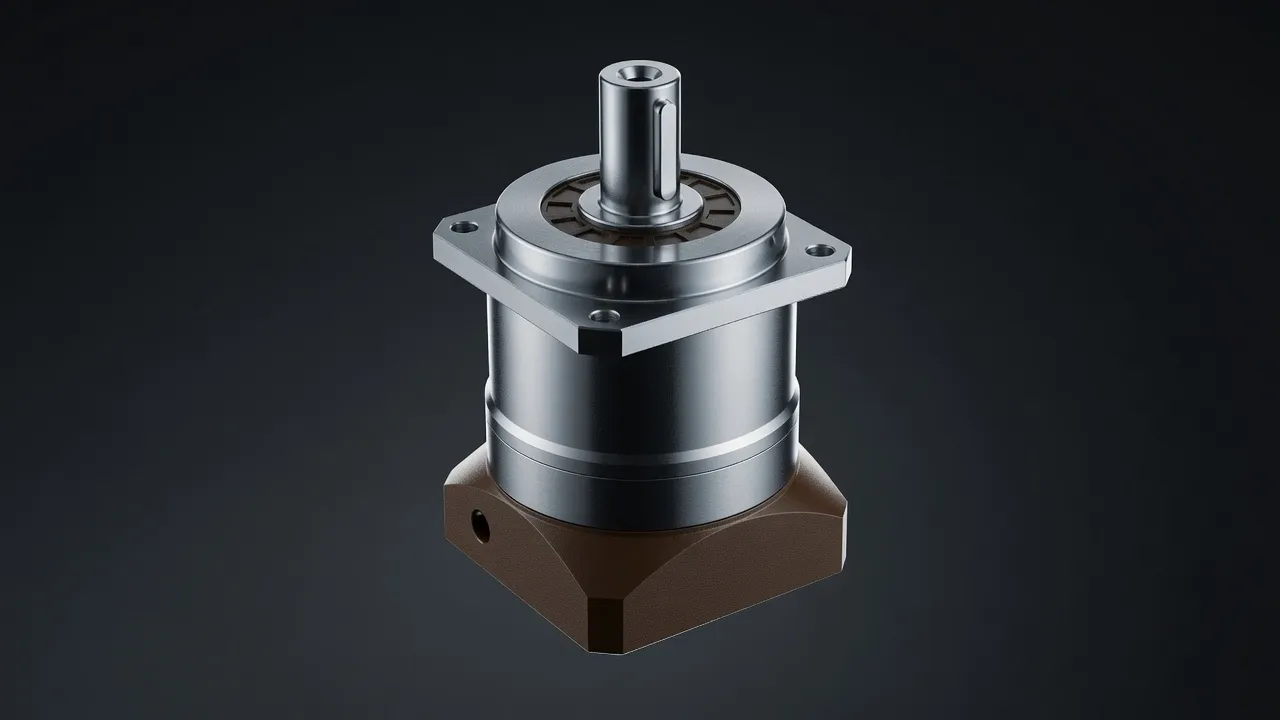
Corrosion Protection Specification for 25-Year Life
| Component | Material | Surface Treatment | Expected Life |
|---|---|---|---|
| Housing exterior | EN-GJS-400 ductile iron | Thermal spray zinc + 2-pack epoxy, 250 µm DFT | 25 years, recoat at 15 years |
| Gear teeth | 18CrNiMo7-6 case-hardened | Phosphate + EP oil film | 25 years with oil maintenance |
| Planet shaft | 16MnCr5 case-hardened | Precision ground, chrome plating at seal contact | 25 years |
| Fasteners | Grade 10.9 alloy steel | Hot-dip galvanised or A4 stainless | 25 years |
| Oil plugs and fittings | 316L stainless steel | Electropolished | 25 years |
| Seals | Viton (FKM) | — | 5–8 years, replace at service |
Specifications for Class S (offshore severe) wind turbine gearboxes per GL/DNV standard.
Lubrication System Requirements for Remote Operations
Offshore turbine oil changes are expensive — a jack-up vessel or crew transfer vessel plus technician time costs $50 000–$150 000 per turbine visit depending on site location and weather. This drives offshore gearbox lubrication systems toward longer oil service intervals (5+ years), online oil condition monitoring (continuous particle counters and water content sensors in the oil circuit), and oil top-up capability from ground level through a dedicated fill line in the tower. The EPG one-stage precision planetary gearbox series uses a pre-filled sealed housing with a sight glass visible from the ground level (on smaller turbines) to eliminate the need for nacelle access for routine oil level checks.
Condition Monitoring as an Operational Necessity
On an onshore turbine, a gearbox that develops an early-stage fault can be inspected within days of the alert. On an offshore turbine in Bass Strait or offshore Queensland, the same alert might not result in an inspection for 6–12 weeks depending on weather and vessel availability. This means condition monitoring systems must provide enough warning time for the fault to be managed through a planned vessel deployment rather than an emergency response. Vibration analysis on planetary gearboxes is more complex than on parallel-shaft gearboxes because the planet gear meshing frequencies are modulated by the planet carrier rotation — the characteristic frequency signatures require specialist signal processing software to interpret correctly. The EPB high-precision torque planetary series includes internal vibration monitoring access ports designed specifically for condition monitoring sensor mounting in offshore-standard installations.
For industrial applications requiring comparable offshore-grade reliability in a smaller format, the HRV104 high-temperature worm gearbox demonstrates the sealing and material selection principles applied in demanding environments, providing a useful reference point for specifying industrial drives in marine-adjacent locations.
Frequently Asked Questions
Speak with a Planetary Drive Specialist
Share your torque requirement, ratio, and application environment — our team at Condell Park NSW returns a sized recommendation and stock check within one business day. No obligation.