
Industrial 3D printers — FDM systems producing engineering-grade parts, pellet-fed large-format printers for architectural prototyping, and metal powder bed fusion platforms — place unusual demands on their material feed drive systems. The extruder drive must control filament or pellet feed rate to within ±1% at speeds ranging from near-zero (for fine detail) to maximum throughput (for infill), maintain consistent grip on the feedstock without slipping or crushing, and respond to sudden reversals (retraction) without the backlash or overshoot that causes stringing or under-extrusion. A precision planetary gearbox between the servo motor and the feed gear provides all three capabilities in a package that fits within the print head carriage.
Why Extruder Drives Need Planetary Gearboxes
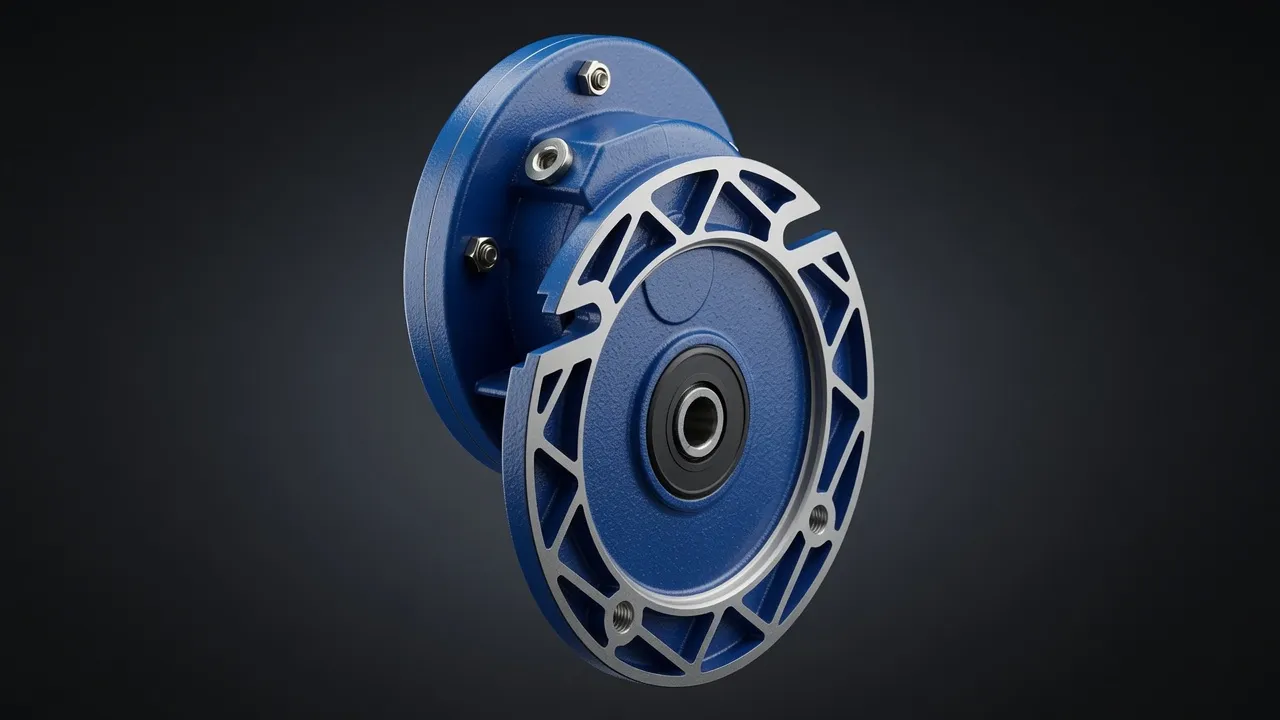
Desktop 3D printers typically use a direct-drive extruder (motor connects directly to the feed gear) or a Bowden extruder (motor remote from the print head). Industrial and professional printers — particularly pellet extruders producing parts in ABS, PEEK, or carbon-fibre-filled polymers — require much higher feed forces than a direct-drive motor can produce within the carriage weight budget. A compact planetary reducer with 5:1 or 10:1 ratio multiplies the motor torque by that factor, allowing a small, light servo motor to produce the grip force needed to drive viscous or abrasive materials through the heated zone.
Ratio Selection for Extruder Feed Drives
The ratio determines the balance between feed speed and feed force. A higher ratio produces more force but slower maximum feed rate. The target is the ratio that achieves the required maximum volumetric flow rate at a motor speed within its efficient operating range, while also providing sufficient torque to push the most viscous material specification through the nozzle at the minimum print speed.
| Printer Type | Material | Max Feed Force | Max Feed Speed | Ratio | Gearbox Series |
|---|---|---|---|---|---|
| Desktop pro, 0.4 mm nozzle | PLA, PETG | 40 N | 120 mm/min | 3:1–5:1 | AB042 or AF042 |
| Industrial FDM, 0.8 mm nozzle | ABS, ASA, PC | 80 N | 80 mm/min | 5:1–7:1 | AB060 or AF060 |
| High-temp, 0.4 mm | PEEK, PEI, Ultem | 120 N | 40 mm/min | 7:1–10:1 | AB060 or AB090 |
| Pellet extruder, large format | ABS/CF, PP/GF | 300+ N (screw torque) | Variable | 40:1–100:1 | EPG 1- or 2-stage |
| Metal bound filament | 316L, 17-4PH sinter | 200 N | 20 mm/min | 10:1–15:1 | AB090 or AB115 |
Feed force at nozzle varies with material viscosity, temperature, and nozzle diameter.
Retraction Speed and Backlash During Direction Reversal
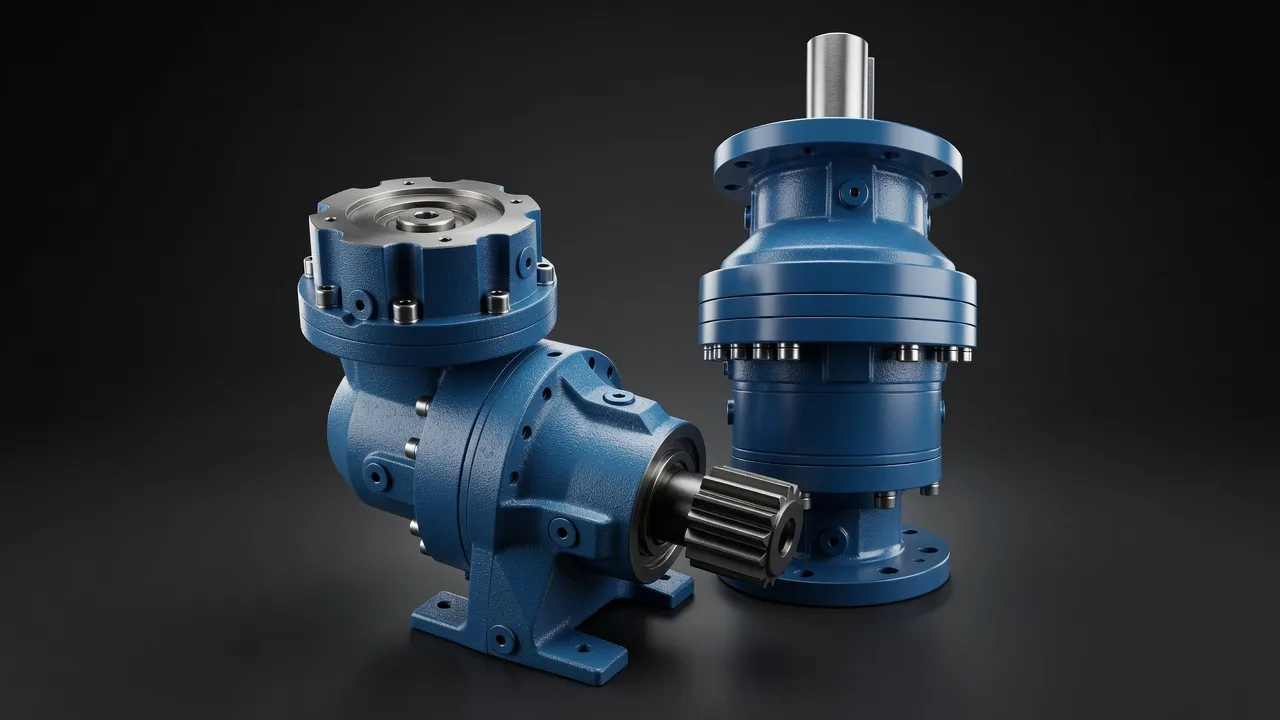
Retraction is the brief reversal of filament feed at the end of a print segment to reduce oozing during travel moves. A well-designed extruder retracts 1–5 mm of filament in 20–50 ms — requiring both high retraction speed and high torque (the material must be pulled back against the viscosity of the hot zone). Backlash in the planetary gearbox introduces a dead zone during retraction where the motor reverses but the feed gear does not — during this dead zone, the filament continues to ooze slightly. The result is a thin string of material between segments (stringing) that degrades part surface quality.
The AF042 flange output planetary series with its internal gear preload reduces backlash to below 3 arc-minutes, which at a typical feed gear pitch corresponds to less than 0.05 mm of linear backlash at the filament — not zero, but small enough to be compensated by a modest retraction distance setting in the slicer. The AF060 series extends this to higher torque extruder drives for larger nozzle sizes and more viscous materials.
Compact Packaging for Print Head Carriage
Every gram of carriage mass reduces the maximum printing acceleration the printer can achieve without introducing resonance artifacts in the printed part. A high-speed FDM printer targeting 500 mm/s print speed with 5 000 mm/s² acceleration generates 0.5 N of inertia force per gram of carriage mass — 100 g of unnecessary gearbox weight adds 50 N of inertia force that the motor must overcome. The AB042 compact series delivers 40 N·m output torque in a housing weighing under 400 g — the industry-leading torque-to-weight ratio for this frame size. Competing worm or parallel-shaft reducers at equivalent torque weigh 3–5× more.
Frequently Asked Questions
Speak with a Planetary Drive Specialist
Share your torque requirement, ratio, and application environment — our team at Condell Park NSW returns a sized recommendation and stock check within one business day. No obligation.