
A servo drive planetary gearbox is not simply a smaller version of an industrial planetary reducer — it is a precision component where backlash, torsional stiffness, and inertia matching take precedence over peak torque capacity. The servo motor it connects to responds to position commands in microseconds; any compliance in the mechanical transmission between motor and load appears as position error that the controller must compensate, and any backlash creates a dead-zone where motor movement does not produce load movement. In a high-performance CNC machine or robot joint, these effects are the difference between micrometre-level positioning accuracy and millimetre-level inaccuracy.
Backlash: Definition and Its Effect on Servo Performance
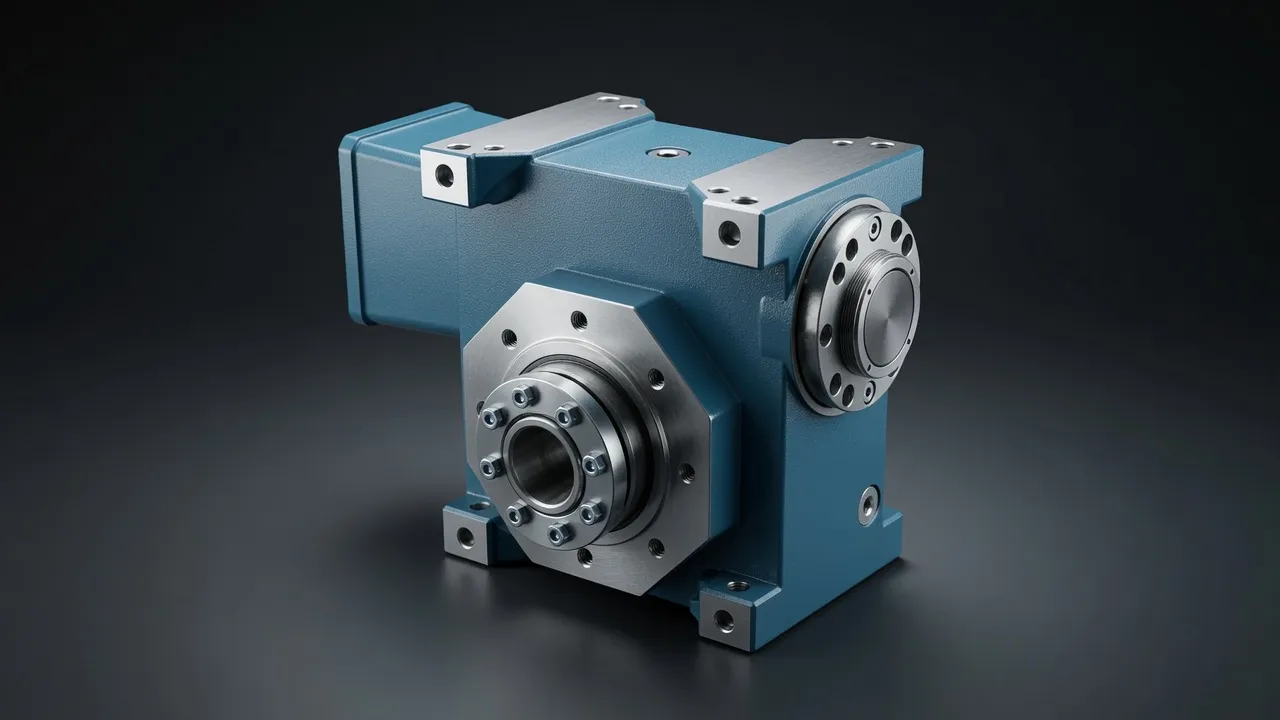
Backlash in a servo planetary gearbox is the angular free play at the output shaft when the input shaft is held stationary and the output is rotated in both directions. It is measured in arc-minutes (1 arc-minute = 1/60 of a degree = 0.000291 radians) and directly limits the positioning accuracy of the servo system. A gearbox with 3 arc-minutes of backlash contributes ±1.5 arc-minutes of position uncertainty at the output shaft, regardless of how accurate the servo motor and encoder are. For a servo driving a 500 mm diameter rotary table, 1.5 arc-minutes of angular uncertainty at the load translates to ±0.22 mm of linear position uncertainty at the table rim — far too much for any precision machining application.
Torsional Stiffness and Dynamic Response
Torsional stiffness (sometimes called rigidity) is the ratio of output torque to output shaft angular deflection — expressed in N·m per arc-minute or N·m/rad. A gearbox with high torsional stiffness transmits the motor’s dynamic torque commands to the load with minimal angular deflection and without oscillation. Low torsional stiffness allows the gearbox to flex under load, which introduces a resonant frequency into the servo loop — the gearbox acts as a spring between the motor inertia and the load inertia, creating a mechanical resonance that limits the servo loop bandwidth and ultimately the achievable positioning speed and accuracy.
| Gearbox Frame | Rated Output Torque | Backlash (standard) | Torsional Stiffness | Max Input Speed |
|---|---|---|---|---|
| AB042 (Apex-compatible) | 40 N·m | ≤3 arc-min | 7 Nm/arc-min | 6 000 rpm |
| AB060 | 75 N·m | ≤3 arc-min | 14 Nm/arc-min | 6 000 rpm |
| AB090 | 120 N·m | ≤3 arc-min | 23 Nm/arc-min | 5 000 rpm |
| AB115 | 200 N·m | ≤3 arc-min | 38 Nm/arc-min | 4 500 rpm |
| AB142 | 340 N·m | ≤3 arc-min | 70 Nm/arc-min | 4 000 rpm |
| AB180 | 500 N·m | ≤3 arc-min | 120 Nm/arc-min | 3 500 rpm |
Standard backlash ≤3 arc-min. Low-backlash option ≤1 arc-min available on request.
Inertia Matching: The Often-Overlooked Parameter
A servo motor performs best when the reflected load inertia at the motor shaft is within 1:1 to 5:1 of the motor rotor inertia. If the load inertia is much larger than the motor inertia, the motor cannot accelerate the load quickly — increasing the gearbox ratio reduces the reflected inertia by the square of the ratio. Doubling the gearbox ratio reduces the reflected load inertia by a factor of four. This is why servo applications often use higher ratios than torque alone would require — the ratio is chosen to bring the reflected inertia within the motor’s manageable range for fast dynamic response.
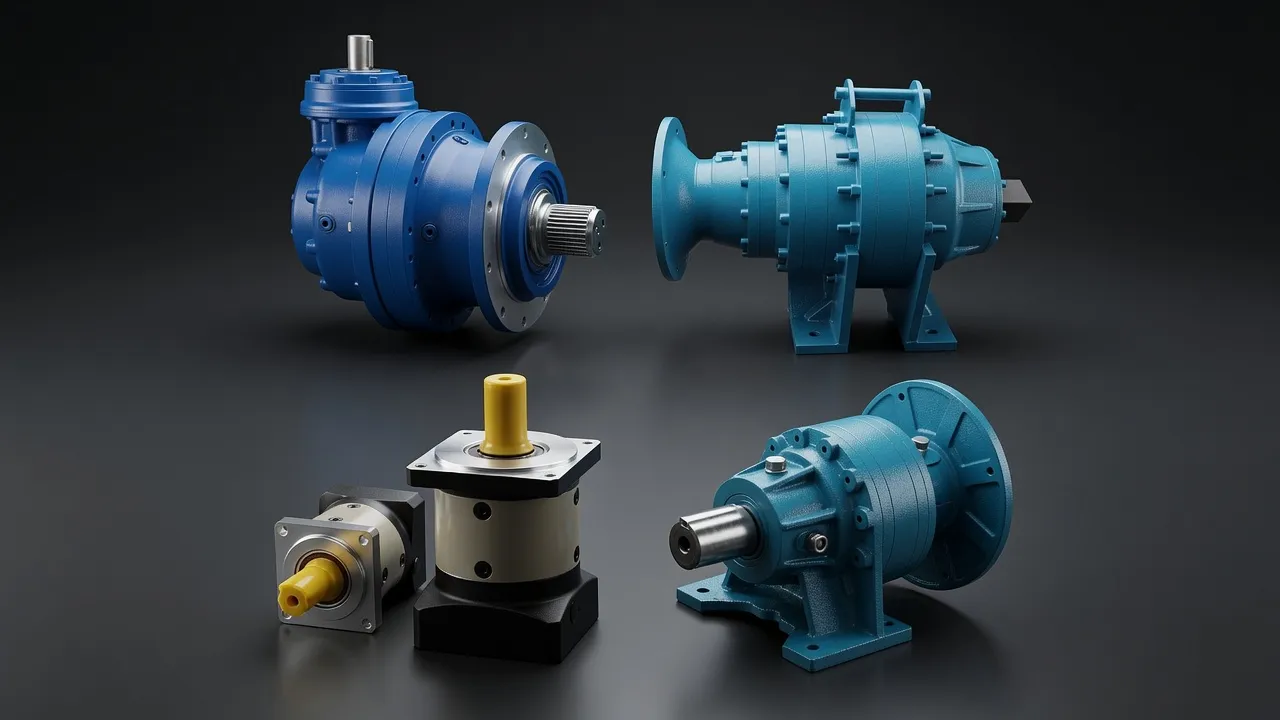
The AB042 high-precision planetary gearbox demonstrates the compact torque density that makes precision planetary gearboxes the standard for servo applications. The AB090 series provides higher torque in the same flange standard, allowing motor-gearbox pairs to be specified across a full torque range with a consistent mechanical interface.
Mounting Interface: The B5 Flange Standard
Servo planetary gearboxes are supplied with an IEC B5 input flange that accepts servo motors with the corresponding flange and pilot diameter. The AB series (Apex-compatible) maintains exact dimensional compatibility with the Apex Dynamics standard, allowing drop-in replacement of Apex units without any mechanical modification. This compatibility is particularly important in Australian manufacturing plants where existing servo systems use Apex gearboxes — the AB060 series provides a direct replacement with equivalent or better backlash and torsional stiffness performance.
Frequently Asked Questions
Speak with a Planetary Drive Specialist
Share your torque requirement, ratio, and application environment — our team at Condell Park NSW returns a sized recommendation and stock check within one business day. No obligation.