
The travel drive on a hydraulic excavator propels the machine across the ground on crawler tracks — from site positioning at up to 6 km/h to digging setup movements at centimetre precision. The planetary gearbox inside the travel motor assembly must deliver enough tractive force to climb grades of 35°, push through clay, pull the machine out of a bog, and propel it at maximum track speed across flat ground — all from the same hydraulic motor and gearbox combination. The ratio needed to reconcile low-speed high-torque requirements with the machine’s maximum travel speed makes the planetary gearbox the only practical choice within the space constraints of the undercarriage.
Track Drive Architecture: Two or Three Planetary Stages
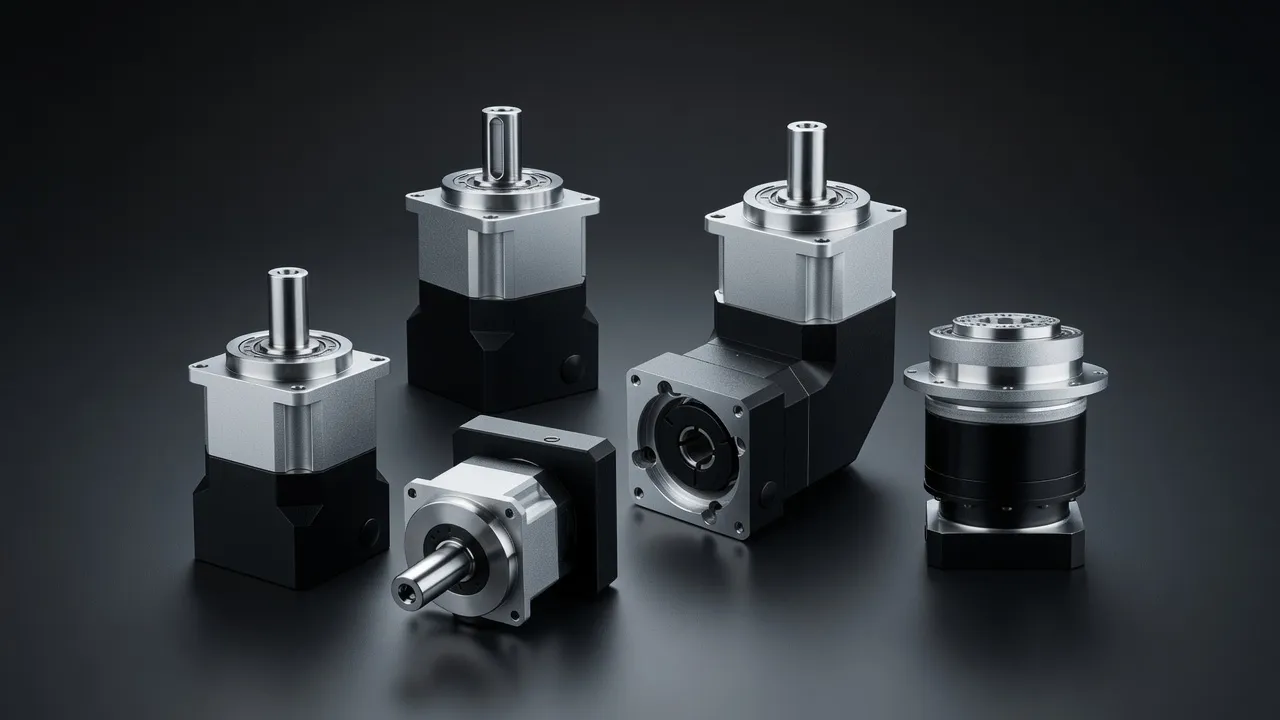
Most excavator travel motors use two or three planetary stages stacked concentrically inside the track sprocket hub. The hydraulic travel motor mounts at the back of the assembly; the planetary stages reduce the motor speed from 2 000–4 000 rpm to the 20–60 rpm at which the track sprocket needs to rotate for the target travel speed. The outer ring gear of the final stage is fixed to the track frame; the planet carrier of the final stage connects to the sprocket hub, which is the rotating output. This concentric design integrates the gearbox within the sprocket hub volume, keeping the undercarriage width to a minimum.
| Excavator Class | Rated Tractive Force | Travel Speed | Sprocket RPM (max) | Overall Ratio | Stage Count |
|---|---|---|---|---|---|
| Mini 3–5 t | 35 kN per side | 5 km/h | 35 rpm | 58:1 | 2-stage |
| Mid 10–15 t | 80 kN per side | 4 km/h | 28 rpm | 90:1 | 3-stage |
| Standard 20–30 t | 150 kN per side | 3.5 km/h | 24 rpm | 110:1 | 3-stage |
| Large 50–70 t | 300 kN per side | 2.5 km/h | 17 rpm | 150:1 | 3-stage |
| Mining 100+ t | 600 kN per side | 2 km/h | 13 rpm | 200:1 | 3-stage |
Travel speed calculated from sprocket RPM and track pitch/circumference.
Tractive Force, Slope Climbing, and Maximum Torque Events
The maximum torque event in an excavator travel drive is not high-speed travel — it is an attempted track pull-out from deep mud or a stalled push against a solid obstacle. In this condition, the hydraulic circuit delivers maximum pressure to the travel motor, which produces maximum torque regardless of output speed (the machine may be stationary). All of this torque passes through the planetary gearbox at maximum ratio, producing the highest possible output torque at the sprocket. For a 20-tonne excavator with a 150 kN rated tractive force per side and a 230 mm sprocket radius: output torque = 150 000 × 0.23 = 34 500 N·m — the full rated gear capacity of the planetary assembly must withstand this without permanent deformation.
Two-Speed Travel and Ratio Selection
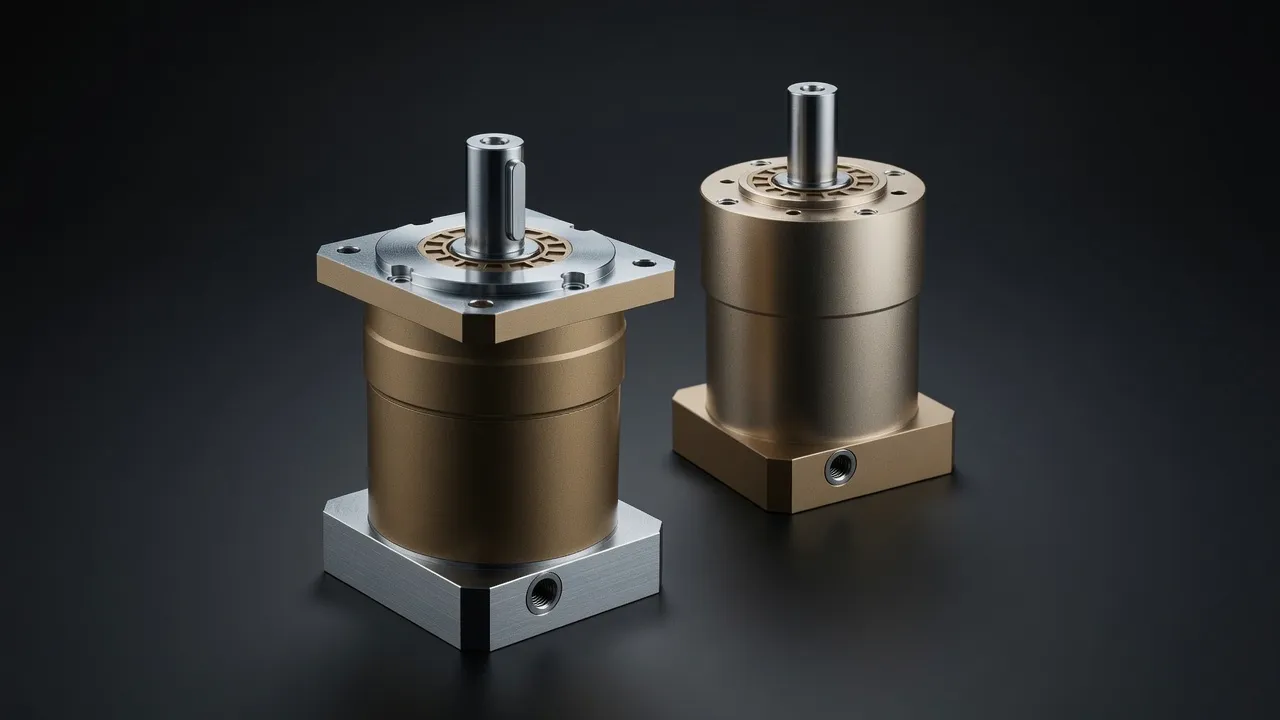
Many excavators provide two travel speeds: low speed (high torque, for pushing through difficult terrain) and high speed (lower torque, for faster site positioning). A two-speed travel motor achieves this by switching the hydraulic motor between two displacement settings — at full displacement, the motor turns slowly with maximum torque; at reduced displacement, it spins faster with reduced torque. The planetary gearbox ratio remains fixed; only the motor changes. This is mechanically simpler and more reliable than a two-ratio gearbox, and explains why excavator travel planetary gearboxes are fixed-ratio units. The EPX heavy planetary gearbox represents the industrial equivalent of this fixed-ratio, high-torque planetary architecture applied to stationary industrial machinery.
Travel Brake and Park Brake Function
The travel brake (also called the negative brake or park brake) is a spring-applied, hydraulically released disc brake within the travel motor housing, upstream of the planetary gearbox. It locks the motor shaft (and through it, the entire planetary gearbox and track sprocket) when the operator releases the travel control. The planetary gearbox does not need to be self-locking because the travel brake provides positive holding against any slope the machine can stand on. The EPG two-stage precision planetary is used in electric travel drive systems on hybrid excavators where the hydraulic motor is replaced by a servo motor, requiring the same high-ratio, high-torque planetary concept in an electric drive format. For information on comparable heavy-duty sealed drives in outdoor applications, the RR528 heavy-duty worm gearbox provides a useful reference for housing and sealing standards in similar working environments.
Frequently Asked Questions
Speak with a Planetary Drive Specialist
Share your torque requirement, ratio, and application environment — our team at Condell Park NSW returns a sized recommendation and stock check within one business day. No obligation.