
Agricultural harvesters ¡ª grain combines, cane harvesters, cotton pickers, and forage harvesters working across Australian farms from the Darling Downs wheat belt to the Queensland sugar cane regions ¡ª depend on planetary gearboxes to drive cutting headers, threshing cylinders, grain elevators, and cleaning shoe drives from a single PTO shaft or dedicated hydraulic motor. The gearbox must deliver reliable torque through the most chaotic mechanical environment in any agricultural setting: seasonal dust exposure, high shock loads from stones and non-crop debris, wide speed variation as the operator adjusts threshing cylinder speed for different grain varieties, and the expectation that the machine will work 18-hour days during the short harvest window without failure.
Combine Harvester Drive Architecture
A modern combine harvester distributes power from the engine to 8 to 15 rotating work elements simultaneously: the header cutter bar, feeder house, threshing cylinder or rotor, concave, grain pans, sieves, grain elevator, grain augers, straw walkers or chopper, and the unloading auger system. The planetary gearbox on the threshing cylinder drive provides the critical speed reduction and torque multiplication from the engine-driven belt or hydraulic motor to the threshing cylinder, which rotates at 400 to 1 200 rpm depending on crop type. On a 300 kW engine combine, the threshing cylinder may absorb 50 to 100 kW ¡ª requiring a planetary gearbox capable of 500 to 1 000 N¡¤m output torque continuously during peak threshing load.
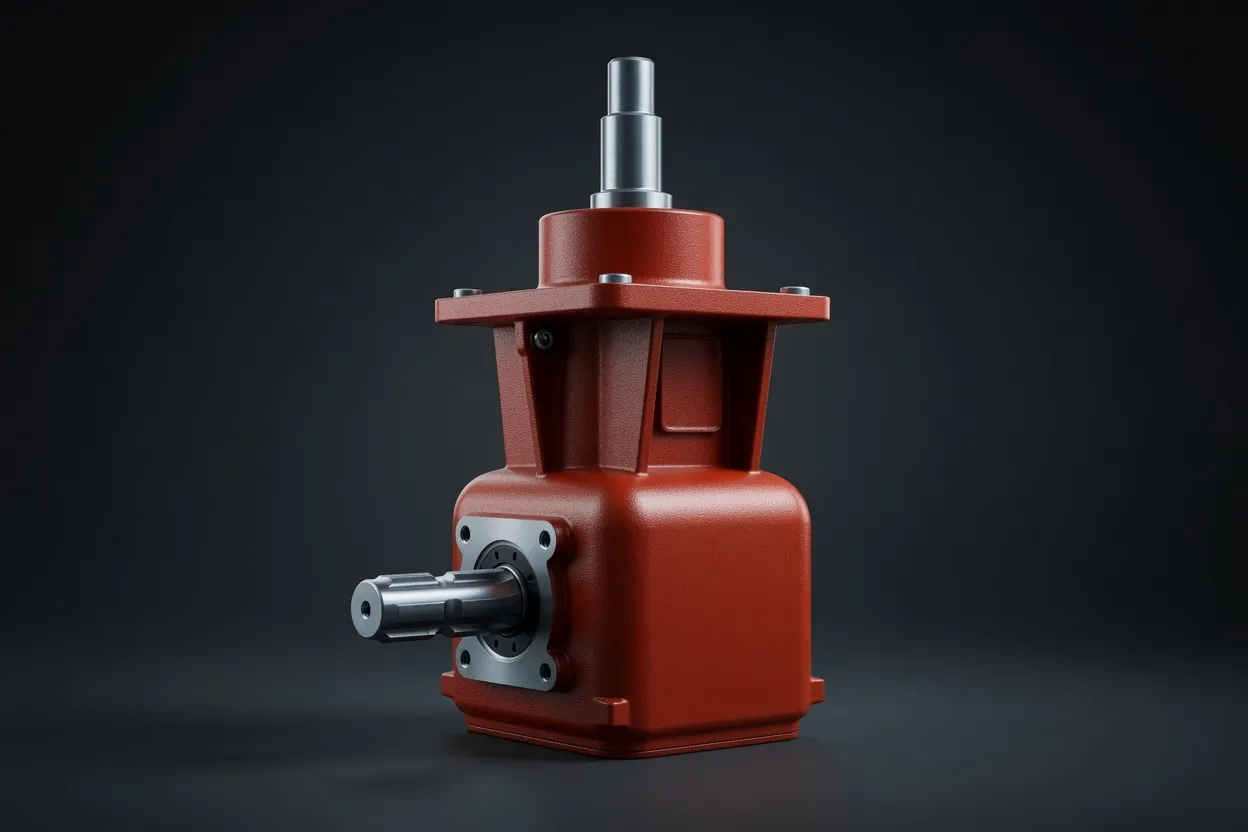
| Crop Type | Cylinder Speed | Required Torque | Stone Frequency | Shock Rating | Ratio |
|---|---|---|---|---|---|
| Wheat gentle | 900¨C1 200 rpm | 300¨C600 N¡¤m | Low | 1.5 ¡Á rated | 1:3¨C1:5 |
| Canola fragile | 600¨C900 rpm | 200¨C400 N¡¤m | Very low | 1.25 ¡Á rated | 1:4¨C1:6 |
| Maize tough | 400¨C700 rpm | 600¨C1 000 N¡¤m | Moderate | 2 ¡Á rated | 1:4¨C1:8 |
| Soybean | 500¨C800 rpm | 400¨C700 N¡¤m | Low to moderate | 1.5 ¡Á rated | 1:4¨C1:6 |
| Sugar cane chopper | 1 000¨C1 500 rpm | 1 000¨C2 000 N¡¤m | Moderate | 2.5 ¡Á rated | 1:2¨C1:4 |
Shock rating is the service factor multiple applied to account for stone and debris impact loads.
Stone and Debris Impact: Shock Load Specification
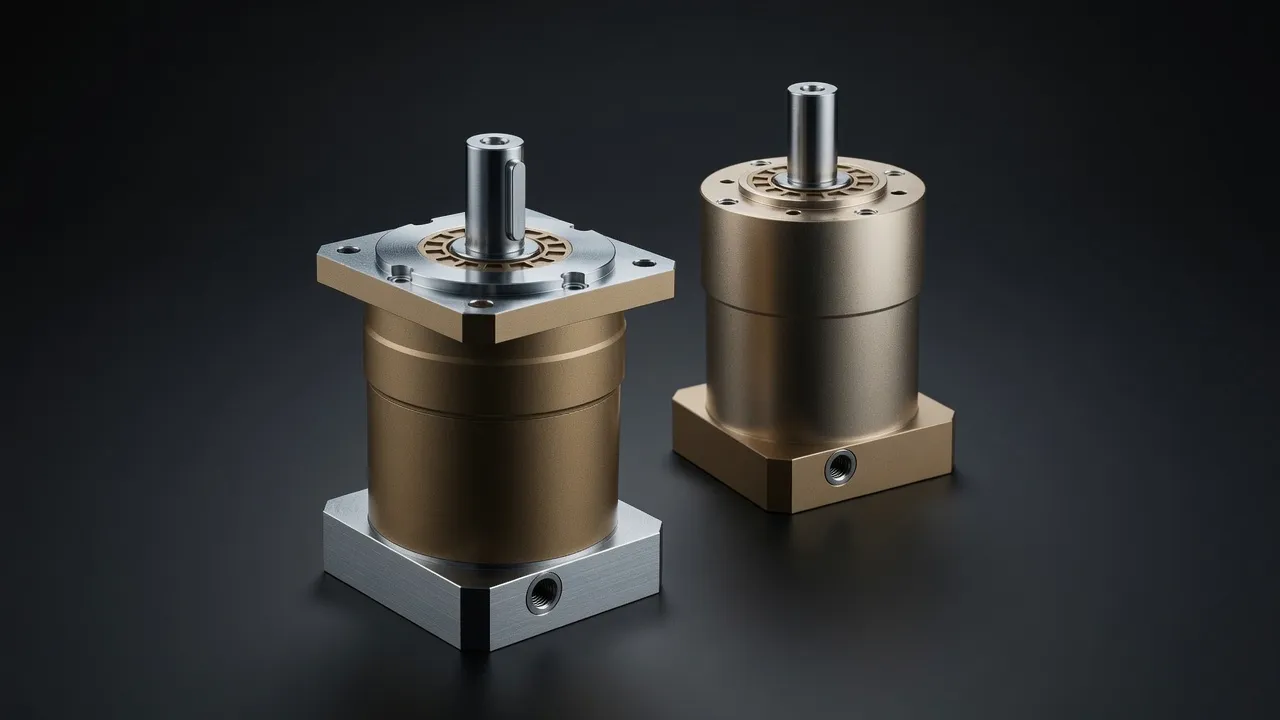
The most damaging event in combine harvester threshing is a stone strike ¡ª when a rock enters the threshing cylinder between the rotor and the concave bars, the cylinder stalls almost instantaneously, releasing the stored rotational kinetic energy as a torque spike. For a threshing cylinder with 80 kg of rotating mass at 800 rpm, the stored kinetic energy approaches 8 800 J. Released in 0.05 seconds, the peak power reaches 176 000 W ¡ª producing peak torque 3.5 to 7 times the normal threshing torque. The planetary gearbox must absorb this spike within its elastic capacity or the planet gear teeth will fracture. The EPX heavy planetary series with case-hardened 20CrMnMo gears, shot-peened tooth roots, and conservative face width ratios provides the shock absorption capacity needed for threshing cylinder drives in crops with moderate to high stone frequency. The EPB high-precision torque planetary handles lower-shock applications ¡ª wheat and canola ¡ª where positional accuracy of the cylinder speed matters for threshing quality and grain damage rate.
Variable Speed Drives and Electronic Cylinder Control
Modern combines use electronic variable-speed control of the threshing cylinder speed to optimise threshing quality and grain loss across different crop varieties, moisture contents, and crop densities. The planetary gearbox ratio is fixed; speed variation is provided by the motor ¡ª variable-speed hydraulic motor or electric motor on electrified platforms. The gearbox must maintain full torque capacity across the full motor speed range. At lower cylinder speeds, the gearbox cooling dependent on oil splash circulation from the rotating gears is reduced, and thermal limits must be checked at minimum operating speed with maximum torque.
Frequently Asked Questions
Speak with a Planetary Drive Specialist
Share your torque requirement, ratio, and application environment ¡ª our team at Condell Park NSW returns a sized recommendation and stock check within one business day. No obligation.