
Filling machines in beverage, sauce, dairy, and pharmaceutical production run at high cycle rates with short, repetitive indexing motions — conditions that place unusual demands on a gearbox. The worm reducer suits filling machine drives not because it is the most efficient option, but because it delivers right-angle torque transmission in a compact envelope, quiet operation near the production floor, and a high ratio in a single stage that simplifies the driveline to the filling head or star wheel.
Drive Architecture of a Filling Machine
Most filling machines use a central camshaft that synchronises all heads — filling, capping, labelling — through cam followers and linkages. The camshaft typically turns at 20–60 rpm. A 4-pole motor at 1440 rpm driving through a 1:25 worm gearbox produces 57.6 rpm — close enough to use a VFD to trim the final speed. The right-angle output of the worm unit allows the motor to mount horizontally above or beside the machine frame while the camshaft runs parallel to the production line, giving maintenance access to both ends of the machine without the motor projecting into an aisle.
Noise and Vibration: Why Food Lines Prefer Worm Drives
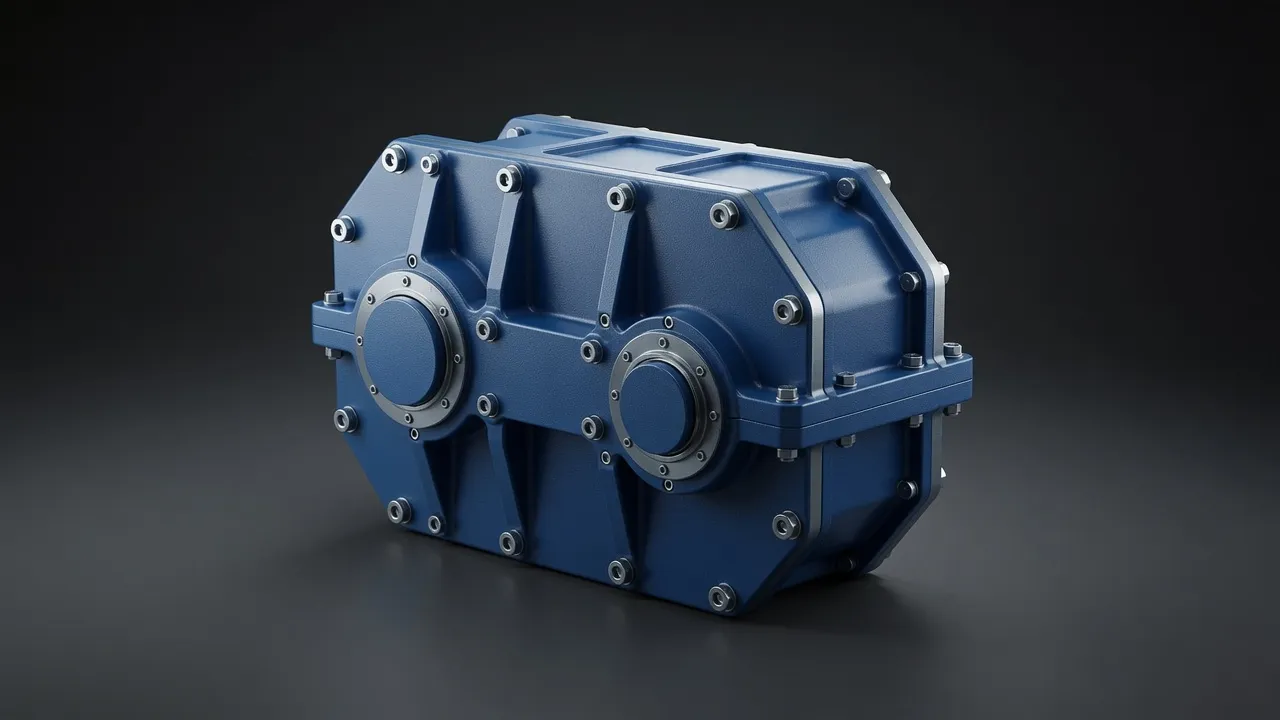
Filling lines running at 300 bottles per minute are already noisy from conveying and capping. Adding gearbox whine on top is unpopular with operators and can mask audible fault signals from the filling valves. Single-stage worm gearing generates noise primarily in the 200–400 Hz range at typical operating speeds — lower and less intrusive than the 800–2 000 Hz range characteristic of helical gearing at comparable ratios. Measured at 1 metre from the housing, WP units typically produce 62–70 dB(A) at 1440 rpm input.
| Machine Type | Camshaft RPM | Ratio (1440 rpm motor) | Frame | Output Torque |
|---|---|---|---|---|
| Water filling, 12 000 bph | 60 | 1:25 | WPA 80 | 151 N·m |
| Sauce filling, 6 000 jph | 40 | 1:40 | WPA 100 | 291 N·m |
| Dairy filling, 4 000 cph | 30 | 1:50 | WPA 120 | 399 N·m |
| Pharma filling, 2 400 vph | 20 | WPE 1:100 | WPE 60-100 | 500 N·m |
| Viscous sauce, 1 800 jph | 15 | WPE 1:100 | WPE 80-135 | 1400 N·m |
bph = bottles per hour; jph = jars per hour; cph = cartons per hour; vph = vials per hour.
Compact Drive for High-Throughput Lines
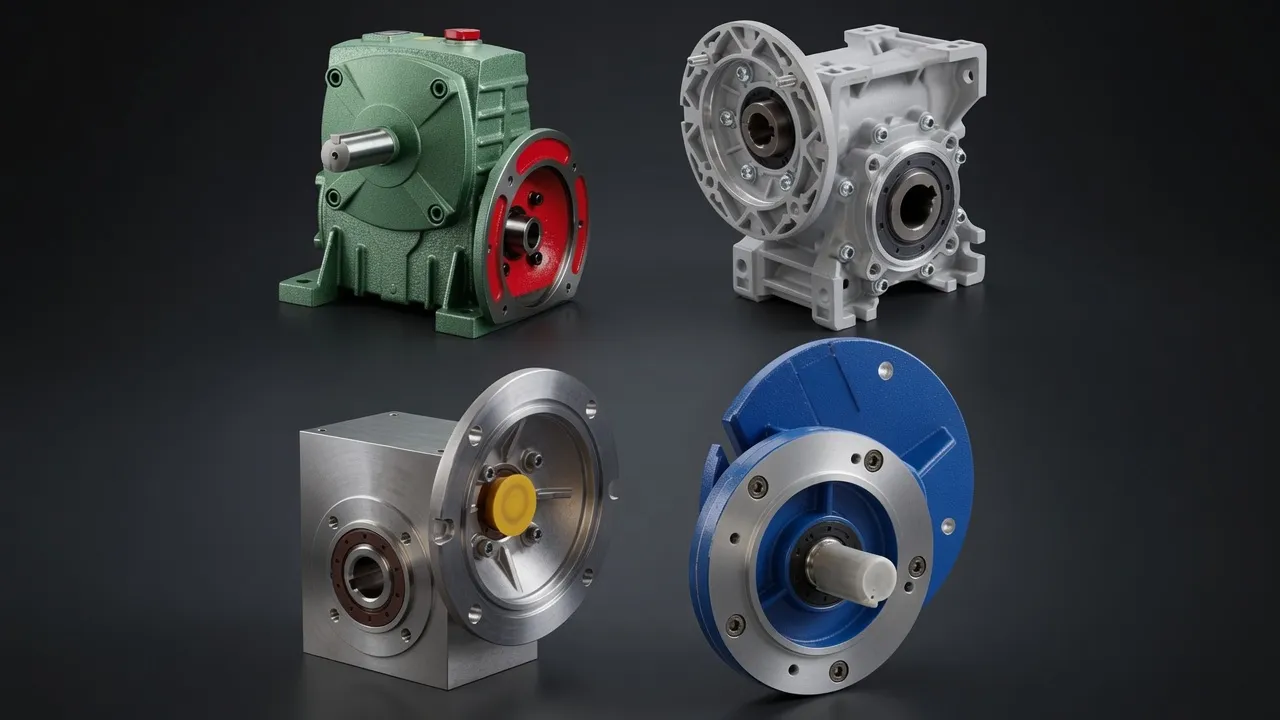
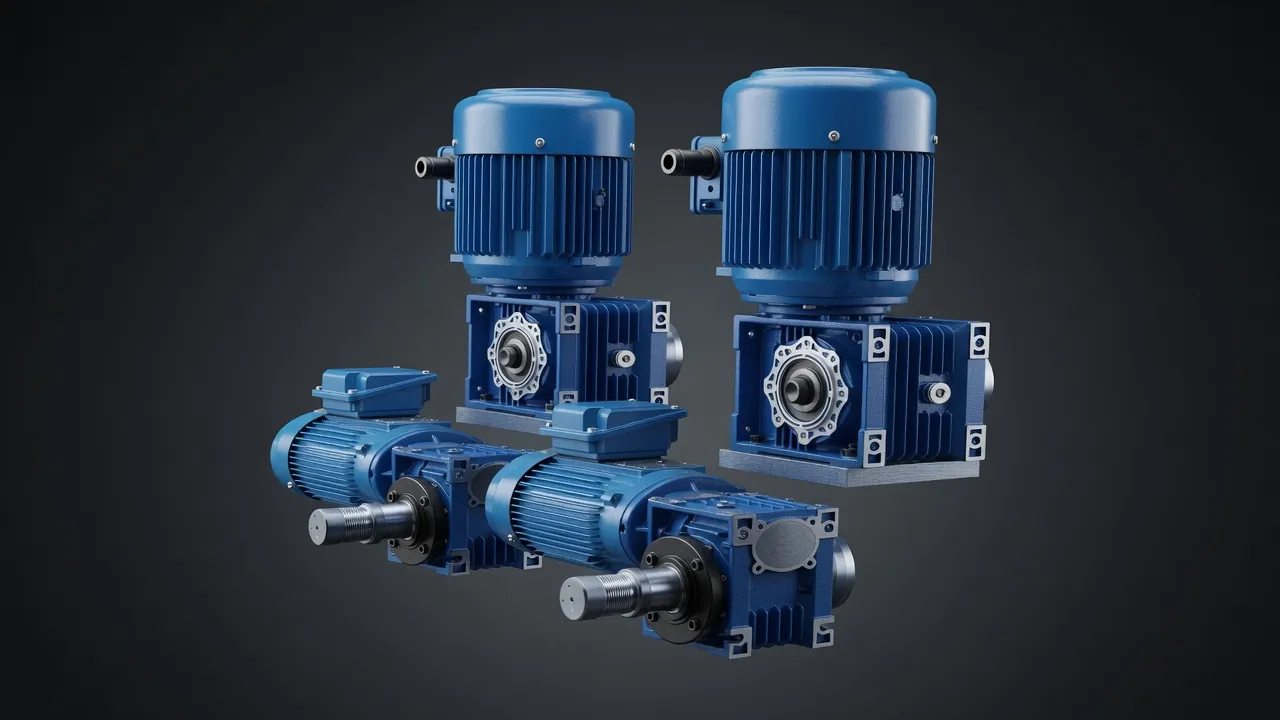
High-speed filling machines — water lines at 12 000 bph — leave almost no room for a large drive assembly. The WPDA motor-flange series mounts the motor directly on the gearbox input without a bell housing, reducing overall drive length by 120–180 mm. The DKS top-entry hollow shaft series goes further — the gearbox slides over the camshaft stub from above, with the motor and gearbox body sitting compactly above the machine frame out of the way of the filling zone. For alternative compact aluminium-housed options, the FGV035 aluminium compact worm gearbox is worth reviewing for light-duty filling OEM equipment.
Frequently Asked Questions
Get a Sized Recommendation
Share your load data and target speed — our team at Condell Park NSW returns torque calculations and a stock check within one business day.