Description
DKS Series — Top-Entry Hollow Shaft Worm Gear Reducer
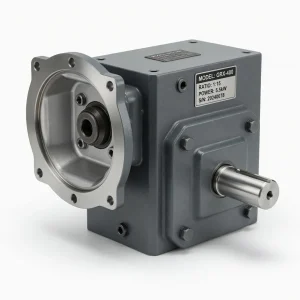
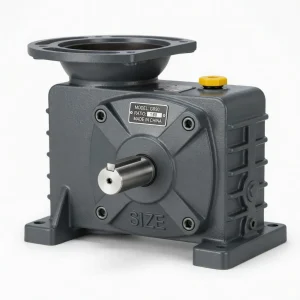
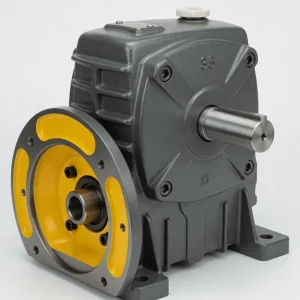
The DKS Series positions the IEC motor flange above the worm centreline (S-type orientation) while retaining the keyed hollow shaft worm gearbox output that defines the DK platform. This top-entry layout is purpose-built for vertical tank-top agitator and mixer drives, where the motor sits on a bridge or platform above the vessel and the hollow bore slides over the impeller shaft descending into the tank. Thirteen frame sizes from WP40 to WP250 and ratios from 5:1 to 60:1 give process engineers full flexibility to match torque, speed, and bore diameter to the vessel geometry. The one-piece cast-iron housing seals lubricant in and process vapours out, and the direct motor-mount flange removes coupling maintenance from the equation entirely.
Typical Applications
Chemical and Pharmaceutical Tank Agitators
In reactor vessels, blending tanks, and dissolution kettles, the DKS mounts on the tank-top flange with the motor above the gearbox. The hollow bore clamps directly onto the agitator shaft, so no rigid coupling, guard, or alignment procedure is needed between the reducer output and the impeller. Chemical plants running Pfaudler glass-lined reactors or De Dietrich stirred vessels commonly pair WP80–WP135 DKS units at 20:1 or 25:1 with explosion-proof motors. The self-locking worm gearbox property at these ratios holds the impeller stationary during batch transfers, preventing reverse rotation from fluid backflow.
Wastewater Treatment Flocculators
Slow-speed paddle flocculators in municipal and industrial water-treatment plants need gentle, steady rotation — typically 1–5 r/min. A DKS at 50:1 or 60:1 paired with a 0.37–0.75 kW motor delivers the required speed while the right angle worm gearbox geometry keeps the motor above the waterline. The hollow bore slips over the flocculator shaft running through the tank wall bearing, eliminating the thrust coupling that a solid-shaft reducer would require.
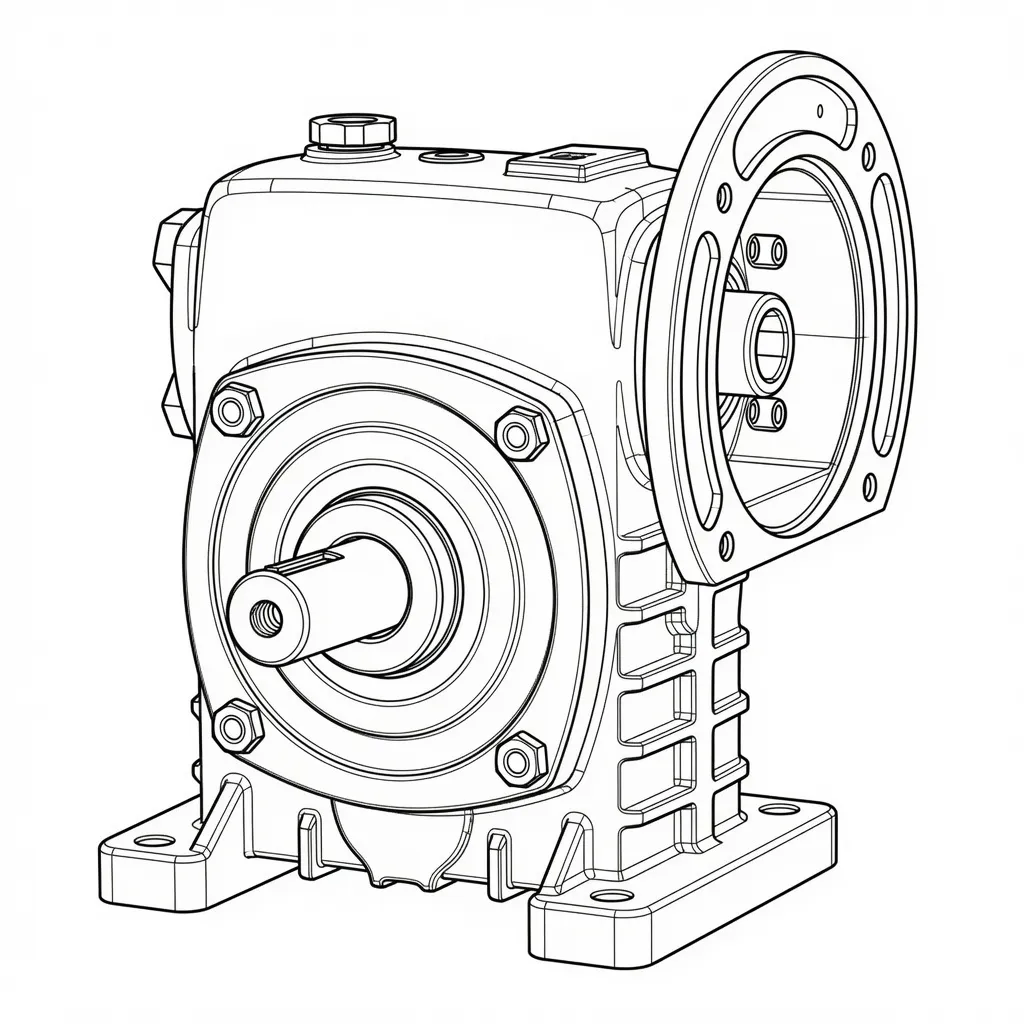
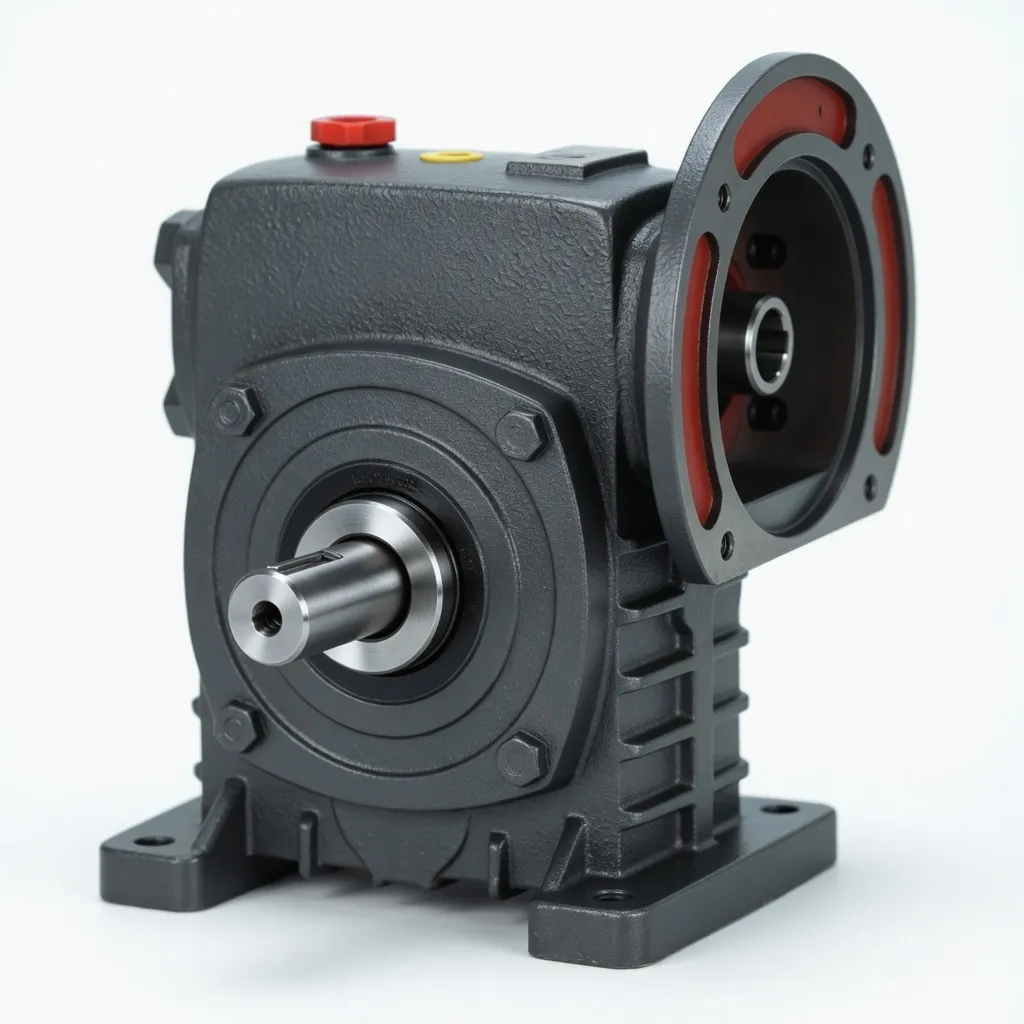
S-type motor position (above) and hollow output bore detail
Performance Data
All torque values below apply at 1,500 r/min input speed under continuous duty at 10–25 °C ambient. The DKS shares identical gear geometry and efficiency curves with the DA and DKA series on the same speed reducer gearbox platform. Motor power ratings follow A02/Y-series IEC norms.
| Frame (mm) | Motor (kW) | Ratios | Torque at 10:1 (N·m) | Peak Torque (N·m) |
|---|---|---|---|---|
| WP40 | 0.12 | 5:1 – 60:1 | 6 | 20 |
| WP60 | 0.37 | 5:1 – 60:1 | 19 | 73 |
| WP80 | 0.75 – 1.5 | 5:1 – 60:1 | 77 | 248 |
| WP120 | 2.2 – 3 | 5:1 – 60:1 | 151 | 521 |
| WP155 | 5.5 | 5:1 – 60:1 | 270 | 1,260 |
| WP200 | 11 | 10:1 – 60:1 | 623 | 2,856 |
| WP250 | 11 – 15 | 10:1 – 60:1 | 850 | 3,025 |
Structural Design Highlights
The DKS housing is the same one-piece grey cast-iron casting used across the entire single-stage WP range. The only tooling difference is the position of the motor-flange machining — rotated 180° relative to the DKA so the input bore faces upward. This means every internal component (worm shaft, bronze wheel, tapered roller bearings, oil seals) is fully interchangeable between the DA, DKA, and DKS, simplifying spares management for facilities that run multiple reducer variants. The foot pads on the housing are machined on two perpendicular planes, allowing the unit to be bolted to a horizontal platform or a vertical mounting bracket with equal rigidity. An oil-level sight glass on the side and a top-mounted breather plug are standard on all frames.
Lubrication and Service Intervals
Use ISO VG 220–320 EP gear oil (Shell Omala, Mobil DTE, or Texaco Meropa) for temperatures up to 40 °C. When the DKS is mounted with the output shaft pointing downward into a tank, verify the oil level covers the full worm-wheel tooth depth — the fill quantity differs from horizontal installations and is noted in the frame-specific installation manual. Perform the first oil change after 100 hours, then every 2,500 hours or 12 months. At each change, inspect the magnetic drain plug for abnormal metal debris. Keep the breather plug clear of paint, dust, and process residue to prevent pressure build-up inside the housing.
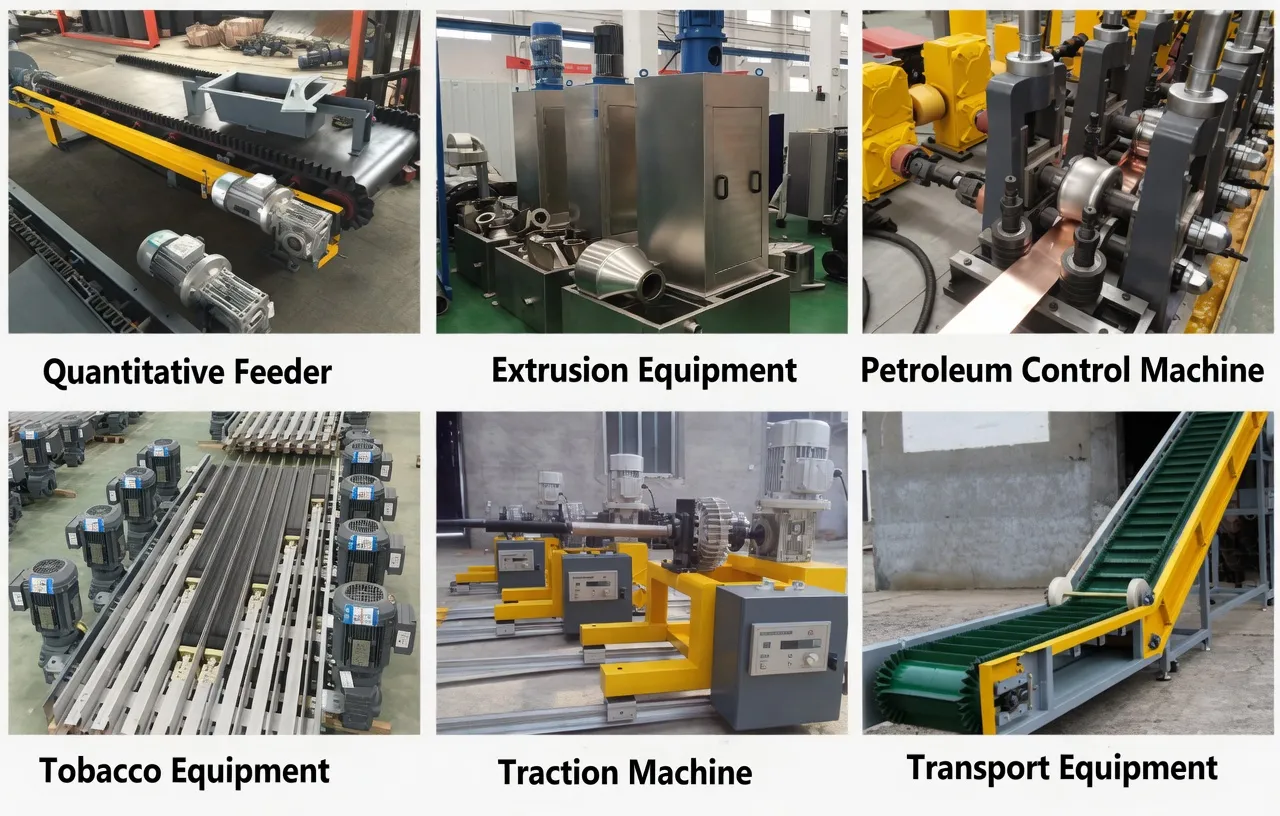
Gear-grinding and housing-machining lines
Why Work with Ever-Power Australia
Our Condell Park, NSW warehouse stocks popular DKS frame sizes alongside the complete range of DA and DKA variants, so you can consolidate your order and receive everything in a single shipment. Every unit ships with an ISO 9001-traceable test certificate and a factory oil fill. Our Sydney-based engineers can advise on bore sizing, torque-arm placement, and motor selection. We also supply complementary gearbox lines such as S-series helical-worm combination gear reducers for applications that benefit from a helical pre-stage for higher efficiency at low ratios. Reach out to contact us or call +61 2 9708 3322 for pricing and lead times.