
Chain conveyors move pallet loads, automotive assemblies, steel billets, and bottling crates — loads where shock and reversal are the norm rather than the exception. The self-locking characteristic of a worm reducer becomes a functional advantage here, not just a theoretical footnote. This piece explains exactly when and why that property matters, and how to size the unit so the worm pair still holds when the chain drive jams or power drops unexpectedly.
What Chain Conveyor Loads Actually Do to a Gearbox
Chain conveyors impose peak torques that can be three to five times the steady running value. An automotive assembly plant chain moving 800 kg bodies at 6 m/min might appear to need just 400 N·m at the drive sprocket, but the torque spike when a carrier catches a guide rail can exceed 1 200 N·m for a fraction of a second. The worm housing sees that spike through the output shaft and bearing housings; the bronze wheel can absorb moderate overloads because it deforms slightly rather than fracturing outright.
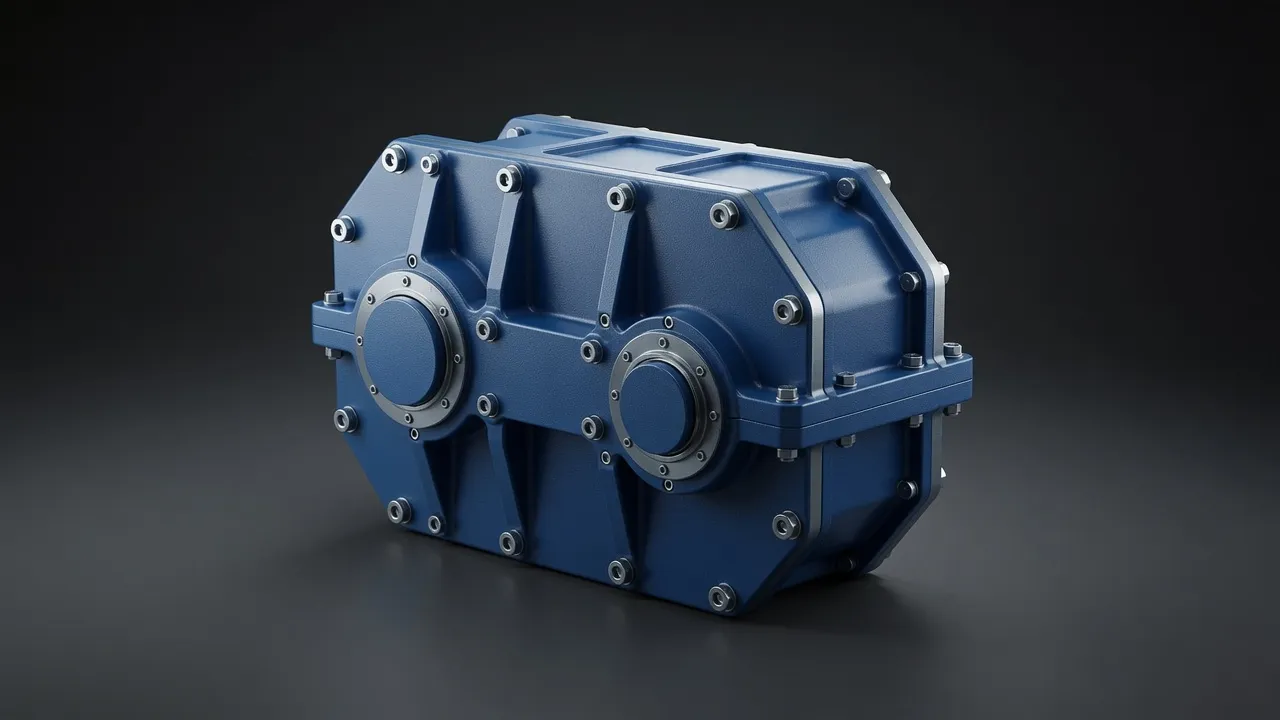
Self-Locking in Practice: How the Physics Works
The Lead Angle Threshold
Self-locking occurs when the lead angle of the worm thread is smaller than the friction angle between steel worm and bronze wheel. For a single-thread worm at typical surface finishes, this threshold falls at roughly 4–6°, corresponding to ratios of about 1:20 and above. At 1:30 the lead angle is around 2.7°, well inside the self-locking zone — a vertically rising pallet chain cannot back-drive the motor when power is removed.
Temperature and Lubrication Effect
Self-locking degrades at elevated housing temperatures because the oil film becomes thinner and the effective friction angle drops. A unit running at 85°C oil temperature with ISO VG 460 synthetic may lose self-locking at ratios as high as 1:25. Monitoring housing temperature and sizing the frame conservatively reduces this risk significantly. For any safety-critical holding duty, Australian WHS regulations require a rated brake regardless of the worm’s locking behaviour.
| Application | Shock Factor | Service Factor | Recommended Frame Strategy |
|---|---|---|---|
| Overhead pallet chain, 8 h/day | Moderate | 1.2 | Calculate torque × 1.2, next size up if within 20% |
| Floor chain, 16 h/day, reversal | Heavy | 1.5 | Calculate torque × 1.5, consider dual-stage WPE |
| Steel billet transfer chain | Severe | 1.75–2.0 | Always select next frame; monitor temperature |
| Packaging accumulation chain | Light | 1.0–1.1 | Steady load; standard WPA or WPS frame |
| Automotive assembly overhead | Moderate-heavy | 1.4 | Check cantilever load from drive sprocket |
Service factors per WP catalogue Table 2.
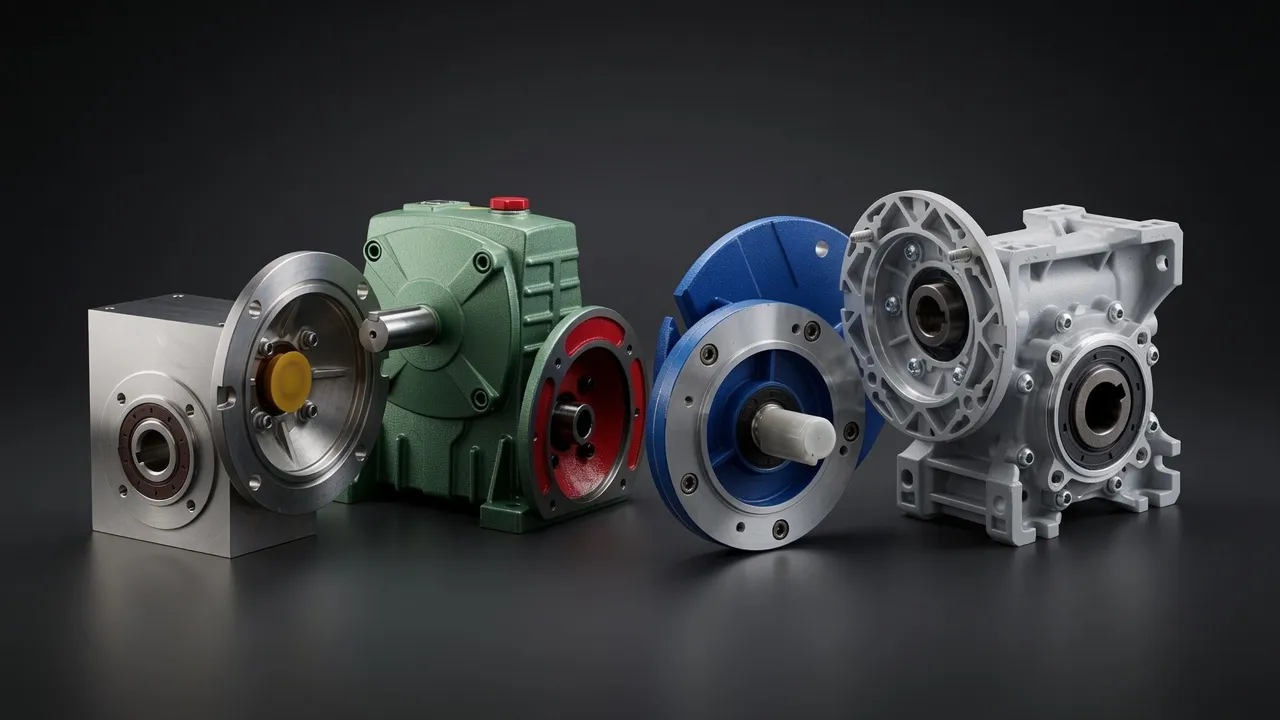
Shaft Configuration for Chain Drives
A chain drive from the gearbox output shaft to the conveyor head shaft is the default arrangement on heavy-duty floor chains because it allows a secondary ratio and keeps the gearbox clear of chain spray. The DX/DO dual output series suits conveyors where the chain must be driven from both sides of the head shaft simultaneously — both output shafts rotate at identical speed from one input, simplifying synchronisation entirely.
Double-Reduction WPE for Very Slow Chains
Pallet accumulation systems and kiln car chains often run at 0.5–2 m/min — far below what a single-stage worm can reach with a standard 4-pole motor. The EA series double worm reducer at 1:300 with a size 60-100 frame produces about 500 N·m output torque from a 0.37 kW motor — sufficient to drive a light pallet accumulation chain at walking pace. Two-stage units sacrifice efficiency (typically 45–55% at high ratios) but the low input power keeps absolute losses manageable. For alternative aluminium-housed options at comparable ratios, the PCNMRV compact worm gearbox is worth reviewing for lighter-duty accumulation lines.
Frequently Asked Questions
Get a Sized Recommendation
Share your load data and target speed — our team at Condell Park NSW returns torque calculations and a stock check within one business day.