
Sealing machines — induction sealers, hot-air sealers, band sealers, and rotary jaw sealers — run at high throughput with continuous jaw or roller contact. The gearbox driving the sealing element must deliver smooth, jitter-free rotation at a consistent speed, run quietly, and survive the thermal cycling of a machine that may go from ambient to 200°C jaw temperature and back down every day.
Why Smooth Rotation Matters for Seal Quality
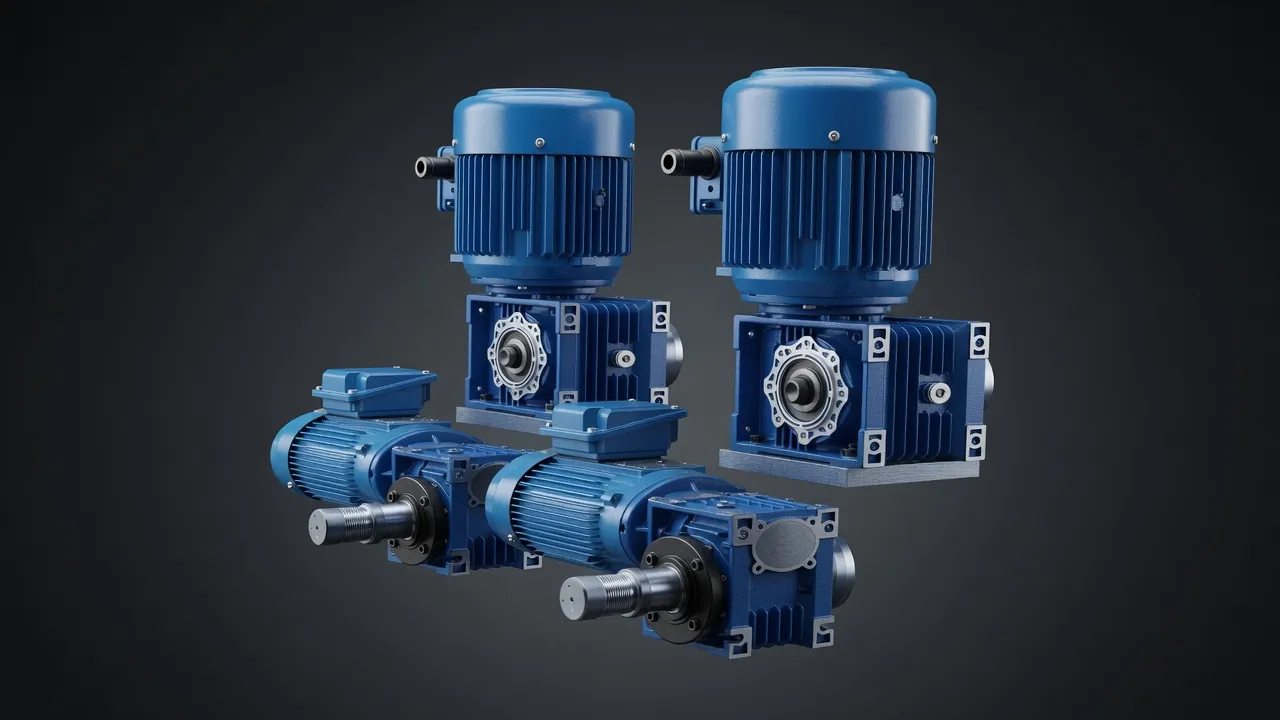
A jaw sealer running with cyclic speed variation — even ±2% around the setpoint — produces seals of inconsistent dwell time. Variable dwell time means some seals get full heat and pressure, others get less, resulting in a mix of strong seals and peelable ones that pass visual inspection but fail in the distribution chain. Worm gearing is inherently smooth because both the worm thread and wheel tooth are in continuous contact at multiple points simultaneously, which averages out any minor tooth-pitch error. This contrasts with a gear-motor where single-tooth engagement produces a once-per-tooth-per-revolution speed pulse.
Speed and Ratio for Common Sealing Machine Layouts
| Sealer Type | Jaw/Roller Speed | Cycle Rate | Ratio (1440 rpm) | Frame |
|---|---|---|---|---|
| Continuous band sealer | Roller 1.5 m/min | Continuous | 1:60 direct drive | WPA 50 |
| Rotary jaw sealer, small | 4–6 cycles/min | 60 jaws/min | 1:25 | WPA 60 |
| Rotary jaw sealer, high-speed | 10–15 cycles/min | 150 jaws/min | 1:10 | WPA 80 |
| Pouch sealing machine | 2–4 cycles/min | 30 cycles/min | 1:40–1:50 | WPA 70–80 |
| Tube sealing, pharma | 1–3 cycles/min | 20 cycles/min | 1:50–1:60 | WPA 80 |
All at 1440 r/min motor input. Use VFD for fine speed trim to ±0.5 rpm.
Thermal Cycling and Oil Stability
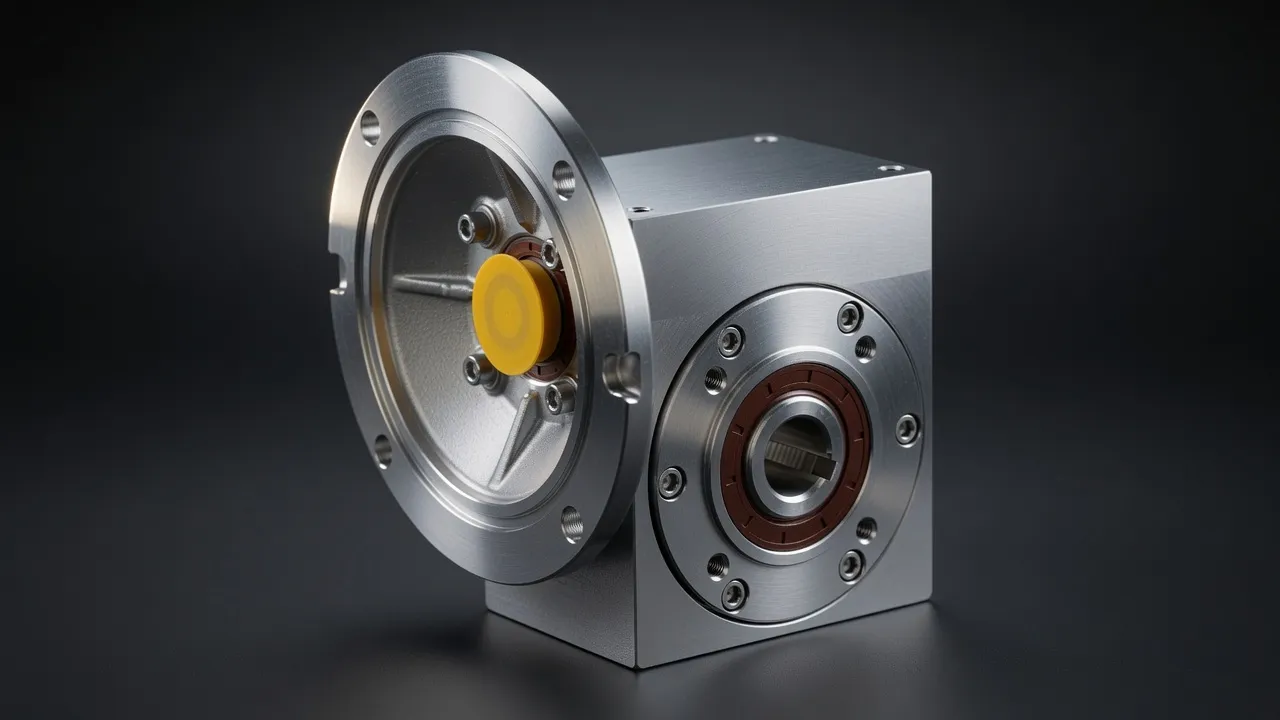
Sealing machines operate hot — jaw temperatures of 150–220°C radiate heat into the frame and the gearbox housing when the unit is mounted close to the seal station. An ambient temperature of 40–55°C is common at the gearbox location, ruling out standard ISO VG 220 mineral oil. Specify VG 320 or a synthetic PAO at VG 320 for sealing machine gearboxes in any installation within 500 mm of the seal station. Synthetics also handle the repeated cold-hot-cold thermal cycles that mineral oil weathers poorly — mineral oil oxidises faster under thermal cycling, forming varnish deposits that increase mesh wear.
Quiet Operation Near Workstations
Sealing machines typically operate within 2 metres of an operator who feeds product and removes sealed packs. NSW WHS Regulation 2017 sets an 8-hour exposure limit of 85 dB(A). WP worm units at 60–65 rpm output generate housing noise around 62–67 dB(A) at 1 metre — well below the threshold that meaningfully changes the overall noise budget of a sealing room.
Selecting a Direct-Motor-Flange Unit for Compact Machines
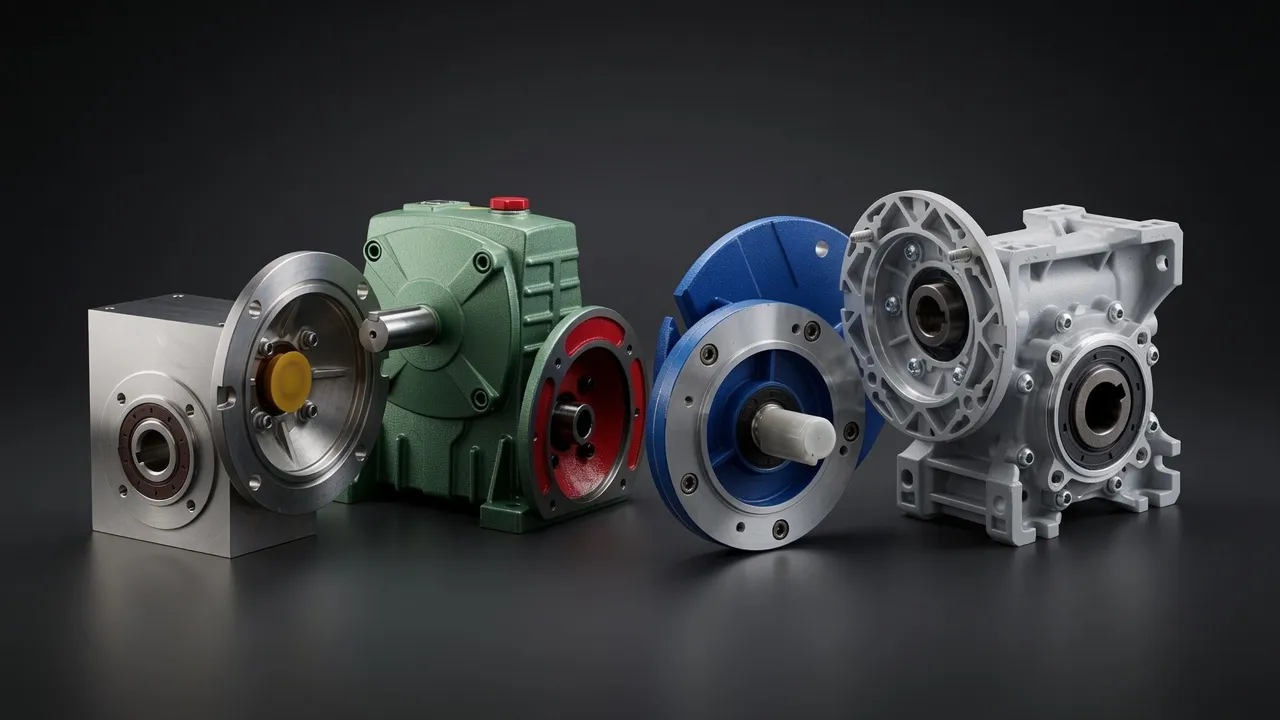
The DA series motor-flange worm gearbox accepts a B5 IEC motor directly on the input face, reducing the driveline length by 120–160 mm and eliminating the coupling. The KA hollow shaft series mounts over the sealing head input shaft stub directly, with a torque arm against the machine frame — the most compact arrangement possible and the one that needs the least realignment when the sealing head is replaced for format change.
Frequently Asked Questions
Get a Sized Recommendation
Share your load data and target speed — our team at Condell Park NSW returns torque calculations and a stock check within one business day.