
A rotary tiller converts PTO torque into the rotational force that drives each tine blade through soil at 150–400 rpm. The gearbox between the PTO stub and the tiller rotor does two things: it multiplies torque to handle the peak load when a tine strikes a stone or clay pan, and it redirects power through 90° from the tractor’s longitudinal PTO axis to the tiller’s transverse rotor axis. Selecting the wrong ratio or an undersized frame is one of the most common reasons rotary tillers break gearbox casings in their first season.
PTO Speed and Standard Ratio Options
Australian agricultural machinery predominantly uses the 540 rpm standard PTO, with some larger tractors offering 1000 rpm. At 540 rpm input, reaching a tiller rotor speed of 180 rpm requires a ratio of 540 ÷ 180 = 1:3 — too small for a single-stage worm reducer, which starts at 1:5. In practice, tiller gearboxes use the worm stage as one element of a compound gearbox: the PTO connects to a bevel or spur primary stage that brings the speed to a level where the worm stage can provide the final reduction and 90° output direction change to the rotor.
| PTO Speed | Worm Ratio | Combined Ratio | Rotor RPM | Application |
|---|---|---|---|---|
| 540 rpm | 1:5 | 1:3 (bevel) × 1:5 = 1:15 | 36 | Heavy clay, deep tillage |
| 540 rpm | 1:5 | 1:2 × 1:5 = 1:10 | 54 | Normal cultivating conditions |
| 540 rpm | 1:10 | 1:2 × 1:10 = 1:20 | 27 | Very heavy subsoil breaking |
| 1000 rpm | 1:5 | 1:2 × 1:5 = 1:10 | 100 | Fast soil preparation, light soils |
| 1000 rpm | 1:10 | 1:3 × 1:10 = 1:30 | 33 | Medium tillage, 1000 rpm PTO |
Total ratio = primary stage ratio × worm stage ratio.
Shock Load Tolerance: The Critical Design Criterion
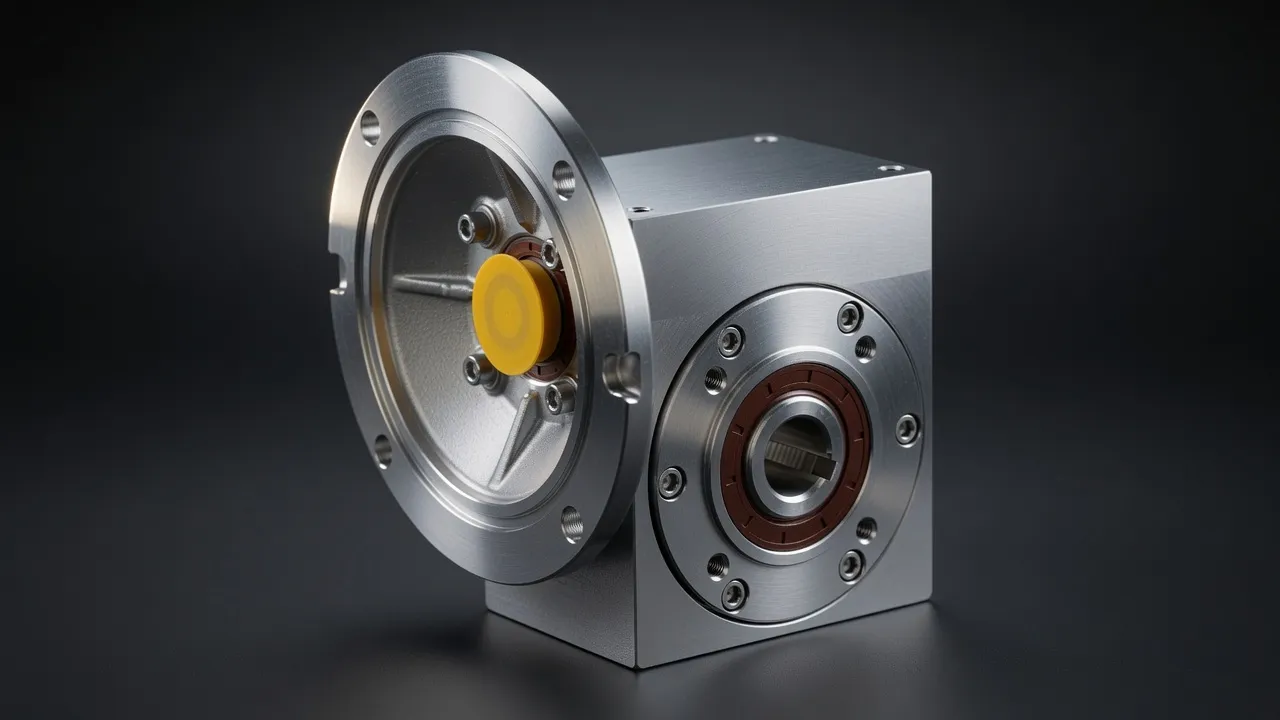
Rotary tillers hit rocks, old roots, and buried debris without warning. The shock torque transmitted to the gearbox when a tine stops suddenly can reach 6–10 times the rated running torque. Bronze worm wheels crack under this loading if the frame is sized on running torque alone. Sizing on a service factor of 3.0–4.0 is appropriate for stony Australian soils — this typically means moving two frame sizes above the running-torque requirement. Many commercial tiller gearboxes also fit a shear-bolt drive coupling on the PTO shaft; when the shear bolt breaks, the gearbox is protected from the full stone-strike load.
Worm Stage Placement: Before or After the Bevel Stage?
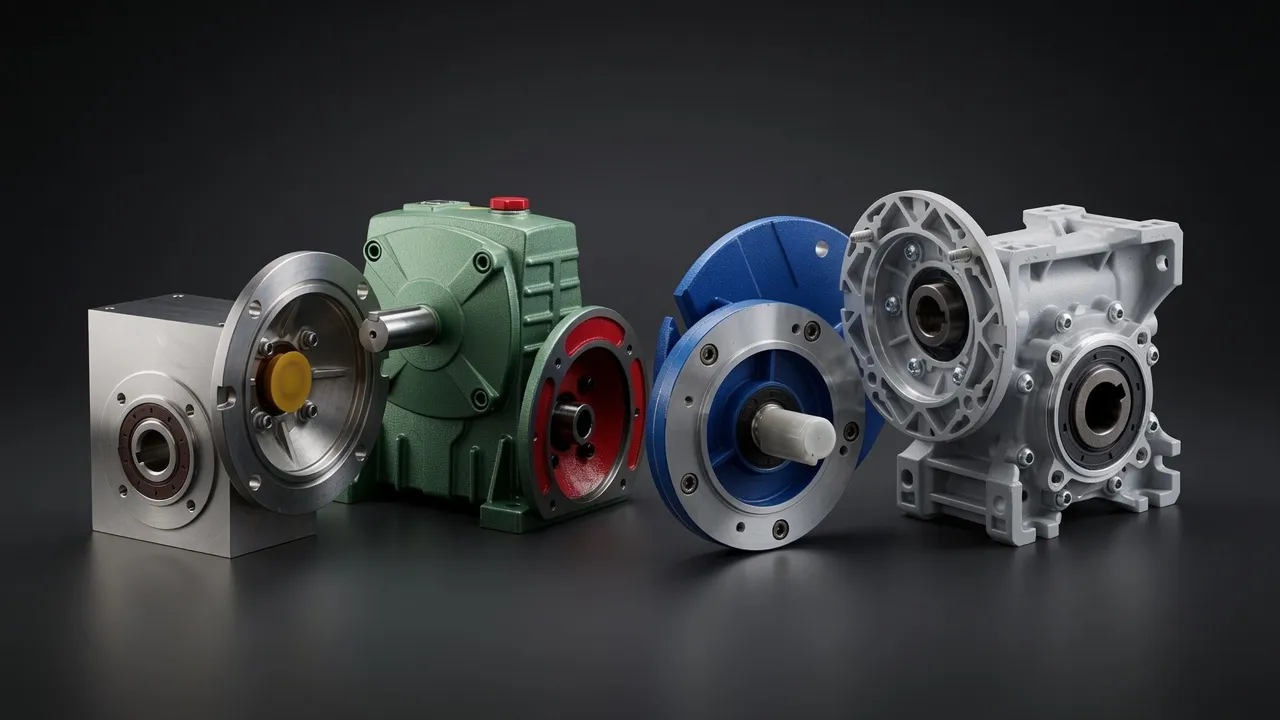
Compound tiller gearboxes typically place the worm stage after the bevel stage — the bevel reduces the 540 rpm PTO to an intermediate speed, and the worm provides the final reduction and 90° direction change to the rotor. The alternative — worm first, then bevel — is used when the rotor is very close to the tractor and the geometry requires a different output direction. The PWDKO universal series with multiple output face options gives designers the flexibility to configure the output shaft direction without fabricating a custom housing.
Lubrication Under Heavy Field Contamination
Rotary tiller gearboxes operate in the most hostile environment any gearbox encounters in normal use: soil, grit, crop residue, and water ingress during field work, followed by pressure washing and months of outdoor storage between seasons. Use mineral oil rated VG 320 for the operating season; drain and refill at the start of each season regardless of hours since the last change. Inspect all shaft seals visually before first use each season — stiff, cracked, or missing seals during storage allow full contamination of the gear mesh before the first tractor pass. For comparable compact drives in agricultural applications, the K-series bevel helical right-angle reducer is worth comparing on higher-power tillage applications where worm efficiency becomes a cost consideration.
Frequently Asked Questions
Get a Sized Recommendation
Share your load data and target speed — our team at Condell Park NSW returns torque calculations and a stock check within one business day.