
A hoist gearbox failure is not a production inconvenience — it is a safety event. When a worm reducer drives a hoist drum or travelling block, the self-locking property is often cited as the primary holding mechanism. Understanding exactly when that property is reliable, and when it is not, is the most important engineering judgement in hoist drive selection.
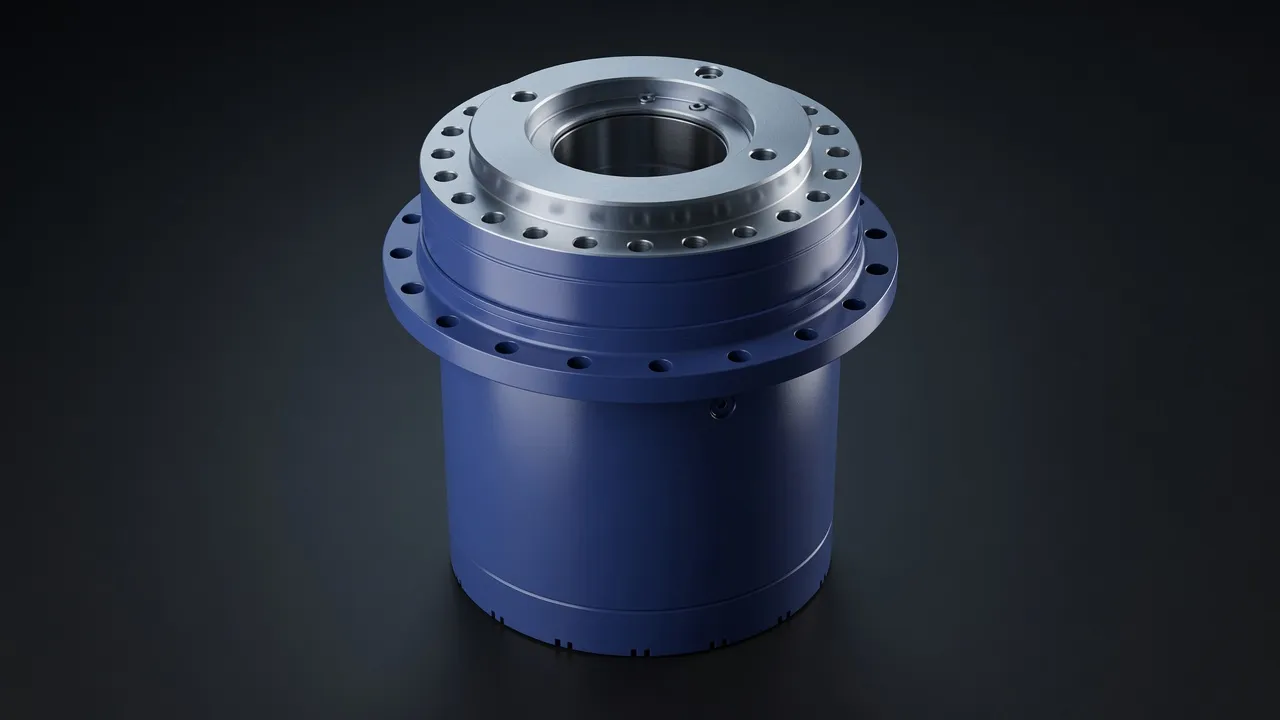
The Mechanics of Self-Locking in Worm Gears
Self-locking in a worm pair occurs when the helix angle of the worm is smaller than the friction angle of the tooth contact. For standard WP geometry with a steel worm and bronze wheel, this threshold sits at a helix angle of roughly 3–5°, corresponding to reduction ratios of 1:20 and above. At these ratios, a load applied to the output shaft (the hoist drum) cannot generate enough torque to reverse-drive the worm — the thread faces dig into the mating surface and resist motion.
Why Self-Locking Cannot Replace a Rated Brake
Thermal Degradation of the Friction Angle
The friction coefficient between steel worm and bronze wheel drops as housing temperature rises. A unit running continuous hoist duty at 70% of rated torque may reach 80–90°C sump temperature within two hours, which reduces the effective friction angle enough to allow slow creep under load at ratios as low as 1:30. The load does not suddenly drop, but it inches downward — an outcome indistinguishable from a slow brake leak in terms of safety consequence.
Vibration-Induced Back-Drive
Vibration from adjacent machinery, building resonance, or wind-induced oscillation on an outdoor gantry can temporarily break the static friction condition and allow incremental back-drive. Each vibration cycle advances the output shaft a small angle; over minutes or hours this accumulates into measurable drop. No catalogue self-locking claim accounts for vibration-induced movement. Australian AS 2549 and applicable WHS codes require a rated positive brake on any hoist whose suspended load creates a risk to persons.
| Hoist Duty Class | Daily Running Time | Max Housing Temp | Recommended Action |
|---|---|---|---|
| M2 (light) | ≤0.5 h | <60°C | VG 320, annual oil change |
| M4 (moderate) | ≤1.5 h | <70°C | VG 320, 6-month oil change |
| M6 (heavy) | ≤3.0 h | <80°C | VG 460 or synthetic, quarterly |
| M8 (very heavy) | Continuous | Monitor | Synthetic PG, consider helical-bevel |
Housing surface temperature measured at the worm shaft bearing region.
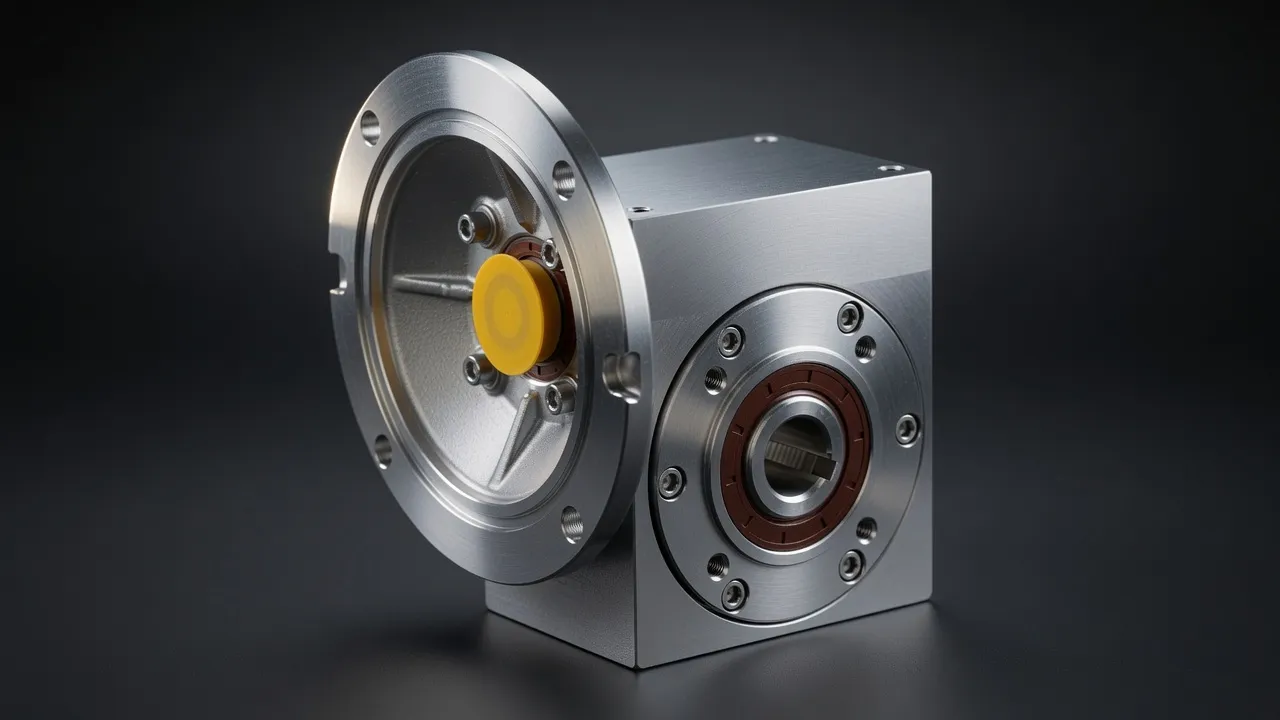
Frame Selection: Rated Load to Output Torque
Hoist output torque equals the suspended load in newtons multiplied by the drum radius in metres. A 2 000 kg SWL hoist with a 200 mm drum radius requires 3 924 N·m at the drum shaft. If the gearbox output connects to the drum via a 3:1 chain reduction, the gearbox output needs only 1 308 N·m. The DA series worm reducer at 1:30 with WPA 200 frame (rated 1 782 N·m) covers that requirement. Always verify that the rated torque in the catalogue is at the appropriate ratio and input speed for your specific application.
Mounting Orientation and Oil Level
Most hoist gearboxes mount horizontally with the input worm shaft on one side and the output bull gear shaft on the perpendicular axis. The WPA and WPDA series are designed for this orientation, and the oil sight glass and fill/drain plugs are positioned accordingly. Mounting the unit in a non-standard orientation shifts the oil level relative to the designed immersion depth — always specify the mounting orientation clearly when ordering. Some WP variants have repositioned plugs for non-standard installations.
Frequently Asked Questions
Get a Sized Recommendation
Share your load data and target speed — our team at Condell Park NSW returns torque calculations and a stock check within one business day.