
Bucket elevators carry the highest consequence of gearbox failure in any bulk material handling plant — a seized or runaway elevator can collapse an entire tower structure if the backstop fails alongside the drive. Selecting the right worm reducer involves three calculations that many datasheets skip: rated load at the bucket centres, the worst-case runback torque the backstop must hold, and the total overhung radial load on the output shaft from the drive chain or belt.
Load Rating for Elevator Drive Duty
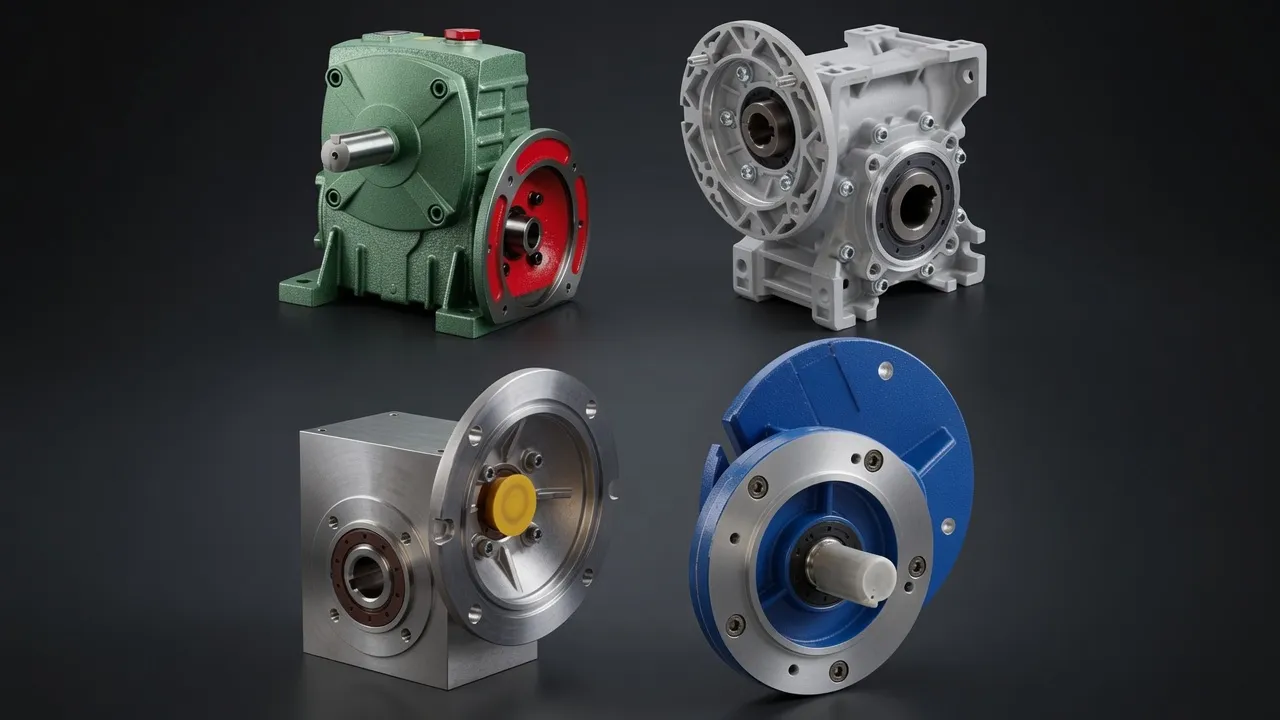
Bucket elevator load rating starts at the bucket pitch circle. The total effective pull equals the weight of material lifted per metre of travel multiplied by the vertical height, divided by belt speed. For a centrifugal-discharge elevator lifting 30 t/h of dry wheat to 18 m at 1.8 m/s, the theoretical belt pull is roughly 2 900 N and the drive head torque around 580 N·m at a 400 mm drive drum. Apply a service factor of 1.5 for heavy shock — bucket filling is inherently impulsive — and the selection torque reaches 870 N·m. The WPA 175 at 1:30 delivers a rated 1 189 N·m output, adequate with room for temperature correction.
Self-Locking as a Runback Mechanism — and Its Limits
When the Worm Holds
At ratios of 1:40 and above, the lead angle of a standard WP worm thread drops below 3°, well inside the self-locking zone assuming clean oil at normal operating temperature. An elevator stopped mid-cycle on a power cut holds the bucket chain stationary through friction alone, preventing backslide and the catastrophic chain pile-up that follows a runaway.
Where Self-Locking Fails
Elevated housing temperatures thin the oil film and reduce the effective friction angle. A heavily loaded elevator running continuous shifts in a 35°C shed may reach 90°C oil temperature, at which point standard VG 320 cannot maintain the film needed for reliable self-locking at 1:30. The solution: size the gearbox so the housing stays below 75°C at full load, and fit a dedicated cam-type backstop or ratchet mechanism regardless. A rated backstop is the only device that counts under AS 4024 and relevant WHS codes.
| Elevator Capacity | Bucket Speed | Required Output RPM | Suggested WP Ratio | Frame |
|---|---|---|---|---|
| 10 t/h, grain, 12 m | 1.2 m/s | 57 rpm | 1:25 | WPA 120 |
| 30 t/h, grain, 18 m | 1.8 m/s | 86 rpm | 1:15+VFD | WPA 155 |
| 60 t/h, fertiliser, 25 m | 2.0 m/s | 95 rpm | 1:15 | WPA 175 |
| 100 t/h, limestone, 30 m | 2.5 m/s | 120 rpm | helical-worm hybrid | WPA 200 |
| Continuous cement, 40 m | 1.5 m/s | 72 rpm | 1:20 | WPE double-stage |
Output RPM at a 400 mm drive drum. Verify against actual drum diameter.
Output Shaft Radial Load from Drive Chains
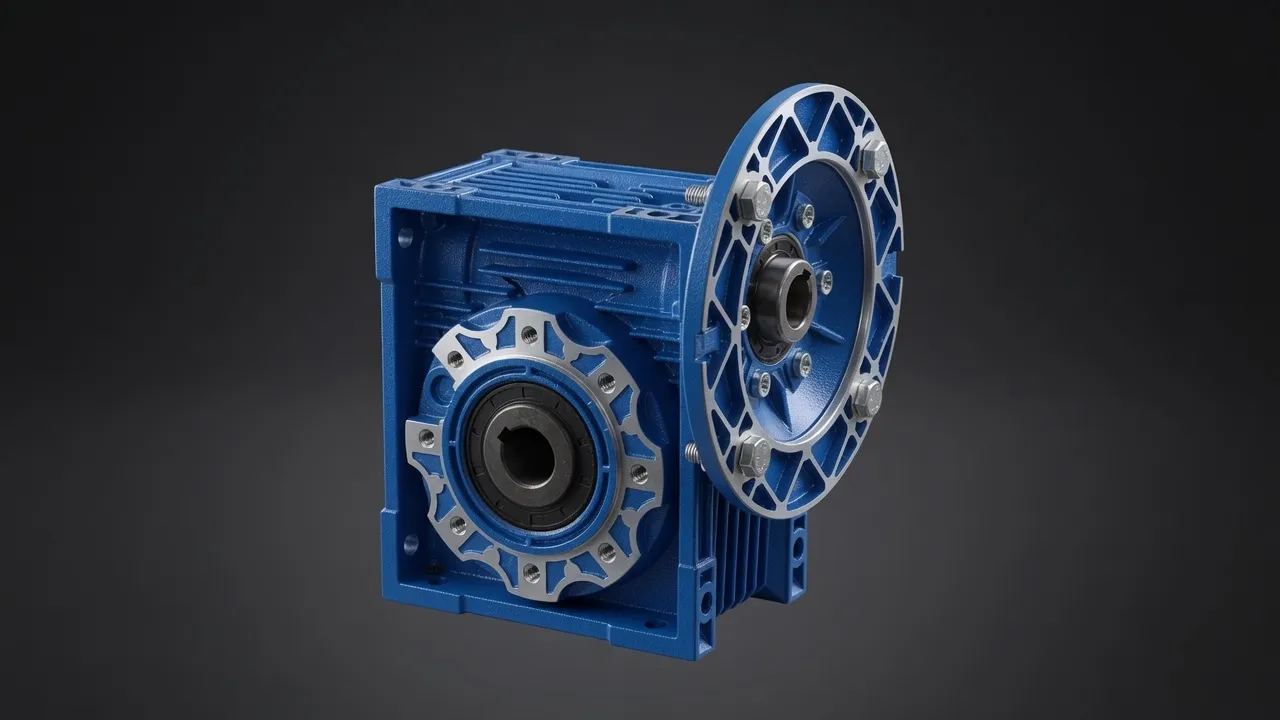
The elevator drive chain spans from the gearbox output sprocket to the elevator head shaft. Both chain pull and sprocket weight act radially on the output shaft. For a WPA 155 frame, the cantilever load limit at 1:30 with 1500 r/min input is 10 800 N. A No. 2080 duplex chain with 2 900 N pull and 15 kg sprocket at 300 mm centre generates around 3 200 N radial load — well within limits. Exceed the catalogue limit and bearing life drops from years to months.
Why the Hollow Shaft Simplifies Smaller Elevator Installations
Smaller grain elevators and seed conditioning units frequently mount the gearbox directly on the elevator head shaft using the DKA hollow bore configuration. This removes the external chain stage, the chain casing, and the second bearing housing entirely. The gearbox body is held against rotation by a torque arm pinned to the elevator head frame. Maintenance is faster: pull the entire motor-gearbox assembly off the shaft without disturbing the bucket path or head bearing housings.
Frequently Asked Questions
Get a Sized Recommendation
Share your load data and target speed — our team at Condell Park NSW returns torque calculations and a stock check within one business day.