
An electric hoist sits at the intersection of duty cycle engineering and mechanical precision: the motor and gearbox together must handle hundreds of lift cycles per shift without overheating, while the load must be positioned accurately and held safely between lifts. This guide focuses on the three numbers — torque, ratio, and duty cycle — that define whether a worm reducer is the right choice and what specific variant to specify.
Torque at the Drum: Starting Point for Every Selection
The gearbox output torque requirement for an electric hoist is frequently underestimated because engineers focus on the motor nameplate rather than the drum geometry. Output torque equals hook load (including block and slings, in newtons) multiplied by the drum radius at the outermost rope layer. For a 2-tonne SWL hoist with three rope layers on a 160 mm core drum (maximum radius approximately 200 mm after layers): load torque = 2 000 × 9.81 × 0.2 = 3 924 N·m. If the gearbox connects directly to the drum shaft, it must produce that torque — confirm the reeving arrangement before calculating.
Ratio Selection for Lifting Speed
Standard electric hoists lift at 4–12 m/min. A 6 m/min lift with a 150 mm effective drum radius requires the drum to turn at about 6.37 rpm. If the motor runs at 1440 rpm, the required ratio is 1440 ÷ 6.37 ≈ 226:1. Single-stage worm ratios go only to 1:60, so either a two-stage EA double-stage worm reducer or a single worm stage combined with a rope-drum reduction achieves the target. The EA series covers ratios to 1:900 in one housing — combining this with a 3:1 rope reeving gives a total mechanical advantage over 2 700.
| Lift Speed (m/min) | Drum Radius (mm) | Required Drum RPM | Gear Ratio Needed | WP Solution |
|---|---|---|---|---|
| 4 | 150 | 4.2 | ~340:1 | WPE 1:300 + 1.1:1 pulley |
| 6 | 150 | 6.4 | ~225:1 | WPE 1:200 + chain stage |
| 8 | 180 | 7.1 | ~203:1 | WPE 1:200 |
| 12 | 180 | 10.6 | ~136:1 | WPE 1:100 + 1.36:1 chain |
| 20 | 200 | 15.9 | ~90:1 | WPA 1:60 + 1.5:1 stage |
Input speed 1440 r/min assumed throughout.
Duty Cycle — the Factor Most Often Ignored
Duty cycle is the ratio of on-time to total cycle time. An electric hoist running 5 minutes in every 10 operates at 50% ED. Worm gearboxes generate heat from mesh sliding friction regardless of load; at high ratios (1:30–1:60), efficiency can drop to 65%, meaning 35% of input power becomes heat in the housing. The equilibrium temperature is reached when heat loss through the surfaces equals heat input. If that equilibrium exceeds 95°C, oil degrades rapidly and seal life collapses.
Choosing Between WPA and WPDA for Hoist Installations
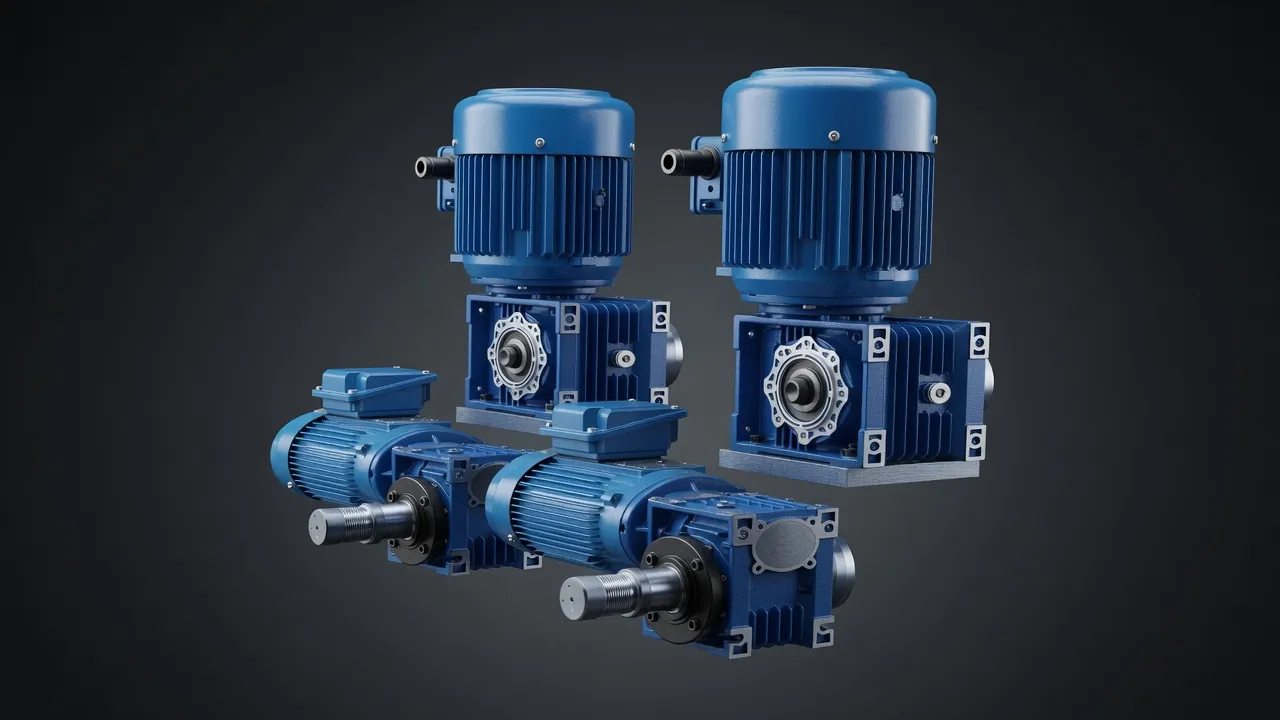
The DKA hollow shaft series with torque arm mounting eliminates the separate drum shaft and coupling hardware — the gearbox hollow bore slides over the drum shaft directly, which is the cleanest arrangement for small monorail hoists where every kilogram of dead weight reduces payload. The WPDA motor-flange series suits compact hoist frames where the motor mounts directly on the gearbox without an intermediate bell housing. The WPA foot-mount is preferable when the motor must be replaced independently in the field without removing the entire drive assembly.
Frequently Asked Questions
Get a Sized Recommendation
Share your load data and target speed — our team at Condell Park NSW returns torque calculations and a stock check within one business day.