
Slicers in deli counters, meat processing plants, vegetable preparation kitchens, and cheese factories share one mechanical requirement: the drive must deliver the blade exactly the same distance per cut, thousands of times per shift, with a force that scales cleanly with product density. A worm reducer’s right-angle geometry, high single-stage ratio, and smooth output motion fit this requirement without an additional reduction stage.
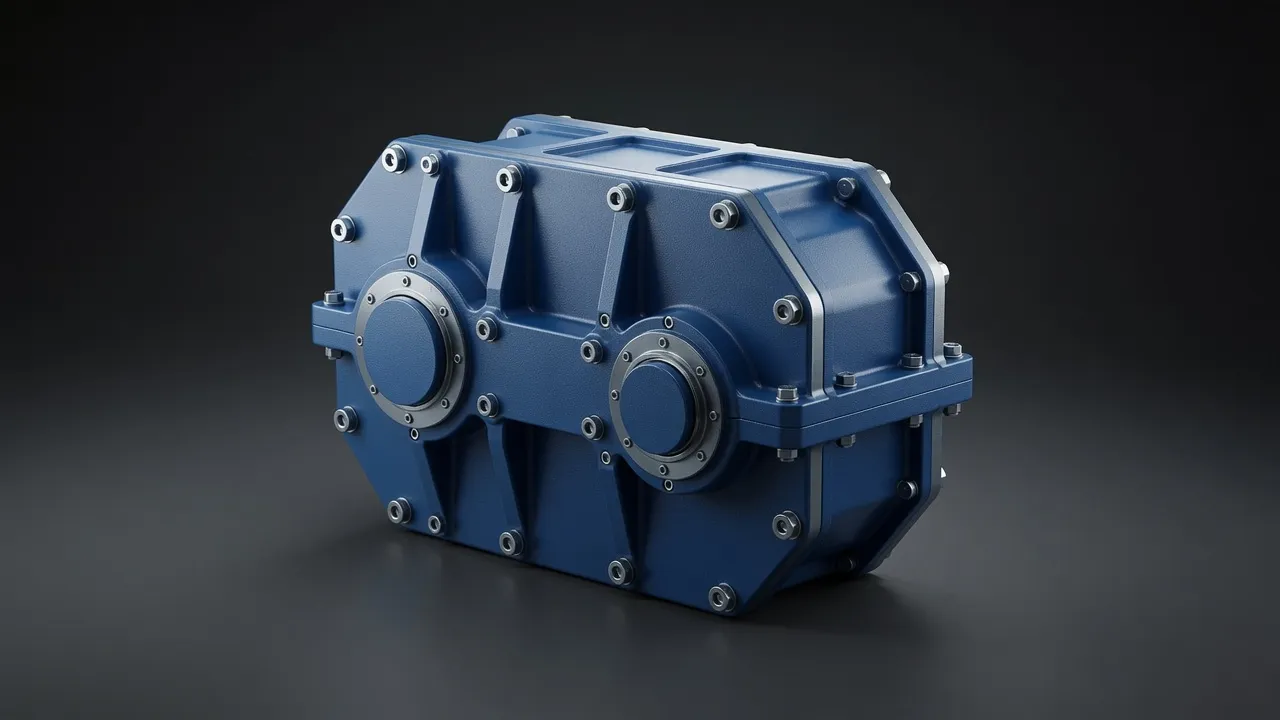
Right-Angle Transmission in Slicer Design
Most food slicers drive a rotating or reciprocating blade from a motor mounted perpendicular to the blade axis. The 90° output of a worm reducer connects these axes directly without bevel gears, U-joints, or belt stages. This simplicity reduces the number of components exposed to the food-zone wash-down and reduces the number of joints that can harbour bacteria. The shorter power transmission path also reduces the mechanical compliance between motor and blade, improving cut-thickness consistency.
Feed Rate and Ratio Calculation
| Feed Rate (mm/min) | Feed Roller Dia (mm) | Roller RPM | WP Ratio (1440 rpm) | Application |
|---|---|---|---|---|
| 50 | 30 | 0.53 | WPE 1:900 + chain | Very slow precision feed |
| 100 | 30 | 1.06 | WPE 1:900 | Thin-slice precision |
| 500 | 40 | 3.98 | WPE 1:300 | Standard deli slicer |
| 1 000 | 40 | 7.96 | WPE 1:200 or WPA 1:60+chain | Normal throughput |
| 5 000 | 50 | 31.8 | WPA 1:45 | High-speed bulk slicing |
Feed roller circumference = π × diameter (mm).
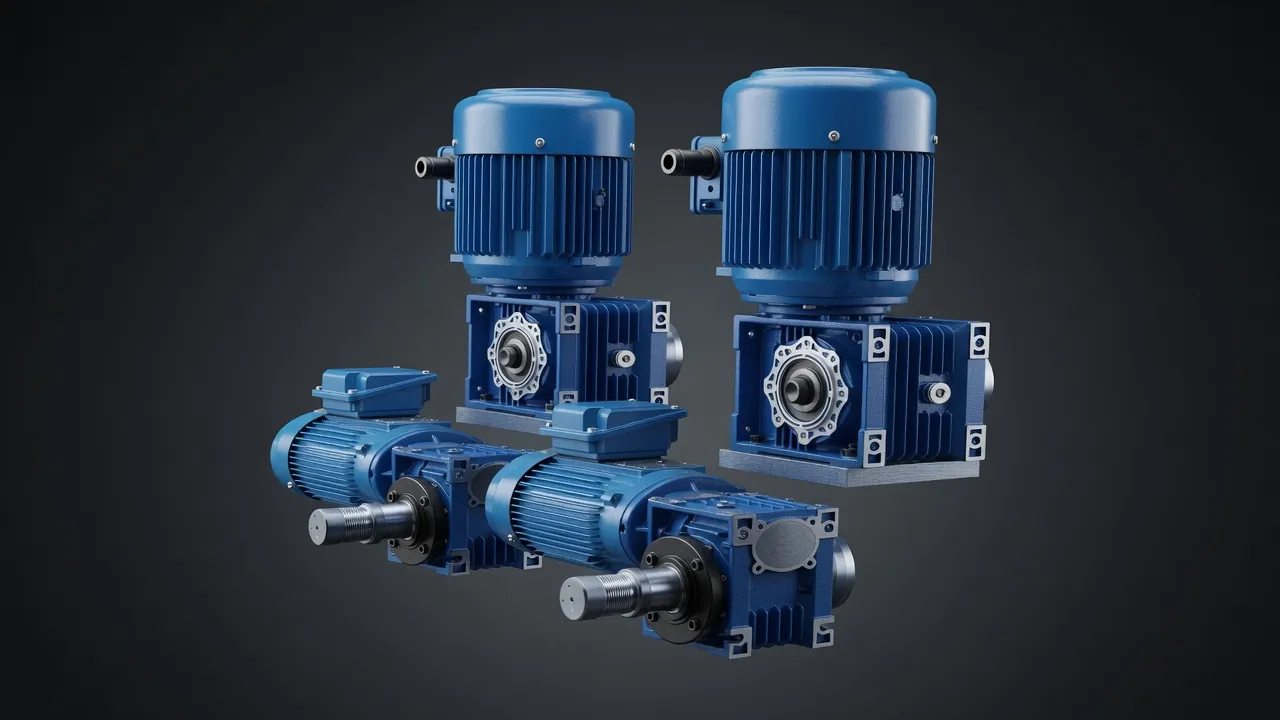
Hygiene and Material Selection for Food Slicers
Food slicers must be constructed so no lubricant can reach the food contact surface. The gearbox output shaft must be protected by double seals with a purge point between them, or positioned entirely outside the food-contact envelope with a food-grade shaft seal at the machine frame boundary. NSF H1 lubricant is mandatory if the gearbox is within 300 mm of an open food product. Stainless steel output shafts (316L) or chrome-plated carbon steel shafts (minimum 50 HRC at seal contact surface) prevent rust contamination risk in wet wash-down environments.
The Case for Hollow Shaft Units on Replaceable Feed Rollers
Commercial food slicers replace feed rollers frequently. The KA hollow shaft worm gearbox slides over the feed roller stub shaft and is held by a torque arm against the slicer frame. Roller replacement takes 5 minutes — remove the keeper ring, slide off the gearbox-motor assembly, swap the roller, and reassemble. The equivalent operation on a solid-shaft unit with a coupling requires unfastening the coupling, removing the shaft key, and dealing with shaft-bore interference that develops over years of service.
Frequently Asked Questions
Get a Sized Recommendation
Share your load data and target speed — our team at Condell Park NSW returns torque calculations and a stock check within one business day.