
A screw conveyor is one of the most mechanically demanding applications a worm reducer can face: constant torque across the full revolution, significant radial loading from the screw’s own weight, and frequent start-under-load conditions when the trough is full. Getting the specification right at the design stage avoids the two most common field failures — overheated housings and broken output shafts.
Why Screw Conveyors Demand Higher Service Factors
Unlike a belt conveyor where load varies with product flow, a screw conveyor often runs against a constant resistance set by material compaction against the trough wall. Wet bulk materials — cement slurry, animal feed pellets, mineral concentrates — can compact around a stopped screw and require two to three times the running torque to break loose on restart. That start torque lands directly on the gearbox output shaft and the first worm mesh, which is why the WP catalogue recommends a service factor of 1.5–1.75 for cohesive materials, rising to 2.0 for slurries with high solid content.
Right-Angle Drive: The Geometric Advantage
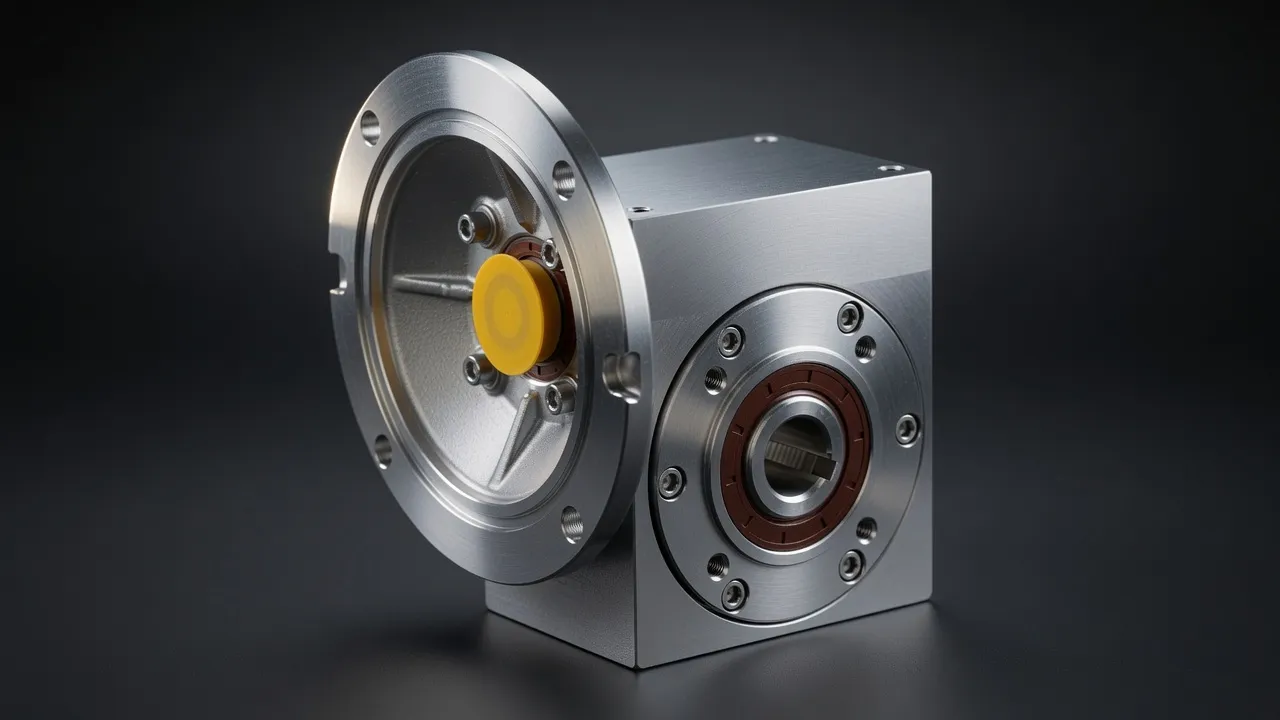
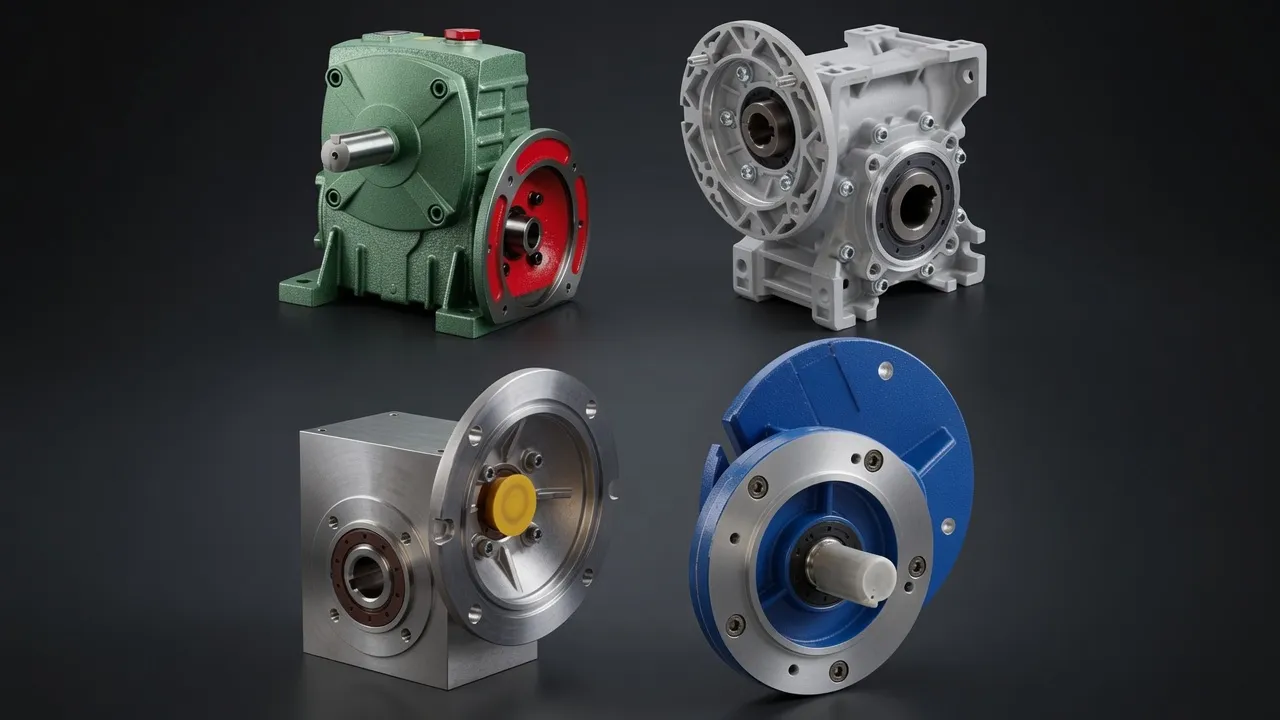
Most screw conveyors run the motor perpendicular to the auger axis to keep the drive assembly narrow enough to fit between the end trough and the support structure. A worm gearbox provides the 90° shaft offset in a single stage, where a parallel-shaft reducer would need a separate bevel stage or a complex chain arrangement. The WPO and WPZ series with vertical output shaft suit vertical screw conveyors feeding hoppers from below; standard WPA or WPDA units serve the more common horizontal and slightly inclined configurations.
WPA — Foot Mounted
Standard base-mounted unit. Suited to horizontal or inclined screws where the motor and reducer sit on a common baseplate beside the conveyor end.
WPDA — Motor-Flange
IEC flange on input accepts motor directly. Compact end-to-end arrangement for inline installation where space around the trough head is limited.
WPO / WPZ — Vertical Output
Output shaft points upward into the screw tube. Common on vertical screws discharging into overhead bins or mixing vessels.
WPKA — Hollow Shaft
Bore slides directly over the screw shaft stub. Eliminates coupling hardware and simplifies replacement when the screw wears out.
Sizing for Start-Under-Load Torque
| Material Type | Running Factor | Start Factor | Recommended Service Factor |
|---|---|---|---|
| Free-flowing grain, pellets | 1.0 | 1.5 | 1.2 |
| Dry cement, fly ash | 1.2 | 2.0 | 1.5 |
| Wet sand, mineral concentrate | 1.4 | 2.5 | 1.75 |
| Animal manure slurry | 1.5 | 3.0 | 2.0 |
| Sticky clay, adhesive paste | 1.8 | 3.5 | 2.5 |
Multiply calculated running torque by service factor to obtain gearbox selection torque.
Cantilever Load from the Screw Shaft
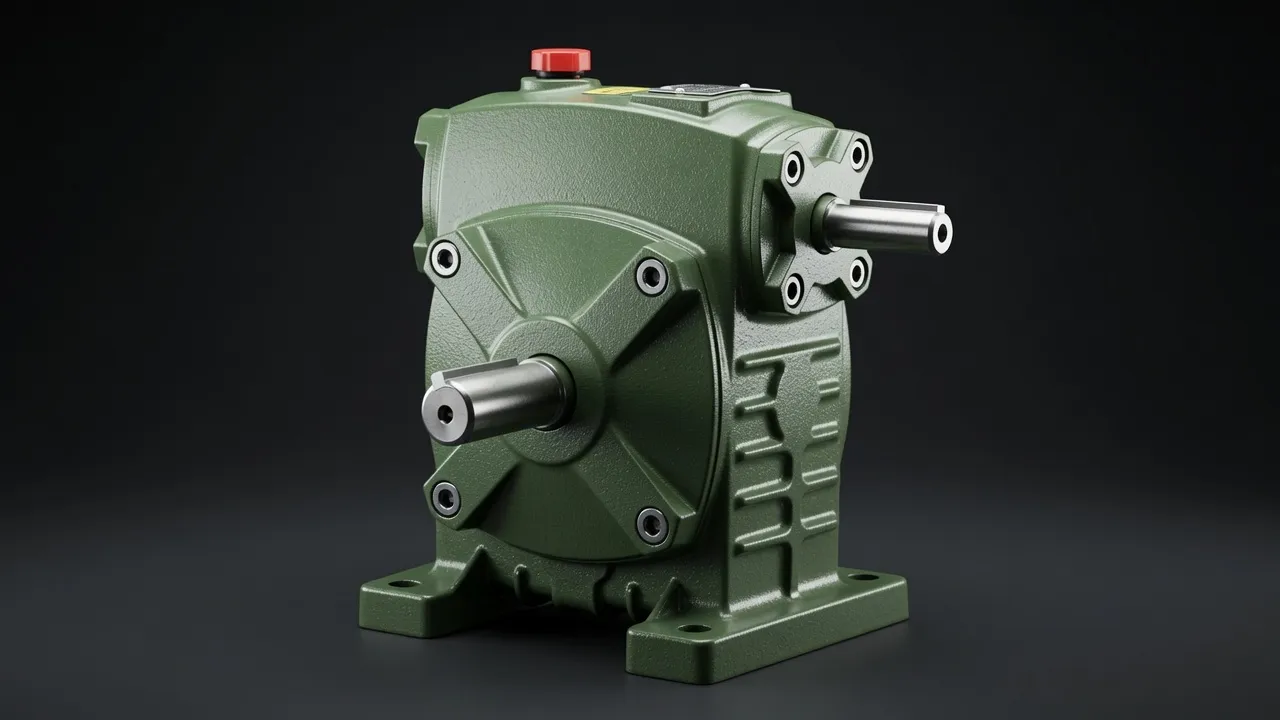
The screw shaft exerts a radial load on the gearbox output bearing every time it rotates under the weight of the auger and trapped material. For a 4-metre 200 mm diameter screw filled with wet sand at 1 900 kg/m³ and 40% fill, the shaft weight alone can exceed 600 N at the drive end. For a WPA 100 at low speeds the cantilever limit is around 2 100 N — accommodating most horizontal screws up to 250 mm diameter. Longer or larger screws need either a steady bearing at the opposite end or a larger frame.
Lubrication in Dusty and Wet Environments
Screw conveyors handling dusty dry materials (flour, cement, lime) run in environments where fine particles infiltrate every seal gap. The DS split-housing series allows inspection and re-sealing without removing the shaft connections. For pharmaceutical screw conveyors, the HSRV stainless steel worm gearbox addresses hygiene requirements without the bulk of a helical-bevel unit. Use a synthetic polyglycol lubricant if the ambient temperature fluctuates widely — it maintains more consistent viscosity across a wider temperature range than mineral oil.
Frequently Asked Questions
Get a Sized Recommendation
Share your load data and target speed — our team at Condell Park NSW returns torque calculations and a stock check within one business day.