Description
Introducing the DS Series Worm Gear Reducer
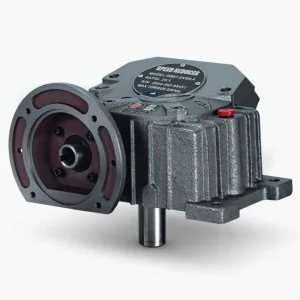
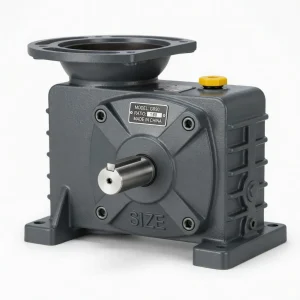
The DS Series brings a practical twist to the single-stage WP worm reducer platform: a split (two-piece) cast-iron housing combined with the S-type motor-flange position (input from above). This split-case construction allows maintenance teams to access and replace the bronze worm wheel without unbolting the reducer from the machine or disconnecting the motor — a significant time saver on production lines where downtime carries a high cost per hour. In every other respect, the DS shares the same hardened-steel worm shaft, tin-bronze wheel, tapered roller bearings, and IEC motor flange found across the single-stage range. Thirteen frame sizes (WP40 through WP250), ratios from 5:1 to 60:1, and six shaft orientations provide the same broad coverage as the one-piece DA model, with the added benefit of field serviceability.
Technical Specifications
Performance figures below are measured at 1,500 r/min input speed under continuous duty. The DS uses the same gear pair geometry as the DA Series, so efficiency and torque ratings are identical per frame and ratio. All output shaft dimensions conform to GB/T tolerances and mate directly with standard couplings, sprockets, and pulleys available from any Australian power-transmission distributor. For specific dimensional drawings, contact us with your required frame size and shaft orientation.
| Frame (mm) | Motor (kW) | Ratios | Torque at 10:1 (N·m) | Peak Torque (N·m) |
|---|---|---|---|---|
| WP40 | 0.12 | 5:1 – 60:1 | 6 | 20 |
| WP60 | 0.37 | 5:1 – 60:1 | 19 | 73 |
| WP80 | 0.75 – 1.5 | 5:1 – 60:1 | 77 | 248 |
| WP100 | 1.5 | 5:1 – 60:1 | 80 | 344 |
| WP135 | 3 – 4 | 5:1 – 60:1 | 219 | 690 |
| WP175 | 5.5 – 7.5 | 5:1 – 60:1 | 415 | 1,450 |
| WP250 | 11 – 15 | 10:1 – 60:1 | 850 | 3,025 |
Design and Engineering Merits
Split Housing for Rapid Service
The housing separates along a horizontal plane that passes through the worm-wheel centreline. Once the upper half is lifted away, the worm wheel sits exposed on the output shaft and can be slid off without disturbing the worm shaft or its bearings in the lower half. This field-replacement capability is particularly valued in 24/7 process plants — sugar mills, cement kilns, continuous casting lines — where a full reducer swap would involve rigging, re-alignment, and many hours of lost production. The parting line is sealed with a precision-ground gasket and dowel-pinned for repeatable register, so reassembly restores the original bearing alignment automatically.
S-Type Motor Orientation
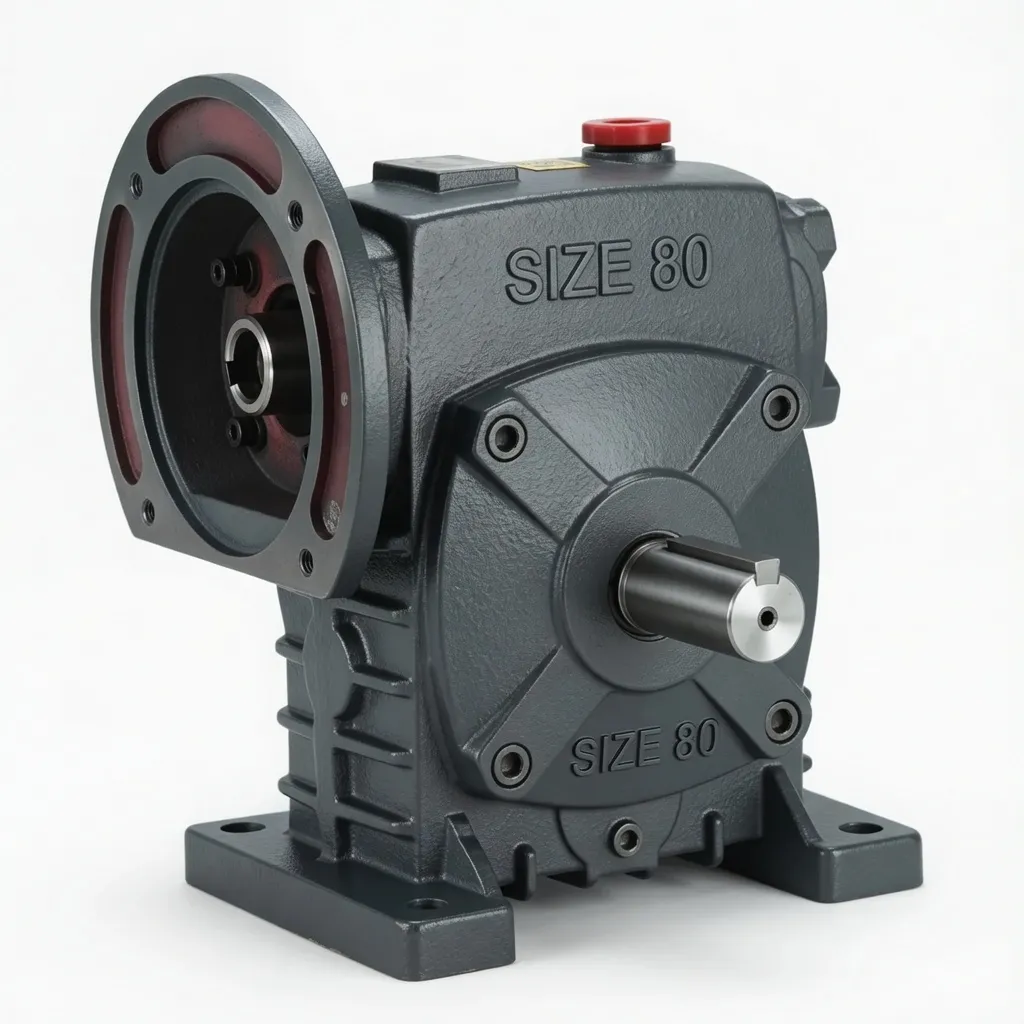
Positioning the motor above the worm gear reducer keeps the motor clear of floor-level debris, coolant splash, and fork-lift traffic. This overhead layout also shortens vertical drivetrain height when the output shaft drives downward into a hopper, bin gate, or rotary valve. The motor flange accepts A02 and Y-series IEC motors, and the h6-tolerance input bore guarantees concentric coupling without shimming or dial-indicating.
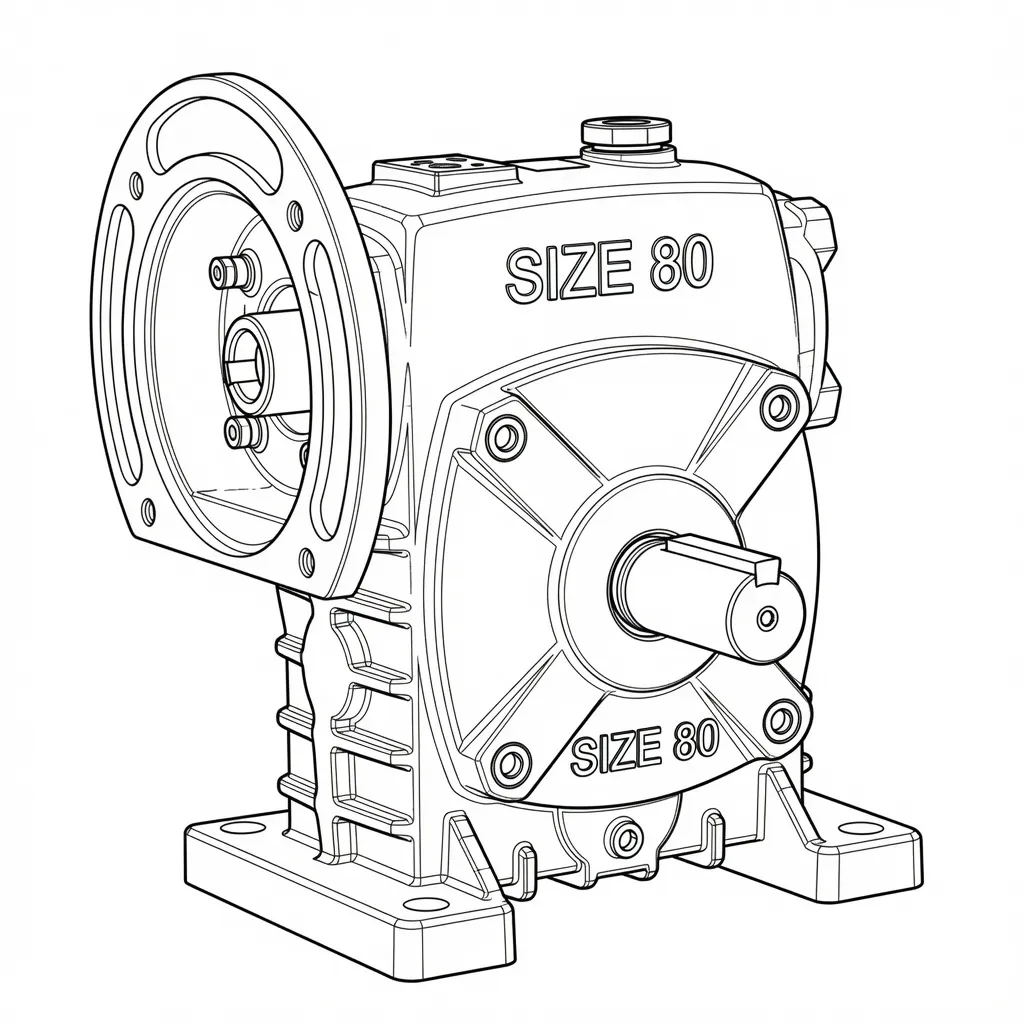
Split-housing parting line and S-type motor flange position
Manufacturing Process
Every DS reducer moves through four tightly controlled production stages. The card overview below illustrates the journey from raw casting to tested, oil-filled unit ready for dispatch.
Casting
High-grade grey cast iron is poured into precision moulds, producing a split housing that separates cleanly along the worm centreline for easy assembly and future servicing.
CNC Machining
Bearing bores, output shaft seats, foot pads, and the IEC motor flange are machined in a single CNC setup to hold coaxiality within 0.02 mm.
Gear Finishing
The worm shaft is thread-ground on a dedicated grinding machine; the bronze wheel is hobbed and shaved to achieve full-depth tooth contact across the mesh width.
Assembly & Test
Bearings, seals, and the gear pair are assembled, filled with EP gear oil, and run under load on a test bench to verify noise, temperature, and output torque before packing.
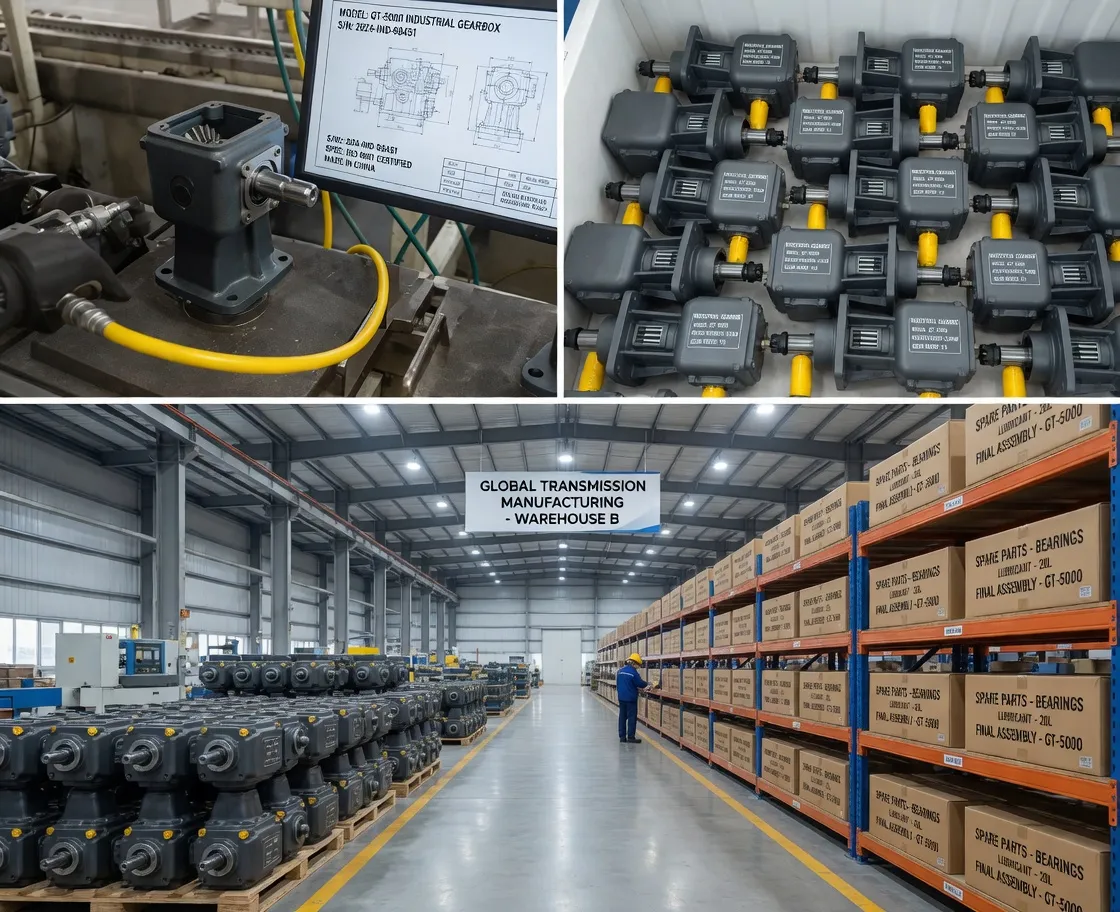
Precision bore-milling on the DS split housing
Application Scenarios
Sugar and Grain Processing
Screw conveyors, paddle mixers, and rotary feeders in sugar mills and grain elevators run around the clock during harvest season. The DS Series in the WP100–WP175 range delivers the torque these machines need at the low output speeds (25–75 r/min) they operate at. The split housing means a worn worm wheel can be swapped during a scheduled four-hour maintenance window rather than requiring a full weekend shutdown, keeping throughput on track.
Pump and Fan Drives
Centrifugal pumps from Grundfos, Sulzer, and KSB, as well as industrial fans, frequently mount a right angle worm gearbox between the motor and the impeller to reduce speed and multiply torque. The DS S-type layout places the motor horizontally above the reducer while the output shaft descends vertically into the pump bracket — a clean geometry that avoids the need for a separate right-angle coupling. At ratios of 15:1 to 25:1, the efficiency of the worm pair stays above 74 %, keeping energy costs in check.
Lubrication Recommendations
Fill the DS with ISO VG 220–320 EP mineral gear oil for ambient conditions up to 40 °C. Proven lubricant brands include Shell Omala S2 G 220, Mobil Gears 627, and Esso Spartan EP 320. Change the oil after the initial 100 running hours, then at 2,500-hour intervals or once annually. When servicing the split housing, clean both mating faces with a lint-free cloth and apply a thin bead of non-hardening gasket sealant before re-torquing the housing bolts to specification. This prevents oil weeping at the parting line during operation. Our speed reducer gearbox platform documentation includes frame-specific oil quantities and torque values for every housing bolt.
Ever-Power Australia — Your Local Supply Partner
Ever-Power Transmission Australia Pty Ltd stocks the DS Series alongside the full single-stage WP range at our Condell Park, NSW facility. We also carry replacement worm wheels, seal kits, and gasket sets for every frame size, so field-service jobs can be completed without long lead-time delays. Our engineers assist with sizing, motor-frame matching, and mounting-arrangement advice — call +61 2 9708 3322 or email [email protected]. For applications needing a helical pre-stage to boost overall efficiency, see our PCNMRV pre-stage helical worm gearboxes line.