
Construction hoists — material hoists, builder’s hoists, and concrete placement hoists on building sites across NSW — operate in some of the most demanding conditions any gearbox encounters: sustained high-torque lifting, frequent start-stop cycles under full load, outdoor exposure to concrete slurry, cement dust, and rain, and an expectation of reliable operation from the first pour to the topping-out of a building with almost no maintenance access. Selecting the right worm reducer for a construction hoist means accounting for duty class, thermal management, and the structural loading on the output shaft — not just the nameplate lifting capacity.
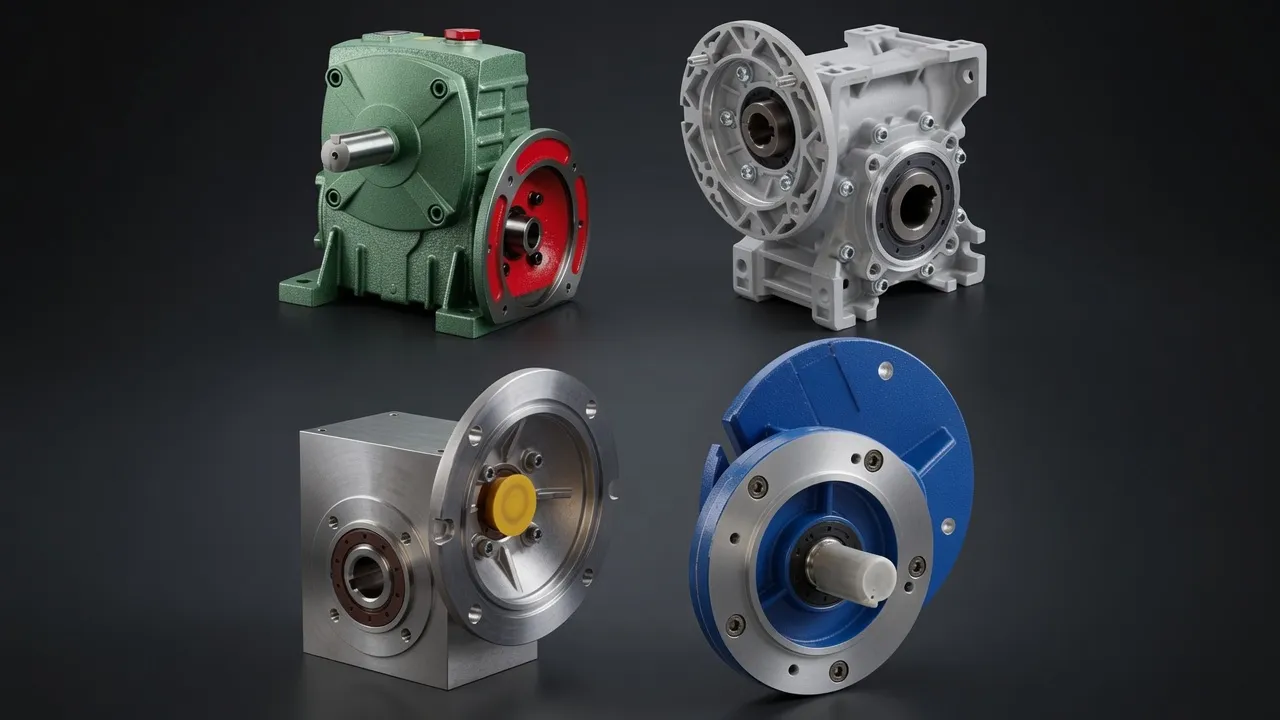
Construction Hoist Duty Classification
The FEM and ISO duty classification system for hoists defines six classes (M1 through M8) based on the total number of operating cycles over the life of the machine and the proportion of time spent at maximum load. Construction hoists on multi-storey residential or commercial projects typically fall in the M5–M6 range — hundreds of thousands of lifts over a project lasting 12–24 months, with loads varying from empty skip (20% of maximum) to full concrete bucket (100%). A gearbox selected on continuous rating at maximum load would be oversized and unnecessarily expensive; a gearbox selected on the M5/M6 cycle average and checked against the maximum load peak torque is the appropriate engineering approach.
Torque and Frame Size for Typical Hoist Configurations
| Hoist Type | SWL | Lifting Speed | Drum Radius | Peak Output Torque | WP Frame (indicative) |
|---|---|---|---|---|---|
| Light material hoist, 6-storey | 300 kg | 18 m/min | 100 mm | 490 N·m | WPA 120, 1:30 |
| General builder’s hoist, 10-storey | 500 kg | 15 m/min | 120 mm | 980 N·m | WPA 155, 1:30 |
| Heavy material hoist, 20-storey | 1 000 kg | 12 m/min | 150 mm | 2 450 N·m | WPA 200, 1:30 |
| Concrete bucket hoist, 15-storey | 1 200 kg | 10 m/min | 130 mm | 3 060 N·m | WPA 250, 1:25 |
| Suspended platform, multi-level | 500 kg × 2 | 8 m/min | 100 mm | 980 N·m × 2 | Twin WPA 155 units |
Peak output torque calculated at maximum SWL without service factor. Apply 1.5× for M5/M6 selection torque.
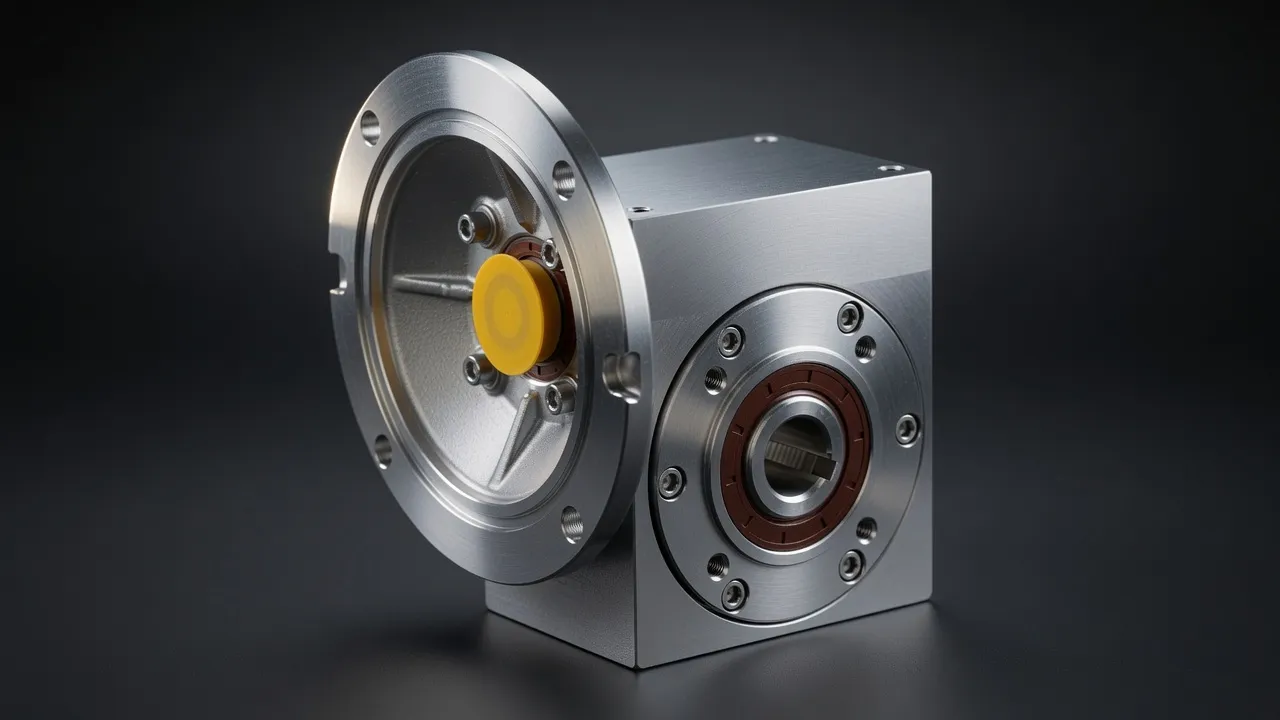
High-Torque Drive: Single Stage vs Double Stage
Construction hoists requiring more than 2 500 N·m at the drum shaft face a sizing challenge with single-stage WP units — only the WPA 250 (the largest standard frame, rated approximately 2 745 N·m at 1:30) covers this range without an intermediate mechanical stage. For higher torques, two options exist: a double-reduction WPE unit providing higher ratios and correspondingly higher output torque from a smaller motor, or a single-stage WP unit combined with a chain stage that provides a secondary torque multiplication. The chain stage approach is more common on construction hoists because it allows a faster drum speed (and faster lifting speed) while keeping the gearbox within its optimal torque range, and the chain stage itself provides a convenient breakpoint for maintenance — chain replacement is simpler than gearbox overhaul on a building site.
Thermal Management in High-Duty Construction Hoists
A concrete placement hoist running continuous cycles on a tower crane pour day — 8 hours of near-continuous lifting at 90% of maximum load — imposes a severe thermal load on the gearbox. The worm’s sliding contact efficiency of 70–75% at 1:30 means that 25–30% of the input power becomes heat. At 15 kW input, that is 3.75–4.5 kW of heat dissipation required from the housing surface. Housing surface area of a WPA 200 frame is approximately 0.3 m², and natural convection dissipates roughly 10–12 W per square metre per degree C of temperature rise above ambient. At 35°C ambient on a summer pour day in Sydney, the equilibrium housing temperature is 35 + (4 000 ÷ (0.3 × 11)) = 35 + 1 212°C — clearly the housing cannot dissipate this heat naturally and a fan-cooled or water-cooled solution is required for continuous duty at this power level.
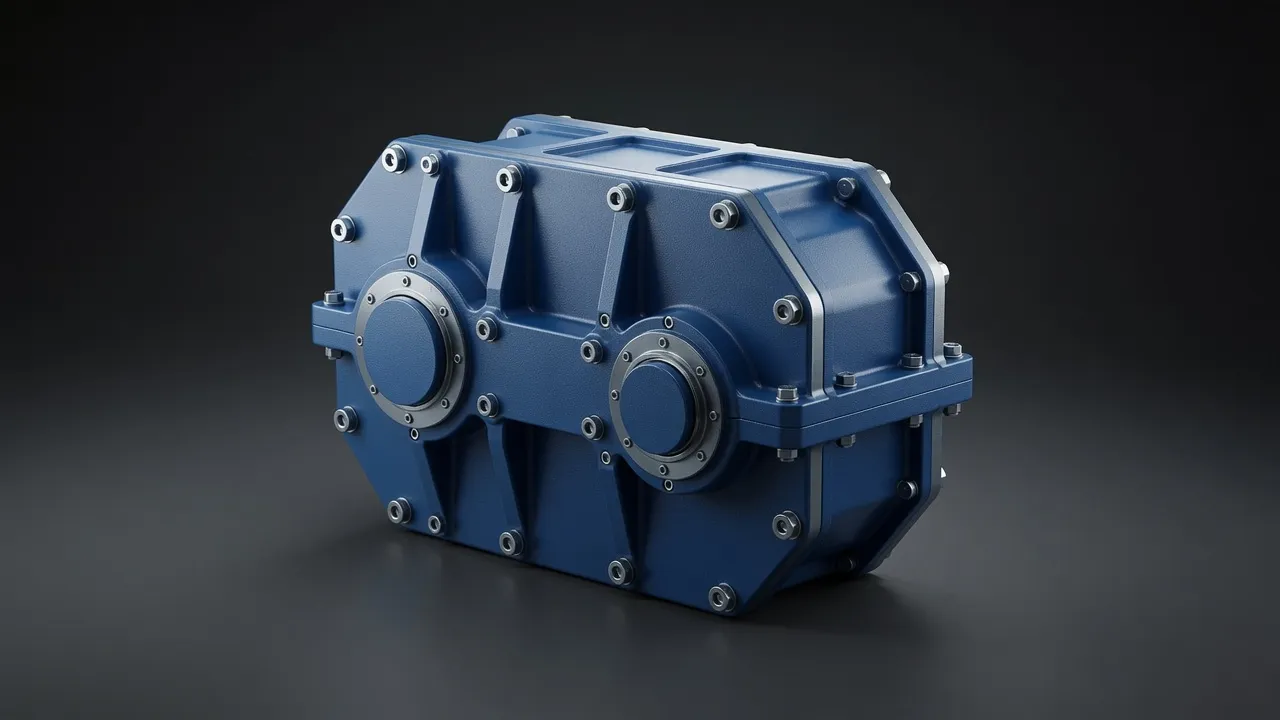
Output Shaft Loading from Hoist Chain and Drum
The output shaft on a construction hoist gearbox carries both the torque load and the radial load from the chain sprocket or drum flange. For a WPA 200 unit on a 1 000 kg SWL hoist, the radial load from the chain pull alone can reach 10 kN — close to the catalogue maximum cantilever load for that frame at the relevant speed. Always check the cantilever load table in the WP catalogue for the specific configuration, and if the chain geometry produces an overhung load above the limit, fit an external bearing on the output shaft to redistribute the load.
Dust and Concrete Sealing Requirements
Cement dust and concrete slurry are among the most abrasive and corrosive substances an outdoor gearbox encounters. Fine cement particles infiltrate standard lip seals within weeks, acting as a lapping compound that rapidly scores the shaft seal contact surface. Specify labyrinth seals with an additional dust exclusion lip, and apply a greased felt wiper ring around the output shaft outside the labyrinth to catch airborne cement before it reaches the seal. Clean the wiper ring and regrease it at weekly intervals on active pour sites. The DA series with enhanced sealing and the RR528/RR577 heavy-duty worm gearbox both provide options for construction and heavy industrial environments where standard sealing is inadequate.
Frequently Asked Questions
Speak with a Drive Specialist
Send through your load data, speed requirement, and application environment — our team at Condell Park NSW provides a sized gearbox recommendation and stock availability check within one business day. No obligation.