
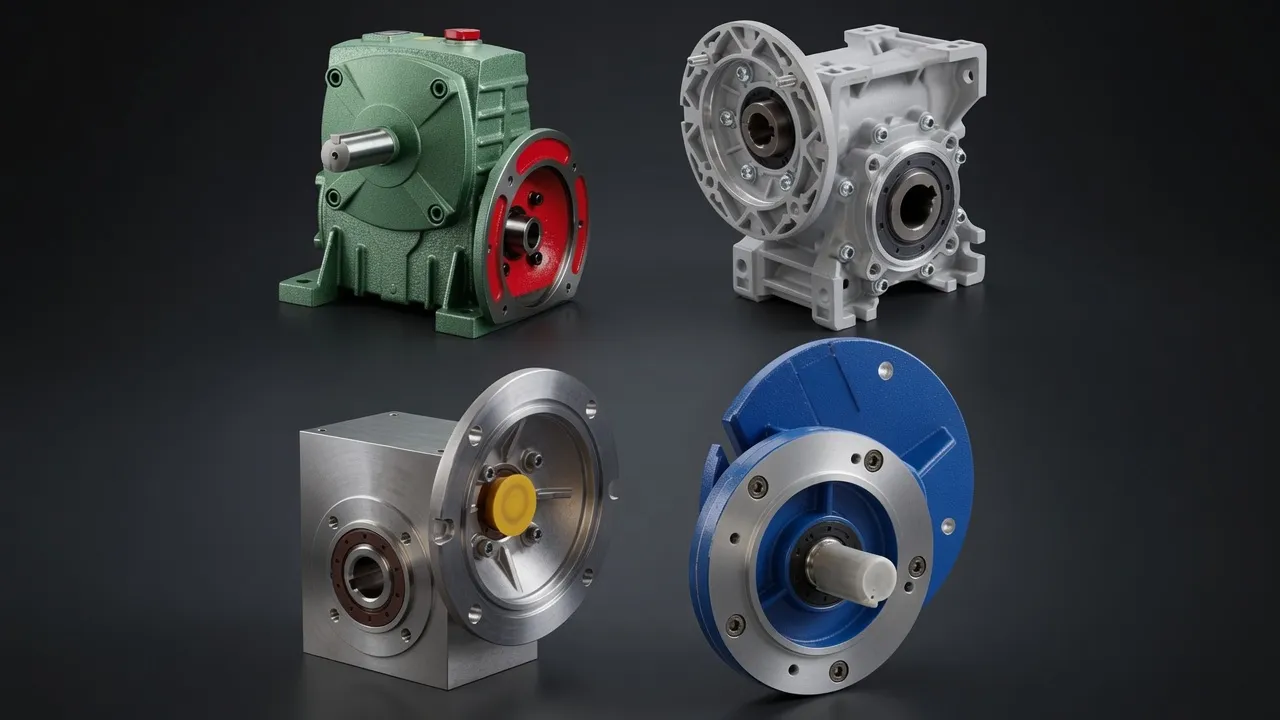
Crane auxiliary drives — slow-speed travel drives, trolley travel mechanisms, slewing ring positioners, and jib rotation units — carry a safety classification that immediately elevates the requirements above standard industrial machinery. A failure in a crane drive does not result in a conveyor belt stoppage or a production delay: it can result in a swinging load, a runaway trolley, or an uncontrolled slew that endangers personnel. This context shapes every aspect of the worm gearbox selection for crane auxiliary service — torque margin, self-locking reliability, brake specification, and the structural integrity of the housing under shock loads.
What Makes Crane Auxiliary Drives Different
The term “auxiliary drive” on a crane refers to the drives that move the crane itself — the bridge travel drive, the trolley travel drive, and the slewing mechanism — as opposed to the main hoist. These drives move much slower than the hoist but carry the full inertia of the crane structure plus any suspended load. A 10-tonne overhead crane bridge travel mechanism must smoothly accelerate a 5-tonne bridge, 1-tonne trolley, and 10-tonne suspended load at 0.2 m/s² without wheel slip on the rail. The gearbox that drives the bridge travel wheel must produce this tractive force consistently at the specified speed, across thousands of daily cycles, in an environment that may include steel dust, high ambient temperature (foundry applications), or outdoor weather exposure on a gantry crane.
Self-Locking and Holding Torque Requirements
Crane auxiliary gearboxes are almost universally specified with self-locking worm drives at ratios of 1:30 and above. The self-locking property prevents the crane bridge or trolley from drifting when the drive motor is de-energised at a mid-travel position, which would otherwise require a separate parking brake on every travel axis. For slewing ring drives, the self-locking worm prevents the jib from swinging uncontrolled when the slewing motor is stopped mid-rotation. The critical specification is that the self-locking torque must exceed the maximum holding torque from wind load, pendulum effect of the suspended load, and any slope or camber in the crane runway rail.
| Crane Type | Auxiliary Drive | Typical Output Speed | Holding Torque Requirement | WP Unit |
|---|---|---|---|---|
| EOT crane, 5 t SWL | Bridge travel, 20 m/min | 15–25 rpm at wheel | 800–1 200 N·m | WPA 155, 1:30 |
| EOT crane, 20 t SWL | Bridge travel, 15 m/min | 10–18 rpm at wheel | 2 500–4 000 N·m | WPA 250, 1:30 |
| Gantry crane, outdoor | Trolley travel, 12 m/min | 8–15 rpm at wheel | 1 500–2 500 N·m | WPA 200–250, 1:30 |
| Jib crane, 3 t | Slewing drive | 1–2 rpm at jib ring | 1 200–2 400 N·m | WPE 1:300, 100-155 |
| Overhead crane, 50 t | Long travel drive | 8–12 rpm at wheel | 8 000+ N·m | Custom compound drive |
Holding torque includes wind load at design speed plus 25% inertia margin. Verify against site wind design.
Brake Specification for Crane Safety Compliance
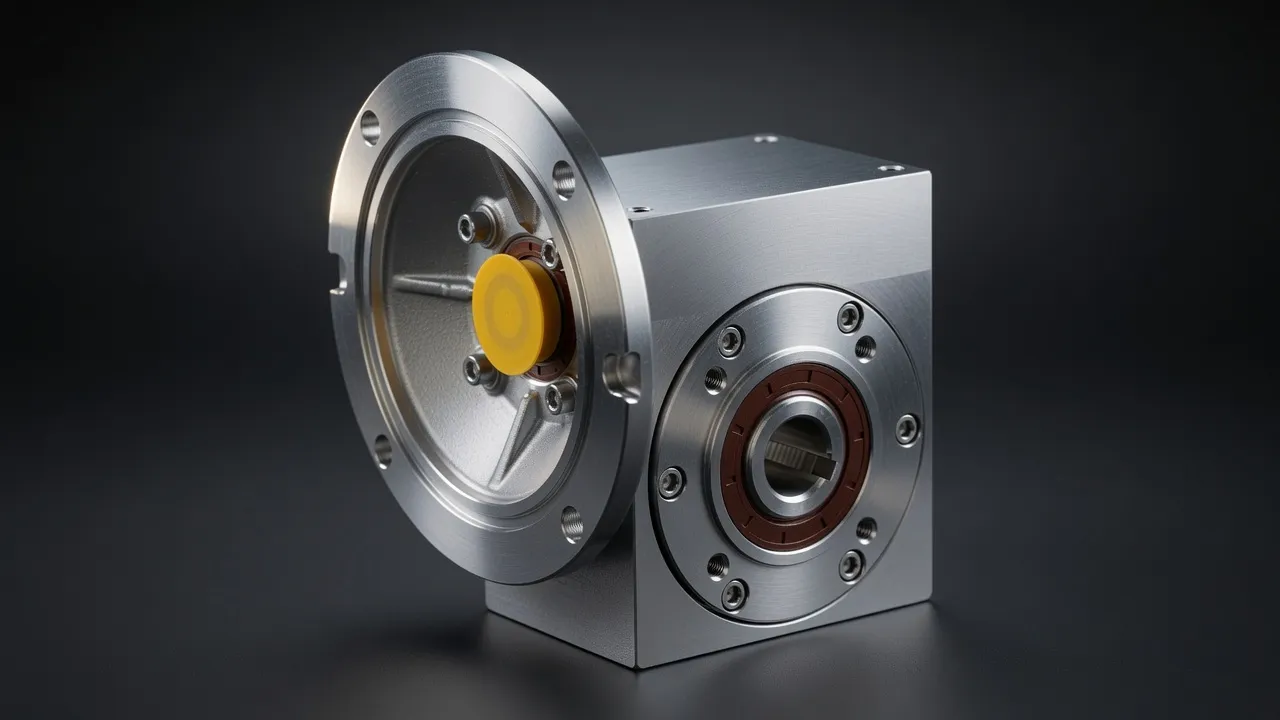
Australian Standards AS 4991 (cranes) and the relevant WHS codes require that all powered crane motions have independent positive brakes capable of holding the load under all design conditions. The worm gearbox self-locking property does not substitute for a rated brake — it supplements it. The motor-mounted electromagnetic brake is the primary safety device; the worm’s self-locking is the secondary. The brake must hold the maximum torque at the rated holding condition (maximum load on maximum grade) without any contribution from the worm mesh friction.
Brake sizing for crane travel drives: holding torque at the motor shaft equals the required wheel tractive force multiplied by the wheel radius, divided by the total drive ratio (gearbox ratio × any chain or gear stage ratio). For a 10-tonne bridge at 0.05 g deceleration force (490 N), 150 mm travel wheel radius, and 1:30 gearbox with 2:1 chain stage: motor brake torque = 490 × 0.15 ÷ 60 = 1.23 N·m minimum. Standard motor brakes are rated at 150–200% of motor nominal torque — verify that figure exceeds the required holding torque at the specified motor.
Thermal Management on Frequent-Start Crane Drives
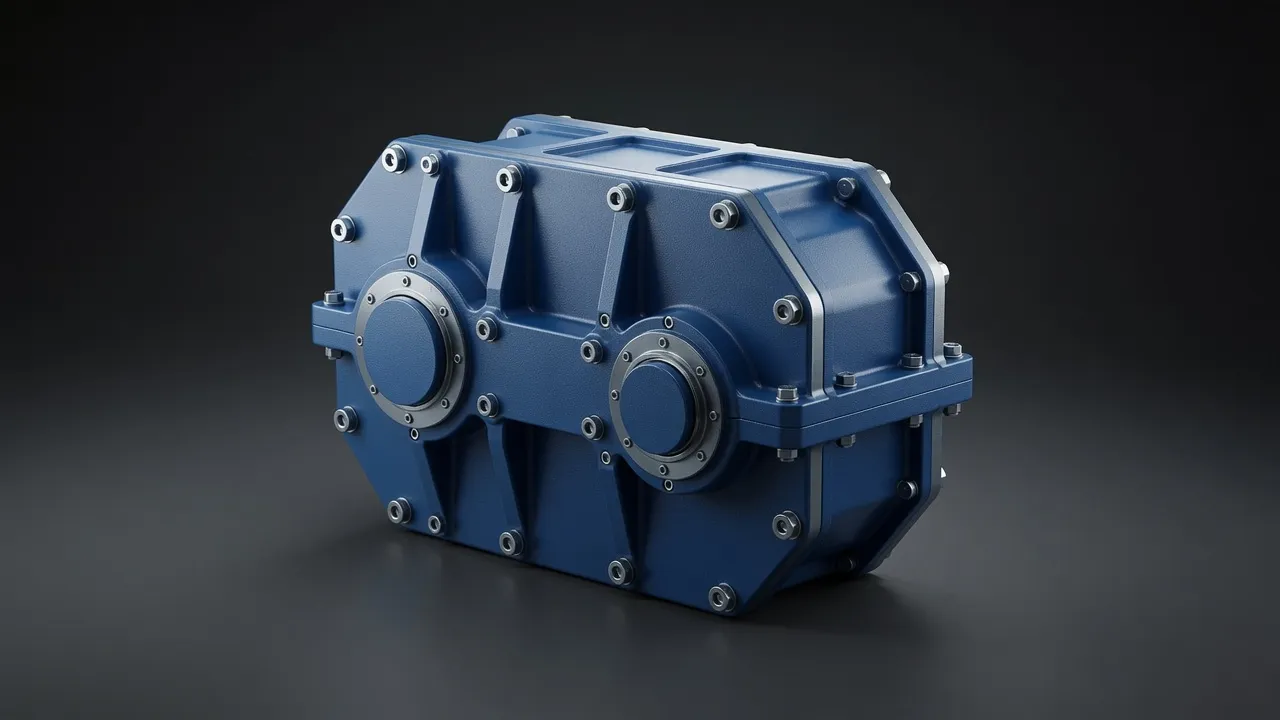
Crane travel and trolley drives start and stop frequently — a typical manufacturing plant crane may cycle 200–400 times per day. Each start-stop cycle imposes a brief high-current inrush to the motor and a corresponding high-torque pulse to the gearbox. The aggregate heating effect from these inrush cycles is captured by the motor duty class (typically S4 or S5 for crane service), but the gearbox also accumulates heat from each start transient, even though the average torque during travel is modest. For crane service above 200 cycles per day, specify the gearbox frame one size above the average-torque requirement to provide additional thermal mass and surface area to manage the start-cycle heating.
Long-Travel Drives: Multiple Gearboxes or Mechanical Shaft
On long-span overhead cranes (spans above 25 m), driving both end-carriages from a single motor through a long lineshaft is the traditional approach — the lineshaft ensures perfect synchronisation between the two travel wheels and prevents the “crabbing” that occurs when one end travels faster than the other. Worm gearboxes at each end of the lineshaft provide the final wheel-speed reduction. The DA series worm reducer with matching output shaft diameter and mounting interface at both ends ensures identical torque delivery to both wheels. For modern variable-frequency drive systems where each end-carriage has its own motor, synchronisation is handled electronically — the gearboxes are independent, and the VFD controllers maintain speed matching through encoder feedback.
Frequently Asked Questions
Speak with a Drive Specialist
Send through your load data, speed requirement, and application environment — our team at Condell Park NSW provides a sized gearbox recommendation and stock availability check within one business day. No obligation.