
Concrete mixers — from 250-litre portable site mixers to 5 m³ twin-shaft batching plant mixers — subject their drive gearboxes to a combination of abuse that is almost unique in the industrial world: heavy, impulsive torque as fresh concrete resists paddle motion, continuous operation for hours in dusty and wet conditions, vibration from the drum rotation and aggregate impact, and the constant presence of alkaline concrete slurry that attacks every seal and coating system within reach. The worm reducer that survives this environment for years rather than months is selected for the duty, not for the catalogue rating alone.
Torque Demand in Concrete Mixing: Why It Is Not Constant
A concrete mixer does not present a steady torque load to the gearbox — it presents a highly variable torque that depends on the water-cement ratio, the aggregate grading, the fill level, and the mixing time. At the start of a dry mix cycle, when sand and cement are combined before water is added, the paddle resistance is relatively low. As water is added and the mix becomes plastic, resistance increases sharply. If the mix becomes too dry (low water-cement ratio) or if aggregate bridging occurs, the paddle can stall momentarily, applying 3–5× the steady running torque as a spike. These spikes are what destroy undersized gearboxes — not the average torque, but the peak.
Service Factor for Concrete Mixer Applications
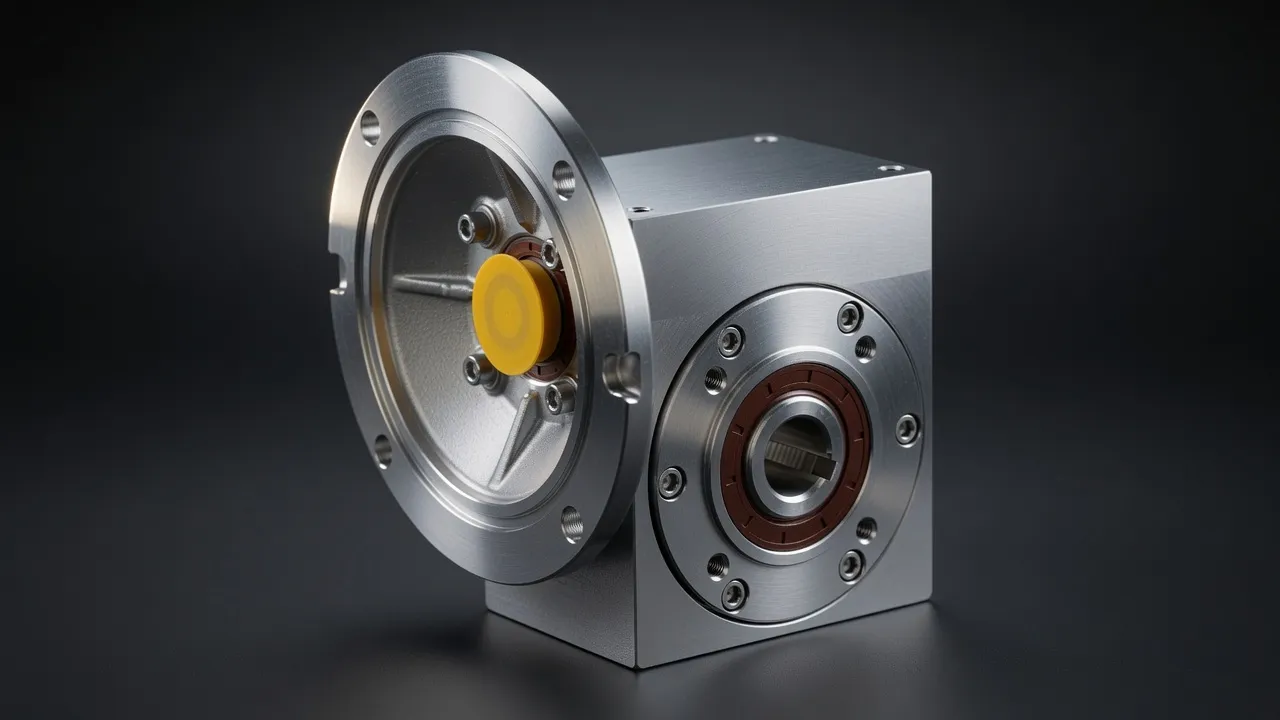
The WP catalogue service factor table places concrete mixers in the heavy-shock category, typically calling for a factor of 2.0–2.5 applied to the calculated steady-state torque. For a 500-litre mixer producing a 2 400 kg/m³ mix at 40% fill factor with a 1.2 m diameter drum turning at 18 rpm, the estimated running torque is roughly 380 N·m. Multiplying by 2.5 gives a selection torque of 950 N·m — requiring at minimum a WPA 155 at 1:30 (rated 848 N·m) or WPA 175 at 1:30 (rated 1 189 N·m). Given that concrete mixers regularly stall and require starter overload protection anyway, the WPA 175 with its larger torque margin is the more robust choice.
| Mixer Type | Drum Volume | Estimated Running Torque | Service Factor | Selection Torque | WP Frame |
|---|---|---|---|---|---|
| Portable site mixer | 250 L | 120 N·m | 2.0 | 240 N·m | WPA 100, 1:30 |
| Transit mixer drum | 3 m³ | 800 N·m | 2.5 | 2 000 N·m | WPA 250, 1:25 |
| Pan mixer, batch plant | 500 L | 350 N·m | 2.5 | 875 N·m | WPA 175, 1:30 |
| Twin-shaft mixer, 2 m³ | 2 000 L | 1 200 N·m | 2.5 | 3 000 N·m | WPE + chain stage |
| Planetary mixer, precast | 750 L | 500 N·m | 2.0 | 1 000 N·m | WPA 175–200, 1:30 |
Running torque estimated at 60% fill, normal concrete mix. Actual figure requires test measurement.
Alkaline Environment and Seal Protection
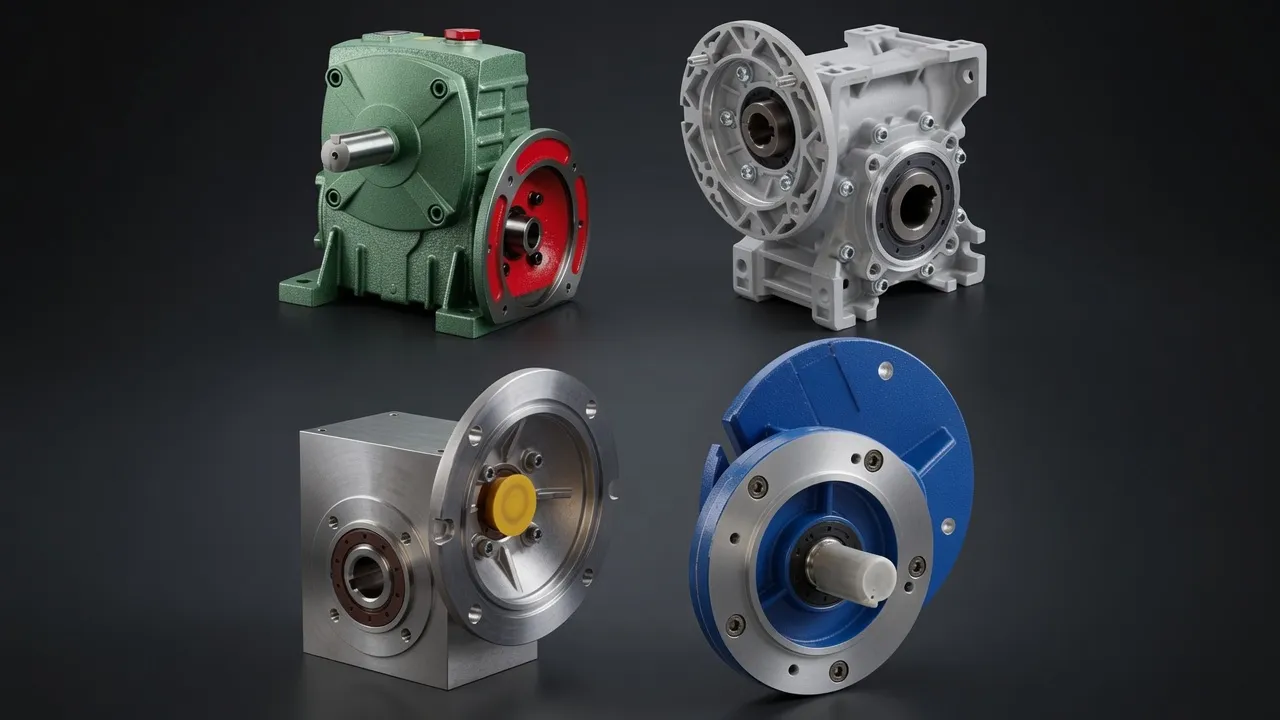
Concrete has a pH of 12–13 — strongly alkaline, which attacks standard seal rubber compounds, surface coatings, and even the tin-bronze alloy of the worm wheel when direct contact occurs. The primary protection is physical exclusion: ensuring that concrete slurry cannot reach the gearbox output shaft seal. In drum mixers, the output shaft enters the drum through a flinger collar that throws slurry outward by centrifugal action before it can track along the shaft to the seal lip. In pan mixers, where the paddles are driven from above or below the pan, the shaft passes through a seal housing that must be both alkaline-resistant (EPDM or Viton seal material, stainless shaft contact surface) and replaceable on site in under 30 minutes when worn. The DS split-housing series allows the output shaft seal to be replaced without removing the shaft or the gearbox from its mounting — a significant advantage on a batch plant where downtime directly affects production output.
Continuous Duty and Thermal Limits
A batch plant concrete mixer running two 20-minute mix cycles per hour for 10 hours per day operates at approximately 67% duty cycle — well above the light-duty threshold. At this duty level, the worm gearbox must dissipate substantial heat continuously. The WPA 175 housing surface area (approximately 0.2 m²) can dissipate roughly 2 000 W through natural convection at 15°C above ambient — adequate for a motor input below 8 kW. For higher-power mixers, a shaft-mounted fan or a unit with an integral cooling fan on the motor-gearbox combination is required to keep housing temperature below 80°C.
Synthetic polyglycol oil (ISO VG 320 or VG 460) is the preferred lubricant for continuous-duty concrete mixers: it maintains stable viscosity across the operating temperature range, resists water emulsification when moisture inevitably enters through worn seals, and extends oil change intervals to 12 months compared to 6 months for mineral oil in this environment.
Drive Arrangement: Direct Output vs Chain Stage
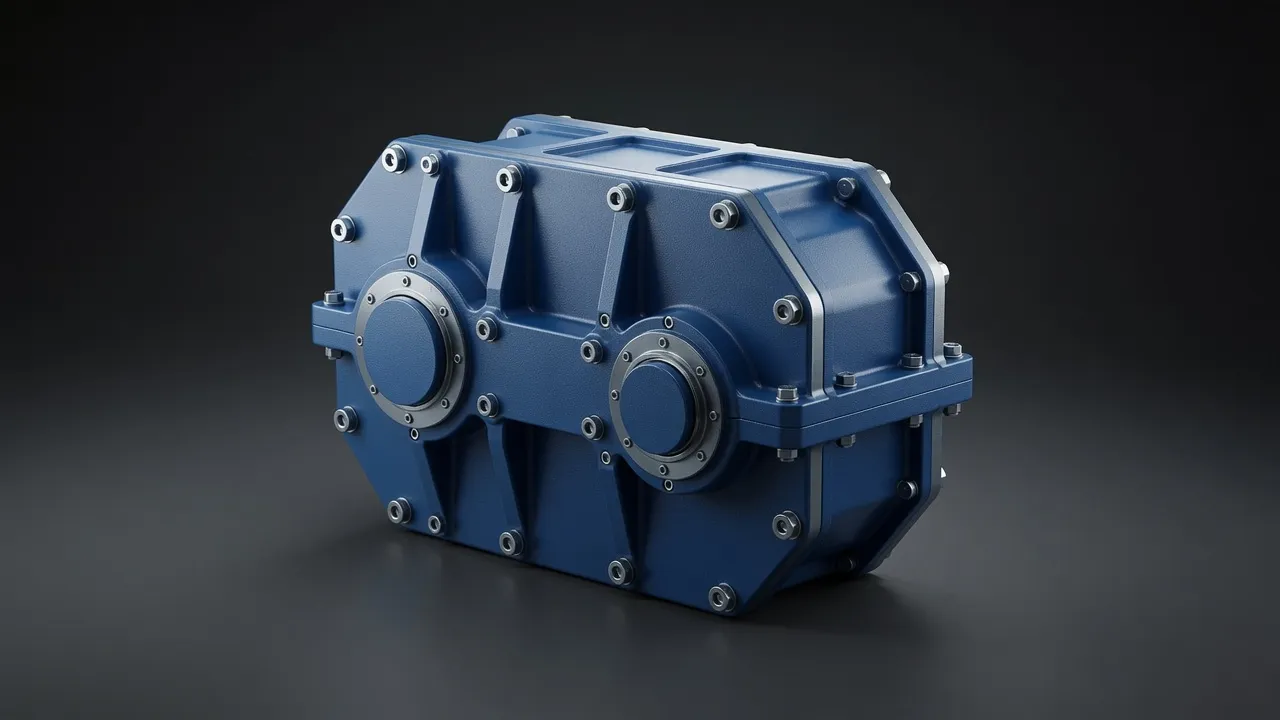
Small and medium drum mixers often drive the drum directly from the gearbox output shaft through a flanged coupling — clean, compact, and with minimal intermediate drive components. For larger mixers where the motor and gearbox must be positioned away from the drum axis (to allow tilting for discharge), a chain drive from the gearbox output to the drum ring gear is the standard arrangement. The O/X series vertical output worm reducer suits mixers where the motor is horizontal and the drum ring gear drive requires a downward-facing output shaft. For batch plant twin-shaft mixers needing synchronised drives from two gearboxes, the RR528/RR577 heavy-duty worm gearbox provides the robust, high-torque housing required for continuous batch plant duty.
Frequently Asked Questions
Speak with a Drive Specialist
Send through your load data, speed requirement, and application environment — our team at Condell Park NSW provides a sized gearbox recommendation and stock availability check within one business day. No obligation.