
Dam gate actuators, sluice gate drives, and overflow weir mechanisms share a requirement almost no other industrial application matches: the drive must hold a multi-tonne gate stationary under variable hydrostatic pressure for days or weeks at a time, in an outdoor installation exposed to flooding, sediment, and UV, with minimal maintenance access. A worm reducer addresses most of these requirements directly — but the IP rating and self-locking torque margin under degraded conditions need careful attention.
Hydrostatic Load and Output Torque Calculation
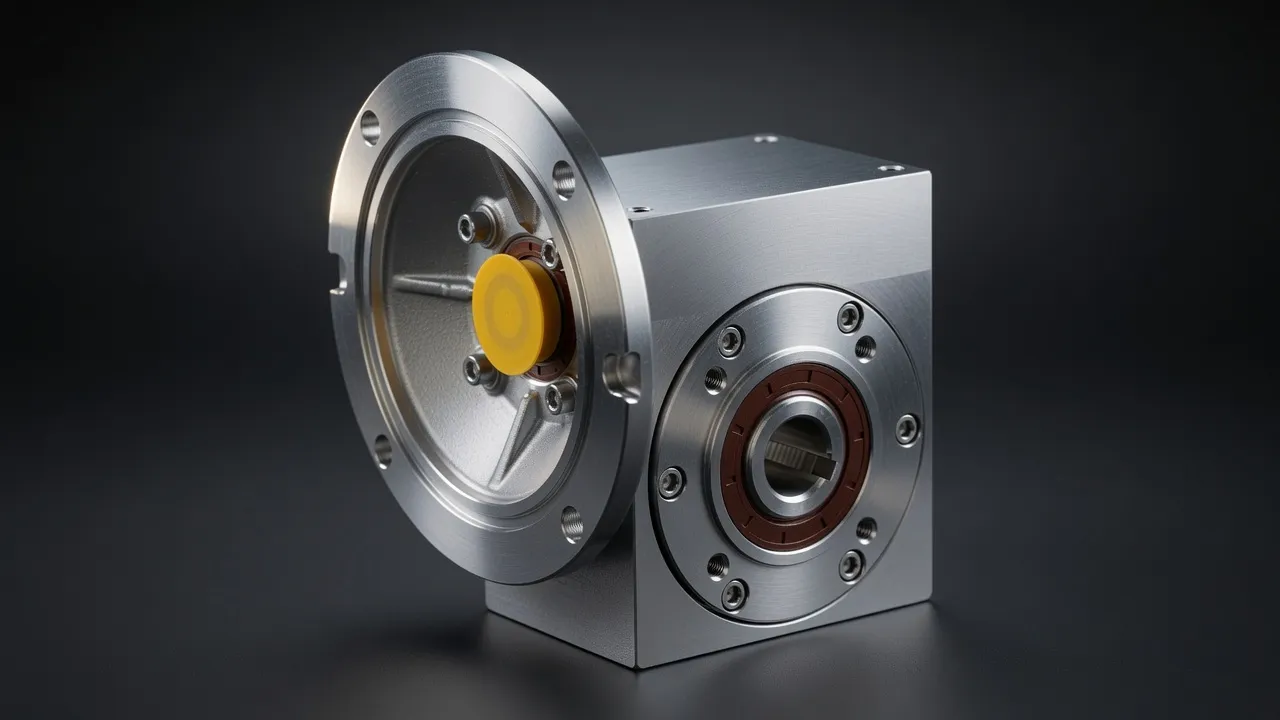
The torque required to turn a gate actuator stem equals the force on the gate multiplied by the mechanical advantage of the stem thread or rack. For a 2 m wide by 1.5 m tall sluice gate with a 3 m head of water above the gate sill, the hydrostatic force reaches approximately 44 kN. With a trapezoidal stem thread of 20 mm lead and 90% thread efficiency, the input torque to the stem nut is roughly 156 N·m. Add gate seal friction (typically 15–25% extra on rubber-sealed gates) and the gearbox output requirement rises to around 190 N·m. The DA series worm reducer at WPA 100 frame, 1:30 ratio (rated 277 N·m), covers that with reasonable margin.
IP Rating Requirements for Submerged and Flood-Risk Installations
IP54 — Standard
Splash-protected. Suitable for outdoor installations under canopy or behind a weir wall where direct water jet is not expected.
IP65 — Dust/Jet
Full dust exclusion plus water jet resistance. Available on WP units with enhanced lip seals — covers most gate actuators in open-channel installations.
IP67 — Temporary Immersion
Immersion to 1 m for 30 minutes. Requires special shaft seals and sealed housing; specify explicitly. Available on selected WP variants.
IP68 — Continuous Submersion
Continuous immersion beyond 1 m. Not available on standard WP cast-iron housings — requires stainless or marine-grade housing variant.
Self-Locking Under Variable Hydrostatic Pressure
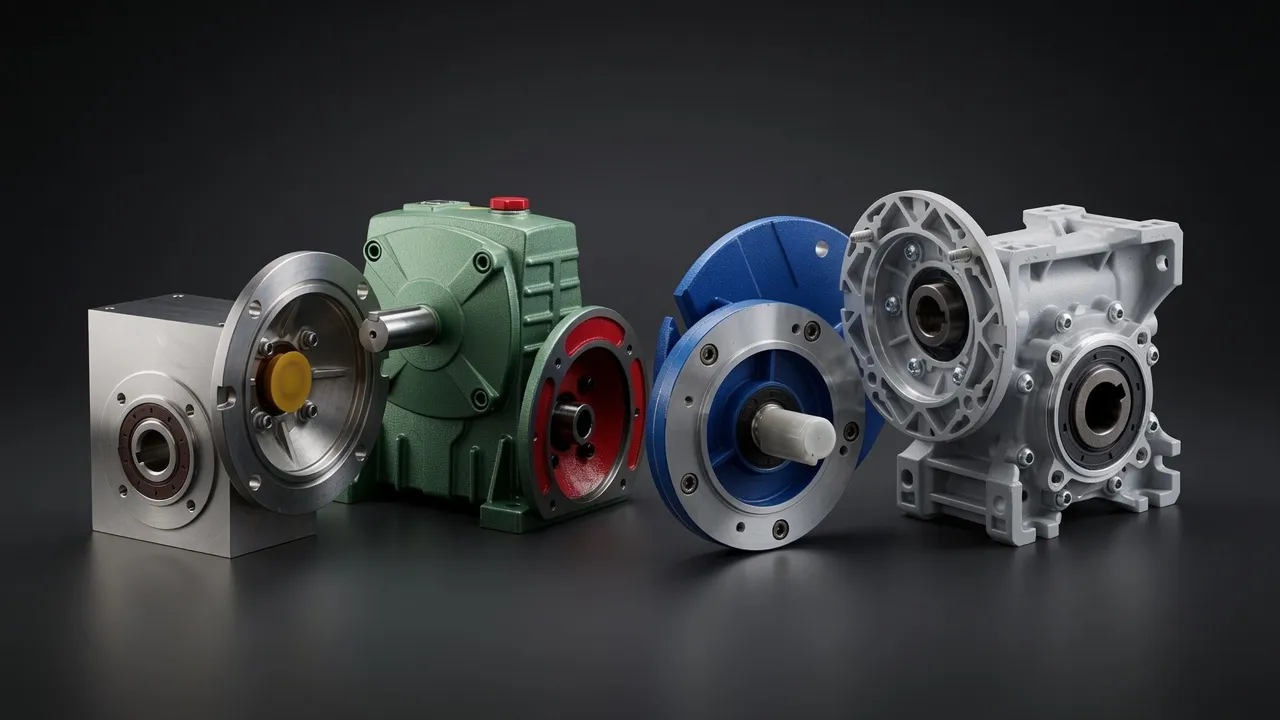
A dam gate must hold against varying upstream head as rainfall events change reservoir levels. Unlike a hoist whose load is constant, the gate actuator may face 2× its sizing torque if the upstream level rises after the gate is set. At a 1:30 ratio, the self-locking margin is robust against moderate torque excursions — the friction angle is typically twice the lead angle, meaning the gate can experience up to 2× rated hydrostatic torque before the worm starts to back-drive slowly. For high-head structures (over 10 m head), specifying 1:50 provides a generous self-locking reserve at the cost of slower gate travel speed.
Corrosion Protection for Long-Service Installations
| Protection Level | Coating System | Expected Life (Coastal NSW) | Fasteners |
|---|---|---|---|
| Standard industrial | Alkyd enamel, 60 µm | 3–5 years | Zinc-plated steel |
| Enhanced outdoor | Epoxy primer + PU topcoat, 100 µm | 8–12 years | Hot-dip galvanised |
| Severe marine/flood zone | 2-pack epoxy, 150 µm | 15–20 years | 316 stainless steel |
| Submersion capable | Epoxy glass-flake, 200+ µm + sealed housing | 20+ years | 316 SS throughout |
DFT = dry film thickness. Coastal exposure defined as within 1 km of tidal water.
Frequently Asked Questions
Get a Sized Recommendation
Share your load data and target speed — our team at Condell Park NSW returns torque calculations and a stock check within one business day.