
Packaging machine gearboxes are invisible components — hidden behind safety guards, buried in compact frames — until they fail and bring a production line to a halt. Quiet, compact, reliable, and precise in speed delivery: these four criteria make the worm reducer the default choice across form-fill-seal machines, cartoners, labellers, and case packers that make up the heart of most consumer goods packaging lines.

Why Packaging Lines Standardise on Worm Gearboxes
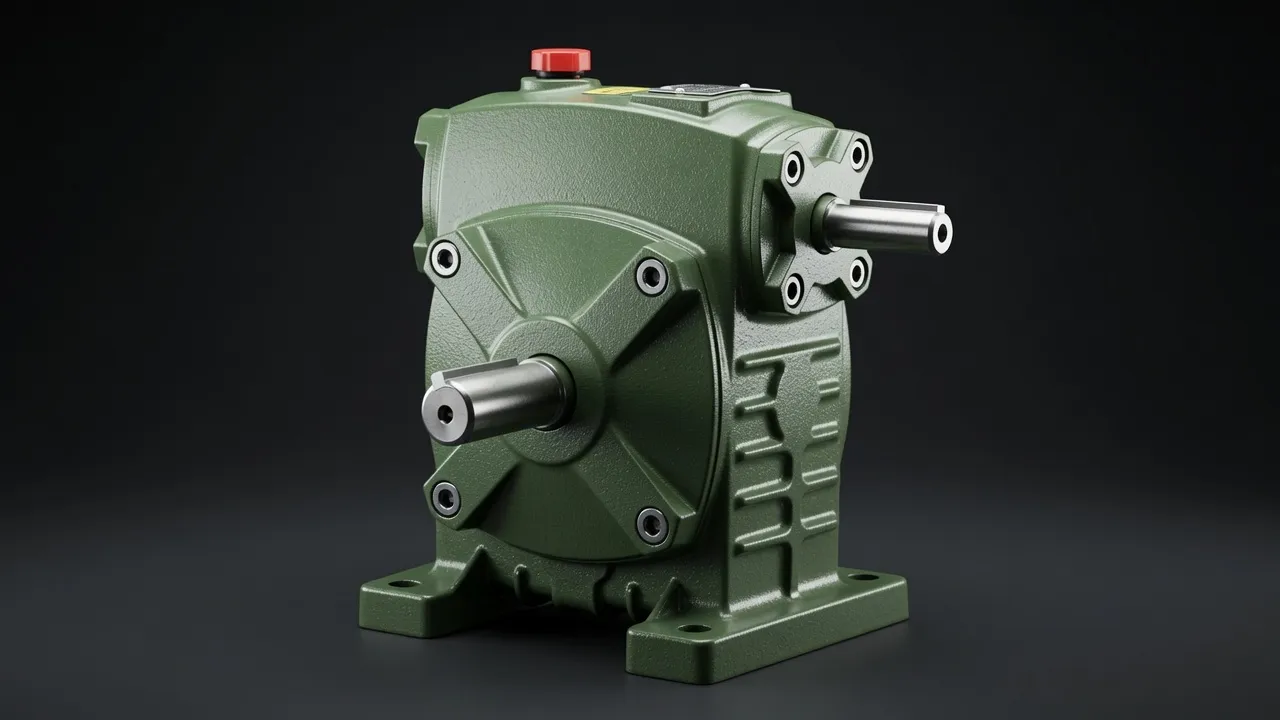
Packaging machine designers converge on worm gearboxes for the same reason they converge on a few motor frame sizes and servo amplifiers: standardisation reduces spare parts inventory and technician training requirements. A plant running 15 packaging machines with 40 gearboxes does not want 12 different gearbox types — it wants two or three WPA sizes in three or four ratios, stocked on the shelf, interchangeable across machines. The WP series, with consistent mounting dimensions across the full torque range, fits this requirement. A WPA 80 and WPA 100 share the same bolt pattern on the foot, the same IEC motor flange interface, and the same oil specification.
Speed Control: VFD Integration and Line Synchronisation
Modern packaging lines run all machine drives through a central speed reference, with each station’s VFD trimming the local motor to maintain product registration. Worm gearboxes are transparent to VFD control — the gearbox does not care whether the motor runs at 800 rpm or 1400 rpm within the rated worm shaft speed range. What matters is that the gearbox is sized at the maximum possible speed (highest VFD frequency) for thermal purposes, and at the maximum torque (lowest VFD frequency) for mechanical sizing. The two conditions sometimes require different frame sizes, and the larger governs.
Low-Noise Operation Near Operators and Sensors
Packaging halls often have conveyor noise running at 72–78 dB(A) continuously. WP units at 50–100 rpm output contribute approximately 60–68 dB(A) at 1 metre — generally below the ambient. Helical gearboxes at equivalent outputs generate higher-frequency noise in the 1 000–2 000 Hz range that carries further and is more perceptible against a low-frequency conveyor ambient. In proximity to quality sensors — vision systems, checkweighers, metal detectors — gearbox vibration can induce false rejects if the sensor housing resonates at the gearbox frequency; worm units’ lower vibration amplitude is a practical benefit in these zones.
Cartoner Drive
Motor-flange WPDA unit drives the carton blank feed mechanism at 30–60 rpm. Compact installation beside the blank magazine; VFD-controlled for format change.
Labeller Cam Drive
WPA foot-mount at 1:25 ratio drives the labeller station cam at 57 rpm. Steady speed is critical for adhesive dwell time consistency on pressure-sensitive labels.
Case Packer Index
WPE double-stage at 1:200 drives the packing index table at 7.2 rpm for a 100-case/hour line. Low noise suits proximity to the palletiser vision system.
Form-Fill-Seal Jaw
WPDA motor-flange at 1:30 drives the transverse jaw cam. Motor-gearbox in one piece minimises length behind the film unwind station.
| Machine Station | Output RPM Needed | Torque Requirement | Standard WP Unit |
|---|---|---|---|
| Carton blank feed | 50 | 80 N·m | WPA 80, 1:30 |
| Wrap-around cartoner | 40 | 130 N·m | WPA 80, 1:40 |
| Top-load cartoner | 30 | 180 N·m | WPA 100, 1:50 |
| Case erector | 20 | 250 N·m | WPA 100, 1:60 |
| Case sealer conveyor | 48 | 100 N·m | WPA 80, 1:30 |
| Palletiser transfer | 15 | 400 N·m | WPA 120, 1:50 |
Indicative values for 1440 r/min 4-pole motor input; confirm torque against actual machine load.
Maintenance Standardisation Across a Multi-Machine Plant
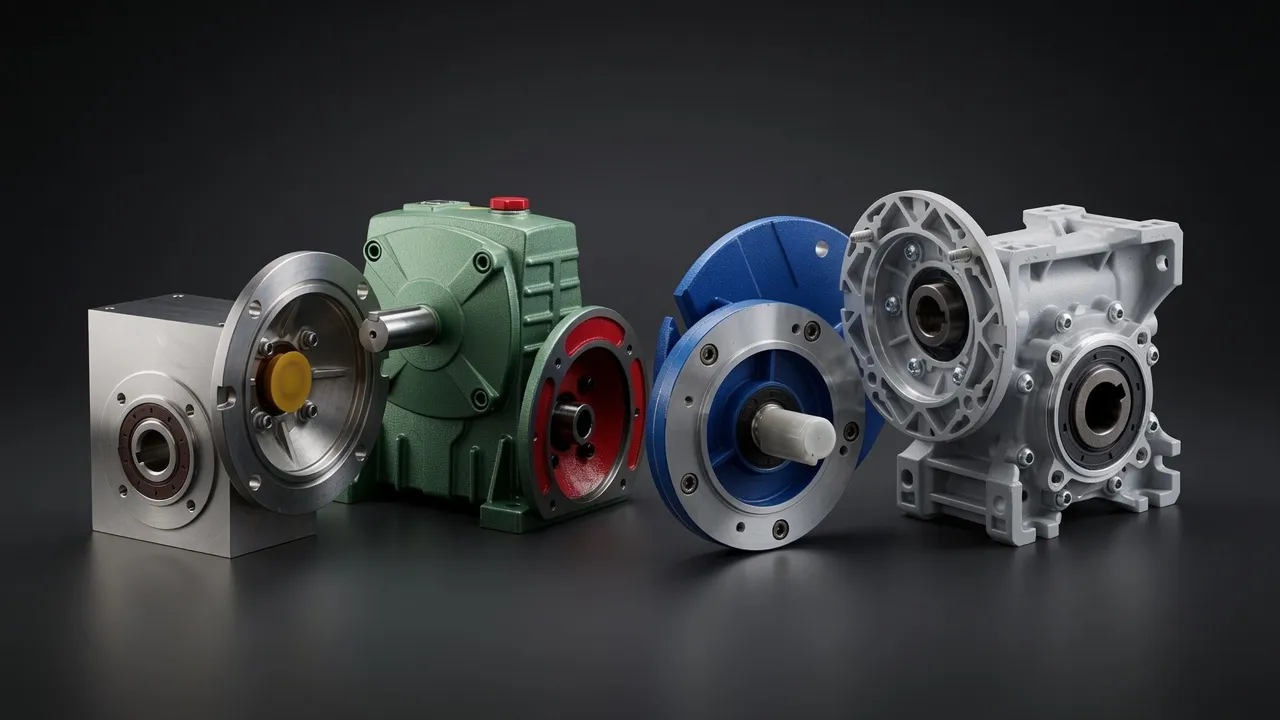
Stocking three frame sizes (WPA 80, 100, 120) covers the torque range of 90% of packaging machine drives. With three ratios per frame (1:20, 1:30, 1:40), nine gearboxes cover virtually all configurations on the floor. The DA series and the KA hollow shaft series in two or three sizes cover most of what a packaging plant needs, and both series are in stock at the Condell Park warehouse for same-day dispatch to NSW metro sites.
Frequently Asked Questions
Get a Sized Recommendation
Share your load data and target speed — our team at Condell Park NSW returns torque calculations and a stock check within one business day.