
Solar tracking systems on photovoltaic arrays and concentrating solar power collectors follow the sun across the sky at angular velocities so slow — roughly 15° per hour for single-axis trackers — that the gearbox output barely registers as rotating. Yet the mechanical demands are severe: wind loading from sudden gusts can apply thousands of newton-metres of torque to the tracker table, the drive must hold position through the night without any motor power, and the installation is outdoors in Australian conditions where ambient temperatures swing from −5°C winter mornings to +50°C summer afternoons, ultraviolet exposure degrades seal materials, and salt-laden coastal air attacks every exposed metal surface.
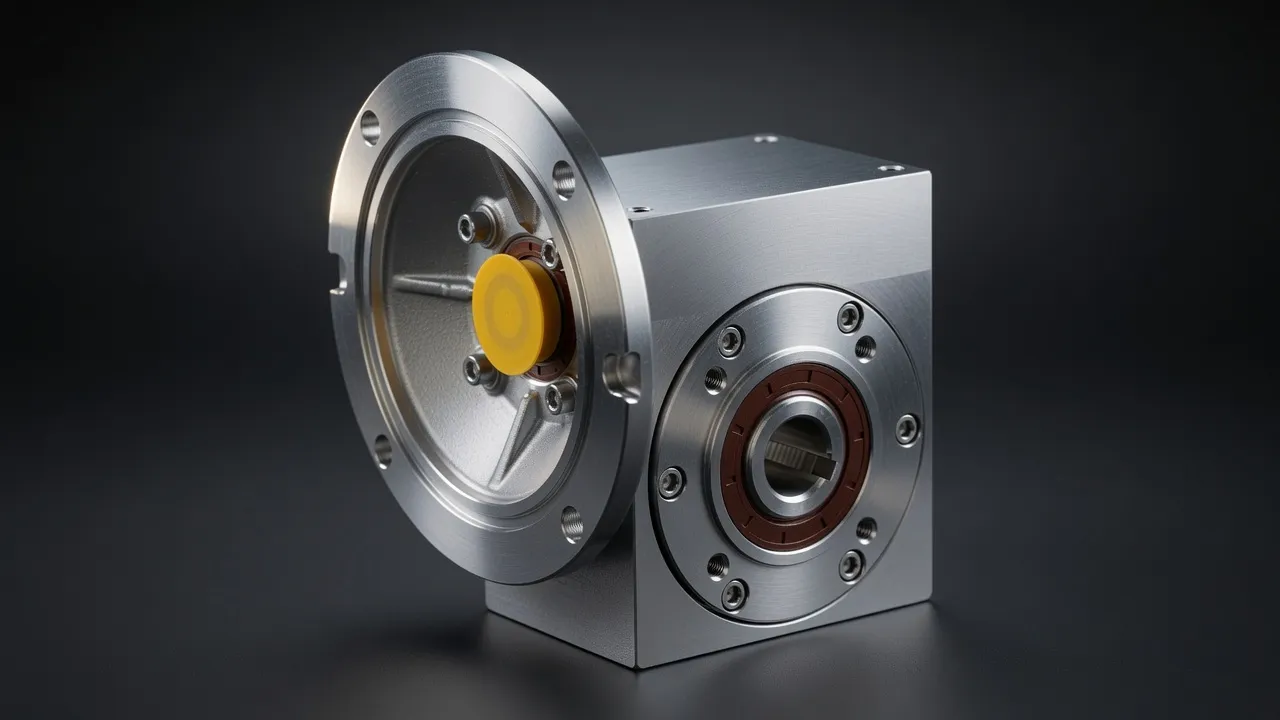
Tracker Architecture: Single-Axis vs Dual-Axis
Single-Axis Trackers
Single-axis trackers rotate the PV panel array around one axis — typically the north-south horizontal axis for horizontal single-axis trackers (HSAT) or a tilted axis for inclined single-axis trackers (ISAT). The array follows the sun from east to west through approximately 180° over the day. At solar tracking speed (approximately 15°/hr), and with a worm gearbox output connected to the tracker shaft through a final-stage gear or chain, the worm shaft rotates at roughly 0.004 rpm during tracking — far below the optimal range for worm gearbox efficiency and lubrication. This very low speed means the gearbox spends most of its operating life as a holding device rather than a rotating drive, and the key performance requirements are self-locking torque margin and housing weather resistance rather than thermal efficiency.
Dual-Axis Trackers
Dual-axis trackers maintain the panel perpendicular to the sun at all times by rotating around both the azimuth and elevation axes. Each axis requires a separate drive gearbox. The azimuth drive (horizontal rotation) on a large dual-axis tracker can require several kilonewton-metres of output torque when driving a heavy panel array against wind load, while the elevation drive (tilt adjustment) typically requires less torque but higher positioning accuracy. Two-stage WPE units are standard for azimuth drives on large dual-axis systems; single-stage WPA units serve the elevation axis on most commercial installations.
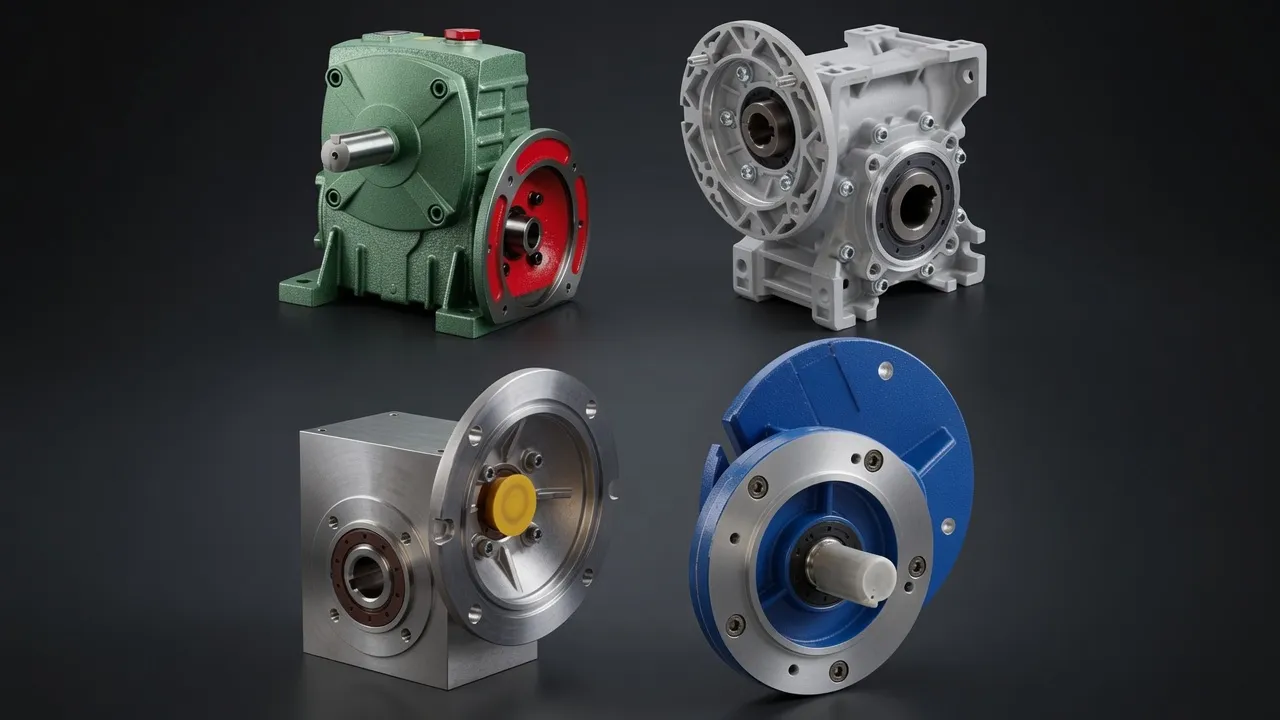
Wind Load: The Dominant Design Force
For a solar tracker in most Australian locations, wind load is the governing force for gearbox and structural design — not the weight of the panels. A 20-panel single-axis tracker with 50 m² of panel area in a 100 km/h design wind (dynamic pressure approximately 470 Pa) sees a wind force of 23.5 kN applied at the panel centroid. With a 3 m panel half-width (moment arm from the tracker shaft), the wind torque at the shaft is 70.5 kN·m — an enormous number that immediately rules out any standard industrial worm gearbox acting alone. The practical solution is a mechanical advantage system between the gearbox output and the tracker shaft: a rack-and-pinion, a linear actuator with a long moment arm, or a large-diameter slew drive ring gear. The worm gearbox output torque then needs only to match the force at the actuator connection point, not the full wind torque at the tracker shaft.
| Array Size | Approximate Wind Torque at Tracker Shaft | Actuator Moment Arm | Required Gearbox Output | WP Unit |
|---|---|---|---|---|
| 4 panels, 8 m² | 11.3 kN·m at 100 km/h | 1.5 m linear arm | 7.5 kN at arm tip → 750 N·m | WPA 155, 1:40 |
| 10 panels, 20 m² | 28 kN·m | 1.8 m linear arm | 15.6 kN → 1 560 N·m | WPA 200, 1:40 |
| 20 panels, 40 m² | 56 kN·m | 2.2 m linear arm | 25.5 kN → 2 550 N·m | WPA 250, 1:40 |
| 40 panels, 80 m² | 112 kN·m | Slew ring, 1 m radius | 112 kN → custom slew drive | Specialist slew ring |
| Dual-axis, elevation only | Variable by panel weight | Direct pivot drive | 200–800 N·m | WPA 100–155, 1:50 |
Wind pressure 470 Pa at 100 km/h. Reduce for wind-sheltered sites or stow angle designs.
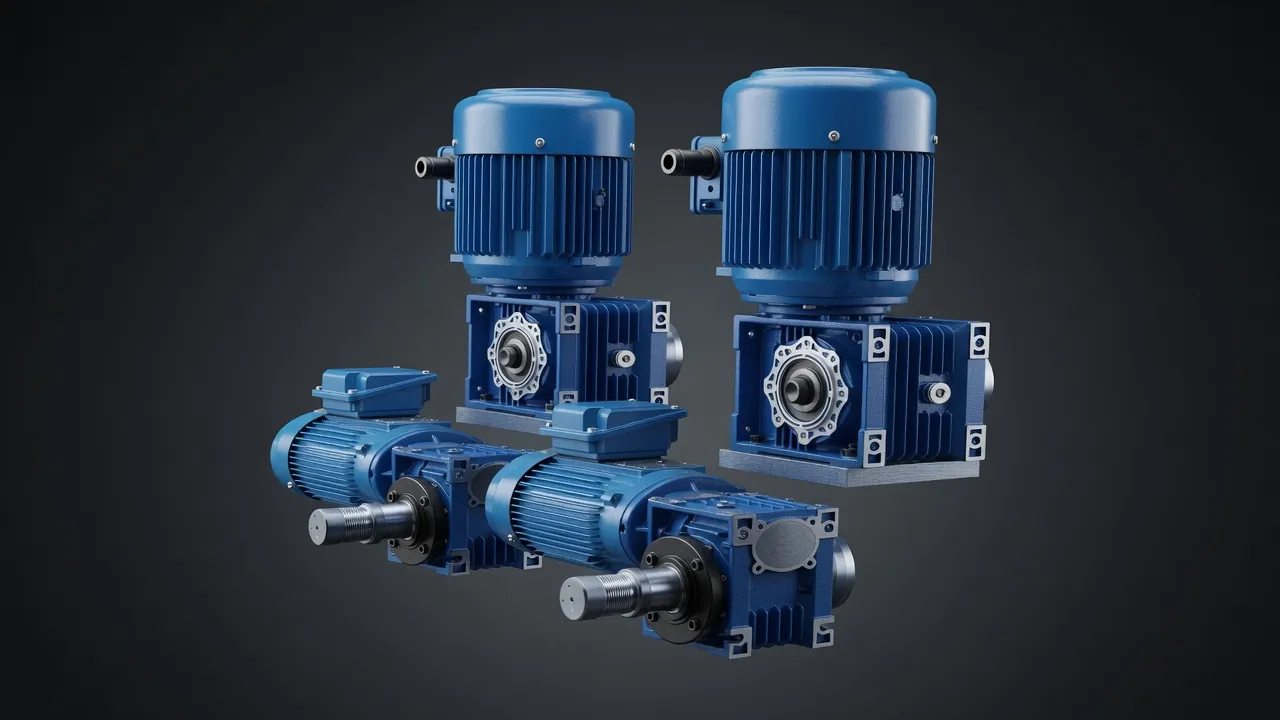
Self-Locking Performance at Very Low Temperatures
A solar tracker in inland NSW — Broken Hill, Orange, Dubbo — encounters sub-zero overnight temperatures in winter. At −5°C, standard ISO VG 320 mineral oil in a worm gearbox has a viscosity 5–8 times higher than at 40°C. This dramatically increases the self-locking friction angle — which is beneficial for holding performance — but also increases the breakaway torque required from the tracker motor at dawn when the system begins tracking again. The tracking motor must be sized for cold-morning breakaway torque (typically 3–4× the warm running torque) or a synthetic polyglycol oil at ISO VG 220 should be specified to limit the cold viscosity increase. Synthetic PG oil at −5°C is approximately 2–3× the warm viscosity rather than 5–8× for mineral, making cold-morning tracking feasible with a smaller motor.
Corrosion and UV Protection for 20-Year Outdoor Service Life
Solar tracking installations are expected to operate for 20–25 years with minimal maintenance access. The gearbox specified today must still be functional in 2045–2050. This long-term perspective changes the corrosion protection specification significantly: standard industrial alkyd enamel topcoat (suitable for 3–5 years outdoors) is inadequate. Specify two-pack epoxy primer plus polyurethane topcoat at minimum 120 µm total dry film thickness. For coastal installations (within 1 km of tidal water), add a sacrificial zinc-rich primer coat under the epoxy. Seal material must be UV-stable Viton (FKM) rather than standard nitrile — UV exposure degrades standard nitrile in 3–5 years on a south-facing installation in full Australian sun, while Viton lasts 15–20 years.
The EWA universal double-worm series with multiple output face configurations suits the varied geometry requirements of different tracker designs, and the cast-iron housing accepts heavy-duty external coating systems better than aluminium. For premium outdoor corrosion resistance, the HSRV stainless steel worm gearbox eliminates the coating maintenance concern entirely for coastal or high-humidity environments.
Frequently Asked Questions
Speak with a Drive Specialist
Send through your load data, speed requirement, and application environment — our team at Condell Park NSW provides a sized gearbox recommendation and stock availability check within one business day. No obligation.