
Fertiliser spreaders work in some of the most inhospitable gearbox environments imaginable: airborne ammonium nitrate and urea dust corrode aluminium and mild steel within months, ground vibration over uneven paddocks transfers shock loads continuously, and the seasonal nature of the machine means it sits idle — often without proper storage preparation — for seven or eight months before being called on to perform without fault. A correctly specified compact worm reducer handles all three challenges when the frame size, sealing package, and lubricant grade are chosen for the field rather than for the factory floor.
Understanding the Fertiliser Spreader Drive
Most fertiliser spreaders use one of two drive architectures: a ground-wheel-driven mechanism where the spreading rate is automatically linked to ground speed, or a PTO-driven system where the tractor hydraulic output or PTO shaft provides constant power regardless of how fast the machine is travelling. The gearbox role differs between these arrangements. In a PTO-driven centrifugal spinner spreader, the worm reducer converts PTO input speed (540 rpm) into the lower rotational speed that drives the metering agitator shaft or the impeller at 80–200 rpm, while the spinner discs themselves are driven by V-belts directly from the PTO at near-full speed. In a drop spreader or oscillating spout spreader, the worm gearbox drives the distribution mechanism at very low speed — sometimes below 10 rpm — where a high-ratio WPE double-reduction unit is the appropriate choice.
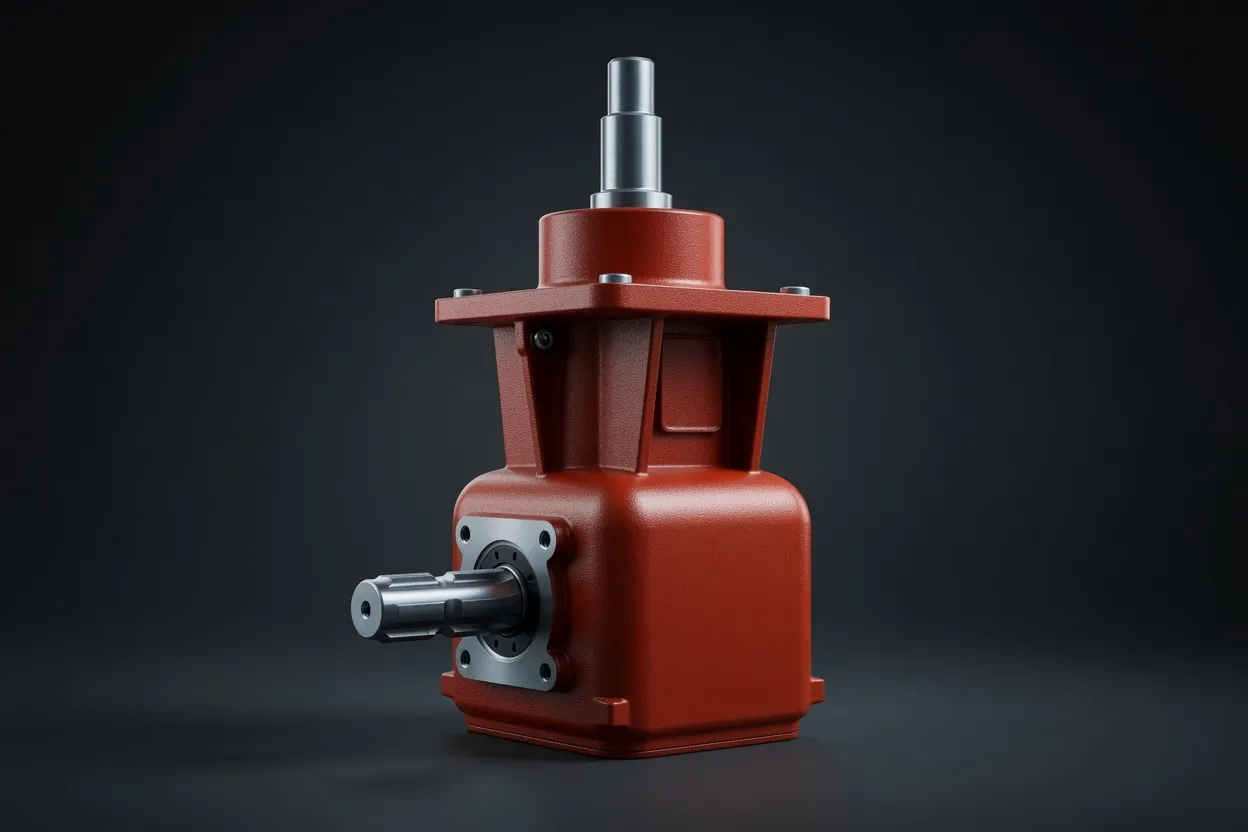
Key Torque Requirements by Spreader Type
| Spreader Type | Drive Point | Output Speed | Torque Range | WP Series |
|---|---|---|---|---|
| Centrifugal spinner, agitator shaft | PTO 540 rpm | 80–120 rpm | 120–250 N·m | WPA 80–100, 1:5–1:7 |
| Drop spreader, distribution roller | Ground wheel | 5–20 rpm | 200–450 N·m | WPA 100–120, 1:40–1:60 |
| Oscillating spout, crank shaft | PTO or hyd motor | 15–40 rpm | 150–320 N·m | WPA 80–100, 1:20–1:40 |
| Pendulum spreader, swing arm | Hyd motor, low speed | 3–8 rpm | 350–700 N·m | WPE 80-100, 1:200 |
| Granule conveyor feed auger | PTO 540 rpm | 30–60 rpm | 200–400 N·m | WPA 100, 1:10–1:20 |
Torque values are indicative for 1–3 t hopper spreaders. Larger machines require proportionally larger frames.
Corrosion Resistance: The Priority No Spec Sheet Mentions
Standard WP grey cast-iron housings resist urea and ammonium nitrate dust adequately when the paint film is intact. The problem is that field work scratches and chips the paint constantly — tool contact during blockage clearing, stone strikes, and pressure-washing all expose bare metal. Bare cast iron corrodes in fertiliser dust within one growing season, producing iron oxide that migrates into the housing through worn seals and contaminates the oil. The practical prevention is a two-pack epoxy topcoat applied after degreasing bare metal, not the standard alkyd enamel applied at the factory. Specify this at purchase if the machine operates in a high-fertility cropping environment, particularly near coastal NSW where airborne salt compounds with fertiliser residue to create an especially aggressive corrosion environment around Condell Park and Hunter Valley operations.
Output shaft seals deserve equal attention. Standard nitrile lip seals fail within one season when exposed to concentrated ammonium nitrate — the nitrogen compound attacks the nitrile rubber and causes cracking at the seal lip. Specify Viton (FKM) seals on the output shaft for any spreader application. The cost difference is modest; a failed seal on a spreader gearbox means fertiliser dust enters the housing and the oil is contaminated within hours, leading to accelerated bronze wheel wear that typically ends in a full gearbox replacement.
Ratio Selection for Ground-Speed-Proportional Drive
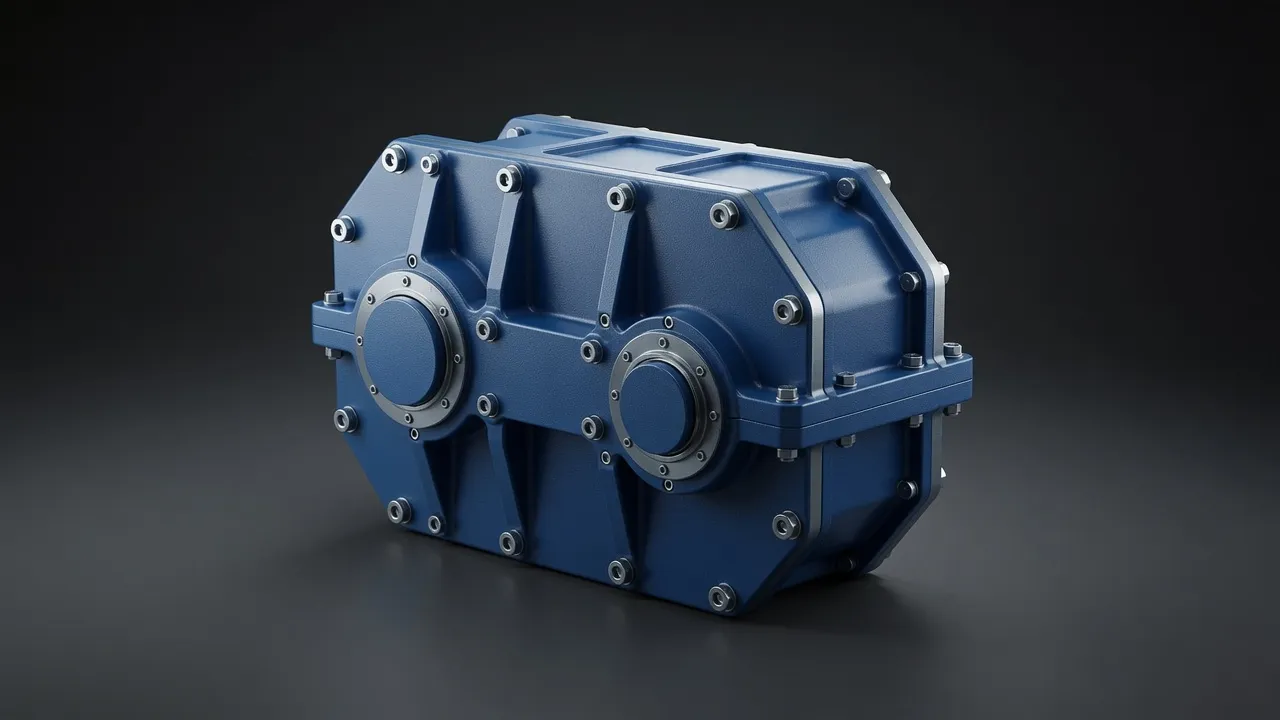
Ground-wheel-driven spreaders require the gearbox output speed to track field travel speed. At 8 km/h travel speed and a 600 mm diameter ground-drive wheel, the wheel turns at 8 000 ÷ (π × 0.6) ÷ 60 ≈ 70.7 rpm. If the metering roller needs to turn at 20 rpm for a target application rate, the gearbox ratio needed is 70.7 ÷ 20 ≈ 1:3.5 — too small for a single-stage worm unit. In practice, spreader manufacturers address this by using a chain stage between the ground wheel and the gearbox input, or by using a variable-rate star sprocket set to allow rate adjustment in the field. The worm unit then works in the 1:10–1:40 range where it is properly matched.
Compact Mounting on the Spreader Frame
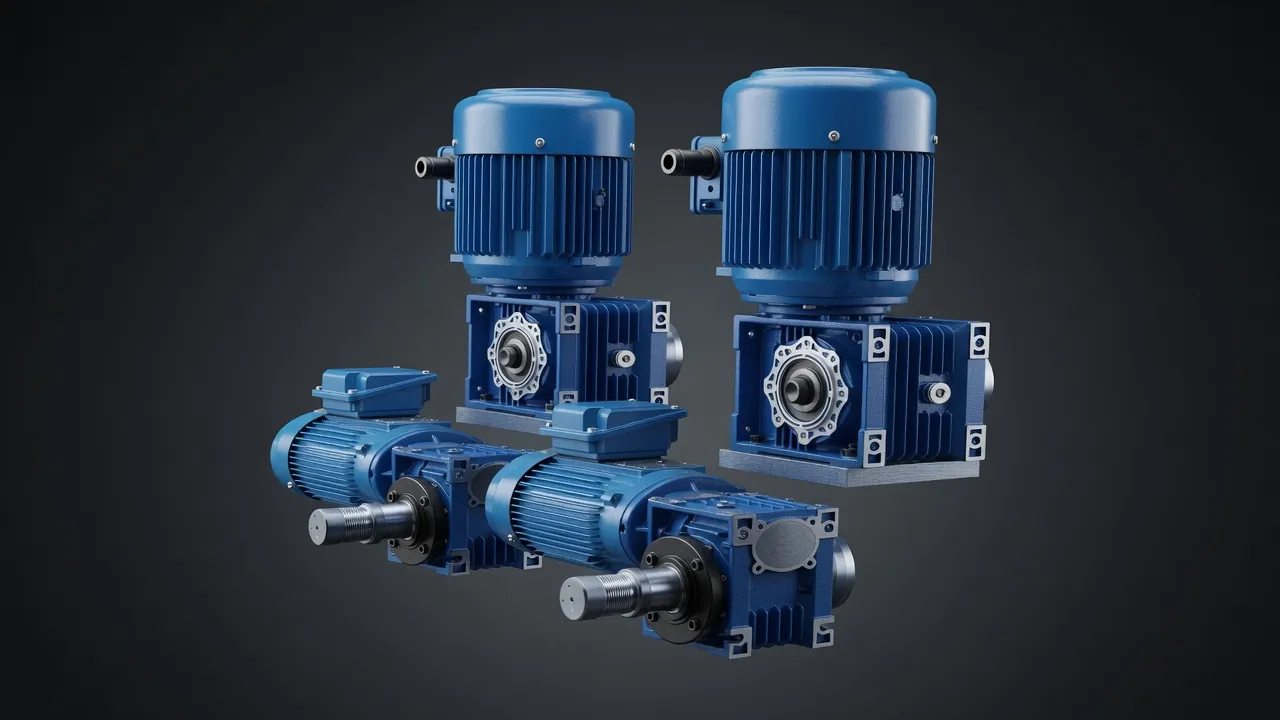
Fertiliser spreader frames are compact and designed around the hopper geometry, leaving minimal space for the driveline. The WPDA motor-flange configuration or the DZ compact vertical series fits into the tight space between the hopper outlet and the distribution mechanism. The DZ series with its reduced housing depth is particularly suited to spreaders where the gearbox must sit inside the hopper frame rails rather than projecting to one side. Hollow-shaft mounting on the distribution roller shaft using the KA series eliminates the external coupling hardware that traps fertiliser residue and becomes a maintenance problem at the start of the next season.
Seasonal Storage: Preventing the Most Common Failure Mode
More fertiliser spreader gearboxes fail during the first use of a new season than at any other time. The reason is simple: residual fertiliser inside the housing (from a seal weep or minor contamination) absorbs atmospheric moisture over the idle months, forming a concentrated corrosive solution that attacks the bronze wheel and gearbox bearings. Preventing this requires two actions at the end of every season: drain and refill with fresh oil (flushing out any contaminated oil and water emulsion), and rotate the output shaft several turns to coat the gear mesh with fresh lubricant before storage. Store the spreader under cover if possible — UV and rain cycles accelerate seal degradation on machines left in the paddock.
Selecting the External Link for Field Drive Alternatives
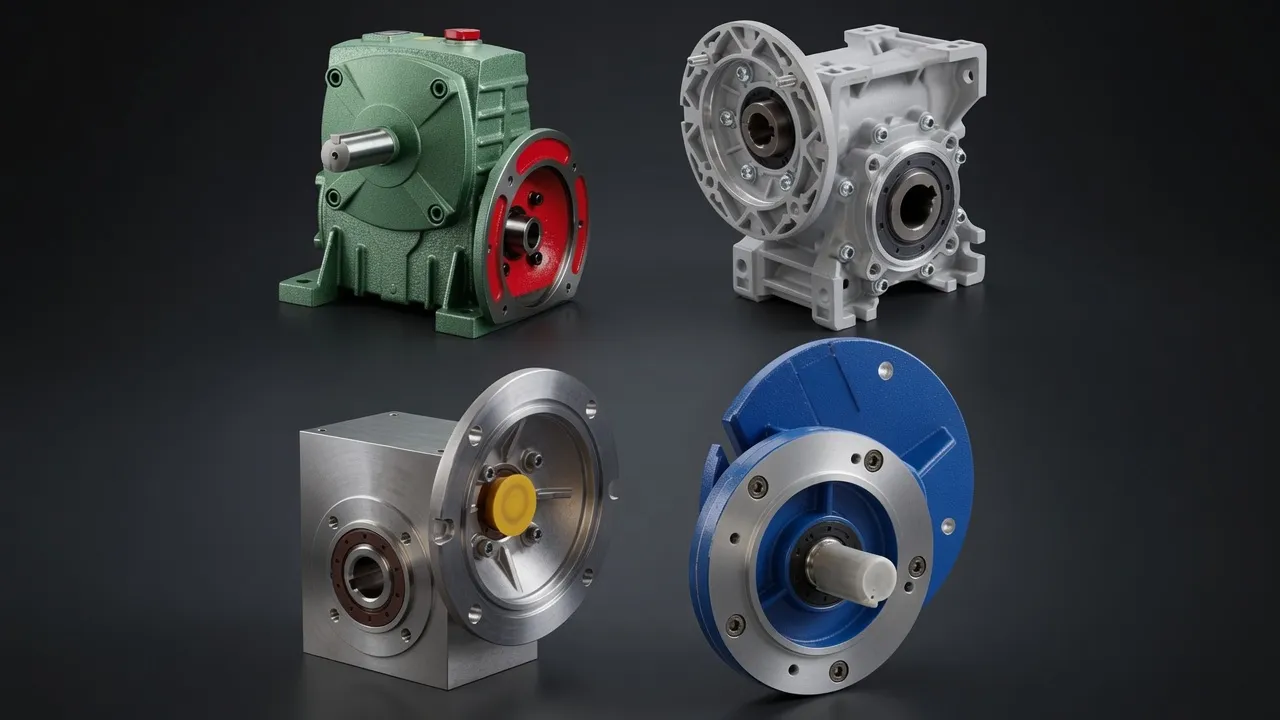
For spreader applications requiring stainless or food-contact-compatible housings (lime spreading near certified organic operations, for example), the HSRV stainless steel worm gearbox provides the corrosion resistance of stainless construction with the compact right-angle geometry of a standard worm unit. This is also worth specifying when the spreader will be used for both fertiliser and lime, as lime (calcium carbonate) is alkaline and attacks standard iron housings through a different chemical mechanism than ammonium-based fertilisers.
Frequently Asked Questions
Speak with a Drive Specialist
Send through your load data, speed requirement, and application environment — our team at Condell Park NSW provides a sized gearbox recommendation and stock availability check within one business day. No obligation.