
A rotary table positions a workpiece to precise angular increments for machining, inspection, or assembly operations. The worm and wheel pair that drives the table has been the standard mechanism for rotary table indexing for over a century — not because it is the most efficient, but because it provides the most direct relationship between input handwheel or motor rotation and output angular movement, combined with inherent self-locking that holds the table against cutting forces without any additional clamp. Understanding how backlash, gear ratio, and load capacity interact in a rotary table drive allows engineers to select or specify the right worm pair for the required positioning accuracy.
The Rotary Table Worm Drive Mechanism
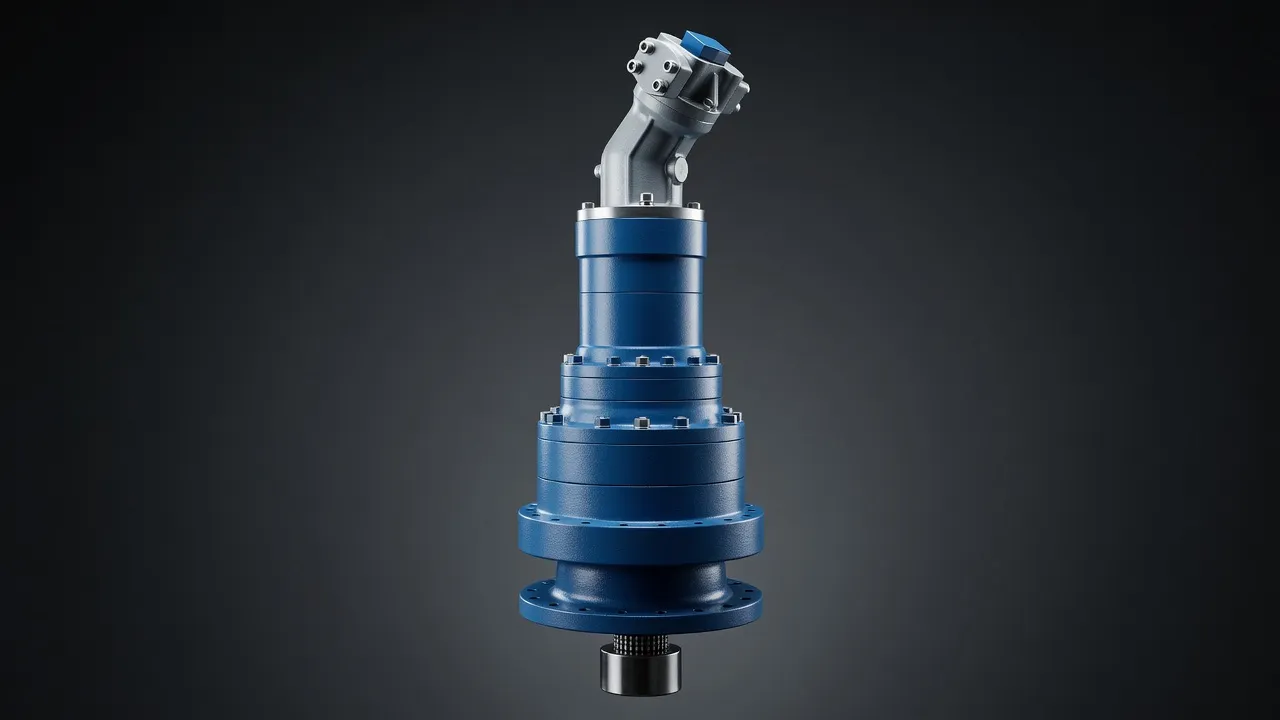
A rotary table worm drive consists of a single-start or multi-start worm meshing with a full-circle worm wheel mounted on the table spindle. The gear ratio is typically expressed as the number of worm wheel teeth — a 90-tooth wheel with a single-start worm gives a 90:1 ratio, meaning 90 full turns of the handwheel or input shaft produce one full revolution of the table. Common ratios are 40:1, 60:1, 72:1, and 90:1, chosen to give convenient angular increments per handwheel division. A 90:1 ratio with a 360-division handwheel dial gives 0.01° per smallest division — 10 arc-minutes per division, which is standard for general machining rotary tables from 150 mm to 400 mm diameter.
Backlash Control for Indexing Applications
Why Backlash Matters More in Rotary Tables than in Feed Drives
In a linear feed drive, backlash can be eliminated for the final approach cut by always travelling in one direction. In a rotary table application — particularly when the table must index to equally spaced positions in both clockwise and counterclockwise directions — backlash directly limits angular positioning accuracy. A rotary table with 0.3° output backlash (at the worm wheel) will position to ±0.15° when reversing direction, which corresponds to ±0.26 mm at the periphery of a 200 mm diameter workpiece. For precision hole-circle drilling or profile milling, this is unacceptable.
Adjustable Worm Mesh for Minimum Backlash
Precision rotary tables use an adjustable worm mesh where the worm shaft is mounted in an eccentric bore. Rotating the eccentric brings the worm thread closer to the wheel tooth flanks, reducing backlash. The adjustment is a compromise — tighter mesh reduces backlash but also increases friction, which reduces the smooth turning feel of the handwheel and can cause stick-slip at very slow feed rates. The optimum setting for general-purpose rotary tables is the minimum mesh clearance at which the table still rotates smoothly without any tight spots through the full 360° range.
| Table Diameter | Worm Wheel Teeth | Standard Ratio | Typical Backlash (adj.) | Angular Error at Rim |
|---|---|---|---|---|
| 150 mm | 60 | 60:1 | 0.02–0.05° | ±0.03 mm at 75 mm radius |
| 200 mm | 72 or 90 | 72:1 or 90:1 | 0.01–0.03° | ±0.03 mm at 100 mm |
| 300 mm | 90 or 120 | 90:1 or 120:1 | 0.01–0.02° | ±0.03 mm at 150 mm |
| 400 mm | 120 or 360 | 120:1 or 360:1 | 0.005–0.01° | ±0.03 mm at 200 mm |
| Precision CNC, any size | Custom | Custom | <0.001° | <0.005 mm at rim |
Backlash figures for new precision-adjusted worm tables. Standard (non-adjustable) tables: add 0.05–0.10°.
Power Rotary Table Drive: Worm Gearbox Selection
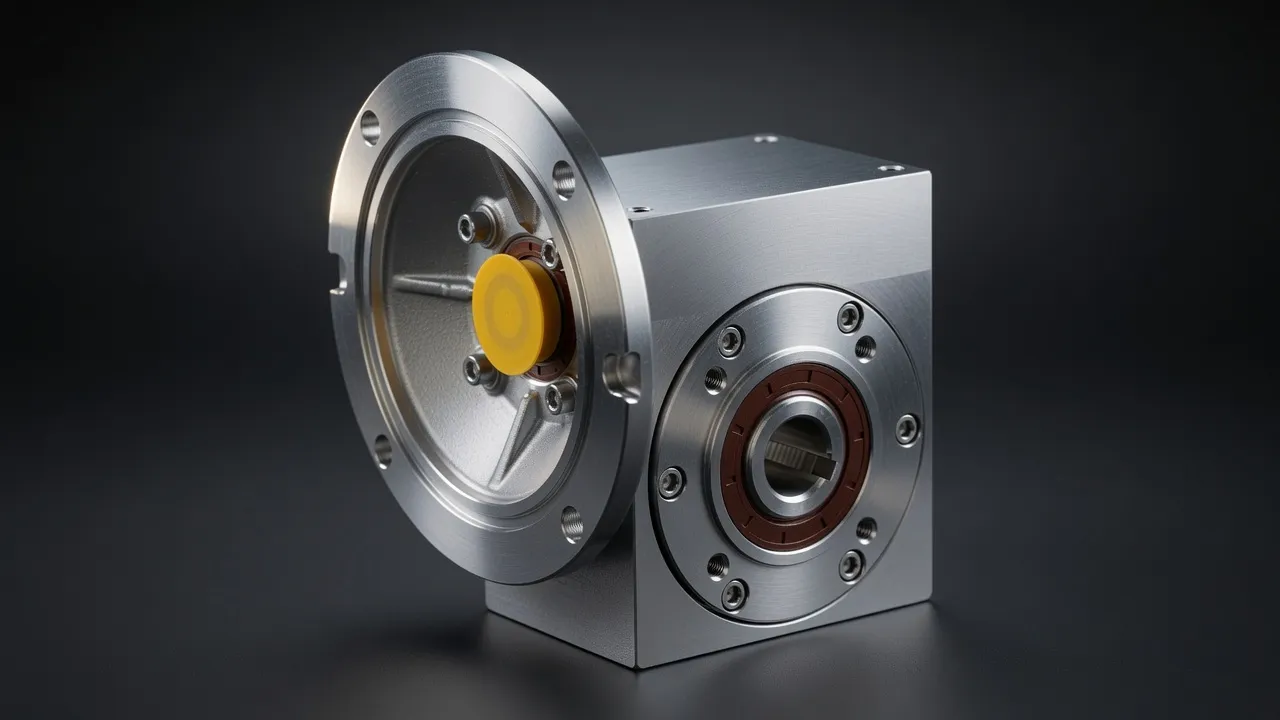
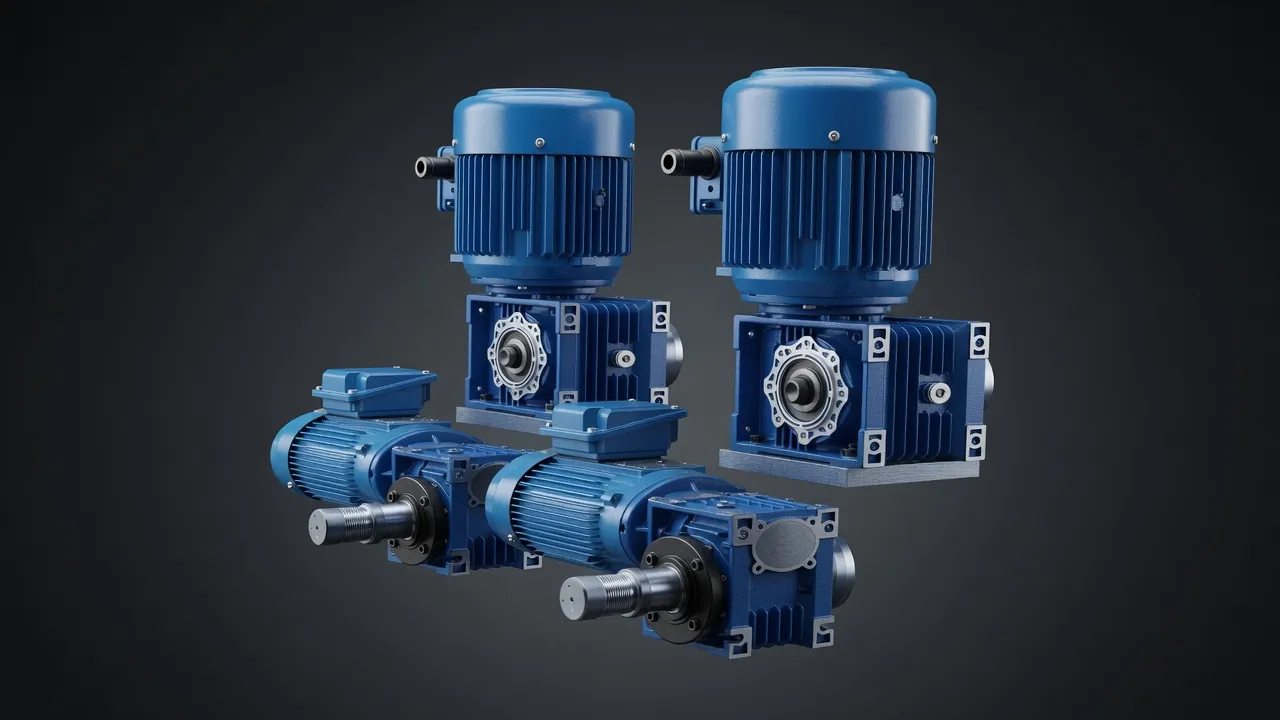
When the rotary table is power-driven from a motor (rather than manually turned), an external worm gearbox provides the speed reduction from the motor to the table input shaft. The gearbox selection follows the same torque and ratio logic as other worm applications, with the additional constraint that the gearbox output shaft backlash must not add meaningfully to the table’s own backlash. For CNC-driven power tables, a zero-backlash worm gearbox is typically required. For power feed rotary tables on manual machines — where the motor provides a constant rotation and the operator locks the table at the desired position — standard WPA backlash is acceptable because position is set by the table’s own worm mechanism.
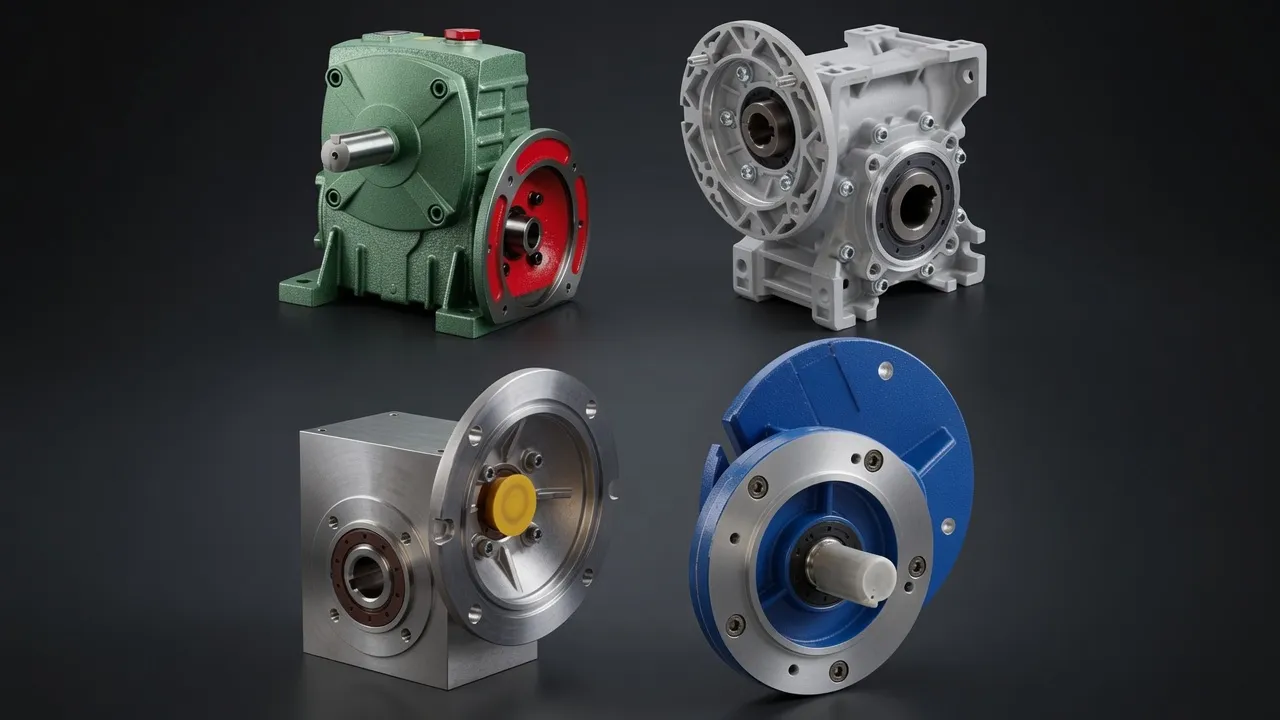
The DA series single-stage reducer is commonly used as the power drive input to the table handwheel shaft on larger power rotary tables (300–600 mm). The motor reduces to an intermediate speed through the DA unit, then the table’s internal 90:1 worm provides the final reduction to the spindle. The VRV040 low-backlash worm gearbox is specifically designed for servo-driven indexing applications where the motor drives the table directly and positional feedback eliminates the need for the table’s own indexing mechanism.
Holding Torque Against Cutting Forces
During a milling cut on a part mounted on a rotary table, the cutting force has a tangential component that tries to rotate the table. On a manually operated table, the operator clamps the table with the locking screw before taking a cut — the worm’s self-locking property alone is not sufficient to resist heavy cutting forces without some additional clamping. On a power rotary table, the servo motor holds the position, supplemented by the worm’s self-locking at the internal table mechanism. The practical rule: clamp the table for any interrupted cut, face milling, or heavy stock removal. Rely on the self-locking worm for light finishing cuts and gentle profiling where the tangential cutting force is below 10% of the worm’s self-locking limit.
Maintenance and Wear Management on Rotary Table Worm Drives
The worm wheel in a rotary table typically sees very non-uniform wear — the same 90° arc of the wheel is used for the most frequent operations (facing, drilling the front quadrant of the workpiece), while the remaining 270° may be used rarely. This selective wear pattern means the table may feel smooth through the frequently used arc but rough or tight through the rarely used portion. Annual inspection involves rotating the table through the full 360° and checking for tight spots or backlash variation by feel. If tight spots exist, the wheel has developed a high spot — this is addressed by lapping the mesh through the tight section with a light abrasive compound, not by tightening the mesh adjustment.
Frequently Asked Questions
Speak with a Drive Specialist
Send through your load data, speed requirement, and application environment — our team at Condell Park NSW provides a sized gearbox recommendation and stock availability check within one business day. No obligation.