
A dividing head (or indexing head) translates rotational input into precise angular increments for gear hobbing, spline milling, multi-flute cutter grinding, and cam profile machining. The worm gear pair inside the dividing head is the element that determines the accuracy, repeatability, and resolution of the indexing operation. When that worm pair is driven by a CNC stepper or servo motor rather than a manual indexing plate, the mechanical performance requirements — and particularly the backlash and torsional stiffness specifications — become more demanding than most standard industrial worm pairs can achieve without specific design attention.
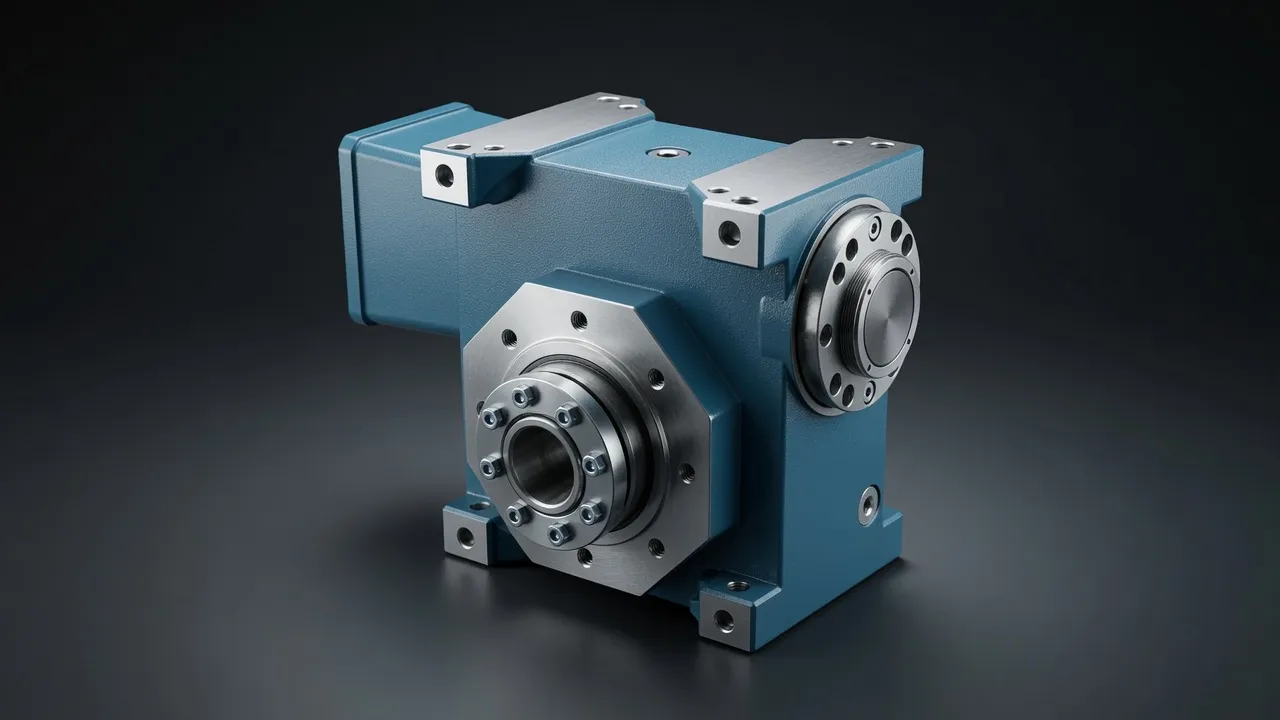
Standard Dividing Head Ratios and Their Origins
The most common dividing head ratio is 40:1 — 40 turns of the input shaft produce one full revolution of the spindle. This ratio was established in the early twentieth century because it allows simple division of 2, 4, 5, 8, 10, 20, and 40 equal parts without fractional indexing, and with a set of standard indexing plates covers divisions up to 400. A 60:1 head gives finer direct divisions and is preferred for gear work requiring prime number division counts. A 90:1 head is used for very fine resolution work and for applications where a single turn of the input shaft must produce a very small spindle movement.
Rigidity Requirements for Gear Cutting Applications
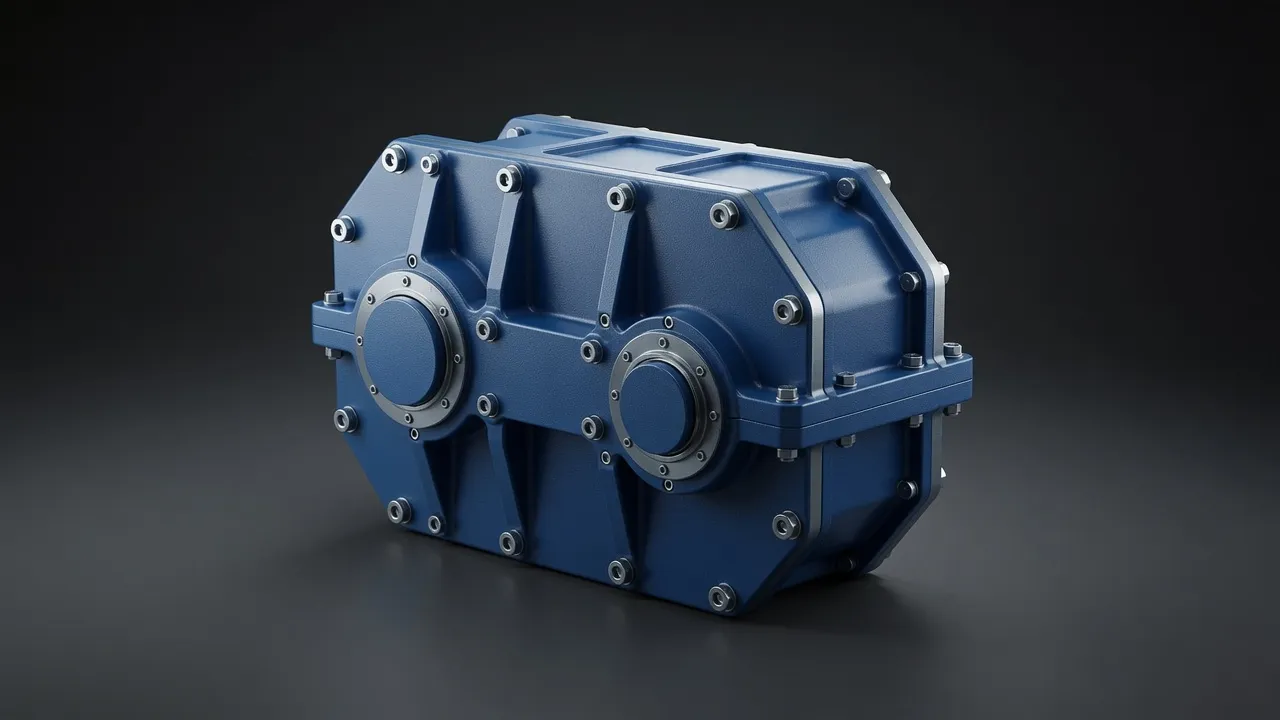
When a hobbing or side-and-face cutter engages a workpiece on the dividing head, the cutting force creates a torque at the spindle that the worm wheel must resist without the spindle moving. The resistance comes from two sources: the worm mesh self-locking (which prevents back-drive) and the mechanical stiffness of the worm shaft and housing (which determines how much the spindle deflects angularly under load before the self-locking condition is reached). A rigid cast-iron WP housing provides substantially better stiffness than an aluminium equivalent, and a large-diameter worm shaft with generous bearing span resists torsional deflection better than a compact lightweight shaft.
Accuracy and Repeatability: How the Worm Pair Determines Both
Pitch Error Accumulation
The angular position error of a worm-driven spindle depends on the accuracy of the worm thread pitch and the worm wheel tooth spacing. Pitch error in a worm pair is expressed as the difference between the commanded angular movement and the actual angular movement at the output spindle. For a standard industrial WP worm pair, pitch error over one full revolution of the worm wheel is typically ±0.05° for a quality-grade unit. For precision dividing heads, grade-A worm pairs achieve ±0.01° or better, requiring finish grinding of the worm thread and precision hobbing of the wheel.
Repeatability vs Accuracy
Repeatability — the ability to return to the same position from the same direction repeatedly — is more important than absolute accuracy in most dividing head applications. A head that positions to ±0.05° absolute error but repeats to ±0.002° is entirely suitable for gear hobbing (where the cutter geometry corrects for absolute errors) but not for inspection (where the absolute position must be traceable). The worm mesh backlash determines repeatability when indexing from the same direction; pitch error determines absolute accuracy. For CNC dividing heads, the CNC controller corrects for both if a high-resolution encoder is fitted to the spindle.
| Application | Required Accuracy | Required Repeatability | Worm Grade | Backlash Limit |
|---|---|---|---|---|
| General dividing, holes | ±0.05° | ±0.01° | Standard | <0.1° |
| Gear hobbing, module >2 | ±0.02° | ±0.005° | Grade A | <0.05° |
| Spline milling, fine pitch | ±0.01° | ±0.002° | Grade A, preloaded | <0.02° |
| Cam profile, CNC servo | ±0.005° | ±0.001° | Precision ground | <0.01° + encoder |
| Gear grinding, DIN 5 | ±0.002° | ±0.0005° | Precision ground+lapped | Zero-backlash |
Backlash values at worm wheel output shaft. CNC encoder compensation can relax mechanical limits.
Motor Sizing for CNC Dividing Head Drive
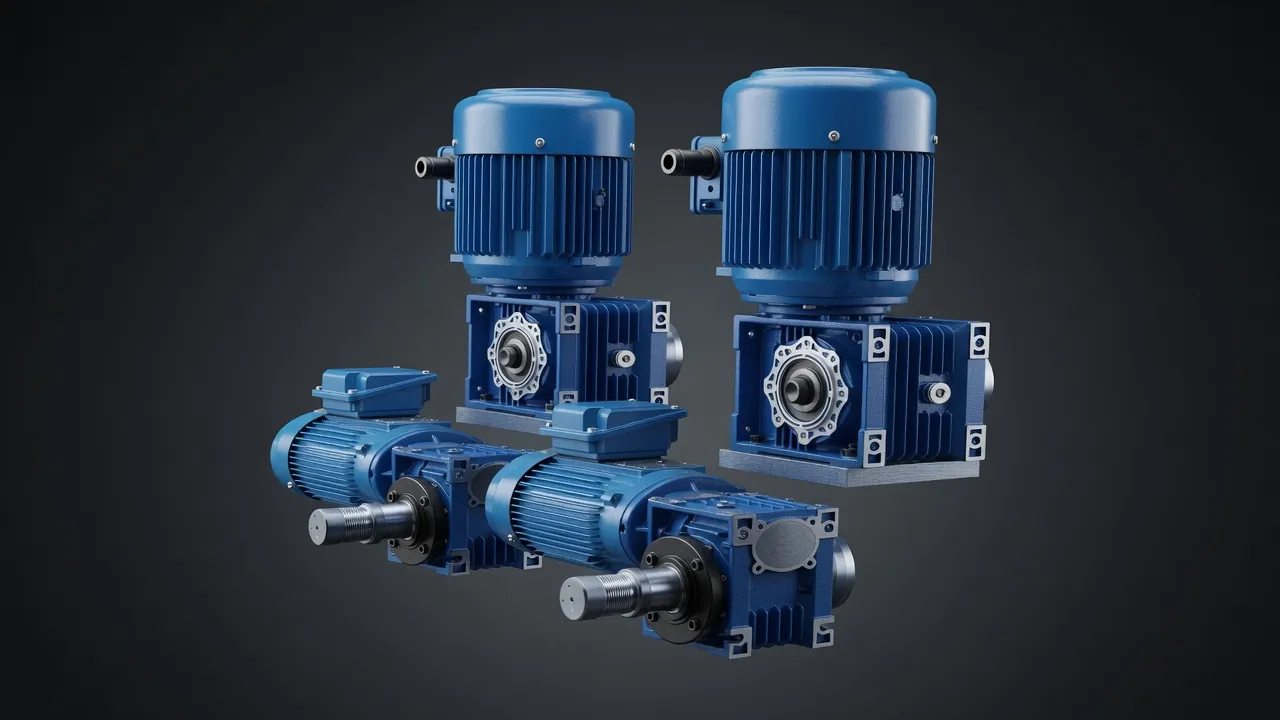
A CNC servo motor drives the dividing head input shaft through a flexible coupling. The motor must provide sufficient torque to accelerate the spindle and workpiece to indexing speed, hold position against cutting forces, and decelerate cleanly to the next position without overshoot. The inertia of the worm wheel and spindle assembly — typically 0.001–0.05 kg·m² depending on head size — determines the acceleration torque required. The DA series single-stage worm reducer between the servo motor and the dividing head input provides a second reduction stage that reduces reflected inertia at the motor by the square of the additional ratio, significantly improving servo response and positioning speed.
Comparing Worm Drive with Harmonic Drive for CNC Indexing
Harmonic drives (strain wave gears) have replaced worm pairs in some high-precision CNC dividing heads because they offer zero backlash and higher stiffness in a smaller package. However, they are significantly more expensive and have lower peak torque ratings for a given housing size. For production gear cutting where the dividing head must handle heavy interrupted cuts, the worm pair’s higher peak torque capacity and lower unit cost make it the practical choice. Harmonic drives win where the cutting loads are light and the positioning accuracy demand exceeds what a precision worm pair can achieve. The VRV040 high-precision low-backlash worm gearbox occupies the middle ground — lower cost than harmonic, higher precision than standard industrial worm — for servo-driven CNC indexing applications.
Frequently Asked Questions
Speak with a Drive Specialist
Send through your load data, speed requirement, and application environment — our team at Condell Park NSW provides a sized gearbox recommendation and stock availability check within one business day. No obligation.