Stage lifts — orchestra pit elevators, hydraulic platform stages, flying rig drives, and revolving stage mechanisms in theatres and entertainment venues — operate in a unique confluence of engineering precision and public safety requirements. The mechanical failure of a stage lift during a performance is not merely a production disruption: it is a life-safety event, as performers, technicians, and in some configurations, audience members, are on or near the moving platform. Worm gearboxes drive the majority of the world’s non-hydraulic stage lifts and flying rigs specifically because their self-locking property provides an inherent fail-safe holding mechanism that prevents uncontrolled descent in the event of power failure.
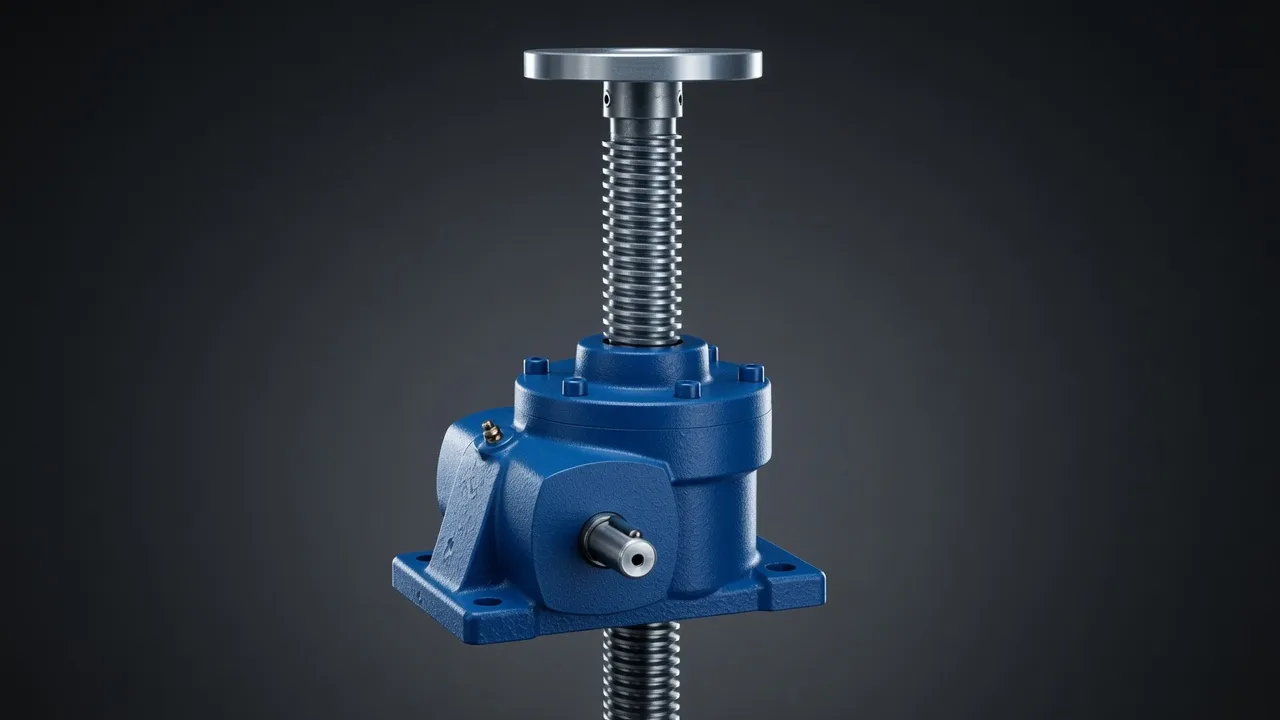
Self-Locking as a Safety-Critical Property
In most industrial applications, the self-locking property of a worm gearbox is a convenient bonus — it holds loads in position without a separate brake and provides a secondary safety function that backs up the primary brake. In stage lift applications, the self-locking property is elevated to a primary safety function by virtue of the consequence of failure. A flying rig that can descend under a power outage is not acceptable; a stage lift that free-falls when the motor trips is catastrophically dangerous. The worm gearbox is specified at a ratio that provides a self-locking torque margin of 3–5 times the maximum suspended load torque — not the 1.5–2.0× typical of industrial applications.
Self-Locking Torque Margin Calculation for Stage Applications
The self-locking torque margin is the ratio of the maximum back-drive torque that can be applied to the output shaft without causing rotation, to the torque generated by the suspended load at that output shaft. For a standard WP worm pair at 1:40 ratio, the lead angle is approximately 2.3° and the friction angle between steel worm and bronze wheel is approximately 5–6° at normal operating temperature. The back-drive torque limit is approximately (tan(5°) − tan(2.3°)) × (cos(2.3°) ÷ cos(5°)) × rated mesh torque — which works out to roughly 2.5–3.0 times the rated output torque in most configurations. For a 3× self-locking margin, the gearbox output must be rated at 3× the maximum load torque. For a stage platform loaded with 10 performers at 80 kg each (800 kg total, 7 850 N) and a 100 mm drum radius, load torque = 785 N·m — gearbox rated output must exceed 785 × 3 = 2 355 N·m. WPA 250 at 1:40 (approximately 2 200 N·m at that ratio) is marginal; a WPA 250 at 1:50 (rated higher) or a double-stage unit is the correct specification.
| Stage Lift Type | Payload | Platform Speed | Required Output Torque | Self-Locking Margin | WP Unit |
|---|---|---|---|---|---|
| Small pit lift, solo performer | 300 kg | 0.15 m/s | 440 N·m | 3× | WPA 155, 1:50 |
| Orchestra pit lift | 2 000 kg | 0.1 m/s | 2 940 N·m (100 mm drum) | 3× | WPA 250, 1:50 or WPE |
| Revolving stage ring | 5 000 kg | 0.2 m/min (rot) | Radial drive, 800 N·m | 4× | WPA 175, 1:60 |
| Flying rig, single performer | 200 kg | 0.3 m/s | 294 N·m (150 mm drum) | 5× | WPA 135, 1:60 |
| Flying rig, group flight | 600 kg | 0.25 m/s | 882 N·m | 5× | WPA 175, 1:60 |
Self-locking margin = gearbox rated output ÷ load torque. Verify against actual worm lead angle at specified ratio.
Speed Precision and Smooth Motion for Performance
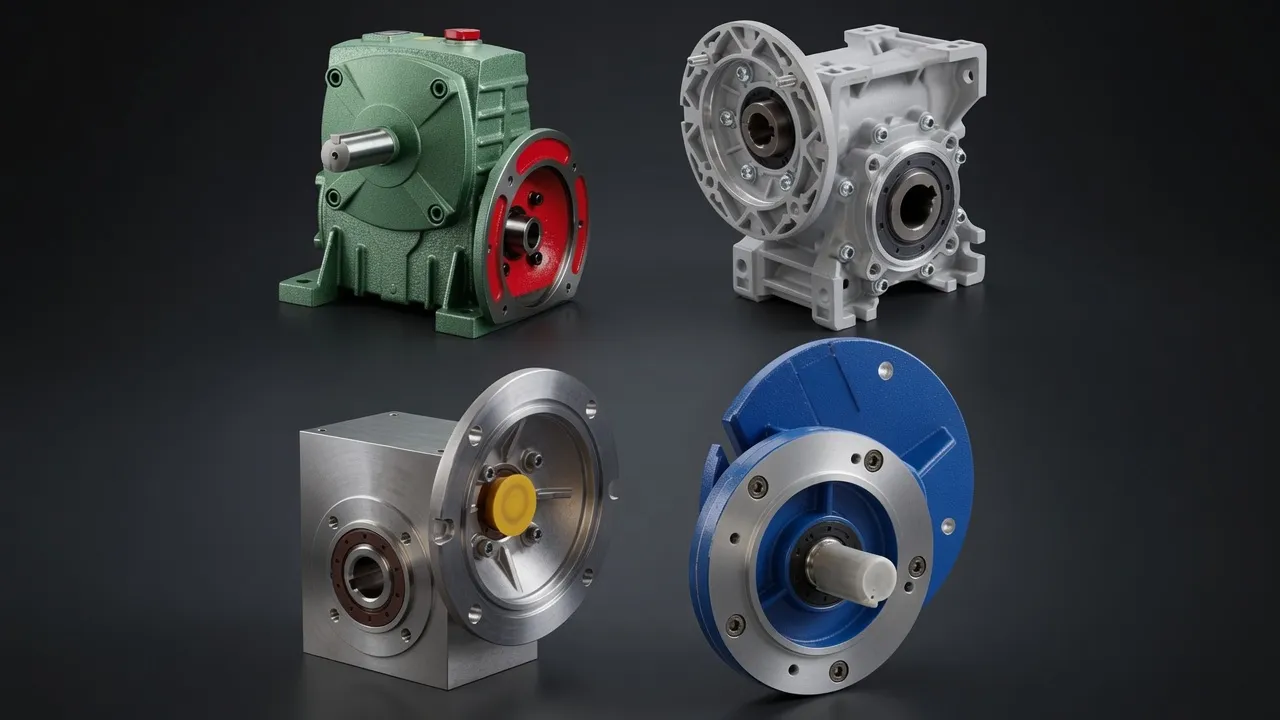
A stage lift descending during a theatrical scene with the house lights up must move at a perfectly constant speed without jitter, vibration, or audible gearbox noise — any irregularity is immediately visible and audible to the audience. Worm gearing at the low output speeds typical of stage lifts (0.1–0.3 m/s platform speed = 1–5 rpm at the drum) produces exceptionally smooth output motion because the continuous multi-tooth contact of the worm thread with the wheel averages out any individual tooth pitch error. This is one reason worm gearboxes outlasted hydraulic and chain drives in theatrical rigging on acoustic requirements alone — hydraulic systems and chain drives are inherently noisier at slow speeds than a worm mesh running in a clean oil bath.
Motor Brake and Emergency Stop Integration
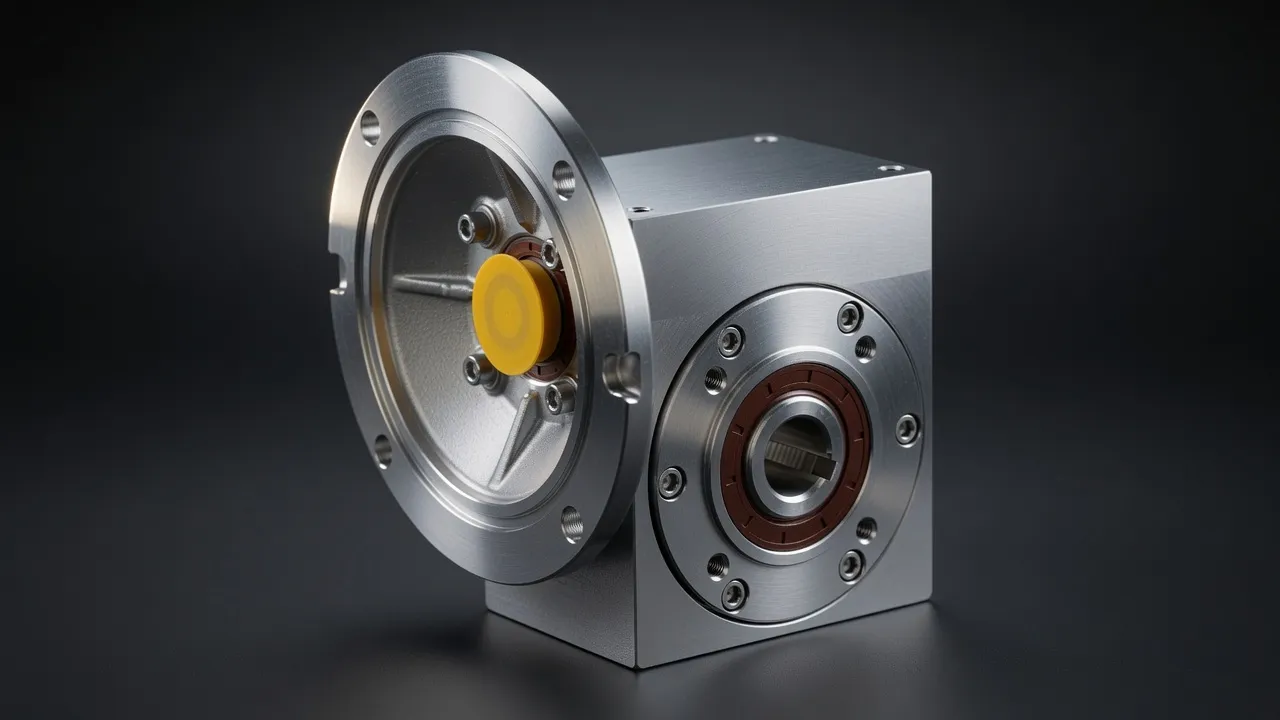
Every stage lift gearbox is paired with at least one positive brake — typically a spring-applied electromagnetic disc brake on the motor shaft — and many theatrical installations specify a secondary brake at the drum shaft as an independent safety device. The control system sequences brakes and motor in a specific order: before lifting, the motor energises and reaches speed before the brake releases; during lowering, the brake remains lightly applied as a dynamic brake, with the motor providing controlled deceleration; at rest, both brakes are applied before the motor is de-energised. This sequence ensures that neither gravity nor an unexpected power failure can cause uncontrolled movement, even if one brake fails simultaneously. The worm gearbox self-locking property provides the third line of defence.
Regulatory Compliance: AS 1418 and Venue Requirements
Stage lift mechanical systems in Australian theatres must comply with the general principles of AS 1418 (cranes, hoists, and winches) and the specific requirements of the relevant state building authority for entertainment venues. Many major venues (Sydney Opera House, Melbourne Arts Centre, Brisbane Convention and Exhibition Centre) have their own internal engineering specifications that go beyond the Australian Standards baseline — these typically specify minimum self-locking ratios, rated brake testing frequency, inspection intervals, and documentation requirements for every drive component. When specifying a worm gearbox for a stage lift, the DA series and EA double-stage series provide the documentation traceability that safety-critical theatrical installations require. Consult the certifying theatrical engineer before finalising any stage lift drive specification.
Frequently Asked Questions
Speak with a Drive Specialist
Send through your load data, speed requirement, and application environment — our team at Condell Park NSW provides a sized gearbox recommendation and stock availability check within one business day. No obligation.