Description
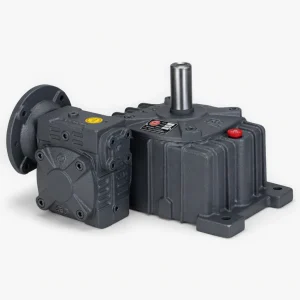
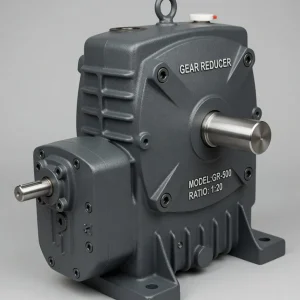
EDA Series — Motor-Flange Double Worm Gear Reducer
The EDA Series combines the extreme ratio coverage of a double-stage worm gear train (200:1 to 900:1) with the installation simplicity of a bolt-on IEC motor flange. Where the standard EA requires a separate coupling or belt between the motor and the first-stage input, the EDA lets you mount the motor directly — saving floor space, alignment time, and a coupling maintenance item. Five frame combinations from WP40–70 through WP155–250 deliver continuous output torques up to 9,066 N·m, covering everything from fractional-horsepower lab equipment to heavy-duty dam-gate actuators. The dual self-locking worm stages hold the output shaft immovably in any position when the motor is de-energised, providing a built-in holding function that eliminates the cost and complexity of an external brake.
Practical Applications
Heavy Gate and Valve Actuators
Penstock gates on hydroelectric dams, sluice gates in water-treatment plants, and large butterfly valves in pipeline systems all demand very high torque at very low speed with absolute position-holding when the drive is off. The EDA in the WP120–175 or WP155–250 frame combination meets these demands in a single compact package. The direct motor flange simplifies the drive assembly to just two components — motor and reducer — rather than the motor-coupling-reducer chain typical of foot-mounted arrangements. Actuator OEMs including AVK, Mueller, and Rotork have integrated WP-platform double-stage worm drives into gate systems worldwide.
Turntable and Indexing Drives
Industrial turntables used in rail-car positioning, CNC pallet changers, and stage-machinery revolves need to rotate large masses very slowly with precise stopping. An EDA at 400:1 or 600:1 turns a standard 1,500 r/min motor into a 2.5–3.75 r/min output, and the dual self-locking worm gearbox characteristic arrests rotation instantly when the motor stops, without coasting. This makes the EDA a reliable industrial gearbox solution for position-critical rotary motion.
Mining Winches and Cable Drums
Underground ore-pass gates, ventilation dampers, and service winches in mining operations need a gear reducer that can hold a suspended load indefinitely if power is lost. The EDA provides that safety margin through passive self-locking, backed by a housing construction that tolerates the vibration, dust, and temperature swings common in underground and open-pit environments.
Performance Data
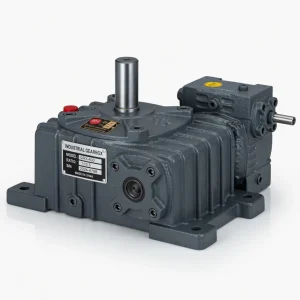
Output torque figures below are measured at 1,500 r/min input under continuous duty. The EDA uses the same dual-housing WP-platform construction as the EA, with an added B5/B14 IEC motor flange on the first-stage input. All frame combinations share interchangeable worm wheels and bearings with the single-stage speed reducer gearbox range.
| Frame Combo | Motor (kW) | Ratios | Output at 200:1 (N·m) | Output at 900:1 (N·m) |
|---|---|---|---|---|
| WP40–70 | 0.12 | 200:1 – 900:1 | 63 | 177 |
| WP60–100 | 0.37 | 200:1 – 900:1 | 195 | 561 |
| WP80–135 | 1.5 | 200:1 – 900:1 | 616 | 1,811 |
| WP120–175 | 2.2 – 3 | 200:1 – 900:1 | 1,798 | 4,463 |
| WP155–250 | 5.5 | 200:1 – 900:1 | 2,841 | 9,066 |
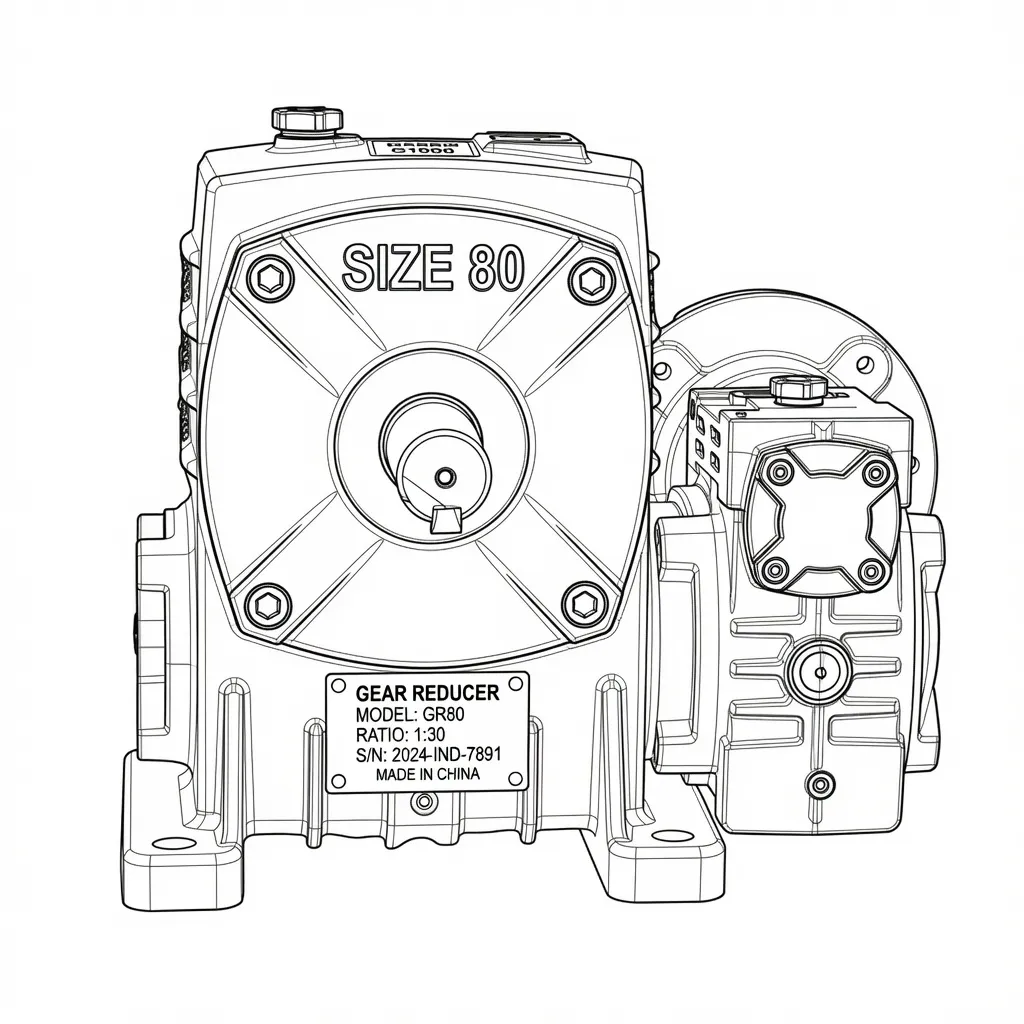
Dual-housing layout and IEC flange interface
From Order to Dispatch
Every EDA unit moves through a structured process from initial application review to tested, packed, and shipped hardware. The steps below outline what to expect when you order from Ever-Power Australia.
Application Review
Our engineers assess your torque, speed, and duty-cycle requirements to determine the optimal frame combination and ratio split between stages.
Motor Matching
We verify that your IEC motor frame, shaft diameter, and flange pattern match the EDA first-stage input bore. Custom adapters are available for non-standard motors.
Production & QC
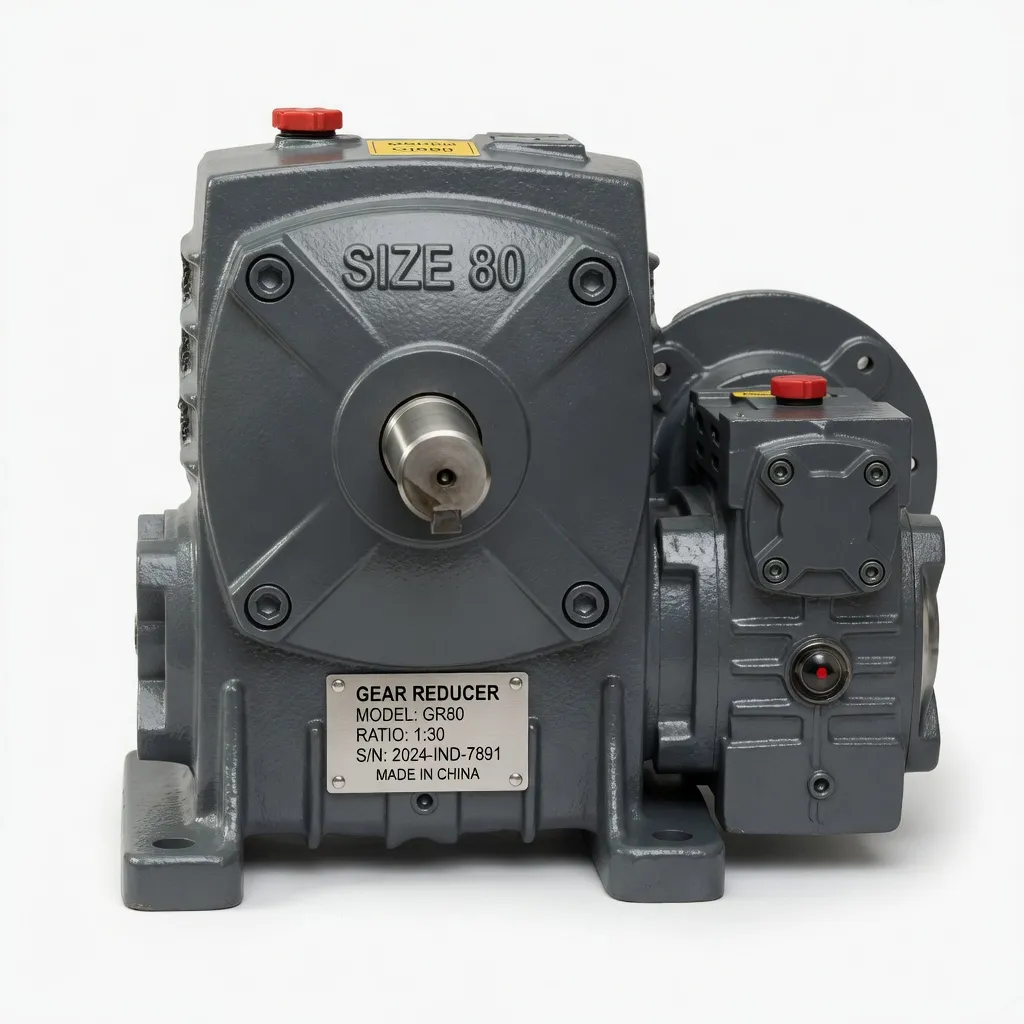
Each EDA is assembled, filled with EP gear oil, and run under load on a dynamometer. Housing temperature, noise level, and output torque are recorded on the test certificate.
Dispatch & Support
Units ship from our NSW warehouse with mounting hardware, installation manual, and a spare set of shaft seals. Our team remains available for commissioning guidance.
Lubrication and Thermal Considerations
Because two worm meshes operate in series, the EDA generates more heat per kW of transmitted power than a single-stage unit. For ambient temperatures up to 40 °C with intermittent duty (under six hours), ISO VG 220–320 mineral EP gear oil (Shell Omala S2 G 220 or Mobil Gears 627) is adequate. For continuous duty beyond six hours, or in enclosed machine bases with poor ventilation, switch to a synthetic ISO VG 220 lubricant such as Mobil SHC 630 to lower stabilised housing temperature by 10–20 °C. Change the oil after the first 100 running hours, then at 2,000-hour intervals or annually — whichever comes first. During each change, inspect both magnetic drain plugs for metal particles and check all shaft seals for weeping.
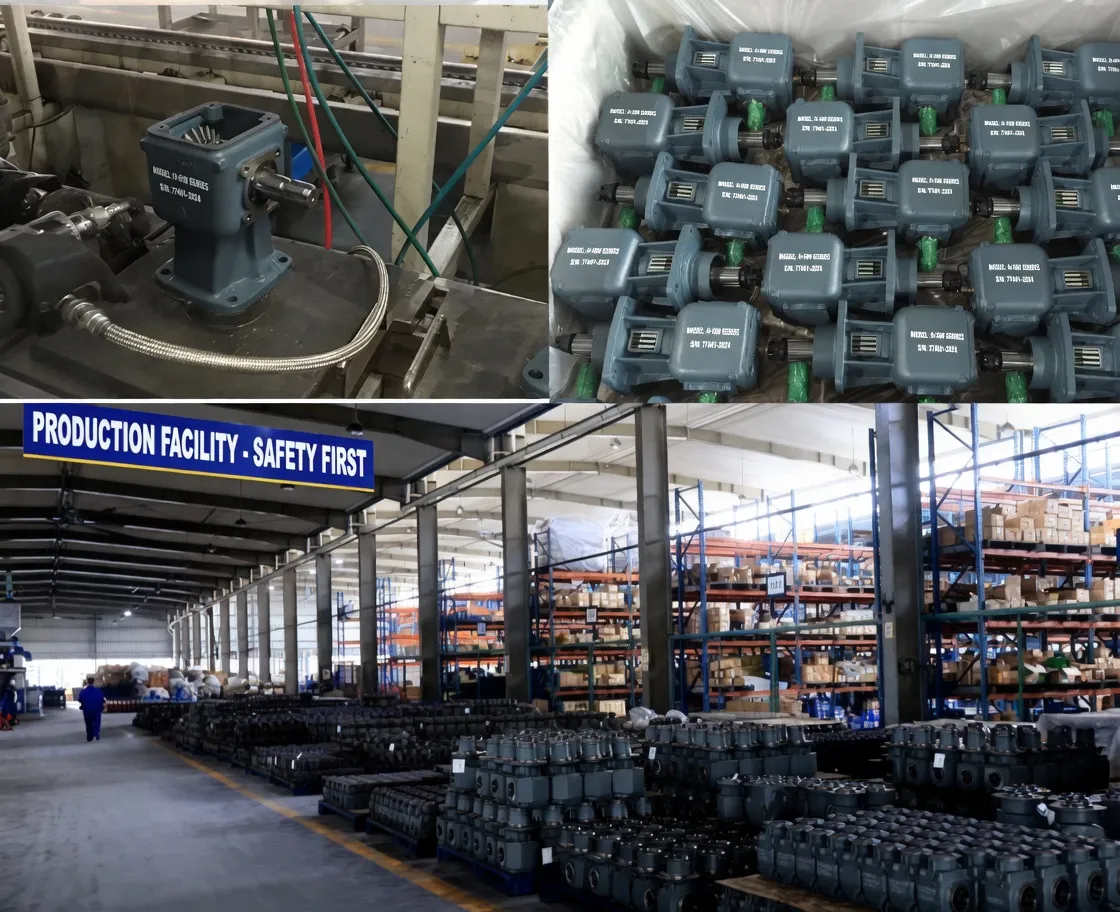
Final assembly and load testing of double-stage units
Why Ever-Power Australia
Ever-Power Transmission Australia Pty Ltd carries the EDA alongside the full EA, DA, and DK ranges from our Condell Park, NSW warehouse. ISO 9001-certified manufacturing, factory load testing, and Australian-based technical support ensure that every unit performs to specification from day one. We also supply RR528 heavy-duty worm gearboxes for metallurgy for high-torque metallurgical and foundry drives that demand heavy-duty construction. contact us or call +61 2 9708 3322 for pricing, lead times, and engineering assistance.