
Product Description
TA series shaft mounted gearbox(speed reducer) with helical hardened gears has the characteristics of high carrying capacity, smooth transmission, light weight, low energy consumption and so on. Input shaft of ATA speed reducer is connected with gear motor by belt pulley, hollow output shaft is linked with a key. It can be replaced by electric drum as power for belt conveyors and lifting equipments. ATA series shaft mounted gearbox could be attached with back-stop to avoid the working machine back skating, and conveniently mounted by tie rod. ATA series shaft mounted speed reducer is widely applied in the mining equipments, concrete mixing batching plant, stone crushers, sand making production line and other belt conveyors, mechanical transmission areas.
Mechanical belt conveyors drive system is composed of ATA shaft mounted speed reducer, torque arm, pulleys and gear motors, whose power transmission from the gear motor to the gearbox through the pulley, and then speed reducer passed to the drive pulley through the hollow output shaft and the gearbox is fixed by torque arm, anti-slip device can be configured. The system is convenient to install,use and maintain.
Components:
1. Housing: Nodular Cast Iron(Ductile Iron) QT600
2. Gears Profile: Hardened Helical Gears
3. Gears Material: 20CrMnTi
4. Gears Processing: Carburizing, Quenching, Grinding
5. Gears Hardness: Surface Hardness: HRC58-62, Inner Hardness: HBS156-207
6. Gears Accuracy: 6 Class
7. Shafts Material: 40Cr
8. Input Configurations:
Keyed CHINAMFG Shaft Input
IEC Normalized Motor Flange
9. Output Configurations:
Keyed Hollow Shaft Output
10. Oil Seal: ZheJiang SOG
11. Bearings: NSK, HRB, ZWZ, LYC
12. Spare Parts: Torque arm, Optional Backstop
Gearbox Parameters:
| Models | Output Bore Dia. | Maximum Torque | Nominal Ratio(i) |
| ATA30 | 30mm | 180Nm | 5
7 10 12.5 15 20 25 31 |
| ATA35 | 35mm | 420Nm | |
| ATA40 | 40mm/45mm | 950Nm | |
| ATA45 | 45mm/50mm/55mm | 1400Nm | |
| ATA50 | 50mm/55mm/60mm | 2300Nm | |
| ATA60 | 60mm/70mm | 3600Nm | |
| ATA70 | 70mm/85mm | 5100Nm | |
| ATA80 | 80mm/100mm | 7000Nm | |
| ATA100 | 100mm/125mm | 11000Nm | |
| ATA125 | 125mm/135mm | 17000Nm |
/* January 22, 2571 19:08:37 */!function(){function s(e,r){var a,o={};try{e&&e.split(“,”).forEach(function(e,t){e&&(a=e.match(/(.*?):(.*)$/))&&1
| Application: | Machinery, Quarry |
|---|---|
| Hardness: | Hardened Tooth Surface |
| Installation: | Shaft Mounted |
| Samples: |
US$ 180/Piece
1 Piece(Min.Order) | Order Sample blue
|
|---|
| Customization: |
Available
| Customized Request |
|---|
.shipping-cost-tm .tm-status-off{background: none;padding:0;color: #1470cc}
|
Shipping Cost:
Estimated freight per unit. |
about shipping cost and estimated delivery time. |
|---|
| Payment Method: |
|
|---|---|
|
Initial Payment Full Payment |
| Currency: | US$ |
|---|
| Return&refunds: | You can apply for a refund up to 30 days after receipt of the products. |
|---|
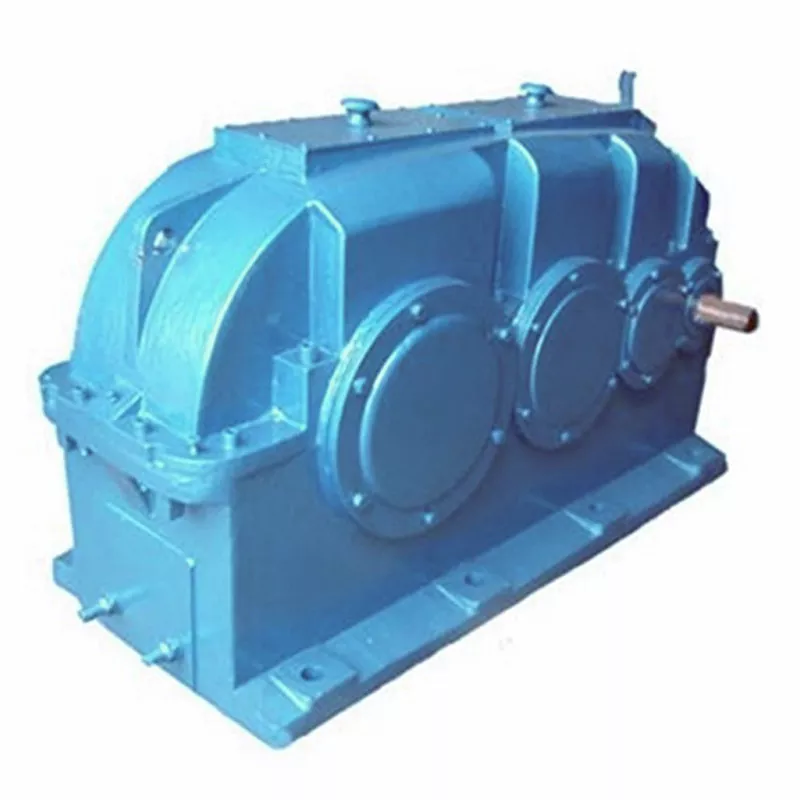
Considerations for Choosing Lubrication for Speed Reducer Gearboxes
Choosing the right lubrication for speed reducer gearboxes is crucial to ensure optimal performance, longevity, and efficiency. Several factors should be taken into account when making this decision:
- Operating Conditions: Consider the temperature range, load, and speed at which the gearbox operates. Extreme temperatures or heavy loads may require specialized lubricants.
- Lubricant Type: Choose between oil and grease lubrication. Oil provides better heat dissipation and is suitable for high-speed applications, while grease offers better sealing and is ideal for applications with frequent starts and stops.
- Viscosity: Select the appropriate viscosity grade of lubricant based on the operating conditions. Higher viscosity is generally preferred for heavy loads and high temperatures.
- Additives: Some applications may require lubricants with specific additives, such as anti-wear additives, extreme pressure additives, or corrosion inhibitors, to enhance performance and protection.
- Sealing and Contamination: Consider the effectiveness of sealing mechanisms to prevent contamination from dust, water, and other particles. Proper sealing helps extend the lubricant’s lifespan.
- Compatibility: Ensure that the selected lubricant is compatible with the materials used in the gearbox construction, including seals, gaskets, and gear materials.
- Re-Lubrication Intervals: Determine how frequently re-lubrication is required. Some applications may demand frequent re-lubrication, while others can operate with longer intervals.
- Environmental Impact: Consider environmental regulations and restrictions when selecting lubricants to minimize ecological impact and ensure compliance.
By carefully evaluating these factors and consulting with lubrication experts, industries can choose the right lubrication strategy for their speed reducer gearboxes, promoting smooth operation and extending the equipment’s service life.
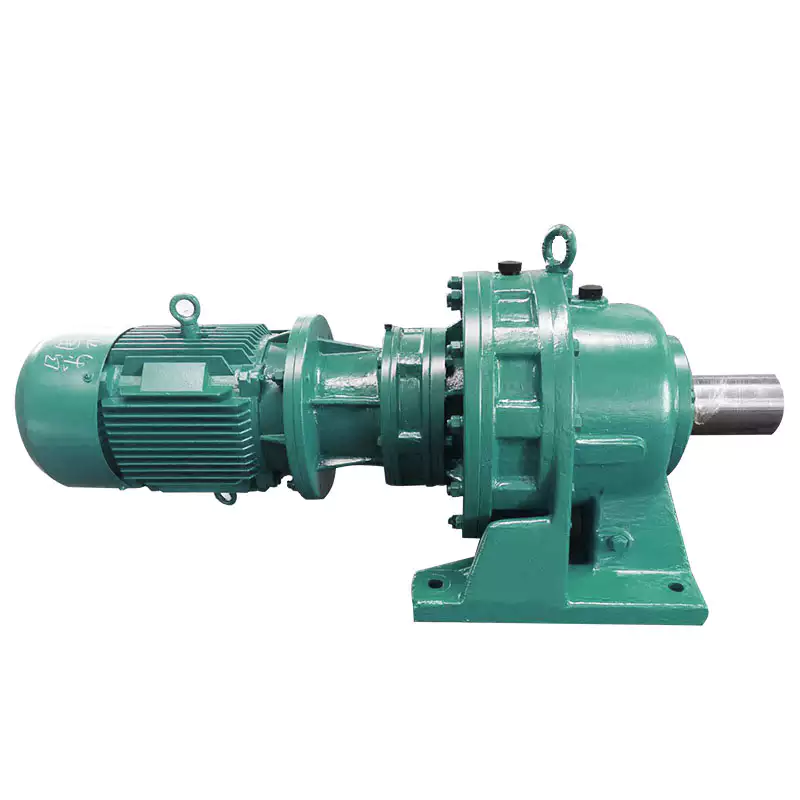
Managing Shock Loads and Sudden Speed Changes in Speed Reducer Gearboxes
Speed reducer gearboxes are designed to effectively manage shock loads and sudden changes in rotational speed, ensuring reliable operation and minimizing potential damage to both the gearbox and the connected machinery. They employ various design features and components to achieve this:
1. High-Strength Materials: Speed reducer gearboxes are constructed using durable and high-strength materials, such as alloy steel, to withstand sudden impacts and shock loads without deformation or failure.
2. Robust Bearings: Heavy-duty bearings are used to support the shafts and gears within the gearbox. These bearings are selected for their ability to handle both radial and axial loads, providing stability and reducing the risk of damage.
3. Shock-Resistant Gears: Gear teeth are designed to absorb and distribute shock loads. Tooth profiles and surface treatments are optimized to minimize stress concentrations and prevent premature wear or fractures.
4. Torque Limiters: Some speed reducer gearboxes incorporate torque limiters or overload protection devices. These mechanisms disengage the gearbox from the motor or driven equipment when excessive torque or shock loads are detected, preventing damage to the components.
5. Lubrication: Proper lubrication is essential to reduce friction and dissipate heat generated during sudden speed changes. High-quality lubricants ensure smooth operation and enhance the gearbox’s ability to absorb shocks.
6. Inertia Considerations: Speed reducer gearboxes are designed to manage changes in inertia between the input and output sides. This is important for maintaining stability during sudden acceleration or deceleration.
By incorporating these features and engineering principles, speed reducer gearboxes can effectively handle shock loads and sudden changes in rotational speed, enhancing the overall reliability and performance of mechanical systems.
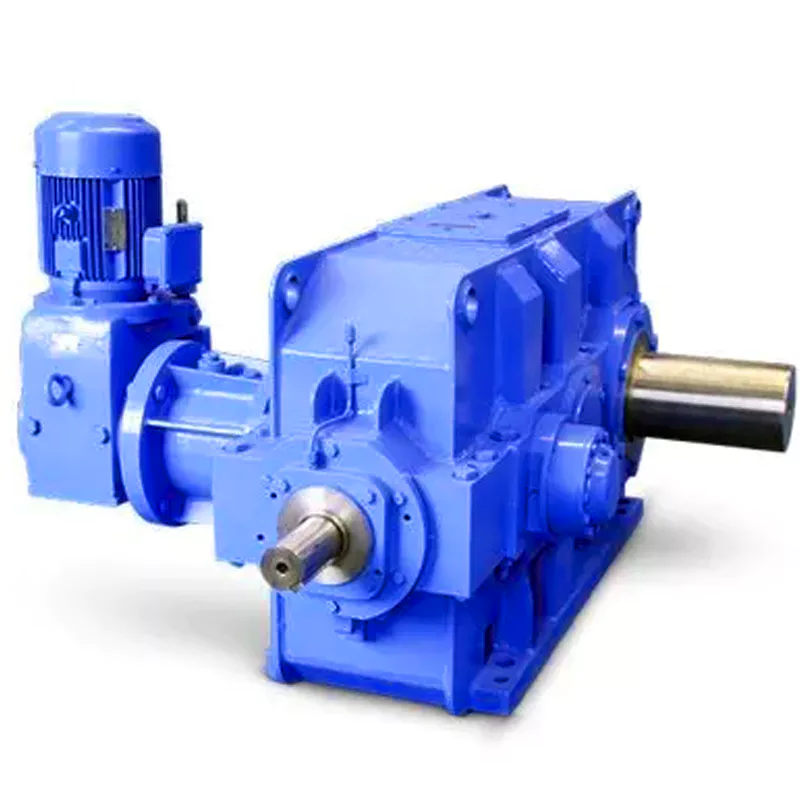
What Advantages Does a Speed Reducer Gearbox Offer in Industrial Applications?
A speed reducer gearbox provides numerous advantages that make it a valuable component in a wide range of industrial applications. These advantages contribute to improved efficiency, performance, and reliability of machinery and equipment.
1. Speed Reduction: One of the primary benefits of a speed reducer gearbox is its ability to reduce the rotational speed of an input shaft, which is often provided by a high-speed power source such as an electric motor. This speed reduction is crucial in applications where the output speed needs to be lower than the input speed to achieve optimal performance. For example, in manufacturing processes or conveyor systems, a slower output speed is often necessary for precise control and safe handling of materials.
2. Torque Increase: The gear arrangement within a speed reducer gearbox leads to an increase in torque at the output shaft compared to the input shaft. This torque amplification is essential for applications that require higher levels of force to overcome resistance, move heavy loads, or perform work. The gearbox’s ability to multiply torque ensures that machinery can handle demanding tasks effectively.
3. Mechanical Advantage: Speed reducer gearboxes utilize gear trains and ratios to create a mechanical advantage. This advantage allows the gearbox to convert high-speed, low-torque input power into low-speed, high-torque output power. The mechanical advantage enhances the efficiency of power transmission and motion control, making it well-suited for applications that involve both speed reduction and torque increase.
4. Versatility: Speed reducer gearboxes are highly versatile and can be tailored to specific application requirements. Manufacturers offer a variety of gear ratios, sizes, and configurations, allowing for customization to achieve the desired output characteristics. This adaptability ensures that gearboxes can be integrated into a wide range of machinery and equipment across different industries.
5. Smooth Operation: The precise meshing of gears in a speed reducer gearbox results in smooth and consistent power transmission. This characteristic is crucial for applications that demand accurate and controlled movement, such as robotics and automated systems. The gearbox’s ability to maintain steady motion contributes to the overall efficiency and performance of the system.
6. Energy Efficiency: By converting high-speed, low-torque input power into a lower-speed, higher-torque output, speed reducer gearboxes help optimize energy usage. This energy-efficient operation can lead to reduced power consumption, lower operating costs, and improved sustainability in industrial processes.
7. Noise and Vibration Reduction: The gear arrangement in a speed reducer gearbox can help dampen noise and vibrations produced by the power source. This is particularly beneficial in applications where noise reduction is essential for a comfortable working environment or to prevent damage to sensitive equipment.
In summary, a speed reducer gearbox offers advantages such as speed reduction, torque amplification, mechanical advantage, versatility, smooth operation, energy efficiency, and noise reduction. These benefits make speed reducer gearboxes indispensable components in various industrial settings, enhancing the overall performance and productivity of machinery and systems.


editor by CX 2024-04-08