
Product Description
Standard F Series Parallel Shaft Helical Gearbox Speed Reducer with 380V/660V 3 Phase Electric Motor 4KW 11KW
|
Input Configurations |
Direct motor coupled |
|
With IEC B5/B14 motor flange |
|
|
With IEC B5/B14 motor mounted |
|
|
With CZPT input shaft |
|
|
Output Configurations
|
Solid output shaft |
|
Solid output shaft with flange |
|
|
Hollow output shaft |
|
|
Hollow output shaft and flange |
|
|
Variants of the Parallel Shaft Helical Gear Unit Series F / FF / FA / FAF |
Foot- or flange-mounted |
|
B5 or B14 flange-mounted |
|
|
Solid shaft or hollow shaft |
|
|
Hollow shaft with key connection, shrink disk, splined hollow shaft, or Torque Arm |
Technical Data:
| Housing material | Cast iron/Ductile iron |
| Housing hardness | HBS190-240 |
| Gear material | 20CrMnTi alloy steel |
| Surface hardness of gears | HRC58°~62 ° |
| Gear core hardness | HRC33~40 |
| Input / Output shaft material | 42CrMo alloy steel |
| Input / Output shaft hardness | HRC25~30 |
| Machining precision of gears | accurate grinding, 6~5 Grade |
| Lubricating oil | GB L-CKC220-460, Shell Omala220-460 |
| Heat treatment | tempering, cementiting, quenching, etc. |
| Efficiency | 94%~96% (depends on the transmission stage) |
| Noise (MAX) | 60~68dB |
| Temp. rise (MAX) | 40°C |
| Temp. rise (Oil)(MAX) | 50°C |
| Vibration | ≤20µm |
| Backlash | ≤20Arcmin |
| Brand of bearings | China top brand bearing, HRB/LYC/ZWZ/C&U. Or other brands requested, NSK. |
| Brand of oil seal | NAK — ZheJiang or other brands requested |
Specification
|
Model |
Shaft Dia. mm |
Horizontal Center Height mm |
External Flange Dia. Mm |
Power Kw |
Ratio i |
Nominal Torque Nm |
|
|
Solid Shaft |
Hollow Shaft |
||||||
|
F/FF/FA/FAF37 |
ф25 |
ф30 |
70 |
160 |
0.12-3 |
4-138 |
180 |
|
F/FF/FA/FAF47 |
ф35 |
ф35 |
80 |
200 |
0.12-5.5 |
4-175 |
360 |
|
F/FF/FA/FAF57 |
ф35 |
ф40 |
100 |
250 |
0.18-7.5 |
4-197 |
420 |
|
F/FF/FA/FAF67 |
ф40 |
ф40 |
100 |
250 |
0.37-7.5 |
4-197 |
700 |
|
F/FF/FA/FAF77 |
ф50 |
ф50 |
120 |
300 |
0.75-11 |
4-197 |
1350 |
|
F/FF/FA/FAF87 |
ф60 |
ф60 |
155 |
350 |
1.5-22 |
4-193 |
2500 |
|
F/FF/FA/FAF97 |
ф70 |
ф70 |
180 |
450 |
2.2-30 |
4-203 |
3700 |
|
F/FF/FA/FAF107 |
ф90 |
ф90 |
200 |
450 |
3-45 |
4-205 |
6500 |
|
F/FF/FA/FAF127 |
ф110 |
ф100 |
240 |
550 |
5.5-90 |
4-202 |
10000 |
|
F/FF/FA/FAF157 |
ф120 |
ф120 |
270 |
660 |
11-160 |
4-190 |
18000 |
Company profile
Scenario
Packing
FAQ
Q1: I want to buy your products, how can I pay?
A: You can pay via T/T(30%+70%), L/C ,D/P etc.
Q2: How can you guarantee the quality?
A: One year’s warranty against B/L date. If you meet with quality problem, please send us pictures or video to check, we promise to send spare parts or new products to replace. Our guarantee not include inappropriate operation or wrong specification selection.
Q3: How we select models and specifications?
A: You can email us the series code (for example: RC series helical gearbox) as well as requirement details, such as motor power,output speed or ratio, service factor or your application…as much data as possible. If you can supply some pictures or drawings,it is nice.
Q4: If we don’t find what we want on your website, what should we do?
A: We offer 3 options:
1, You can email us the pictures, drawings or descriptions details. We will try to design your products on the basis of our
standard models.
2, Our R&D department is professional for OEM/ODM products by drawing/samples, you can send us samples, we do customized design for your bulk purchasing.
3, We can develop new products if they have good market. We have already developed many items for special using successful, such as special gearbox for agitator, cement conveyor, shoes machines and so on.
Q5: Can we buy 1 pc of each item for quality testing?
A: Yes, we are glad to accept trial order for quality testing.
Q6: How about your product delivery time?
A: Normally for 20’container, it takes 25-30 workdays for RV series worm gearbox, 35-40 workdays for helical gearmotors.
|
Shipping Cost:
Estimated freight per unit. Impact of Gear Ratios on Performance of Speed Reducer GearboxesGear ratios in speed reducer gearboxes play a crucial role in determining their performance characteristics and capabilities. The gear ratio represents the ratio of the number of teeth on the driving (input) gear to the number of teeth on the driven (output) gear within the gearbox. This ratio directly affects how the gearbox transforms the input speed and torque into the desired output speed and torque. Speed Reduction: A higher gear ratio in a speed reducer gearbox results in greater speed reduction. In this case, the input shaft’s higher rotational speed is converted into a lower rotational speed at the output shaft. This is advantageous for applications that require increased torque and reduced speed, such as heavy-duty machinery and conveyor systems. Speed Increase: Conversely, a lower gear ratio in a speed reducer gearbox leads to speed increase. The input shaft’s rotational speed is transformed into a higher rotational speed at the output shaft, albeit with decreased torque. This configuration is useful in applications where higher speed is necessary, such as certain types of pumps and fans. The choice of gear ratio is a critical design consideration when selecting a speed reducer gearbox for a specific application. It determines the trade-off between speed and torque, allowing engineers Considerations for Choosing Lubrication for Speed Reducer GearboxesChoosing the right lubrication for speed reducer gearboxes is crucial to ensure optimal performance, longevity, and efficiency. Several factors should be taken into account when making this decision:
By carefully evaluating these factors and consulting with lubrication experts, industries can choose the right lubrication strategy for their speed reducer gearboxes, promoting smooth operation and extending the equipment’s service life. to tailor the gearbox’s performance to match the requirements of the machinery and equipment it will drive. |
To be negotiated |
|---|
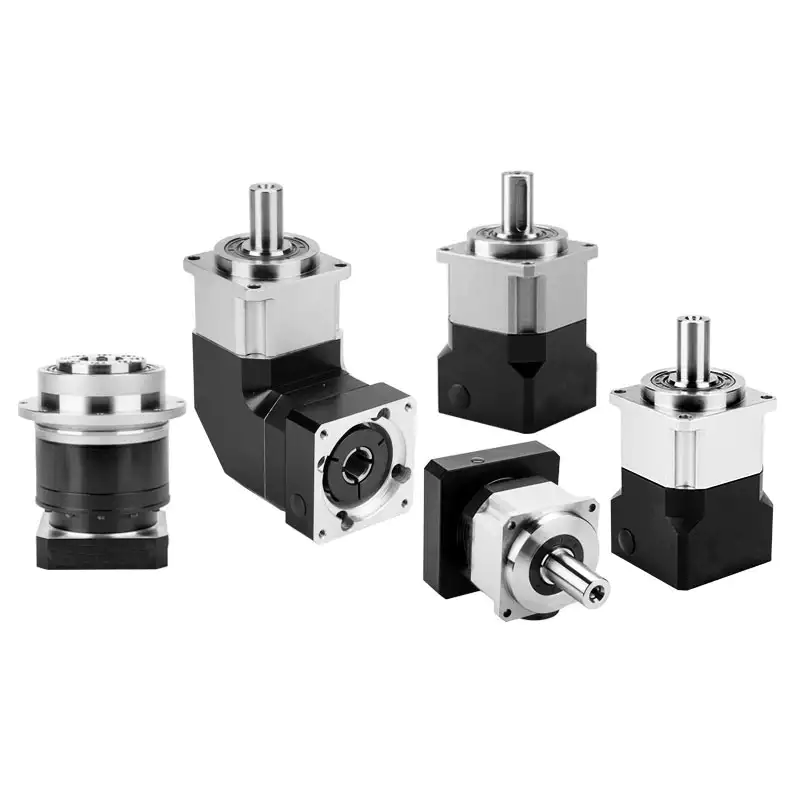
| Application: | Motor, Motorcycle, Machinery, Agricultural Machinery |
|---|---|
| Hardness: | Hardened Tooth Surface |
| Installation: | M1-M6 |
| Samples: |
US$ 1152/Piece
1 Piece(Min.Order) | Order Sample |
|---|
| Customization: |
Available
| Customized Request |
|---|
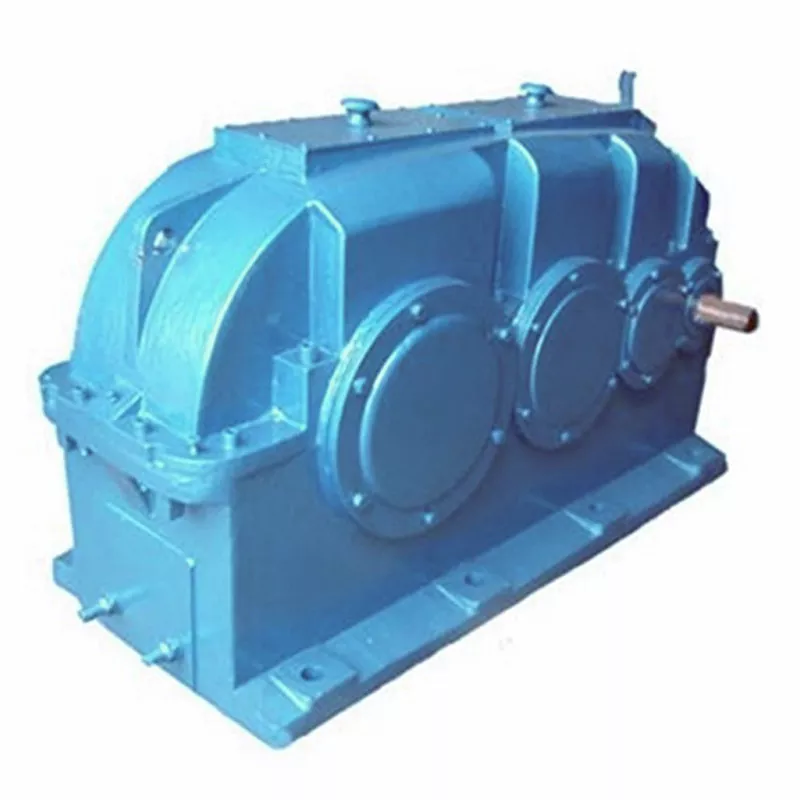
How do Speed Reducer Gearboxes Contribute to Reducing Rotational Speed and Increasing Torque?
Speed reducer gearboxes play a critical role in mechanical systems by achieving the dual objectives of reducing rotational speed and increasing torque. This fundamental function is accomplished through the intricate interaction of different types of gears within the gearbox.
At its core, a speed reducer gearbox consists of multiple gears with varying sizes and configurations. The gears are arranged in specific sequences to create gear trains that manipulate the input speed and torque to achieve the desired output characteristics.
The reduction of rotational speed is achieved through gear train arrangements that involve gear pairs with different numbers of teeth, commonly known as gear ratios. When an input shaft connected to a higher-speed power source engages with a gear of smaller size, it drives a larger gear connected to the output shaft. This gear reduction process results in a lower rotational speed at the output shaft compared to the input shaft. The change in gear size and ratio effectively converts the input speed into a reduced output speed.
Simultaneously, the interaction of gears in the speed reducer gearbox leads to an increase in torque. As the input torque is distributed across the gear train, the larger gear driven by the smaller gear experiences a higher force at its teeth. This force is transmitted through the gears, leading to a torque amplification at the output shaft. In other words, the output torque is greater than the input torque due to the mechanical advantage gained from the gear arrangement.
The combination of gear reduction and torque amplification allows speed reducer gearboxes to match the requirements of various applications. Industries such as manufacturing, material handling, automotive, and robotics benefit from this functionality. For instance, in conveyor systems, the gearbox reduces the high-speed motor rotation to a suitable speed for smoothly transporting materials, all while providing the necessary torque to handle loads efficiently.
In summary, speed reducer gearboxes utilize gear ratios and interactions to effectively lower rotational speed while increasing torque. This capability is instrumental in optimizing the performance of mechanical systems across diverse industrial sectors.


editor by CX 2023-08-16