
Product Description
Detailed Photos
Product Parameters
Products Description
R Series Helical Speed Reducers
R series helical gear reducer has high technological content; it adopts hardened gear surface design, which is reliable and durable and has high overload capacity.
It has the following characteristics
1,R series helical gear reducer is manufactured in accordance with international technical requirements, meeting the technical
requirements of most countries in the world.
2,The design of R series helical gear reducer plays a space-saving, high overload capacity.
3, R series helical gear reducer has low energy consumption, superior performance and high efficiency of more than 95%;
4,R series helical gear reducer has low vibration, low noise, and high energy saving;
5,R series helical gear reducer is made of high quality forged steel material, steel cast iron case, and the surface of gear is heat-treated by high frequency; reliable and durableTranslated with DeepL
R Series reducers are designed and manufactured on the basis of modular combination system.
There are a lot of motor combinations, installation forms and structural schemes. The transmission
ratio is classified and fine to meet different operating conditions, and the performance is superior.
Reinforced high rigid cast iron box; The hardened gear is made of high-quality alloy steel. Its surface
is carburized, quenched and hardened, and the gear is finely ground. It has stable transmission, low
noise, and large bearing capacity. Low temperature rise, long service life. It is widely used in metallurgy,1. Features: small offset output, compact structure, maximum use of box space, use of integral casting box, good stiffness, can improve the strength of the shaft and bearing life.
2. Installation type and output mode: bottom seated type and large and small flange type installation, CHINAMFG shaft output.
3. Input mode: direct motor, shaft input and connecting flange input.
4. Reduction ratio: secondary 5~24.8, tertiary 27.2~264, R/R combination up to 18125.
5. Average efficiency: Class II 96%, Class III 94%, R/R combination 85%.
6. The R series specially designed for mixing can bear large axial and radial forces.
Technical parameters:
Coaxial coaxial output
R reducer
Power: 0.12KW~160KW
Torque: 1.4N · m ~ 23200N · m
Output speed: 0.06 ~ 1090r/min
Model example:
R17-Y4-4P-32.40-M1-0°
R: Series code
F: Shaft extension flange installation
17: Machine model
Y: Three phase AC asynchronous motor
4: Motor power
4P: motor stage
32.40: Transmission ratio
M1: Installation type
0 °: junction box position (0 ° – 270 °)
R series helical gear hardened gear reducer
Basic model of R series reducer:
R17R27R37R47R57R67R77R87R97R107R137R147R167
RF17RF27RF37RF47RF57RF67RF77RF87RF97RF107RF137RF147RF167
RX37RX57RX67RX77RX87RX97RX107RX127RX157
RXF37RXF57RXF67RXF77RXF87RXF97RXF107RXF127RXF157
R series helical gear reducer with hard tooth surface features small size, light weight, high bearing capacity, high efficiency, long service life, convenient installation, wide motor power range, fine transmission ratio classification, etc. It can be widely used in equipment that needs to be decelerated in various industries.
sewage treatment, chemical industry, pharmacy and other industries.
/* January 22, 2571 19:08:37 */!function(){function s(e,r){var a,o={};try{e&&e.split(“,”).forEach(function(e,t){e&&(a=e.match(/(.*?):(.*)$/))&&1
| Hardness: | Hardened Tooth Surface |
|---|---|
| Installation: | Horizontal Type |
| Layout: | Coaxial |
| Gear Shape: | Cylindrical Gear |
| Step: | Single-Step |
| Type: | Gear Reducer |
| Samples: |
US$ 1780/Piece
1 Piece(Min.Order) | |
|---|
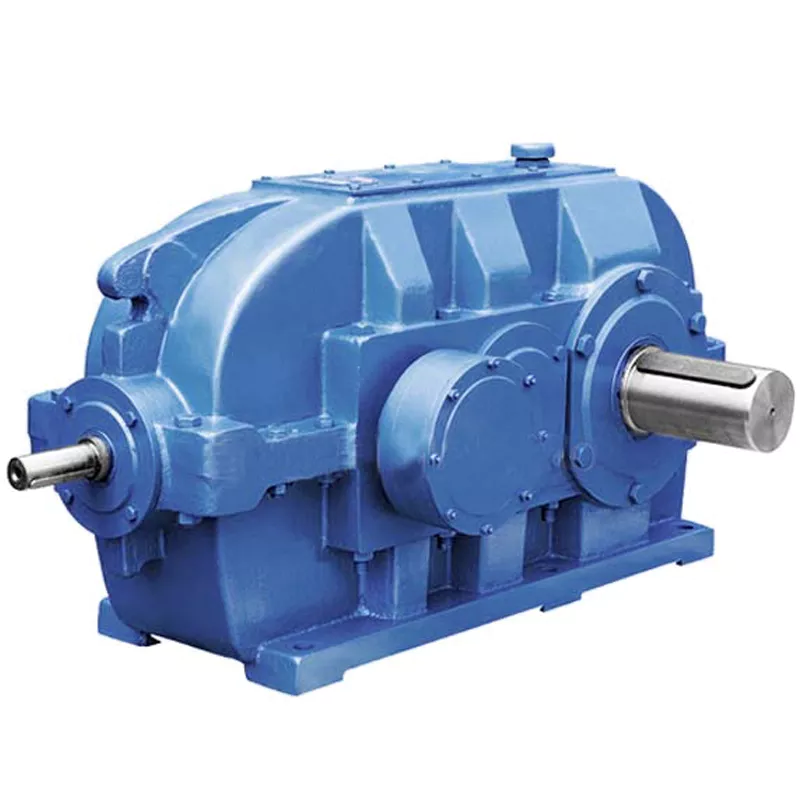
Emerging Trends in Speed Reducer Gearbox Technology
Speed reducer gearbox technology is undergoing continuous advancements, driven by the need for improved efficiency, reliability, and performance in various industrial applications. Some emerging trends in speed reducer gearbox technology include:
- Compact and Lightweight Designs: Manufacturers are developing speed reducer gearboxes with compact and lightweight designs, allowing for easier integration into space-constrained environments and reducing overall equipment weight.
- High-Efficiency Gearing: Advanced materials and manufacturing processes are being used to create high-efficiency gear designs, minimizing friction and energy losses, and maximizing power transmission.
- Integrated Sensors and Monitoring: Many modern speed reducer gearboxes come equipped with integrated sensors and monitoring systems. These technologies enable real-time data collection, condition monitoring, and predictive maintenance, enhancing reliability and reducing downtime.
- Smart and Digital Gearboxes: The integration of digital technologies, such as IoT (Internet of Things) connectivity and automation, is transforming traditional speed reducer gearboxes into “smart” gearboxes. These gearboxes can communicate with other equipment, adjust settings remotely, and optimize performance based on real-time data.
- Noise and Vibration Reduction: Noise and vibration reduction technologies are becoming more prominent in speed reducer gearbox design. Enhanced damping and isolation features help minimize noise levels and vibrations, contributing to quieter and more comfortable operating environments.
- Customization and Modular Design: Manufacturers are offering more customization options and modular designs for speed reducer gearboxes. This allows users to tailor gearboxes to their specific needs and easily replace individual components for maintenance purposes.
As technology continues to evolve, these emerging trends in speed reducer gearbox technology are likely to drive further innovation, enabling industries to achieve higher levels of efficiency, productivity, and overall equipment performance.
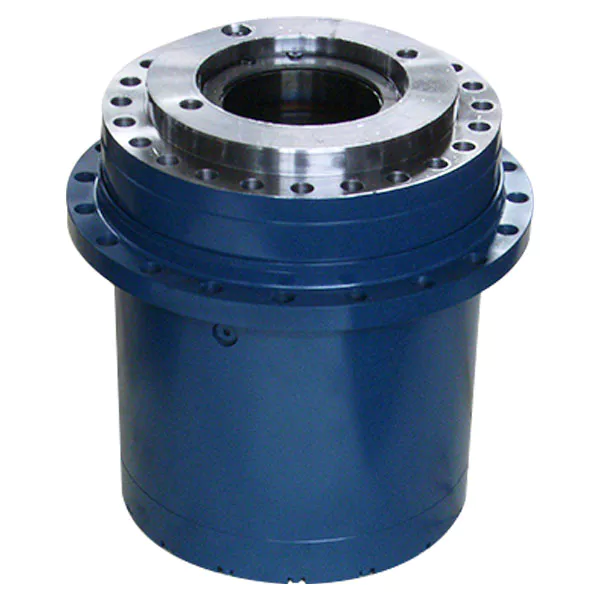
Efficient Power Transmission and Motion Control in Speed Reducer Gearboxes
Speed reducer gearboxes play a crucial role in ensuring efficient power transmission and precise motion control in various mechanical systems. Here’s how they achieve these objectives:
Power Transmission: Speed reducer gearboxes utilize a combination of gears, shafts, and bearings to transmit power from the input shaft to the output shaft. The gear train within the gearbox transforms the input speed and torque to the desired output speed and torque, allowing for effective power transmission.
Mechanical Advantage: The gear ratio in a speed reducer gearbox provides a mechanical advantage by reducing the rotational speed while increasing the available torque. This enables the gearbox to handle higher loads and deliver the required force for specific applications.
Reduced Energy Loss: By optimizing the gear meshing and minimizing friction between components, speed reducer gearboxes help reduce energy loss during power transmission. This leads to higher efficiency and lower heat generation, resulting in improved energy conservation.
Motion Control: Speed reducer gearboxes enable precise motion control by accurately converting input motion to the desired output motion. The gear ratio determines the relationship between input and output speeds, allowing for controlled movement, rotation, or positioning of machinery or equipment.
Backlash Minimization: High-quality speed reducer gearboxes are designed to minimize backlash, which is the play or clearance between gear teeth. This feature ensures accurate and repeatable motion, making them suitable for applications that require precise positioning and synchronization.
Noise and Vibration Reduction: Many speed reducer gearboxes incorporate features such as helical or planetary gears, which help reduce noise and vibration levels during operation. This is particularly important for applications where noise and vibration control is essential.
Enhanced System Stability: Speed reducer gearboxes provide stability to mechanical systems by controlling the speed and torque output. This stability contributes to smoother operation, reduced wear and tear on components, and increased overall system reliability.
Overall, speed reducer gearboxes ensure efficient power transmission and motion control by utilizing their mechanical design, gear arrangements, and precision manufacturing. Their ability to transform and manage power enables them to meet the specific requirements of diverse industrial applications while optimizing performance and reliability.
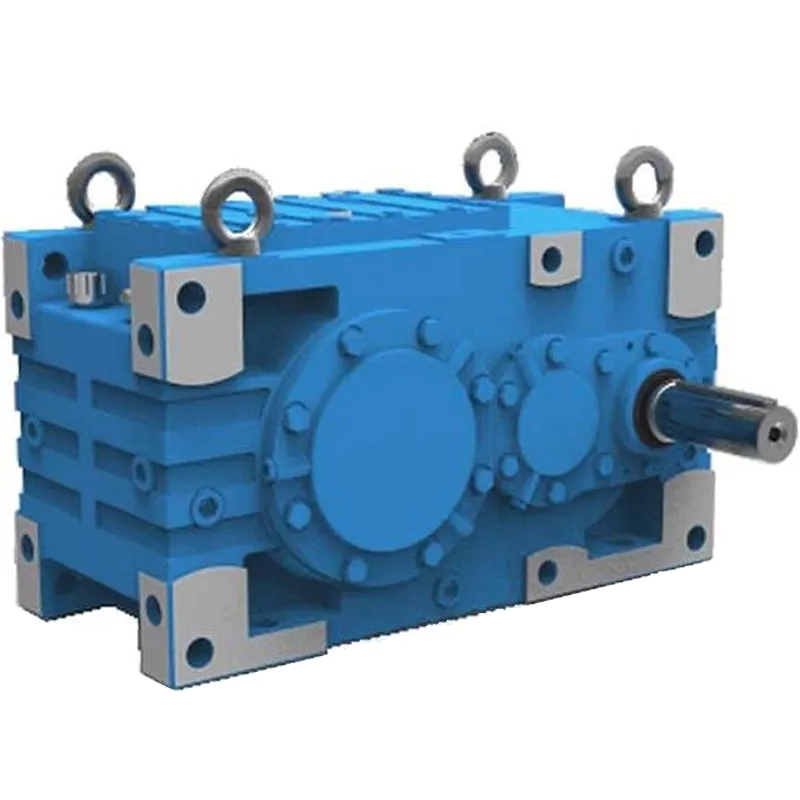
Types of Speed Reducer Gearboxes and Their Applications
Speed reducer gearboxes come in various types, each designed to suit specific applications and performance requirements. These gearbox designs leverage different gear arrangements and mechanisms to achieve the desired speed reduction and torque amplification. Here are some common types of speed reducer gearboxes and their applications:
1. Planetary Gearbox: Planetary gearboxes, also known as epicyclic gearboxes, consist of a central sun gear, multiple planet gears, and a ring gear. This compact design allows for high torque output and efficiency. Planetary gearboxes are commonly used in applications requiring high torque and precision, such as robotics, automated machinery, and aerospace systems.
2. Helical Gearbox: Helical gearboxes utilize helical gears with inclined teeth to transmit power. They provide smooth and quiet operation and are suitable for applications that require moderate speed reduction and torque amplification, such as conveyors, pumps, and industrial mixers.
3. Worm Gearbox: Worm gearboxes consist of a worm screw and a worm wheel. They offer high torque output and are known for their self-locking capability, making them ideal for applications where backdriving prevention is essential, such as lifting mechanisms, gates, and heavy machinery.
4. Bevel Gearbox: Bevel gearboxes use bevel gears to transmit power between intersecting shafts. They are suitable for changing the direction of rotation and transmitting power at right angles. Bevel gearboxes are commonly used in printing presses, woodworking equipment, and automotive applications.
5. Cycloidal Drive Gearbox: Cycloidal drive gearboxes use a unique mechanism with cycloidal motion to achieve speed reduction and torque amplification. They are known for their high shock-load resistance and compact design. Cycloidal drive gearboxes find applications in robotics, packaging machinery, and material handling systems.
6. Spur Gearbox: Spur gearboxes utilize straight-cut spur gears for power transmission. They are simple in design and are suitable for low-speed applications that require minimal torque amplification, such as printing machines, textile equipment, and food processing machinery.
7. Hypoid Gearbox: Hypoid gearboxes use hypoid gears that resemble spiral bevel gears. They offer higher torque capacity and smoother operation compared to traditional bevel gearboxes. Hypoid gearboxes are commonly used in automotive drivetrains and heavy-duty machinery.
8. Harmonic Drive Gearbox: Harmonic drive gearboxes use a flexible spline and wave generator to achieve speed reduction and torque amplification. They are known for their high precision and backlash-free operation, making them suitable for applications requiring precise motion control, such as semiconductor manufacturing and medical devices.
Each type of speed reducer gearbox offers unique advantages and characteristics, making them suitable for specific applications across industries. The choice of gearbox type depends on factors such as required torque, speed reduction ratio, space limitations, efficiency, and operational demands.


editor by CX 2024-05-15