
Product Description
1) Small volume
2) Big transmission torque
3) High efficiency
4) Low consumption
ZLYJ gearbox series are transmission devices, which are specially designed for single-screw extruder with high precision, hard gear surface, accompany with thrust. Adopting the technical specifications stipulated in JB/T9050. 1-1999, all CZPT gearboxes are designed accordingly.
Main Features:
1.The material of gear is the high strength alloy steel, it is manufactured by carburizing, quenching (and other heat treatment), gringding process at last. The gear is in high precison ( 6 grade ) and high hardness ( reaches HRC54-62). Besides, it features low noise when operating.
2. It contains high bearing ability thrust, which is performed reliable and can withstand larger axial thrust.
3.All the items are treated by forced lubrication and cooling system except very few small specification products.
4. CZPT series gearbox is adopted by six-side processing box. Its normal installation is horizontal, but can also be changed to vertical installation according to customer’s requirment.
5.Efficiency transmission, low noise, long operaton time.
Why choose us ?
A> long time experience and history
B> long time nitriding treatment and heating treatment by itself
C>advanced Fanuk series CNC computer-controlled milling machines
D>depth hole drilling machine in 10meters length, which ensure the straigtnss of barrel inside.
E> CAD drawing confirmation before start making
F> Prompt after sale service
G>Land owner and registration capital 25,000,000RMB
| Type | Spec | Input Power(kw) | N( enter) | N(output) | Output Torque | Permitted axial thrust of output shaft(KN) | Screw Diameter | Length-diameter ratio |
| (N@m) | ||||||||
| ZLYJ | 112-8 | 5.5 | 800 | 100 | 525 | 35 | Ø35 | 25:01:00 |
| 133-8 | 8 | 800 | 100 | 764 | 39 | Ø50 | 25:01:00 | |
| 146-10 | 11 | 1000 | 100 | 1050 | 54 | Ø55 | 25:01:00 | |
| 173-10 | 18.5 | 900 | 90 | 1962 | 110 | Ø65 | 25:01:00 | |
| 200-12.5 | 30 | 1000 | 80 | 3581 | 155 | Ø75 | 25:01:00 | |
| 225-12.5 | 45 | 1000 | 80 | 5371 | 180 | Ø90 | 25:01:00 | |
| 250-16 | 55 | 1120 | 70 | 7503 | 192 | Ø105 | 25:01:00 | |
| 280-16 | 75 | 960 | 60 | 7643 | 258 | Ø110 | 25:01:00 | |
| 315-16 | 85 | 960 | 60 | 13528 | 287 | Ø120 | 25:01:00 | |
| 330-16 | 110 | 960 | 60 | 17507 | 360 | Ø135 | 25:01:00 | |
| 375-16 | 132 | 960 | 60 | 21008 | 390 | Ø150 | 25:01:00 | |
| 395-16 | 185 | 960 | 60 | 29442 | 400 | Ø160 | 25:01:00 | |
| 420-16 | 160 | 960 | 60 | 31831 | 430 | Ø160 | 25:01:00 | |
| 420-16 | 220 | 960 | 60 | 31831 | 430 | Ø170 | 25:01:00 | |
| 450-20 | 213 | 1000 | 60 | 40640 | 500 | Ø160/Ø170 | 25:01:00 | |
| 560-17 | 540 | 1000 | 50 | 84034 | 700 | Ø200 | 25:01:00 | |
| 630-10 | 540 | 1000 | 50 | 15712 | 770 | Ø250 | 25:01:00 |
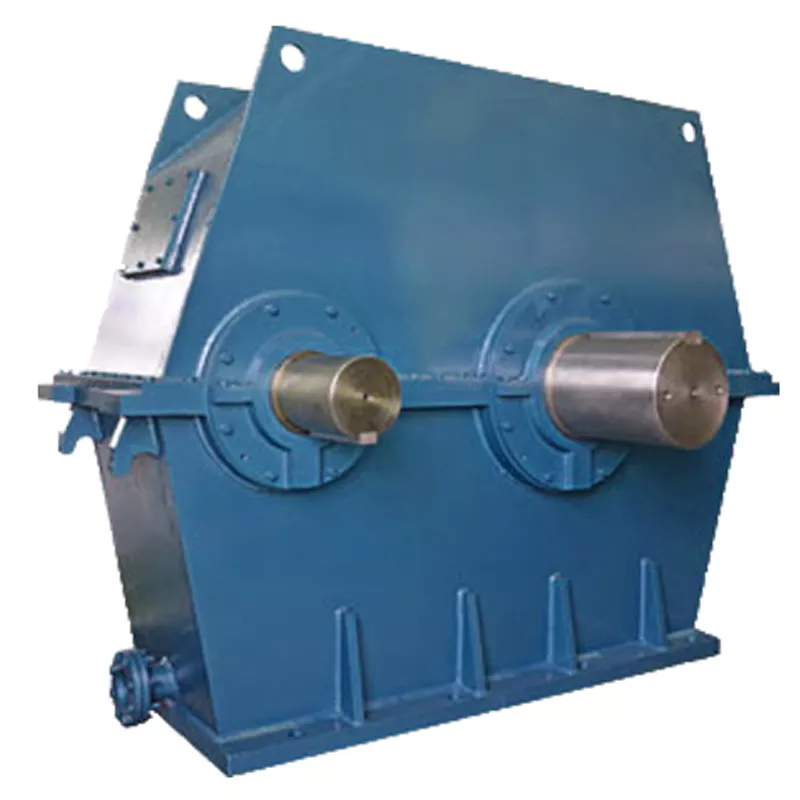
| Type: | Bevel Gear |
|---|---|
| Screw Design: | Single-Screw |
| Color: | Red |
| Lead Time: | 25days |
| Manufacturing Method: | Rolling Gear |
| Toothed Portion Shape: | Spur Gear |
| Customization: |
Available
| Customized Request |
|---|
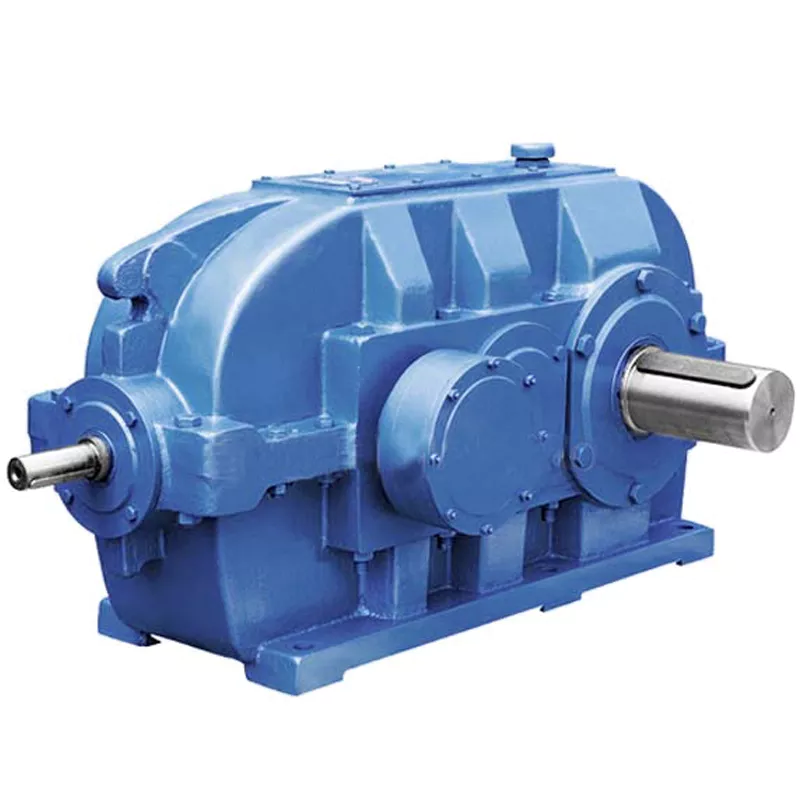
Handling Variations in Input and Output Speeds with Speed Reducer Gearboxes
Speed reducer gearboxes are designed to efficiently handle variations in input and output speeds, ensuring that mechanical systems can operate at desired levels of torque and rotational motion. Here’s how they accomplish this:
Versatile Gear Ratios: Speed reducer gearboxes are equipped with a combination of gears, typically including multiple stages of gear reduction. Each stage contains gears with specific gear ratios. By strategically selecting gear ratios for each stage, the gearbox can adjust the speed and torque output according to the input from the motor or initial power source.
Multi-Stage Reduction: In many speed reducer gearboxes, the input shaft connects to a series of gears, each progressively smaller in size. As the input gear turns, it drives the next gear in the sequence. This process continues through multiple stages, resulting in a significant reduction in rotational speed while increasing torque output.
Helical and Planetary Gears: Some speed reducer gearboxes use helical gears or planetary gear sets. Helical gears have angled teeth that engage gradually, reducing noise and providing smoother transitions between gears. Planetary gears consist of a central sun gear, multiple planet gears, and an outer ring gear. They allow for compact designs and efficient speed reduction.
Frictional and Mechanical Efficiency: Speed reducer gearboxes are designed to minimize friction and mechanical losses during operation. High-quality materials, precision manufacturing, and proper lubrication contribute to higher efficiency and reduced energy waste.
Adjustable Configurations: Speed reducer gearboxes can be configured to achieve different output speeds and torque levels based on the specific requirements of the application. This adjustability allows for customization and fine-tuning of performance.
Torque and Speed Ratings: Manufacturers provide torque and speed ratings for their speed reducer gearboxes, indicating the maximum torque load they can handle while maintaining specified speed reductions. These ratings guide the selection of an appropriate gearbox for a given application.
Overall, speed reducer gearboxes effectively manage variations in input and output speeds through the use of gear ratios, multi-stage reduction, specialized gear designs, and careful engineering. This enables them to adapt to the changing demands of mechanical systems while providing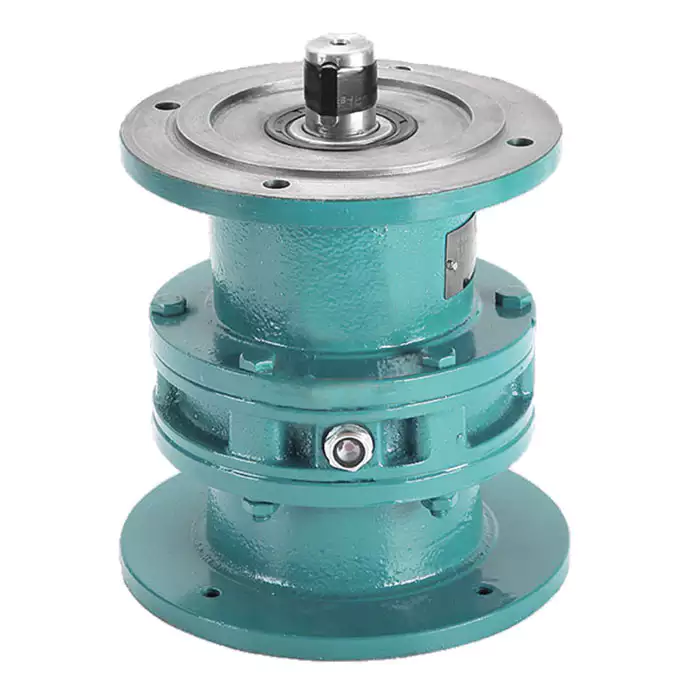
Limitations and Drawbacks of Speed Reducer Gearbox Systems
While speed reducer gearbox systems offer various benefits, they also come with certain limitations and drawbacks that should be considered:
1. Efficiency Loss: Speed reducer gearboxes introduce mechanical losses due to friction and gear meshing. These losses can result in reduced overall efficiency, especially in applications where precise speed control is crucial.
2. Size and Weight: Gearboxes add size and weight to the machinery, which can be a limitation in space-constrained environments or applications where weight is a critical factor.
3. Cost: The design, manufacturing, and maintenance of speed reducer gearboxes can be complex and costly. High-quality materials and precision engineering contribute to higher upfront and operational costs.
4. Maintenance: Gearboxes require regular maintenance, including lubrication, inspection, and potential replacement of worn parts. Improper maintenance can lead to reduced lifespan and operational issues.
5. Backlash: Gears within speed reducer gearboxes may exhibit backlash, which is the small amount of play between gear teeth. Backlash can affect precision in applications requiring accurate positioning.
6. Noise and Vibration: Gear meshing can generate noise and vibrations, especially at higher speeds. Additional measures may be needed to mitigate these effects and ensure a quieter operating environment.
7. Limited Ratios: Some gearbox designs offer a limited range of gear ratios, which may restrict the flexibility of certain applications requiring specific speed adjustments.
8. Heat Generation: The mechanical processes within gearboxes can generate heat, and inadequate cooling or lubrication can lead to overheating and reduced efficiency.
Despite these limitations, proper selection, design, and maintenance of speed reducer gearbox systems can help mitigate these drawbacks and ensure their effective integration into various mechanical systems.
precise control over motion and torque.


editor by CX 2023-08-22