
Product Description
Product Description
The NDR110 series planetary gearboxes are designed and machined as a single unit with special tapered roller bearings to provide high radial load, high torque, ultra-precision, and small size. The ND series uses in highly rigid industries such as fiber optic laser equipment, floor track equipment, robot seventh axis, Parallel robots (spider hand) machine tools, and rotating arms.
Product Name: High Precision Planetary Reducer
Product Series: NDR110 Series
Product features: high torque, high load, ultra-precision, small size
Product Description:
Integrated design concept with high-strength bearings ensure the product itself is durable and efficient
A variety of output ideas such as shaft output, flange and gear are available.
1 arc minute ≤ backlash ≤ 3 arc minutes
Reduction ratios ranging from 3 to 100
Frame design: increases torque and optimizes power transmission
Optimised selection of oil seals: reduces friction and laminate transmission efficiency
Protection class IP65
Warranty: 2 years
Our Advantages
High torque
High load
ultra-precision
Small size
Detailed Photos
Product Parameters
| Segment number | Single segment | ||||||||
| Ratio | i | 4 | 5 | 7 | 10 | 14 | 20 | ||
| Rated output torque | Nm | 250 | 310 | 280 | 210 | 280 | 210 | ||
| Emergency stop torque | Nm | Three times of Maximum Output Torque | |||||||
| Rated input speed | Rpm | 4000 | |||||||
| Max input speed | Rpm | 8000 | |||||||
| Ultraprecise backlash | arcmin | ≤2 | |||||||
| Precision backlash | arcmin | ≤4 | |||||||
| Standard backlash | arcmin | ≤6 | |||||||
| Torsional rigidity | Nm/arcmin | 82 | |||||||
| Max.bending moment | Nm | 430 | |||||||
| Max.axial force | N | 2990 | |||||||
| Service life | hr | 30000(15000 under continuous operation) | |||||||
| Efficiency | % | ≥95% | |||||||
| Weight | kg | 10.5 | |||||||
| Operating Temperature | ºC | -10ºC~+90ºC | |||||||
| Lubrication | Synthetic grease | ||||||||
| Protection class | IP64 | ||||||||
| Mounting Position | All directions | ||||||||
| Noise level(N1=3000rpm,non-loaded) | dB(A) | ≤68 | |||||||
| Rotary inertia | Kg·cm² | 6.84 | 6.25 | ||||||
Applicable Industries
Packaging Machinery Mechanical Hand Textile Machinery
Non Standard automation Machine Tool Printing Equipment
Certifications
Company Profile
DESBOER (HangZhou) Transmission Technology Co., Ltd. is a subsidiary of DESBOER (China), which is committed to the design, development, customized production and sales of high precision planetary reducer as 1 of the technology company. Our company has over 10 years of design, production and sales experience, the main products are the high precision planetary reducer, gear, rack, etc., with high quality, short delivery period, high cost performance and other advantages to better serve the demand of global customers. It is worth noting that we remove the intermediate link sale from the factory directly to customers, so that you can get the most ideal price and also get our best quality service simultaneously.
About Research
In order to strengthen the advantages of products in the international market, the head company in Kyoto, Japan to established KABUSHIKIKAISYA KYOEKI, mainly engaged in the development of DESBOER high precision planetary reducer, high precision of transmission components such as the development work, to provide the most advanced design technology and the most high-quality products for the international market.
/* January 22, 2571 19:08:37 */!function(){function s(e,r){var a,o={};try{e&&e.split(“,”).forEach(function(e,t){e&&(a=e.match(/(.*?):(.*)$/))&&1
| Application: | Motor, Machinery, Marine, Agricultural Machinery, CNC Machine |
|---|---|
| Function: | Change Drive Torque, Speed Changing, Speed Reduction |
| Layout: | Plantery Type |
| Hardness: | Hardened Tooth Surface |
| Installation: | All Directions |
| Step: | Single-Step |
| Customization: |
Available
| Customized Request |
|---|
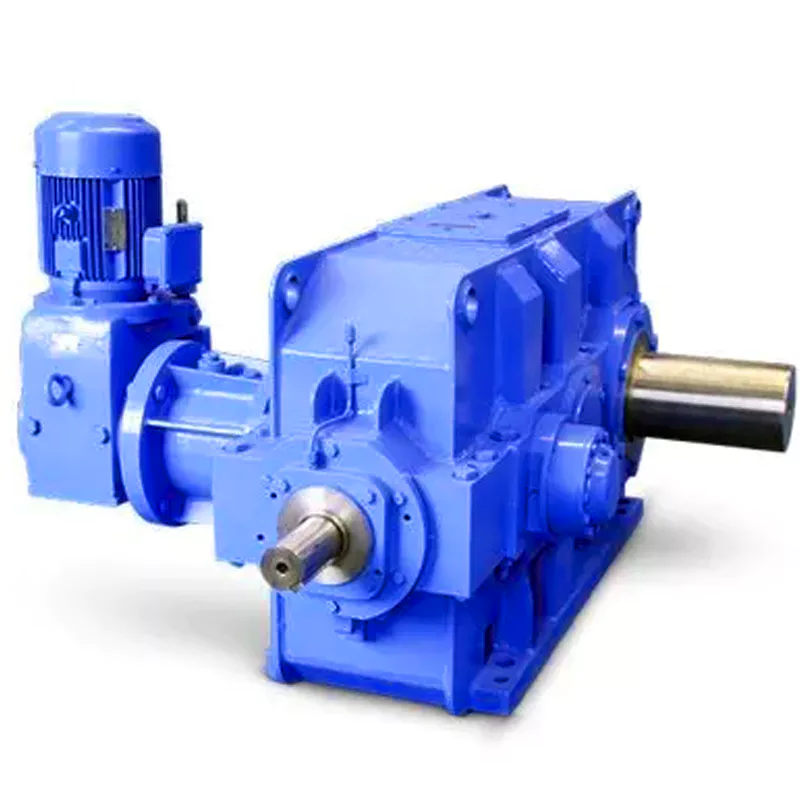
Contribution of Speed Reducer Gearboxes to Energy Efficiency in Machinery
Speed reducer gearboxes play a significant role in enhancing energy efficiency across various industrial applications. Their contributions are as follows:
- Optimized Power Transmission: Speed reducer gearboxes efficiently transfer power from input to output shafts, ensuring minimal energy loss during transmission. By reducing unnecessary friction and minimizing internal losses, these gearboxes maximize power delivery to the intended machinery.
- Torque Amplification: Speed reducers increase torque while reducing rotational speed. This allows larger loads to be moved with less power input, resulting in improved efficiency and reduced energy consumption.
- Variable Speed Control: Some speed reducer gearboxes offer adjustable speed settings, enabling machinery to operate at the most energy-efficient speed for a given task. This feature is especially beneficial in applications with varying load requirements.
- Optimized Motion Profiles: Speed reducer gearboxes help achieve smoother and controlled motion in machinery. By minimizing jerky movements and vibrations, energy waste due to sudden accelerations and decelerations is reduced.
- Reduced Heat Generation: Efficient speed reduction leads to lower heat generation within gearboxes, resulting in decreased energy loss due to heat dissipation. This is particularly important in applications that involve continuous operation.
- Mechanical Advantage: Speed reducers provide mechanical advantage, allowing equipment to perform tasks more easily and efficiently. This can lead to decreased wear and tear on machinery components and, consequently, reduced energy consumption.
Overall, speed reducer gearboxes contribute to energy efficiency by optimizing power transmission, reducing losses, enhancing torque delivery, and enabling precise control over machinery speed and motion. Their inclusion in various industrial setups helps lower energy consumption, operational costs, and environmental impact.
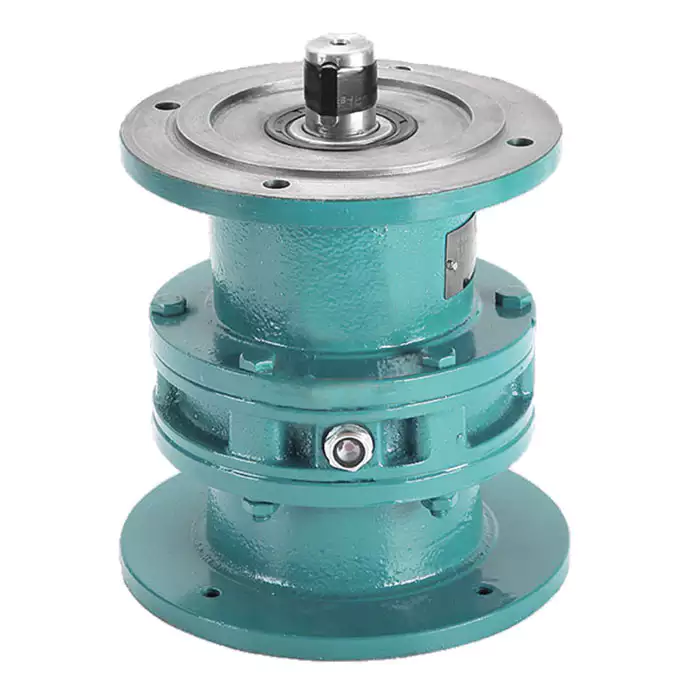
Limitations and Drawbacks of Speed Reducer Gearbox Systems
While speed reducer gearbox systems offer various benefits, they also come with certain limitations and drawbacks that should be considered:
1. Efficiency Loss: Speed reducer gearboxes introduce mechanical losses due to friction and gear meshing. These losses can result in reduced overall efficiency, especially in applications where precise speed control is crucial.
2. Size and Weight: Gearboxes add size and weight to the machinery, which can be a limitation in space-constrained environments or applications where weight is a critical factor.
3. Cost: The design, manufacturing, and maintenance of speed reducer gearboxes can be complex and costly. High-quality materials and precision engineering contribute to higher upfront and operational costs.
4. Maintenance: Gearboxes require regular maintenance, including lubrication, inspection, and potential replacement of worn parts. Improper maintenance can lead to reduced lifespan and operational issues.
5. Backlash: Gears within speed reducer gearboxes may exhibit backlash, which is the small amount of play between gear teeth. Backlash can affect precision in applications requiring accurate positioning.
6. Noise and Vibration: Gear meshing can generate noise and vibrations, especially at higher speeds. Additional measures may be needed to mitigate these effects and ensure a quieter operating environment.
7. Limited Ratios: Some gearbox designs offer a limited range of gear ratios, which may restrict the flexibility of certain applications requiring specific speed adjustments.
8. Heat Generation: The mechanical processes within gearboxes can generate heat, and inadequate cooling or lubrication can lead to overheating and reduced efficiency.
Despite these limitations, proper selection, design, and maintenance of speed reducer gearbox systems can help mitigate these drawbacks and ensure their effective integration into various mechanical systems.
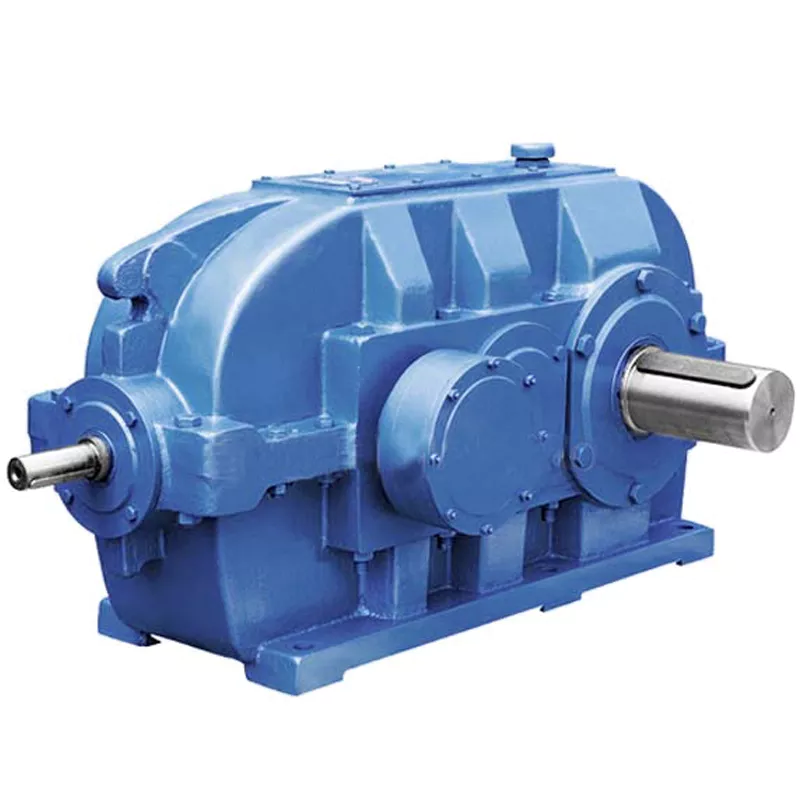
Handling Variations in Input and Output Speeds with Speed Reducer Gearboxes
Speed reducer gearboxes are designed to efficiently handle variations in input and output speeds, ensuring that mechanical systems can operate at desired levels of torque and rotational motion. Here’s how they accomplish this:
Versatile Gear Ratios: Speed reducer gearboxes are equipped with a combination of gears, typically including multiple stages of gear reduction. Each stage contains gears with specific gear ratios. By strategically selecting gear ratios for each stage, the gearbox can adjust the speed and torque output according to the input from the motor or initial power source.
Multi-Stage Reduction: In many speed reducer gearboxes, the input shaft connects to a series of gears, each progressively smaller in size. As the input gear turns, it drives the next gear in the sequence. This process continues through multiple stages, resulting in a significant reduction in rotational speed while increasing torque output.
Helical and Planetary Gears: Some speed reducer gearboxes use helical gears or planetary gear sets. Helical gears have angled teeth that engage gradually, reducing noise and providing smoother transitions between gears. Planetary gears consist of a central sun gear, multiple planet gears, and an outer ring gear. They allow for compact designs and efficient speed reduction.
Frictional and Mechanical Efficiency: Speed reducer gearboxes are designed to minimize friction and mechanical losses during operation. High-quality materials, precision manufacturing, and proper lubrication contribute to higher efficiency and reduced energy waste.
Adjustable Configurations: Speed reducer gearboxes can be configured to achieve different output speeds and torque levels based on the specific requirements of the application. This adjustability allows for customization and fine-tuning of performance.
Torque and Speed Ratings: Manufacturers provide torque and speed ratings for their speed reducer gearboxes, indicating the maximum torque load they can handle while maintaining specified speed reductions. These ratings guide the selection of an appropriate gearbox for a given application.
Overall, speed reducer gearboxes effectively manage variations in input and output speeds through the use of gear ratios, multi-stage reduction, specialized gear designs, and careful engineering. This enables them to adapt to the changing demands of mechanical systems while providing precise control over motion and torque.


editor by CX 2024-03-27