
Product Description
Product Description
Detailed Photos
Product Parameters
|
Name |
High Precision Planetary Gearbox |
|
Model |
AB042, AB060, AB060A, AB090A, AB115, AB142, AB180, AB220 |
|
Gearing Arrangement |
Planetary |
|
Effeiency withfull load |
≥97 |
|
Backlash |
≤5 |
|
Weight |
0.5~48kg |
|
Gear Type |
Helical Gear |
|
Gear stages |
1 stage, 2 stage |
|
Rated Torque |
14N.m-2000N.m |
|
Gear Ratio One-stage |
3, 4, 5, 6, 7, 8, 9, 10 |
|
Gear Ratio Two-stage |
15, 20, 25, 30, 35, 40, 45, 50, 60, 70, 80, 90, 100 |
|
Mounting Position |
Horizontal (foot mounted) or Vertical (flange mounted) |
|
Usage |
stepper motor, servo motor, AC motor, DC motor, etc |
features:
AB-series reducer features:
1. Helical gear design The reduction mechanism adopts the helical gear design, and its tooth shape meshing rate is more than twice that of the general spur gear, and has the characteristics of smooth operation, low noise, high output torque and low backlash
2. Collet type locking mechanism The connection between the input end and the motor adopts a collet-type locking mechanism and undergoes dynamic balance analysis to ensure the concentricity of the joint interface and zero-backlash power transmission at high input speeds
3. Modular design of motor connection board The unique modular design of the motor connecting plate and shaft is suitable for any brand and type of servo motor;
4. Efficient surface treatment technology The surface of the gearbox is treated with electroless nickel, and the connecting plate of the motor is treated with black anodic treatment to improve the environmental tolerance and corrosion resistance
5. One-piece gearbox body The gearbox and the inner ring gear adopt an integrated design, with compact structure, high precision and large output torque
6. Accurate concentricity of gear bar The sun gear made of the whole gear bar has strong rigidity and accurate concentricity
7. Solid, Single piece sun gear construction obtains precise concentricity with increased strength and rigidity. 8.Precision taper roller bearing support to increases radial and axial loading capacity.
Applications
Certifications
Packaging & Shipping
| Hardness: | Hardened Tooth Surface |
|---|---|
| Installation: | Vertical Type |
| Layout: | Coaxial |
| Gear Shape: | Planetary |
| Step: | Single-Step |
| Type: | Ab Series Gearbox, Gear Reducer |
| Samples: |
US$ 100/Piece
1 Piece(Min.Order) | |
|---|
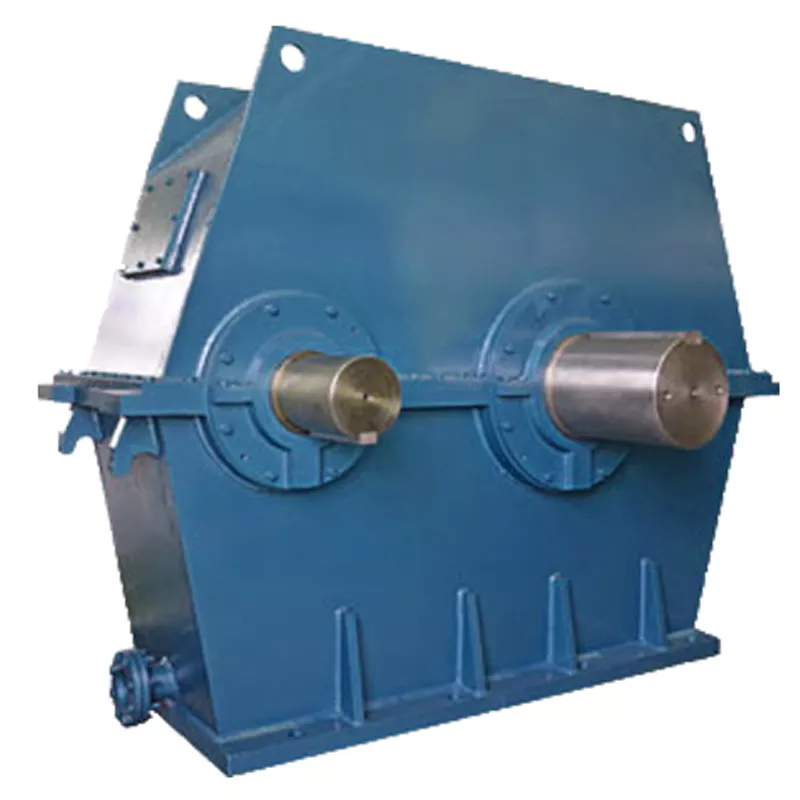
Customization of Speed Reducer Gearboxes for Specific Industrial Needs
Yes, speed reducer gearboxes can be customized to meet specific industrial requirements. Manufacturers offer various customization options to ensure that the gearboxes align with the unique needs of different applications:
- Design Flexibility: Manufacturers can modify the design of speed reducer gearboxes to accommodate specific space constraints, mounting arrangements, and input-output shaft configurations.
- Gear Ratio Selection: Custom gear ratios can be selected to optimize the speed reduction or increase for a particular application, allowing for tailored torque and speed requirements.
- Material Selection: Gearbox components can be crafted from different materials based on factors such as corrosion resistance, temperature tolerance, and load-bearing capacity.
- Sealing and Protection: Customized sealing solutions, such as IP-rated enclosures and specialized gaskets, can be integrated to enhance protection against dust, moisture, and harsh environments.
- Lubrication Systems: Gearboxes can be equipped with specialized lubrication systems to ensure consistent and efficient lubrication in specific operating conditions.
- Accessories and Attachments: Manufacturers can add accessories like external cooling fans, temperature sensors, and mounting flanges to enhance gearbox performance and monitoring.
- Compliance with Standards: Customized gearboxes can be designed to meet industry-specific standards, certifications, and safety requirements.
By collaborating with manufacturers and providing detailed specifications, industries can obtain speed reducer gearboxes that are tailor-made to their specific needs, ensuring optimal performance and reliability in their applications.
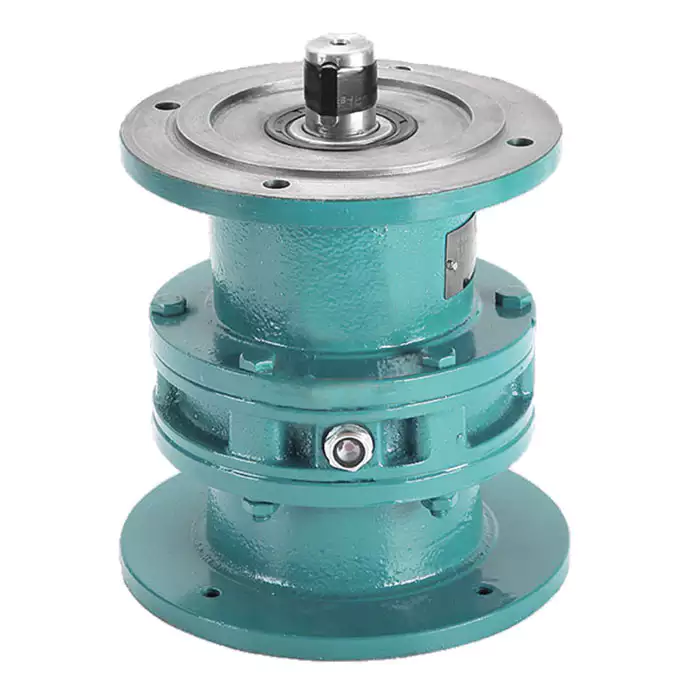
Limitations and Drawbacks of Speed Reducer Gearbox Systems
While speed reducer gearbox systems offer various benefits, they also come with certain limitations and drawbacks that should be considered:
1. Efficiency Loss: Speed reducer gearboxes introduce mechanical losses due to friction and gear meshing. These losses can result in reduced overall efficiency, especially in applications where precise speed control is crucial.
2. Size and Weight: Gearboxes add size and weight to the machinery, which can be a limitation in space-constrained environments or applications where weight is a critical factor.
3. Cost: The design, manufacturing, and maintenance of speed reducer gearboxes can be complex and costly. High-quality materials and precision engineering contribute to higher upfront and operational costs.
4. Maintenance: Gearboxes require regular maintenance, including lubrication, inspection, and potential replacement of worn parts. Improper maintenance can lead to reduced lifespan and operational issues.
5. Backlash: Gears within speed reducer gearboxes may exhibit backlash, which is the small amount of play between gear teeth. Backlash can affect precision in applications requiring accurate positioning.
6. Noise and Vibration: Gear meshing can generate noise and vibrations, especially at higher speeds. Additional measures may be needed to mitigate these effects and ensure a quieter operating environment.
7. Limited Ratios: Some gearbox designs offer a limited range of gear ratios, which may restrict the flexibility of certain applications requiring specific speed adjustments.
8. Heat Generation: The mechanical processes within gearboxes can generate heat, and inadequate cooling or lubrication can lead to overheating and reduced efficiency.
Despite these limitations, proper selection, design, and maintenance of speed reducer gearbox systems can help mitigate these drawbacks and ensure their effective integration into various mechanical systems.
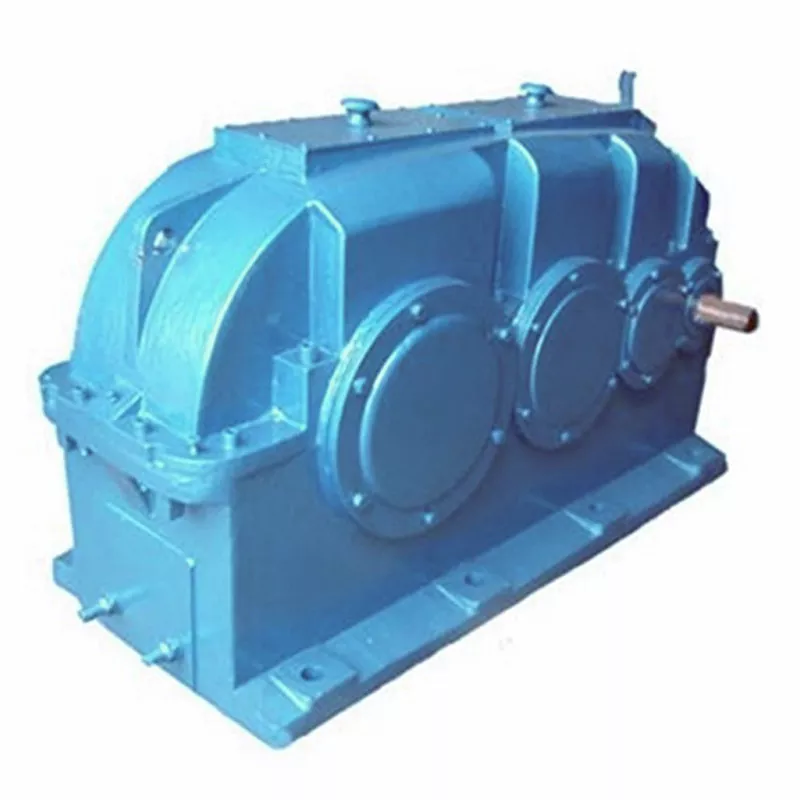
How do Speed Reducer Gearboxes Contribute to Reducing Rotational Speed and Increasing Torque?
Speed reducer gearboxes play a critical role in mechanical systems by achieving the dual objectives of reducing rotational speed and increasing torque. This fundamental function is accomplished through the intricate interaction of different types of gears within the gearbox.
At its core, a speed reducer gearbox consists of multiple gears with varying sizes and configurations. The gears are arranged in specific sequences to create gear trains that manipulate the input speed and torque to achieve the desired output characteristics.
The reduction of rotational speed is achieved through gear train arrangements that involve gear pairs with different numbers of teeth, commonly known as gear ratios. When an input shaft connected to a higher-speed power source engages with a gear of smaller size, it drives a larger gear connected to the output shaft. This gear reduction process results in a lower rotational speed at the output shaft compared to the input shaft. The change in gear size and ratio effectively converts the input speed into a reduced output speed.
Simultaneously, the interaction of gears in the speed reducer gearbox leads to an increase in torque. As the input torque is distributed across the gear train, the larger gear driven by the smaller gear experiences a higher force at its teeth. This force is transmitted through the gears, leading to a torque amplification at the output shaft. In other words, the output torque is greater than the input torque due to the mechanical advantage gained from the gear arrangement.
The combination of gear reduction and torque amplification allows speed reducer gearboxes to match the requirements of various applications. Industries such as manufacturing, material handling, automotive, and robotics benefit from this functionality. For instance, in conveyor systems, the gearbox reduces the high-speed motor rotation to a suitable speed for smoothly transporting materials, all while providing the necessary torque to handle loads efficiently.
In summary, speed reducer gearboxes utilize gear ratios and interactions to effectively lower rotational speed while increasing torque. This capability is instrumental in optimizing the performance of mechanical systems across diverse industrial sectors.


editor by CX 2023-10-31