
Mining drill rigs — rotary blast hole drills, surface top-hammer rigs, and rotary core drilling machines — rely on planetary gearboxes at the rotary head, the feed system, and the carousel indexer. The head drive must deliver high torque at low rotational speed during rock drilling while enduring vibration and axial impact from the drill string, the feed drive must control the weight-on-bit precisely at speeds down to millimetres per minute, and the carousel must index accurately between drill rods in a dusty, vibrating environment without misregistering and dropping a rod. These three applications span almost the full performance envelope of industrial planetary gearing.
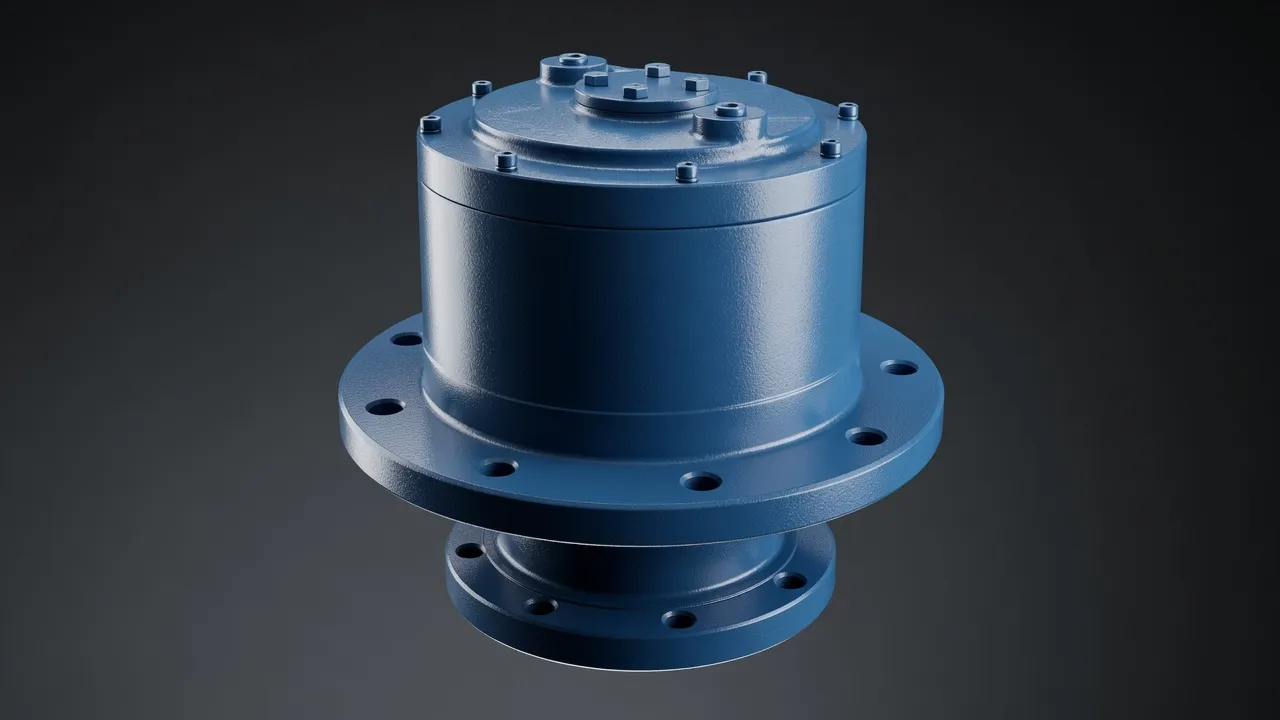
Rotary Head Drive: High Torque at Low Speed
The drill string rotation rate for a surface blast hole drill varies from 20–40 rpm in hard abrasive rock to 80–120 rpm in softer formations. From a hydraulic motor at 1 500–2 000 rpm, the required ratio is 15:1 to 100:1 — achievable in a single-stage planetary for lower ratios or a two-stage for higher ones. The torque requirement depends on the formation hardness, drill string length (which determines the inertia of the string), bit type, and penetration rate. For a 250 mm diameter blast hole in medium-hard granite, rotation torque at the drill head may reach 10 000–20 000 N·m. This is the dominant sizing criterion — the gearbox rated output torque must exceed the maximum expected rotation torque with a service factor of 1.5–2.0 for shock loading from bit transitions between hard and soft zones.
| Drill Type | Hole Diameter | Formation | Rotation Torque | Speed (rpm) | Gearbox Required |
|---|---|---|---|---|---|
| Crawler surface rotary | 150–250 mm | Soft-medium rock | 5 000–15 000 N·m | 30–80 rpm | Two-stage planetary, 1:30–1:80 |
| Surface blast hole drill | 250–400 mm | Hard granite/basalt | 15 000–40 000 N·m | 20–40 rpm | Two-stage + chain, 1:80–1:150 |
| Rotary core drill | 50–100 mm | All formations | 500–2 000 N·m | 100–800 rpm | Single-stage, 1:5–1:30 |
| Wireline core drill | 36–76 mm | Hard rock | 300–1 000 N·m | 200–1 200 rpm | Single-stage, 1:5–1:15 |
| Oil well surface rotary | 350–500 mm | Sedimentary | 30 000–80 000 N·m | 80–200 rpm | Custom compound drive |
Rotation torque at the drill head (after gearbox). Motor torque = head torque ÷ ratio.
Drill String Vibration and Gearbox Fatigue
Drill string vibration in hard rock drilling includes torsional stick-slip (the bit stalls in the rock, the string winds up in torsion, then releases suddenly), lateral whirl (the string gyrates around the borehole), and axial bounce (the bit alternately contacts and loses contact with the rock face). Each of these vibration modes transmits energy into the drill head gearbox as torque spikes, lateral loads on the output shaft, and axial shock loads. Torsional stick-slip produces the most damaging torque spikes — the sudden release of stored torsional energy in the string can generate torques 5–8 times the steady rotation torque in less than 0.1 seconds. Planet gears with through-hardened tooth roots and conservative face-width selection are essential to survive these spikes over tens of thousands of drill hours.
Feed Drive: Precise Weight-on-Bit Control
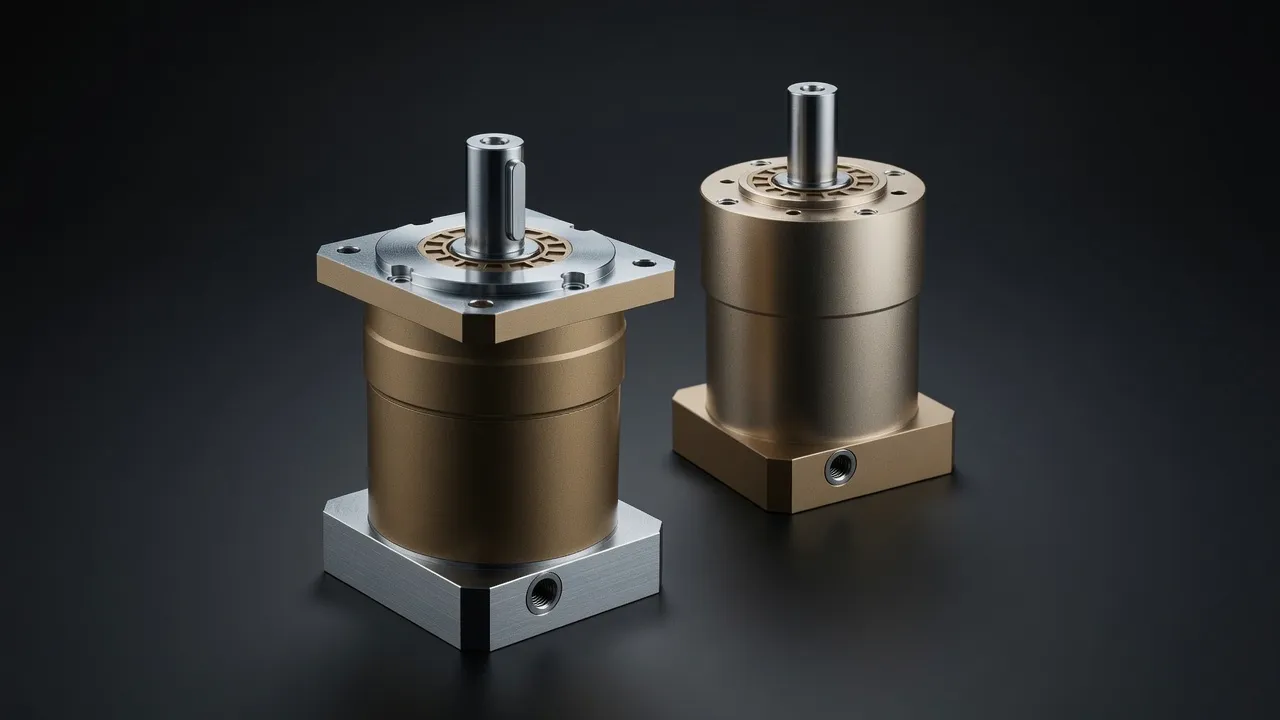
The feed drive controls the force applied to the drill bit — called weight-on-bit (WOB). Too little WOB causes the bit to skid without cutting; too much causes the string to buckle below the neutral point and transfers compressive stress to the drill rods above the bit, reducing penetration efficiency and risking rod failure. Optimal WOB varies with formation hardness and is maintained by controlling the hydraulic pressure in the feed cylinder or by controlling the feed motor torque through the feed planetary gearbox. The EPG two-stage precision planetary series, used in electric feed drives, provides the precise torque control and low-speed smoothness needed for constant WOB maintenance at penetration rates of 0.1–5.0 m/min. The AB115 high-precision planetary handles the servo motor integration required for fully automated drill feed control systems on modern autonomous drilling platforms.
Carousel Indexer Planetary Drive
The carousel (or rod handler) indexes drill rods into the drill string loading position between each rod addition. It must position each rod holder to within ±5 mm of the drill axis — at a carousel radius of 500 mm, this requires ±0.57° angular positioning accuracy. A precision planetary gearbox at 1:100 ratio driven by a stepper or servo motor achieves this with adequate margin. The key requirement beyond accuracy is reliability in the mining environment: fine iron ore dust, diesel exhaust, and water spray create a highly corrosive and abrasive atmosphere that attacks seals and gear surfaces. IP65 minimum sealing and zinc-phosphate or DLC-coated gear surfaces extend service life in this environment significantly.
For precision positioning in dusty industrial environments comparable to mining drill site conditions, the PGV planetary gearbox provides a useful reference for precision drive specifications in challenging ambient conditions.
Frequently Asked Questions
Speak with a Planetary Drive Specialist
Share your torque requirement, ratio, and application environment — our team at Condell Park NSW returns a sized recommendation and stock check within one business day. No obligation.