
Product Description
Why Choose Us
Product Details
|
Type |
Worm Gear Speed Reducer/ gearbox |
|
Model |
WMRV 25/30/40/50/63/75/90/110/130/150/185 |
|
Ratio |
7.5,10,15,20,25,30,40,50,60,80,100. |
|
Color |
Blue(RAL5571)/Silver grey (K9149) Or On Customer Request |
|
Material |
Housing: Aluminum alloy(size 25~90) / Cast iron(size 110~185) |
|
Worm wheel: Aluminum Bronze or Tin Bronze |
|
| Worm shaft: 20CrMn Ti | |
|
Output Shaft: steel-45# |
|
|
Packing |
Carton, Honey Comb Carton, Wooden Case with wooden pallet |
| Warranty | 1 Year |
| Input Power | 0.09kw,0.18kw,1.1KW,1.5KW,2.2KW,3KW,4KW,5.5KW,7.5KW,11Kw and so on. |
| Usages | Industrial Machine: Food Stuff, Ceramics, CHEMICAL, Packing, Dyeing,Wood working, Glass. |
| IEC Flange | IEC standard flange or on customer request |
| Lubricant | Synthetic oil or worm gear oil |
Company Profile
Exhibition
Customized Service
Certificate&Honor
Customer Comments
FAQ
1. How to choose a gearbox which meets our requirement?
You can refer to our catalogue to choose the gearbox or we can help to choose when you provide
the technical information of required output torque, output speed and motor parameter etc.
2. What information shall we give before placing a purchase order?
a) Type of the gearbox, ratio, input and output type, input flange, mounting position, and motor information etc.
b) Housing color.
c) Purchase quantity.
d) Other special requirements.
3. What industries are your gearboxes being used?
Our gearboxes are widely used in the areas of textile, food processing, beverage, chemical industry,
escalator,automatic storage equipment, metallurgy, tabacco, environmental protection, logistics and etc.
4. Do you sell motors?
We have stable motor suppliers who have been cooperating with us for a long-time. They can provide motors
with high quality.
/* January 22, 2571 19:08:37 */!function(){function s(e,r){var a,o={};try{e&&e.split(“,”).forEach(function(e,t){e&&(a=e.match(/(.*?):(.*)$/))&&1
| Application: | Motor, Machinery, Agricultural Machinery |
|---|---|
| Hardness: | Hardened Tooth Surface |
| Installation: | 90 Degree |
| Layout: | Coaxial |
| Gear Shape: | Conical – Cylindrical Gear |
| Step: | Double-Step |
| Samples: |
US$ 25/Piece
1 Piece(Min.Order) | |
|---|
| Customization: |
Available
| Customized Request |
|---|
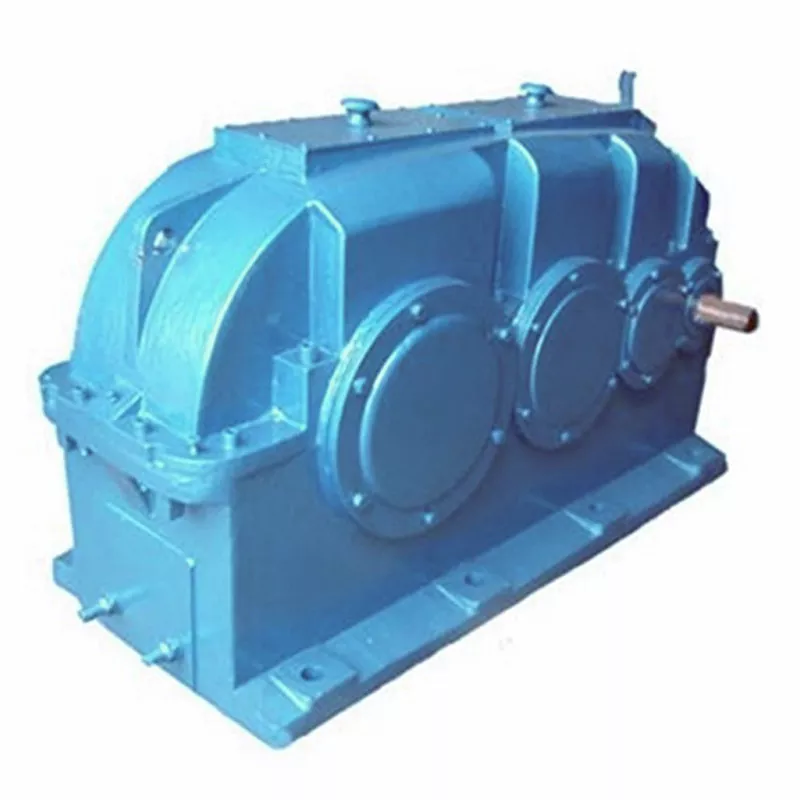
Considerations for Choosing Lubrication for Speed Reducer Gearboxes
Choosing the right lubrication for speed reducer gearboxes is crucial to ensure optimal performance, longevity, and efficiency. Several factors should be taken into account when making this decision:
- Operating Conditions: Consider the temperature range, load, and speed at which the gearbox operates. Extreme temperatures or heavy loads may require specialized lubricants.
- Lubricant Type: Choose between oil and grease lubrication. Oil provides better heat dissipation and is suitable for high-speed applications, while grease offers better sealing and is ideal for applications with frequent starts and stops.
- Viscosity: Select the appropriate viscosity grade of lubricant based on the operating conditions. Higher viscosity is generally preferred for heavy loads and high temperatures.
- Additives: Some applications may require lubricants with specific additives, such as anti-wear additives, extreme pressure additives, or corrosion inhibitors, to enhance performance and protection.
- Sealing and Contamination: Consider the effectiveness of sealing mechanisms to prevent contamination from dust, water, and other particles. Proper sealing helps extend the lubricant’s lifespan.
- Compatibility: Ensure that the selected lubricant is compatible with the materials used in the gearbox construction, including seals, gaskets, and gear materials.
- Re-Lubrication Intervals: Determine how frequently re-lubrication is required. Some applications may demand frequent re-lubrication, while others can operate with longer intervals.
- Environmental Impact: Consider environmental regulations and restrictions when selecting lubricants to minimize ecological impact and ensure compliance.
By carefully evaluating these factors and consulting with lubrication experts, industries can choose the right lubrication strategy for their speed reducer gearboxes, promoting smooth operation and extending the equipment’s service life.
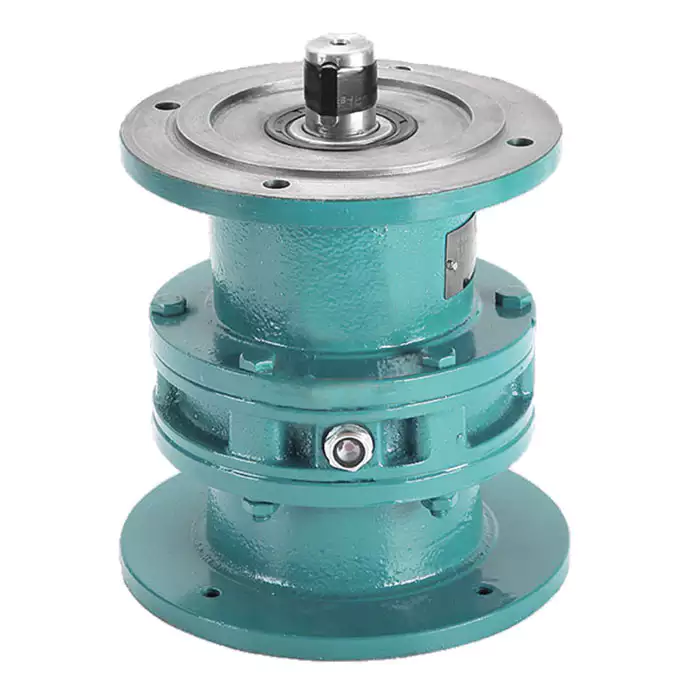
Limitations and Drawbacks of Speed Reducer Gearbox Systems
While speed reducer gearbox systems offer various benefits, they also come with certain limitations and drawbacks that should be considered:
1. Efficiency Loss: Speed reducer gearboxes introduce mechanical losses due to friction and gear meshing. These losses can result in reduced overall efficiency, especially in applications where precise speed control is crucial.
2. Size and Weight: Gearboxes add size and weight to the machinery, which can be a limitation in space-constrained environments or applications where weight is a critical factor.
3. Cost: The design, manufacturing, and maintenance of speed reducer gearboxes can be complex and costly. High-quality materials and precision engineering contribute to higher upfront and operational costs.
4. Maintenance: Gearboxes require regular maintenance, including lubrication, inspection, and potential replacement of worn parts. Improper maintenance can lead to reduced lifespan and operational issues.
5. Backlash: Gears within speed reducer gearboxes may exhibit backlash, which is the small amount of play between gear teeth. Backlash can affect precision in applications requiring accurate positioning.
6. Noise and Vibration: Gear meshing can generate noise and vibrations, especially at higher speeds. Additional measures may be needed to mitigate these effects and ensure a quieter operating environment.
7. Limited Ratios: Some gearbox designs offer a limited range of gear ratios, which may restrict the flexibility of certain applications requiring specific speed adjustments.
8. Heat Generation: The mechanical processes within gearboxes can generate heat, and inadequate cooling or lubrication can lead to overheating and reduced efficiency.
Despite these limitations, proper selection, design, and maintenance of speed reducer gearbox systems can help mitigate these drawbacks and ensure their effective integration into various mechanical systems.
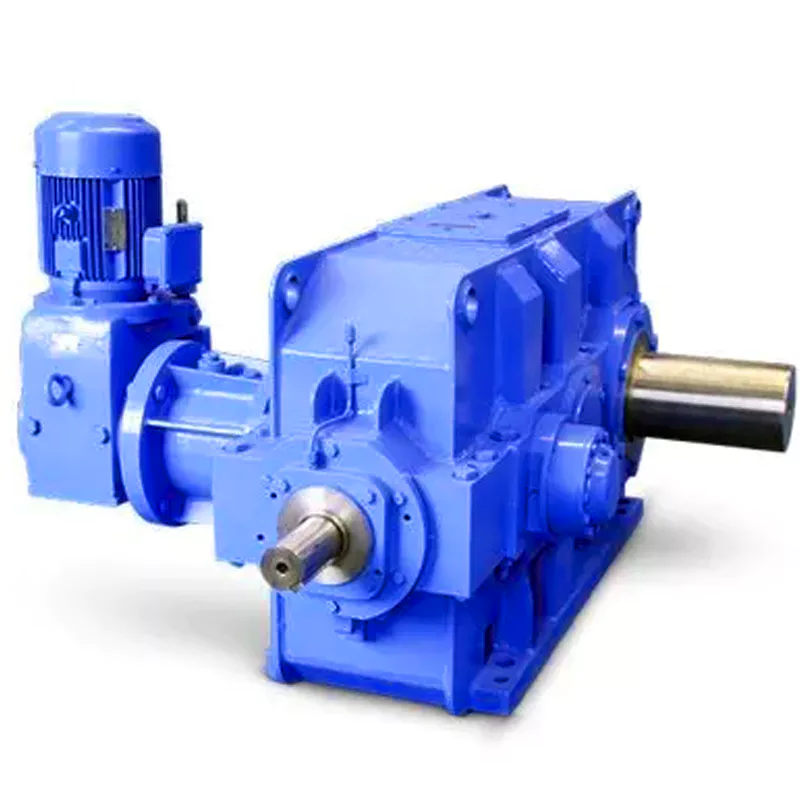
What Advantages Does a Speed Reducer Gearbox Offer in Industrial Applications?
A speed reducer gearbox provides numerous advantages that make it a valuable component in a wide range of industrial applications. These advantages contribute to improved efficiency, performance, and reliability of machinery and equipment.
1. Speed Reduction: One of the primary benefits of a speed reducer gearbox is its ability to reduce the rotational speed of an input shaft, which is often provided by a high-speed power source such as an electric motor. This speed reduction is crucial in applications where the output speed needs to be lower than the input speed to achieve optimal performance. For example, in manufacturing processes or conveyor systems, a slower output speed is often necessary for precise control and safe handling of materials.
2. Torque Increase: The gear arrangement within a speed reducer gearbox leads to an increase in torque at the output shaft compared to the input shaft. This torque amplification is essential for applications that require higher levels of force to overcome resistance, move heavy loads, or perform work. The gearbox’s ability to multiply torque ensures that machinery can handle demanding tasks effectively.
3. Mechanical Advantage: Speed reducer gearboxes utilize gear trains and ratios to create a mechanical advantage. This advantage allows the gearbox to convert high-speed, low-torque input power into low-speed, high-torque output power. The mechanical advantage enhances the efficiency of power transmission and motion control, making it well-suited for applications that involve both speed reduction and torque increase.
4. Versatility: Speed reducer gearboxes are highly versatile and can be tailored to specific application requirements. Manufacturers offer a variety of gear ratios, sizes, and configurations, allowing for customization to achieve the desired output characteristics. This adaptability ensures that gearboxes can be integrated into a wide range of machinery and equipment across different industries.
5. Smooth Operation: The precise meshing of gears in a speed reducer gearbox results in smooth and consistent power transmission. This characteristic is crucial for applications that demand accurate and controlled movement, such as robotics and automated systems. The gearbox’s ability to maintain steady motion contributes to the overall efficiency and performance of the system.
6. Energy Efficiency: By converting high-speed, low-torque input power into a lower-speed, higher-torque output, speed reducer gearboxes help optimize energy usage. This energy-efficient operation can lead to reduced power consumption, lower operating costs, and improved sustainability in industrial processes.
7. Noise and Vibration Reduction: The gear arrangement in a speed reducer gearbox can help dampen noise and vibrations produced by the power source. This is particularly beneficial in applications where noise reduction is essential for a comfortable working environment or to prevent damage to sensitive equipment.
In summary, a speed reducer gearbox offers advantages such as speed reduction, torque amplification, mechanical advantage, versatility, smooth operation, energy efficiency, and noise reduction. These benefits make speed reducer gearboxes indispensable components in various industrial settings, enhancing the overall performance and productivity of machinery and systems.


editor by CX 2024-04-17